









Introduction
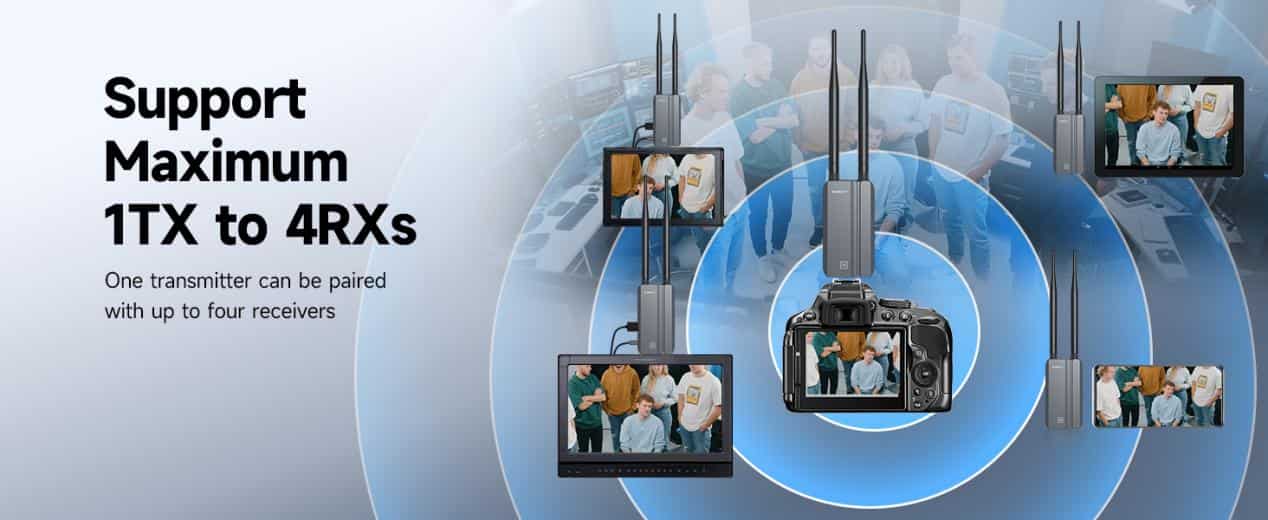
Imagine this: you’ve just settled into your favorite chair, ready to watch the big game. But your family has different plans—your spouse wants to continue a movie in the bedroom, and your kids are gaming in the den. In a wired world, this scenario would require multiple set-top boxes, messy cables, and compromise. But what if one video source could effortlessly appear on four different screens, simultaneously and without degradation? This isn’t a glimpse into the future—it’s the reality of today’s advanced wireless HDMI technology, where flexibility meets simplicity in ways that quietly transform how we share content.
The Hidden Limitation of Traditional Setups
For years, sharing video between rooms meant running cables through walls, investing in complex matrix systems, or simply accepting that certain screens would remain unused. The wireless HDMI transmitter and receiver promised freedom from cables, but early systems came with their own limitations—often supporting only one-to-one connections or struggling with signal reliability across distances.
The breakthrough comes not just from removing wires, but from reimagining how video can flow through a space. Modern wireless HDMI extender systems now understand that our lives aren’t confined to single rooms—and our video sources shouldn’t be either.
The Magic Number: Why One-to-Four Matters
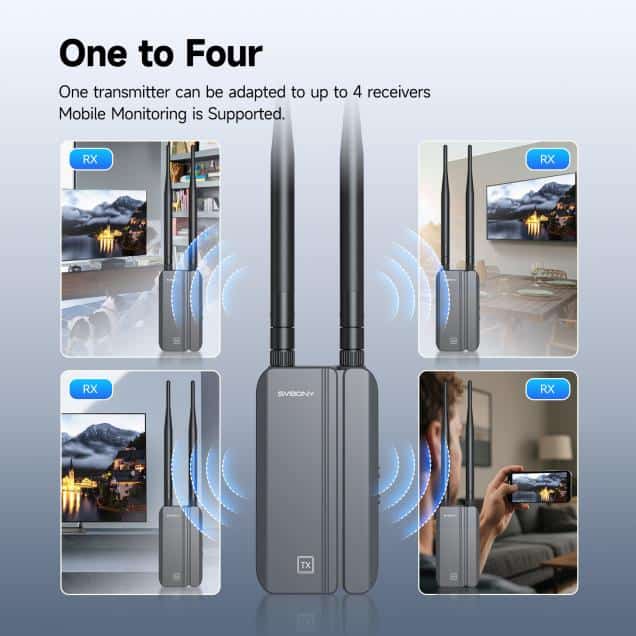
The ability to connect one transmitter to four receivers might sound like a technical specification, but its practical implications are profound. This capability transforms a simple video transmission system into a whole-home entertainment network.
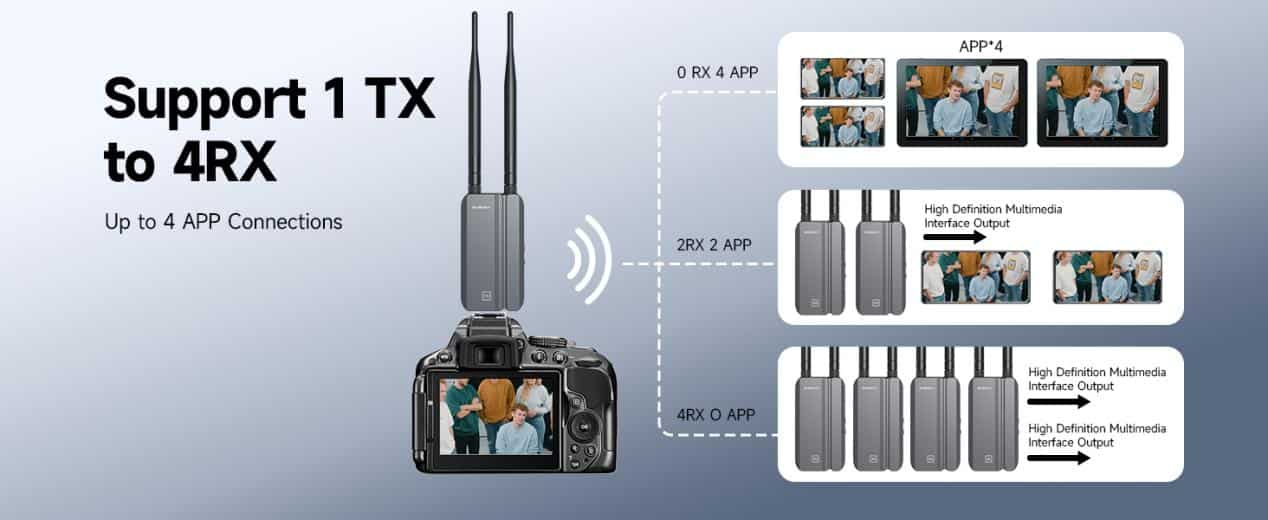
Consider these scenarios:
- A single gaming console streaming to both the living room TV and a bedroom display
- A security camera feed appearing simultaneously on multiple monitors
- A presentation extending from a laptop to displays throughout a conference space
- A set-top box sharing live TV to every screen in the house
This isn’t just convenience—it’s a fundamental shift in how we think about video distribution. The HDMI multi-room streaming capability means your content follows you, rather than tying you to a single location.
Compatibility: The Universal Language of Video
What good is a multi-room system if it only works with certain devices? True flexibility requires broad compatibility—the ability to connect with the equipment you already own, rather than forcing you into a new ecosystem.
The SVBONY TansAir3 understands this deeply. Its compatibility spans the full spectrum of modern video sources and displays:
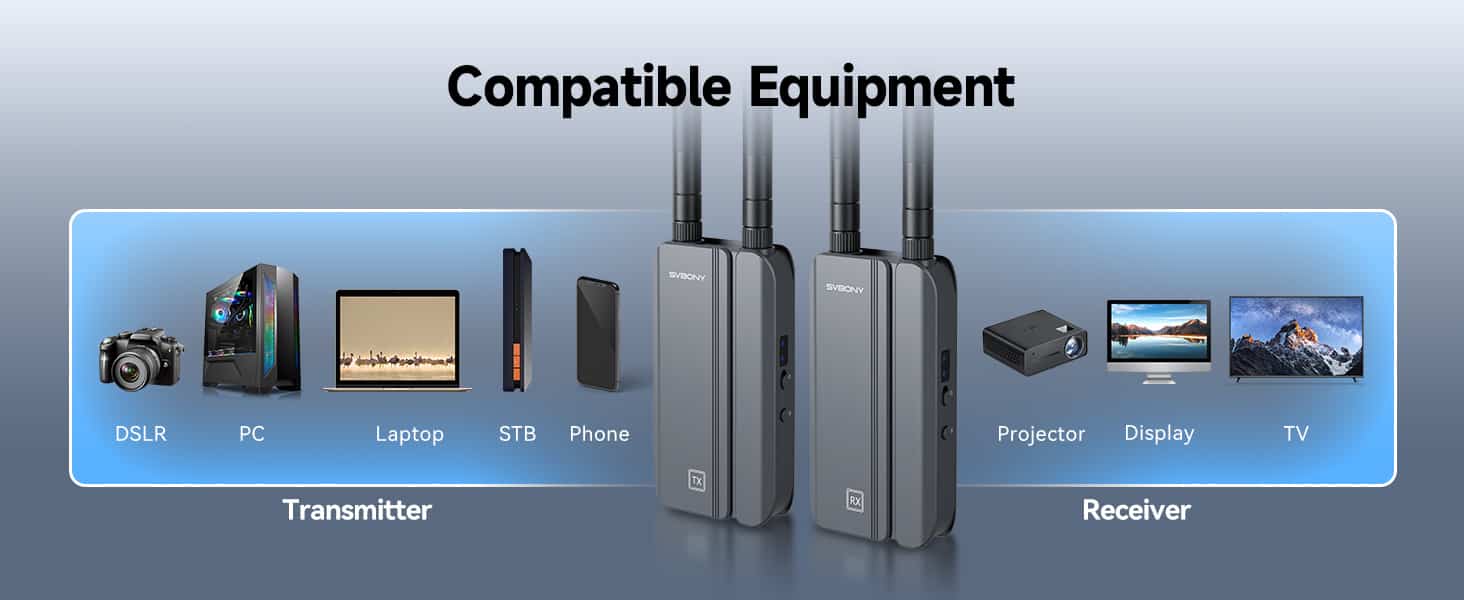
Transmitter Compatibility:
- DSLRs and cameras for photographers and content creators
- PCs and laptops for work and entertainment
- Set-top boxes for television and streaming services
- Smartphones for quick content sharing
- Gaming consoles for immersive gameplay
Receiver Connectivity:
- Projectors for presentations and home theaters
- Displays for offices and control rooms
- Televisions for everyday viewing
This extensive compatibility means the system doesn’t just add functionality—it unifies your existing technology into a cohesive, flexible network.
How It Works: The Technology Behind the Magic
The ability to maintain low latency HDMI connections across multiple receivers simultaneously requires sophisticated engineering. The system employs several key technologies to ensure reliable performance:
Intelligent Signal Distribution
Rather than simply repeating the same signal, the transmitter intelligently manages bandwidth allocation to each receiver based on distance and interference levels. This ensures that all connected displays receive optimal video quality, regardless of how many are active.
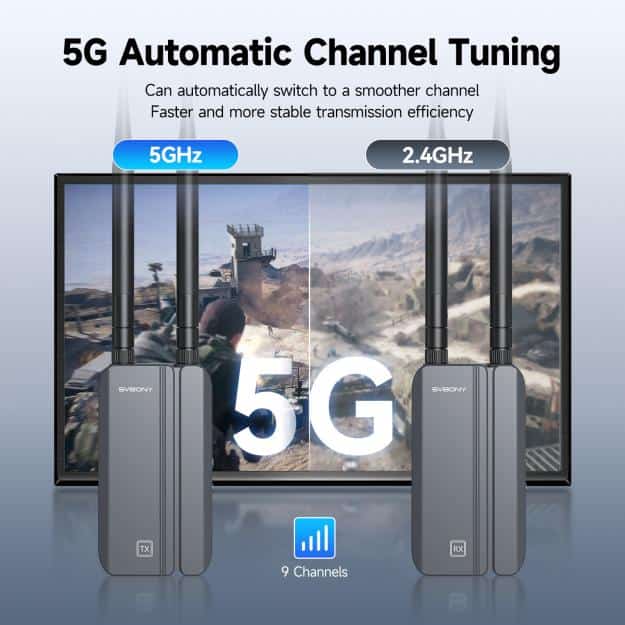
5GHz HDMI Transmission
Using the cleaner 5GHz band provides the necessary bandwidth for multiple high-definition streams. This wireless HDMI approach avoids the congestion common in 2.4GHz environments, ensuring stable connections even when transmitting to four displays simultaneously.
Dynamic Synchronization
Maintaining perfect synchronization across multiple displays is crucial, especially for applications like whole-home audio-visual experiences or professional presentations. The system automatically adjusts for any timing differences, creating a seamless viewing experience throughout your space.
Real-World Applications: Beyond Technical Specifications
The Modern Household
Imagine hosting a sports viewing party where the game appears in perfect sync on the living room TV, patio display, and kitchen screen—all from a single source. Or a family movie night that can continue uninterrupted as people move between rooms. This is the practical reality of HDMI multi-room streaming.
Professional Environments
In business settings, the applications are equally compelling. HDMI for conference room setups becomes dramatically simpler when one presentation can appear on the main screen, secondary displays, and recording equipment simultaneously. Training sessions can reach multiple rooms without complex wiring or signal degradation.
Content Creation Workflows
For creators, the ability to monitor footage on multiple displays while maintaining low latency HDMI performance transforms workflows. A videographer can see the same feed on a field monitor, client display, and recording station without running cables across a set.
The Setup Simplicity: Plug and Play HDMI at Scale
One might expect that connecting multiple receivers would require technical expertise, but the system maintains the plug and play HDMI simplicity that makes modern technology accessible. The pairing process is automatic—once the transmitter is connected to your video source, it automatically detects and connects to receivers within range.
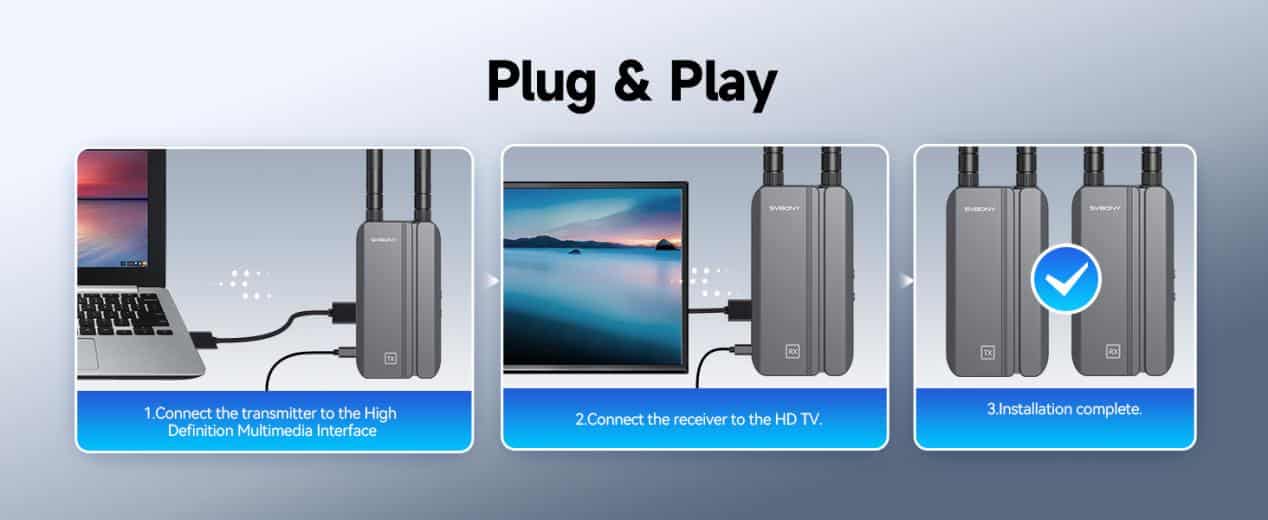
This approach means that expanding your system is as simple as adding another receiver—no complex configuration or technical knowledge required. The system grows with your needs, from a simple one-to-one setup to a comprehensive whole-home solution.
Technical Considerations for Optimal Performance
While the system handles much of the complexity automatically, understanding a few principles can help optimize your setup:
Placement Strategy
Receivers should be positioned to minimize physical obstructions and interference sources. While the system’s 5GHz HDMI transmission penetrates walls effectively, thoughtful placement ensures consistent performance across all connected displays.
Bandwidth Management
The system automatically allocates bandwidth based on the resolution requirements of each connected display. For optimal performance, consider the resolution needs of each application—a computer monitor may benefit from higher settings than a secondary informational display.
Power Considerations
The flexibility of multiple receivers means considering power sources throughout your space. The system’s dual power options (NP-F battery and Type-C) provide installation flexibility for both permanent and temporary setups.
Comparing Approaches: Why This Matters
Traditional solutions for multi-room video distribution often involved complex wiring, expensive matrix switches, or compromised quality through signal splitters. The wireless HDMI approach offers several distinct advantages:
Cost Effectiveness
Compared to wired solutions requiring professional installation, the wireless approach provides similar functionality at a fraction of the cost and complexity.
Flexibility
Wired systems are permanent—wireless systems can be reconfigured as needs change. A receiver can move from bedroom to patio to office as required.
Scalability
Starting with a single transmitter-receiver pair and expanding to full one-to-four capability allows the system to grow with your needs and budget.
Looking Forward: The Evolution of Video Distribution
As our homes and workplaces become increasingly connected, the ability to seamlessly share video between spaces will transition from luxury to expectation. The technology demonstrated in systems like the TansAir3 represents an important step toward truly integrated visual environments.
Future developments may include even more sophisticated management capabilities, enhanced quality adaptation for different display types, and deeper integration with smart home ecosystems.
Conclusion: The Invisible Network
The most powerful technology often works quietly in the background, enhancing our experiences without demanding attention. The ability to connect one transmitter to four receivers represents more than a technical specification—it’s a fundamental reimagining of how video moves through our spaces.
Whether you’re sharing entertainment throughout your home, extending presentations across a workplace, or monitoring content across multiple displays, this technology provides the flexibility to make video follow your life, rather than constraining it.
The next time you watch content on a single screen, consider the possibilities that open when that content can effortlessly appear anywhere you need it—simultaneously, seamlessly, and without compromise.