










Igeekphone News August 4, 2026 – Lenovo’s upcoming Googlebook 15 laptop has surfaced in a new set of leaked renders, offering an early look at what could become one of the first notebooks to ship with Google’s new Aluminium operating system. The images, shared by technology publication Digital Citizen, provide insights into both the hardware design and Google’s broader strategy for the next generation of AI-powered computing.
According to the report, the Googlebook 15 is expected to launch later this year as part of Google’s expanding Googlebook ecosystem.
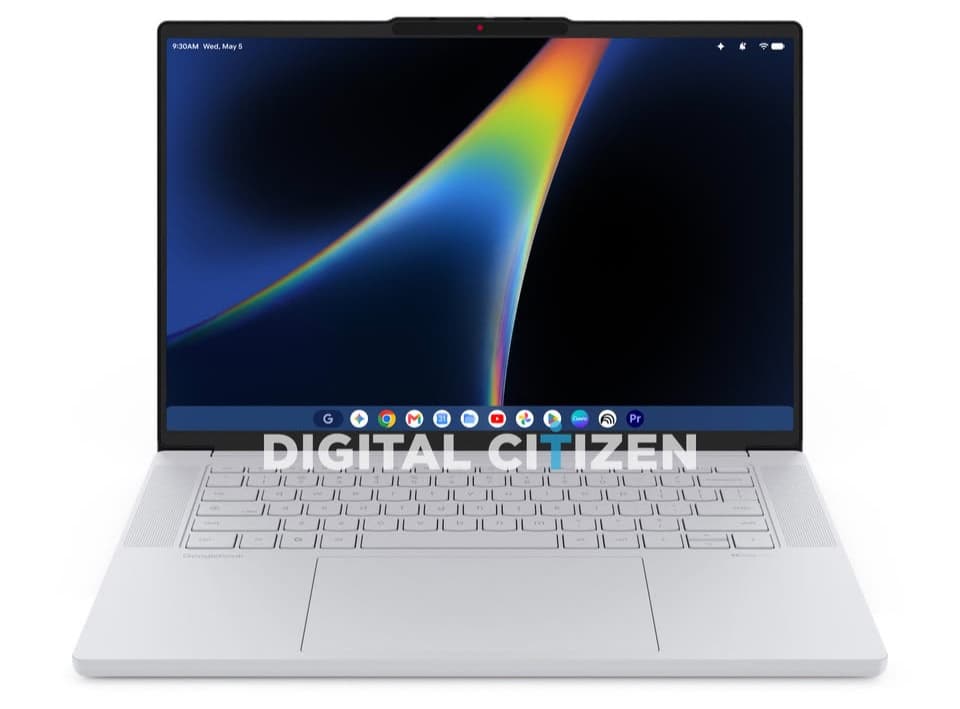
Familiar Lenovo Design with Premium Aluminum Build
The leaked renders show that the Googlebook 15 closely follows Lenovo’s established laptop design language. The notebook features a 15-inch display housed in a sandblasted aluminum chassis, giving it a clean, premium appearance while maintaining the understated aesthetic commonly associated with Lenovo’s productivity-focused devices.
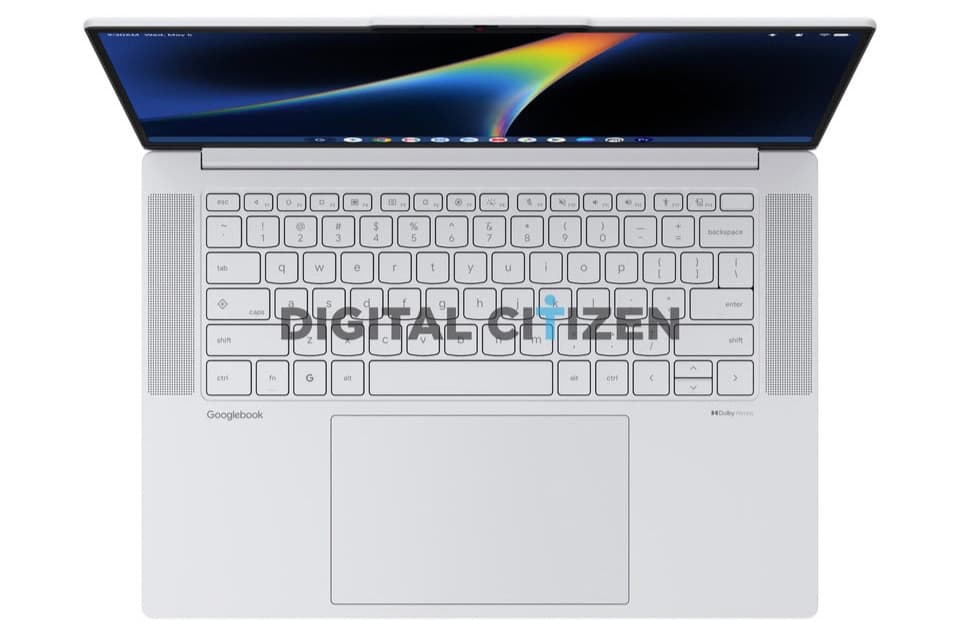
The keyboard layout introduces one notable change: a dedicated Google key featuring the company’s iconic “G” logo. Positioned similarly to the Windows key found on traditional PCs, the button is expected to serve as the primary shortcut for Google-specific system functions and AI-powered features.
Flanking the keyboard are dual speaker grilles, suggesting an emphasis on multimedia performance and improved audio quality.
Wide Range of Connectivity
The leaked images also reveal a versatile selection of ports designed to meet the needs of both consumers and professionals.
Left side:
- HDMI port
- USB-C (or Thunderbolt) port
- 3.5mm headphone jack
Right side:
- USB-C port
- USB Type-A port
- SD card reader (or a similar memory card slot)
This combination offers compatibility with both modern USB-C peripherals and legacy accessories, reducing the need for external adapters.
Powered by Intel’s Upcoming Wildcat Lake Platform
Earlier industry reports suggest that Google’s first generation of Googlebook devices may be powered by Intel’s upcoming Core Series 300 “Wildcat Lake” processors.
The new x86 platform is rumored to feature a 6-core hybrid architecture, consisting of:
- 2 Cougar Cove performance cores
- 4 Darkmont low-power efficiency cores
This configuration is expected to balance strong everyday performance with improved power efficiency, making the platform well suited for productivity workloads, AI-assisted computing, and extended battery life.
Aluminium OS: Google’s Next Desktop Platform
Perhaps the most significant aspect of the Googlebook 15 is its software.
The notebook is expected to ship with Google’s Aluminium operating system, an internal codename for a new desktop platform reportedly under development. According to previous reports, Aluminium represents Google’s effort to unify its mobile and desktop ecosystems into a more seamless computing experience.
The operating system is said to focus on several key areas:
- Native support for Android applications
- Deep AI integration throughout the operating system
- Improved desktop productivity
- Closer integration between Android phones and laptops
- A unified cross-device experience
If successful, Aluminium could represent Google’s most ambitious desktop software initiative since ChromeOS, positioning the company to compete more directly with Microsoft Windows and Apple’s macOS.
Googlebook Lineup Expected to Expand
Previous reports indicate that Google plans to introduce at least eight Googlebook devices before the end of 2026. These products are expected to include both traditional clamshell laptops and convertible 2-in-1 models.
Notably, renders of Lenovo’s first Googlebook convertible device were leaked earlier, suggesting that Lenovo may play a significant role as one of Google’s primary hardware partners during the platform’s initial rollout.
What This Means for the Laptop Market
The arrival of the Googlebook lineup could mark a major shift in Google’s hardware strategy. Rather than relying solely on ChromeOS, the company appears to be developing a more capable desktop operating system designed for AI-driven workflows and broader application compatibility.
With Microsoft rapidly expanding Windows Copilot features and Apple continuing to enhance macOS with on-device AI capabilities, Google’s Aluminium platform could become the company’s answer to the next generation of intelligent personal computing.
While Google has yet to officially announce the Googlebook 15 or Aluminium OS, the newly leaked renders provide one of the clearest looks yet at the company’s future laptop ambitions. More details, including official specifications, pricing, and launch dates, are expected as Google’s anticipated autumn product announcements approach.