









A small RC airplane usually makes its appeal through portability and straightforward flying. The KFPLAN Z68 rc airplane takes a more ambitious approach. With a 303mm wingspan, two brushless motors, six-channel controls, and a built-in gyroscope, this compact fixed-wing aircraft is designed for pilots who want to explore aerobatic manoeuvres without transporting a full-size RC model.
Its most unusual selling point is vertical flight. The Z68 is advertised as capable of vertical ascents, inverted flight, rolls, and other tricks, giving it a broader range of flying possibilities than a basic trainer plane. It also supports conventional forward flight, so pilots can switch between ordinary circuits and more demanding manoeuvres as their skills develop.
If you enjoy unusual RC aircraft that go beyond conventional forward flight, check out our ZHRC Z100 Hover Fighter Glider review for another model designed around distinctive flight manoeuvres.
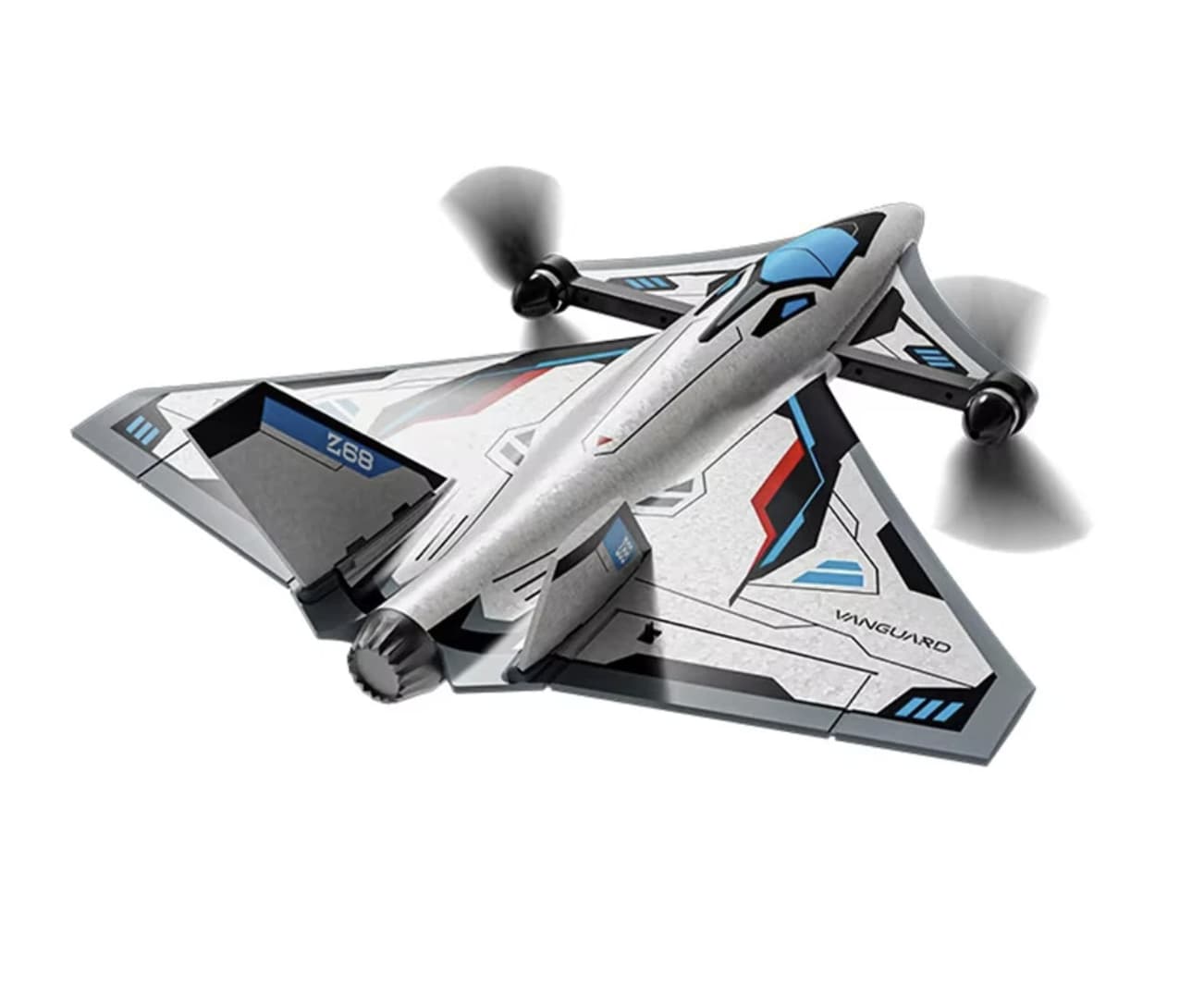
But does a small airframe offer enough control and endurance to make these features worthwhile? Here is what to know about the KFPLAN Z68 before buying it.
KFPLAN Z68 Specifications at a Glance
| Feature | Specification |
|---|---|
| Model | KFPLAN Z68 |
| Aircraft type | Fixed-wing RC airplane |
| Wingspan | 303mm |
| Fuselage length | 370mm |
| Height | Approximately 80mm |
| Airframe material | EPP foam |
| Control system | 2.4GHz, 6-channel |
| Motors | Dual brushless motors |
| Stabilisation | Built-in gyroscope |
| Flight speed | Advertised at approximately 18m/s |
| Control range | Advertised at approximately 300m |
| Aircraft battery | 7.4V, 700mAh |
| Advertised horizontal flight time | Up to approximately 18 minutes |
| Advertised vertical flight time | Approximately 13 minutes |
| Charging time | Approximately 90 minutes |
| Flight features | Vertical flight, inverted flight, rolls and aerobatic manoeuvres |
Figures are based on the seller’s specifications. Actual flight performance depends on battery condition, weather, pilot input, and flying style.
A Miniature Airframe Built Around Aerobatics
The Z68 measures just 303mm from wingtip to wingtip, making it much smaller than many conventional fixed-wing RC airplanes. Its compact dimensions are useful for storage and transport, but the real purpose of this design is to combine a small footprint with a more ambitious flight-control system.
The aircraft uses a fixed-wing layout rather than the multirotor arrangement found in typical camera drones. Its flying experience therefore centres on forward movement, aerodynamic lift, coordinated control, and maintaining the correct orientation.
The advertised ability to perform vertical and inverted flight adds another dimension. Instead of simply flying laps around an open field, pilots can work toward more technical manoeuvres that require accurate throttle and control inputs.
However, a small aircraft should not automatically be considered easy to fly. Its limited size can make orientation harder to judge at a distance, and aerobatic manoeuvres leave less room for correcting mistakes. New pilots should first become comfortable with basic turns, level flight, and controlled landings before attempting advanced tricks.
Dual Brushless Motors: The Power Behind the Z68
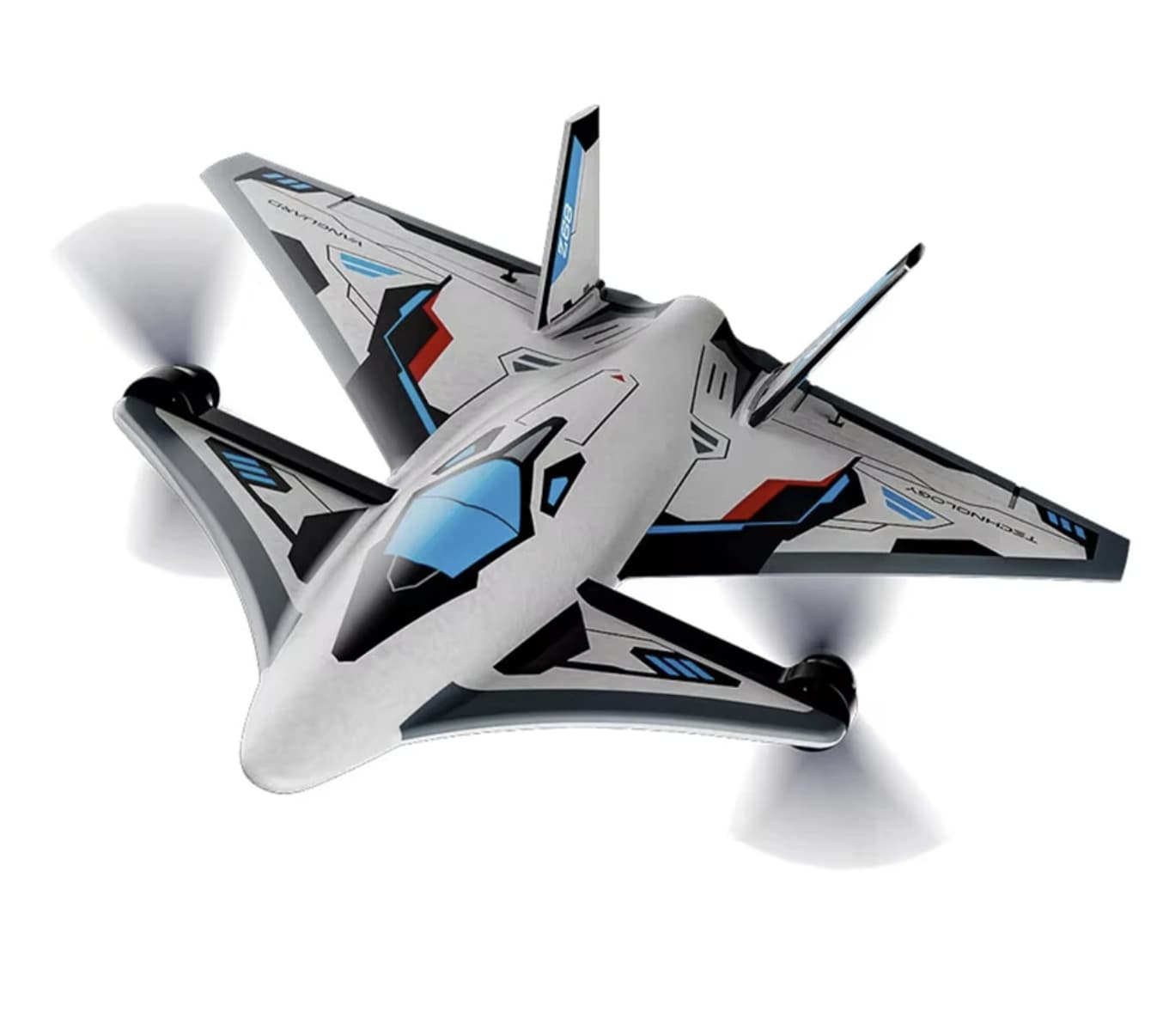
The KFPLAN Z68 uses two brushless motors to generate propulsion. Compared with a simple entry-level motor setup, this configuration is intended to provide the thrust needed for its advertised speed and aerobatic flight modes.
The seller lists a maximum flight speed of approximately 18m/s. That figure is a manufacturer specification rather than a guaranteed speed under every condition, but it indicates that the aircraft is designed for energetic flying rather than slow, purely recreational cruising.
Dual motors also make throttle management particularly important. Abrupt inputs can change the aircraft’s attitude quickly, especially when transitioning between level flight and vertical manoeuvres. Smooth, deliberate control is a better starting point than immediately pushing the model to its limits.
For buyers interested in aerobatics, the combination of two brushless motors and six-channel control is one of the main reasons to consider this aircraft. Still, motor power alone does not determine how well a plane performs. Correct setup, battery condition, centre of gravity, and the pilot’s technique all contribute to the result.
Six-Channel Control and Built-In Gyroscope
A six-channel control system gives the Z68 more control options than a basic two- or three-channel RC aircraft. The listing associates this setup with vertical flight, inverted manoeuvres, rolls, and other aerobatic functions.
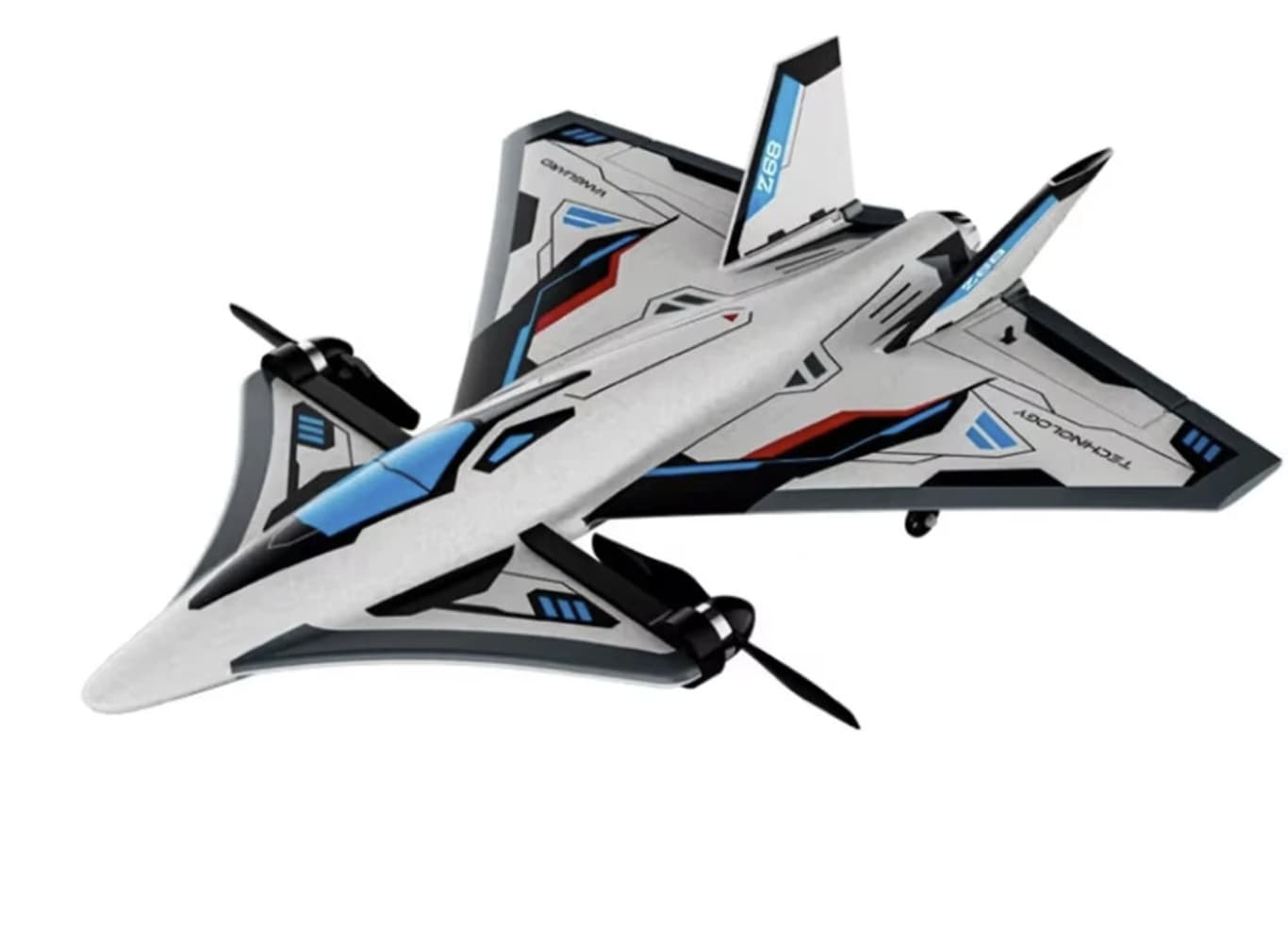
The built-in gyroscope is another important component. Gyroscopic stabilisation can help the aircraft respond more consistently by counteracting certain unwanted movements. This can make handling more manageable, but it does not eliminate the need for pilot input or guarantee a safe recovery from every difficult manoeuvre.
The Z68 also advertises two speed modes and altitude hold. These features may help pilots adapt the aircraft’s response to different flying situations, although their effectiveness depends on the actual control implementation and conditions.
Before the first flight, read the manual and learn how the transmitter controls map to the aircraft’s functions. Check the control surfaces, motor response, battery connection, and stabilisation behaviour while the model is safely on the ground. Never test the propellers near your face or hands.
Vertical Flight and Aerobatic Tricks: What Should You Expect?
Vertical flight is the headline feature of the KFPLAN Z68. The aircraft is advertised as supporting vertical ascents, inverted flight, rolls, and tumbling manoeuvres.
These features are appealing to pilots who find ordinary circuits too predictable. A compact aerobatic plane can provide a more varied flying experience, with opportunities to practise transitions and control coordination in an open flying area.
There are practical limits, however. Vertical manoeuvres place different demands on propulsion and battery power than steady horizontal flight. The listing estimates approximately 13 minutes of vertical flight compared with up to 18 minutes in horizontal flight, illustrating why aggressive flying can shorten a session.
The best approach is to build up gradually:
- Start with straight, level flight and gentle turns.
- Learn to recognise the aircraft’s orientation from different viewing angles.
- Practise maintaining control before attempting inverted or vertical manoeuvres.
- Leave plenty of open space for recovery and landing.
- Stop flying when the battery begins to lose performance rather than waiting for power to drop sharply.
The advertised manoeuvres should be treated as capabilities to explore with practice, not guaranteed results for a first-time pilot.
EPP Foam Construction for Everyday Flying
The Z68 uses an EPP foam airframe. This material is commonly used in lightweight RC models because it offers a balance of low weight and flexibility.
Keeping the airframe light is particularly important for a small aircraft. Excess weight can affect acceleration, handling, and flight duration, while a flexible foam structure can be more forgiving of minor bumps than a brittle construction.
That does not make the plane crash-proof. The nose, wings, control surfaces, motor mounts, and propellers can still be damaged by hard impacts. Inspect the airframe after a rough landing and repair any damage before flying again.
One detail worth noting is that glue is not included, according to the seller’s note. Buyers should therefore check the assembly instructions and prepare any recommended repair or assembly materials before the first flight.
Battery Life, Charging, and Control Range
The advertised aircraft battery is a 7.4V, 700mAh unit. The seller estimates up to approximately 18 minutes of horizontal flight and around 13 minutes of vertical flight, with charging taking about 90 minutes.
These numbers should be viewed as estimates rather than fixed results. Frequent throttle changes, high-power manoeuvres, wind, and battery age can all affect flight time. Pilots planning a longer session should check which battery package they are ordering and whether compatible replacement batteries are available.
The advertised control range is approximately 300 metres. That does not mean every flight should take place at the edge of that distance. Keep the plane within a comfortable visual range, particularly while learning, and avoid flying where trees, buildings, or other obstacles could obstruct the signal or the pilot’s view.
The transmitter requires four AA batteries, which are listed as not included. Remember to account for these when preparing the aircraft.
Hand Launch or Ground Takeoff?
The product listing describes two launch options: hand launching and ground takeoff. This flexibility can be useful when a suitable runway is unavailable, but the best method depends on the surface, wind, setup, and instructions supplied with the aircraft.
A ground launch requires a clear, reasonably smooth stretch of ground. Grass that is too long or uneven may interfere with acceleration. A hand launch, meanwhile, requires the correct technique and a clear area in front of the aircraft.
Do not improvise a launch method if the manual specifies a particular procedure. Confirm that the aircraft is correctly assembled and that the controls and motor operate as expected before attempting takeoff.
For either method, choose an open flying field away from roads, people, buildings, power lines, and wildlife. Avoid strong or gusty winds, which can be especially challenging for a lightweight model.
What Is Included in the Package?
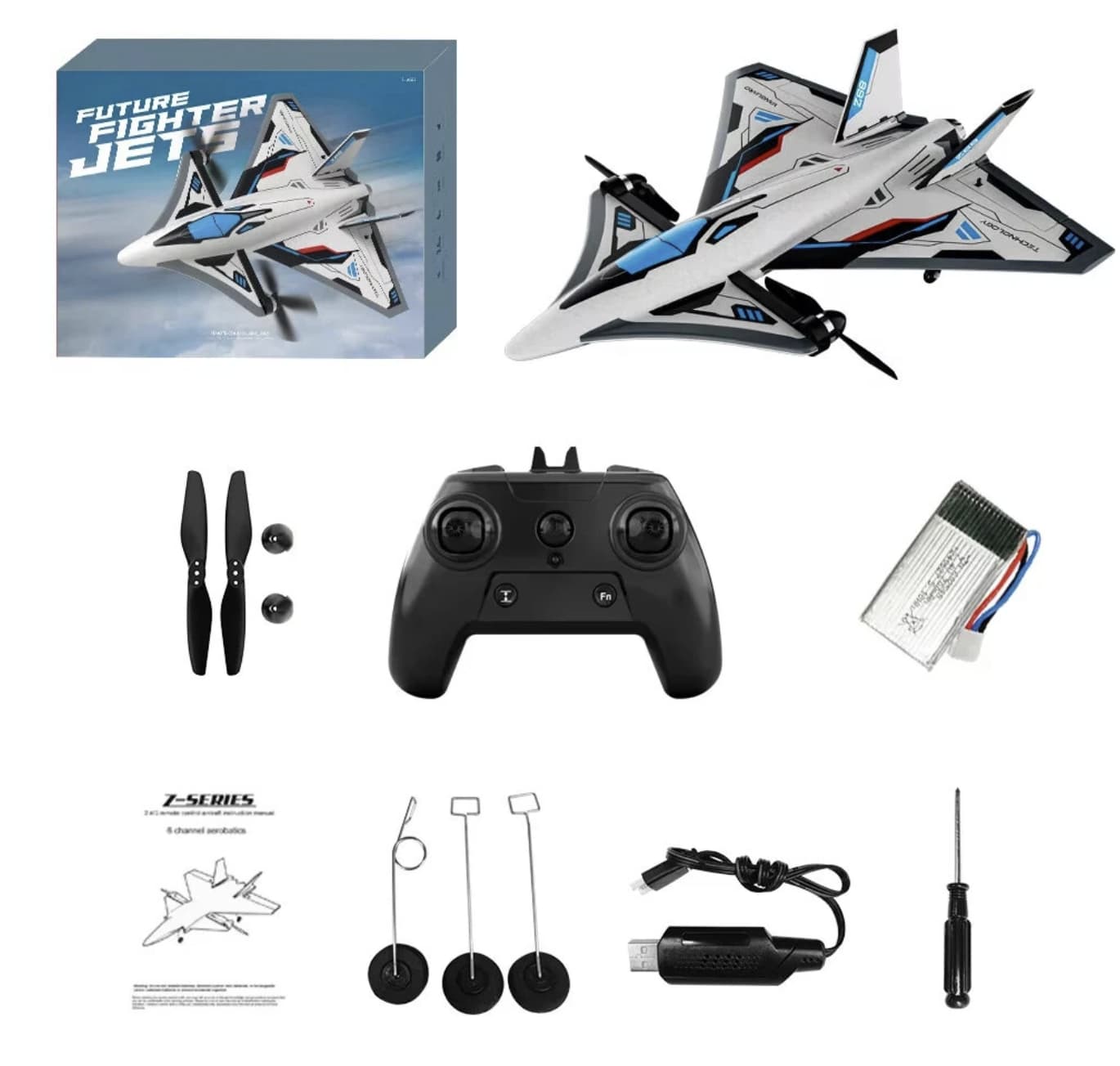
The listing describes a ready-to-fly package containing the KFPLAN Z68 airplane, a remote controller, spare fan blades, a charging cable, a screwdriver, and an instruction manual. The battery configuration can vary: the product page offers options labelled for two or three batteries.
Check the selected package carefully before checkout rather than assuming every listing image represents the exact contents of your order. The four AA transmitter batteries are not included, and glue is also excluded.
It is worth checking the battery quantity, spare parts, and any assembly requirements if you want to fly soon after delivery. Having the correct supplies ready can prevent an otherwise complete kit from being grounded while you wait for additional components.
Who Should Consider the KFPLAN Z68?
The Z68 is best suited to RC enthusiasts who want a compact aircraft with aerobatic ambitions. Its small wingspan makes it convenient to carry, while the dual brushless motors and six-channel system give it more advanced features than a basic trainer.
It may appeal to:
- Experienced RC pilots looking for a small model to practise aerobatic manoeuvres.
- Hobbyists with limited storage space who want a compact fixed-wing aircraft.
- Pilots who enjoy technical flying rather than only making slow, level circuits.
- Buyers seeking a ready-to-fly kit who are comfortable checking the package contents and completing basic setup.
It is less suitable for anyone expecting a completely effortless first flight. Although stabilisation may assist with handling, aerobatic capability still demands practice, appropriate flying conditions, and enough room to recover from errors. A conventional beginner trainer may be a better first aircraft for someone who has never flown an RC plane.
Final Verdict: A Small RC Plane With Ambitious Flight Features
KFPLAN Z68 combines a 303mm wingspan with dual brushless motors, six-channel control, a built-in gyroscope, and advertised support for vertical and inverted flight. Its compact EPP airframe makes it convenient to transport, while the different flight modes offer room to develop more advanced skills.
Its main limitations are equally important: flight time is relatively short, the advertised speed and range are not guaranteed in real-world conditions, and the aircraft’s small size does not remove the challenges of aerobatic flying. Buyers should also remember that transmitter batteries and glue are not included, and that the number of supplied flight batteries depends on the selected package.
For hobbyists who already understand basic fixed-wing control and want a small model with more ambitious manoeuvre options, the KFPLAN Z68 is an interesting candidate. Beginners should take their time with setup and basic flight practice before exploring its vertical-flight capabilities.