









Large-capacity disposable vape devices are increasingly built around more than just battery size and advertised puff counts. Tank visibility, coil configuration, liquid management, and device maintenance have also become important parts of product design. NEXA Ultra 3 brings these elements together in a device featuring a transparent tank, a dual-coil heating system, and an automatic liquid-sealing function.
According to NEXA’s official product information, the Ultra 3 combines a 1,000mAh rechargeable battery, 25W dual-coil output, and a 35mL e-liquid capacity. It also carries two operating modes and an advertised maximum of 100,000 or 60,000 puffs, depending on the configuration.
These headline specifications tell only part of the story. The more interesting questions concern how the visible tank, airflow structure, and automatic sealing system are intended to work—and what their limitations might be.
NEXA Ultra 3 at a Glance
The official product page lists the following specifications:
| Specification | NEXA Ultra 3 |
|---|---|
| Product type | Disposable vape |
| Advertised puff count | Up to 100,000 / 60,000 |
| E-liquid capacity | 35mL |
| Battery capacity | 1,000mAh |
| Maximum output | 25W |
| Coil configuration | Dual mesh |
| Coil resistance | 0.8Ω |
| Airflow | Straight airflow design |
| Charging | USB Type-C |
| Nicotine concentration | 50mg/mL |
| Special feature | JUICY GUARD automatic sealing |
| Operating modes | Dual Mode |
Specifications are based on NEXA’s published product information. Actual performance and available configurations may vary by market.
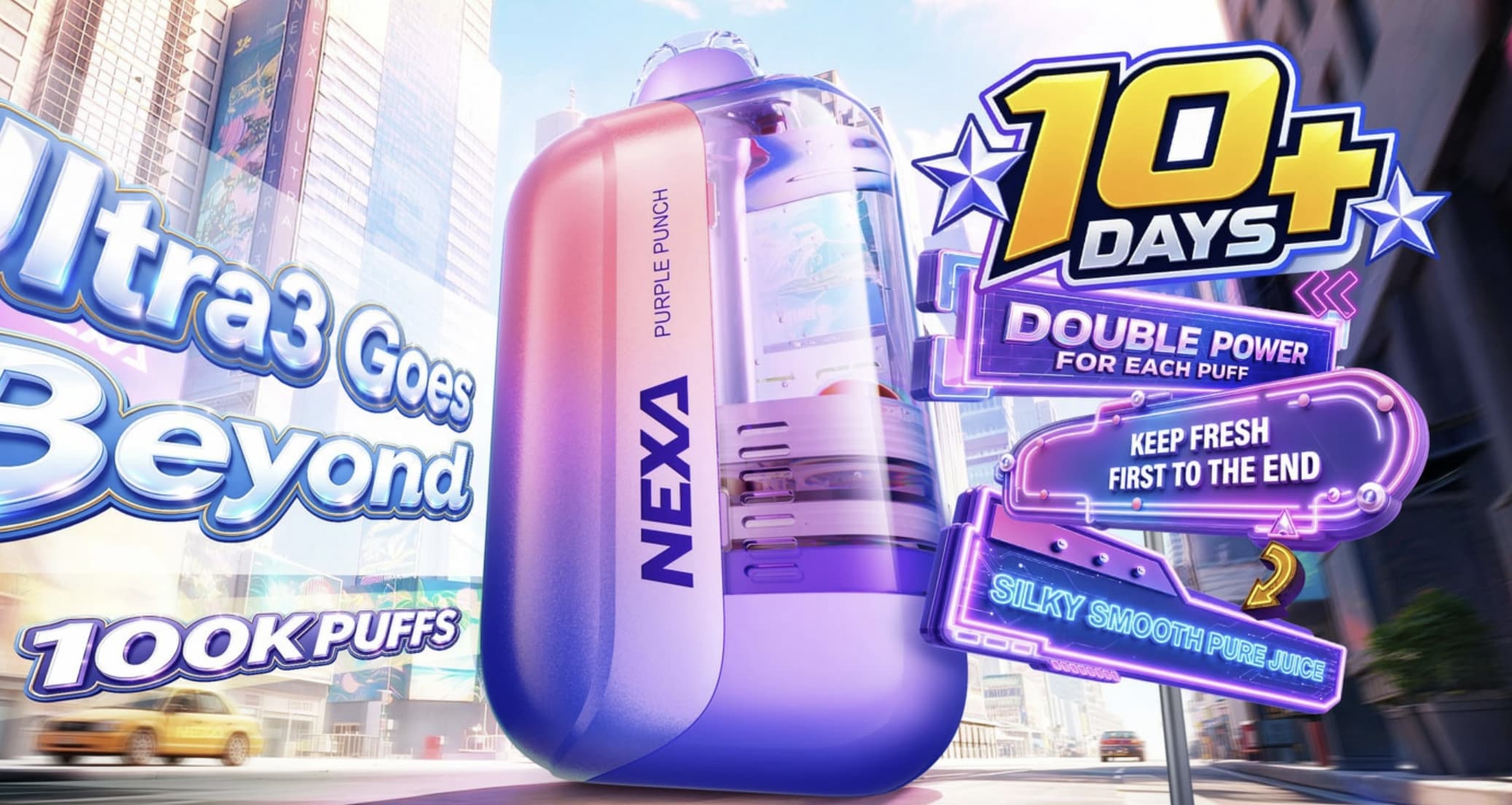
1. A Transparent Tank That Makes Liquid Levels Easier to Check
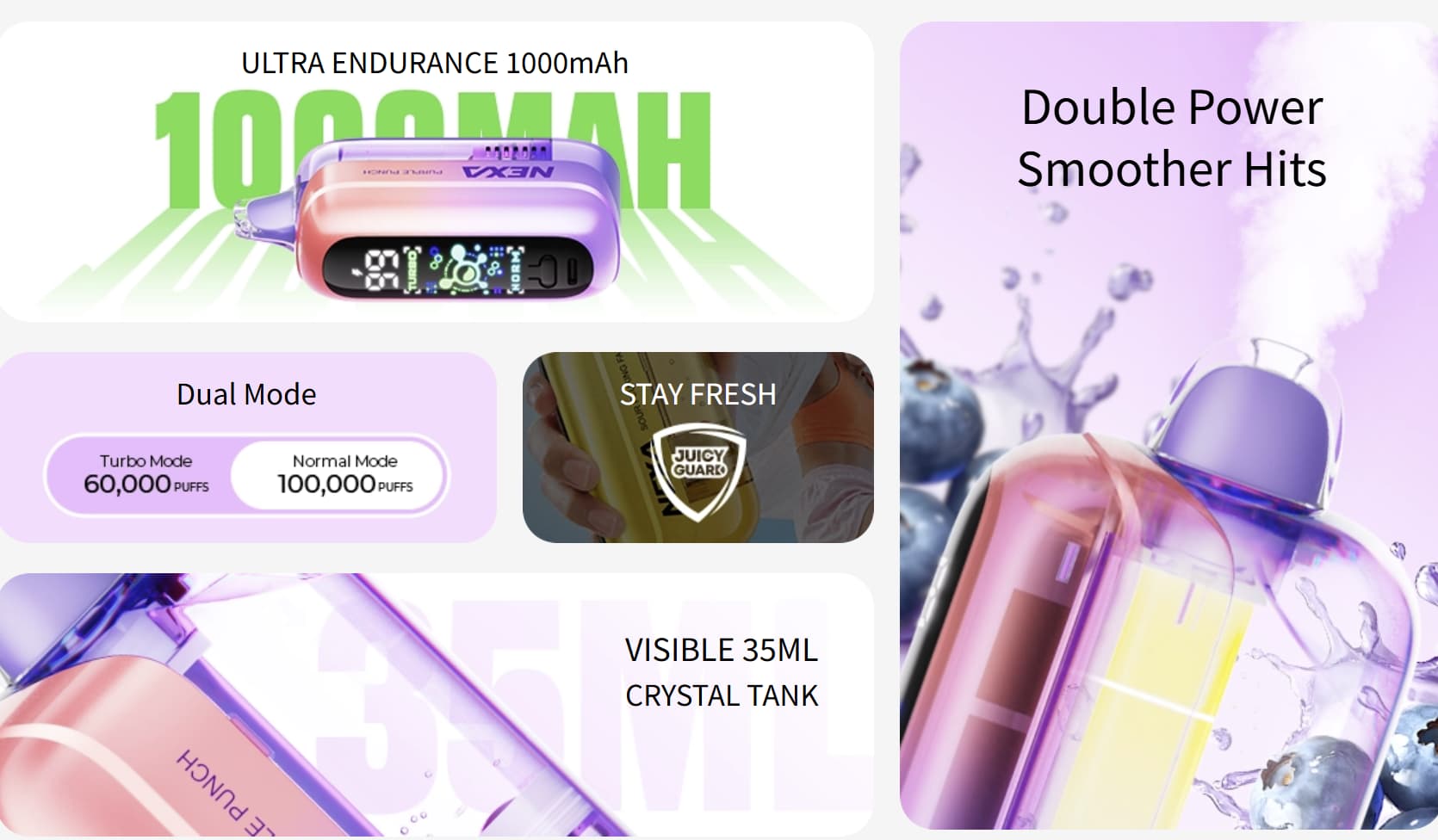
One of the most noticeable design elements of the NEXA Ultra 3 is its visible 35mL Crystal Tank.
Traditional disposable devices with concealed liquid reservoirs can make it difficult to estimate how much e-liquid remains. Users may have to rely on indicators or changes in performance rather than directly seeing the liquid level.
The Ultra 3 takes a more visible approach. Its transparent reservoir allows the remaining liquid to be checked visually, making it easier to recognize when the device is approaching the end of its usable life.
This design also makes the tank structure part of the product’s appearance rather than hiding it inside the housing.
However, visibility should not be confused with a guarantee of consistent performance. A visible reservoir does not establish how efficiently the liquid is consumed, how long the coil will remain functional, or whether the advertised maximum puff count will be reached.
NEXA has used transparent liquid-reservoir designs in earlier models as well, and our comparison of the NEXA Ultra II and original NEXA Ultra 50K explains how the tank design has evolved.
2. Dual Mesh Coils and the 25W Heating System
The NEXA Ultra 3 uses a dual-mesh coil configuration with a published resistance of 0.8Ω and a maximum output of 25W.
Mesh heating elements use a metal mesh structure rather than a conventional wire-style heating element. This design provides a larger heating surface, while the dual-coil arrangement is intended to support the device’s two-coil operating system.
NEXA describes the setup as a way to deliver fuller vapor and richer flavor. Those are manufacturer claims, however, and the specifications alone cannot establish flavor consistency or coil lifespan.
The 25W rating also needs context. It identifies the device’s stated maximum output, not necessarily the power delivered continuously in every operating mode.
For readers comparing devices, the combination of resistance, output, airflow, and liquid formulation is more informative than looking at wattage alone.
3. JUICY GUARD: What Does Automatic Sealing Do?
Another feature that distinguishes the NEXA Ultra 3 is its JUICY GUARD system.
According to NEXA, the automatic sealing mechanism activates after approximately 10 minutes of use to help preserve e-liquid freshness. The idea is to reduce the amount of time the liquid remains exposed to the heating system when the device is not being used.
This is particularly relevant to high-capacity products, where a larger reservoir may remain in use for an extended period.
The important distinction is between a design feature and a verified result. Automatic sealing is intended to manage the liquid system, but it should not be interpreted as proof that leakage, oxidation, or flavor deterioration can never occur.
Users should still follow the manufacturer’s instructions and avoid using a device that shows signs of physical damage or liquid leakage.
For additional background on NEXA’s liquid-preservation approach, see our NEXA Ultra II Juicy Lock longevity test, which examines the technology’s intended purpose and limitations.
4. Straight Airflow and the Dual-Mode Design
NEXA also highlights the Ultra 3’s straight airflow structure. Instead of emphasizing a complicated external adjustment system, the product description presents a direct airflow path intended to create a smoother draw.
Airflow design influences how air moves through a device and can affect draw resistance and the perceived density of the aerosol. The final result also depends on coil performance, power delivery, and other design factors.
The Ultra 3 includes two operating modes, giving the device a dual-mode configuration. NEXA markets this alongside its dual-coil system as a way to offer different operating experiences.
The official product page does not provide a complete technical breakdown of the exact power output or puff-count allocation for each mode. It is therefore better not to assume that the 100,000-puff and 60,000-puff figures correspond to particular modes without confirmation from the product manual.
5. Understanding the 100K and 60K Puff Ratings
The NEXA Ultra 3 is advertised with two puff-count figures: up to 100,000 and up to 60,000.
These are maximum manufacturer ratings rather than guaranteed results for every device or user. Puff totals can depend on draw duration, operating mode, power delivery, and testing conditions.
A higher advertised number does not automatically mean that a device will deliver a proportionally longer usable lifespan. The condition of the heating system, remaining liquid, battery, and other components also matters.
For a more meaningful comparison, look at the complete hardware configuration and the manufacturer’s testing explanation rather than treating the puff figure as a precise measure of everyday use.
6. Battery Capacity and USB Type-C Charging
The Ultra 3 is equipped with a 1,000mAh rechargeable battery and a USB Type-C charging connection.
Rechargeability allows the device’s battery to be replenished during its usable life, rather than making the product entirely dependent on the initial charge.
However, battery capacity alone does not establish how long the device will operate between charges. Actual runtime depends on power consumption, operating mode, usage patterns, and battery condition.
NEXA’s published specifications identify Type-C charging but do not provide a complete charging-time figure on the product page. Buyers should check the packaging or user documentation for the supported charging input and safety instructions.
Do not charge a device with a damaged casing, signs of liquid intrusion, or an unusually hot battery. Follow the manufacturer’s charging guidance and dispose of the product through an appropriate electronic-waste or battery collection program when it reaches the end of its life.
7. Available Flavor Combinations
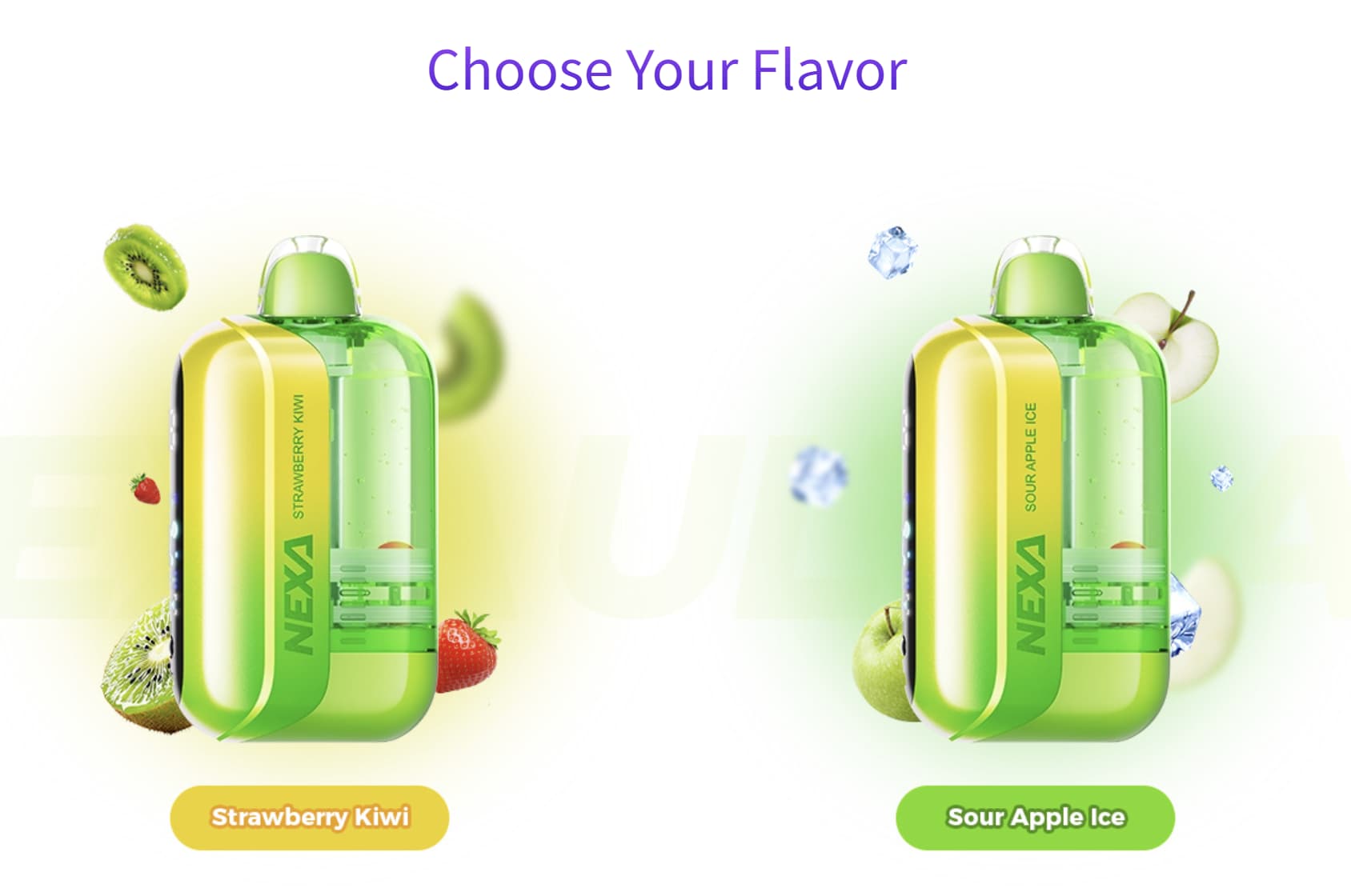
NEXA’s product page presents the Ultra 3 with several paired flavor options:
- Strawberry Kiwi and Sour Apple Ice
- Blue Razz Ice and Miami Mint
- Peach Ice and Purple Punch
- Winter Mint and Cool Mint
- Sour Fcuking FAB and Frozen Watermelon
The paired naming gives the range a different presentation from products that offer only a single flavor label.
Flavor descriptions are subjective, and the names do not establish the exact ingredients or sensory experience. Availability may also differ between retailers and regions.
8. An Important Specification Check Before Buying
There is one detail worth checking carefully: the published liquid-capacity information.
NEXA’s current Ultra 3 product page lists a 35mL capacity. However, a separate product-design award description refers to a 30mL transparent tank.
This difference means buyers should confirm the exact capacity printed on the packaging and supplied documentation for the particular version being offered. Product specifications can change between development materials, regional versions, and retail listings.
The same principle applies to puff-count labels, nicotine concentration, and charging specifications. Confirm the exact product version rather than relying on a general product-family description.
Is the NEXA Ultra 3 Different From Earlier NEXA Devices?
The Ultra 3’s published feature set places particular emphasis on its dual-coil arrangement, 25W output, automatic sealing, and transparent high-capacity tank.
Those features make it useful to compare the Ultra 3 with earlier products in the NEXA range. However, similar product names do not necessarily mean identical internal components or specifications.
When comparing models, check the exact model name, tank structure, battery capacity, resistance, and included components. Avoid assuming that a feature advertised for an earlier NEXA Ultra or Ultra II automatically applies to the Ultra 3.
Final Thoughts: A Design Built Around Visibility and Liquid Management
NEXA Ultra 3 combines several design ideas in one device: a transparent tank, dual mesh coils, straight airflow, two operating modes, and an automatic sealing feature.
Its most distinctive aspect is the way the visible reservoir and JUICY GUARD system are presented together. One makes the liquid level easier to inspect, while the other is intended to manage liquid freshness when the device is not in use.
The 1,000mAh battery, 25W output, and advertised puff figures complete the specification list, although real-world performance cannot be established from headline numbers alone.
For anyone researching the NEXA Ultra 3, the most useful approach is to verify the exact regional version, check the capacity discrepancy, and read the manufacturer’s instructions before drawing conclusions from its advertised specifications.