









Igeekphone News, November 6th: Recently, new Xiaomi devices with models 2512BPNDAC and 25128PNA1C have passed the 3C certification. Blogger @Digital Chat Station confirmed that they are the Xiaomi 17 Ultra.
The blogger revealed that the entire series of Xiaomi 17 Ultra supports 100W flash charging and UWB. The standard version 2512BPNDAC does not support Satcom, while the high-end version 25128PNA1C supports Tiantong satellite calls and Beidou satellite text messages. It is the first Snapdragon 8 Elite Gen5 super large cup flagship.
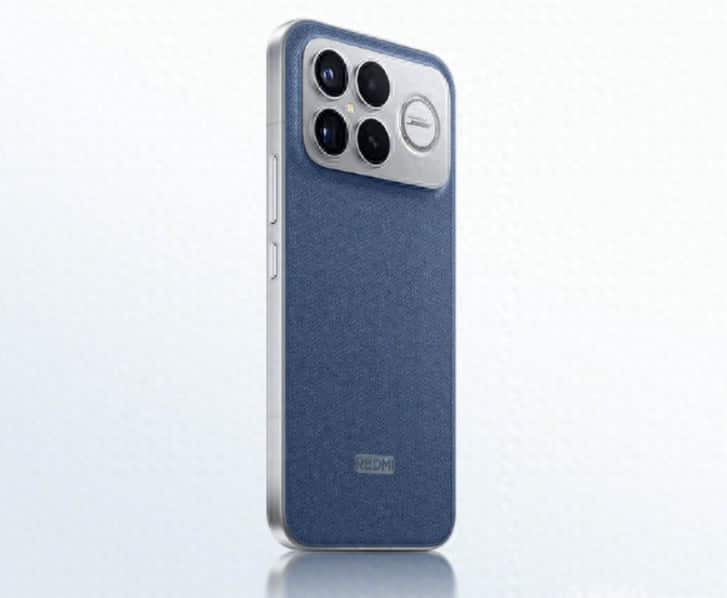
The blogger previously disclosed that the screen, processor, speaker, motor, fingerprint and other specifications of a certain manufacturer’s Snapdragon 8E5 (the fifth-generation Snapdragon 8 Ultra processor) super-large cup model directly refer to those of the large cup, and continue to use the large round ID design. The core advantage of the new model lies in its imaging. It is equipped with the industry’s largest sensor main camera and an exclusive new technology telephoto lens. The new solution also includes an external lens. It is expected to be the Xiaomi 17 Ultra.
According to a previous report by IGEEKPHONE, Lu Weibing, a partner, president, president of the mobile phone department and general manager of the Xiaomi brand of Xiaomi Group, confirmed that the Xiaomi 17 series will not only have a Pro Max version, but also an Ultra version in the future. It has been reported that the Xiaomi 17 Ultra has tested a multi-spectrum sensor and a zoom flash. The super-large cup features a new physical zoom feature exclusively and will focus on the imaging configuration.
With the launch of Xiaomi’s car, more and more of Xiaomi’s products have begun to support UWB technology. For instance, the Xiaomi 15S Pro phone enables the Xiaomi YU7 car to unlock without any contact, eliminating the need to control the car key. It also supports the automatic opening of the trunk three seconds before standing. In addition, the Xiaomi 15S Pro has significantly enhanced its spatial perception capability through UWB, accurately measuring the distance between devices. It can also achieve automatic sensing at rail transit turnstiles, eliminating the need for scanning codes or swiping cards, and ensuring smooth and seamless payment.