









The differences in the durability of electronic cigarette products stem fundamentally from the compatibility between the design logic and the usage scenarios. There are significant differences in the “puff tolerance” aspect between disposable electronic cigarettes and those with replaceable cartridges. Scientific selection should be made based on specific usage needs.
Disposable E-cigarettes: A Convenient Short-Term Solution
The design of these products is intended to offer a portable experience of “use and discard immediately”. The capacity of the built-in battery and the oil storage capacity of the cartridge are fixed in a certain ratio. Generally, a single device can support 200-500 puffs of smoking, depending on the user’s smoking frequency and the duration per puff. Taking mainstream products on the market as an example, the capacity of the cartridge for a single disposable e-cigarette is approximately 1.5-3 ml, combined with a 300-500 mAh battery. Under a moderate usage intensity of 100 puffs per day, it can last for 3-5 days. The advantage of this design lies in its maintenance-free nature and no need for charging, making it particularly suitable for temporary scenarios such as travel and socializing. However, the drawbacks are also obvious – the cartridges cannot be refilled and need to be replaced entirely after use. The long-term usage cost is relatively high.
Replaceable cartridge device: A cost optimization solution for long-term use
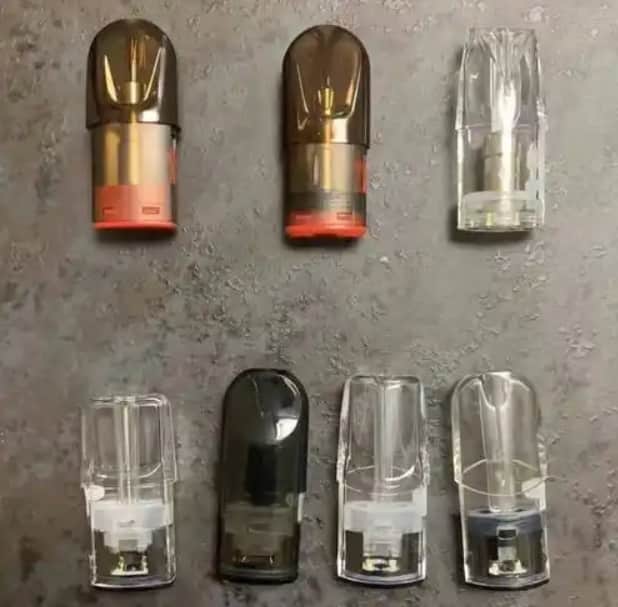
The core advantage of the replaceable cartridge type electronic cigarette lies in its “modular design”. The cartridge itself is an independent component that connects to the main unit through standardized interfaces. Users only need to replace the cartridge regularly to continue using it. Taking a brand’s flagship product as an example, the capacity of a single cartridge is usually 2-5 ml, which can support 300-800 puffs. Some large-capacity models even reach over 1000 puffs. What’s more crucial is that the internal structure of the cartridge adopts a replaceable design – when the e-liquid runs out, users can purchase e-liquid separately for filling, achieving multiple reuses of the cartridge. This design significantly reduces the long-term usage cost: calculated at a daily usage of 200 puffs, a single filled cartridge can achieve the consumption equivalent to 3-5 disposable electronic cigarettes through 3-5 refills of e-liquid, with a comprehensive cost reduction of 40%-60%.
Selection Strategy: Balancing Scene Adaptation and Cost Efficiency
The decision-making process should be based on three core dimensions: usage frequency, scene requirements, and cost sensitivity. For occasional smokers or those with temporary emergency needs, disposable electronic cigarettes have an advantage due to their instant-on and instant-use feature; for frequent users, the replaceable cartridge device that achieves long-term cost optimization through modular design is more significant. What is particularly noteworthy is that some high-end models have realized intelligent interaction between the cartridge and the main unit – through chip recognition of the cartridge type, it automatically adjusts the power output to ensure the best taste experience each time.
Technical Details and Purchase Suggestions
When making a purchase, you should pay close attention to three key technical parameters: e-liquid capacity (ml), battery capacity (mAh), and single mouthpiece consumption (number of mouths). It is recommended to purchase through official channels and verify the product’s anti-counterfeiting mark. Be cautious of products with abnormally low prices, as such items often have issues such as falsely labeled battery capacity and unclear e-liquid composition, posing safety risks. For devices that allow replacement e-liquids, pay attention to the compatibility between the main unit and the e-liquid cartridges. Opt for models that support universal interfaces from multiple brands to enhance flexibility in usage.
In conclusion, disposable electronic cigarettes and refillable cartridge devices have distinct characteristics in terms of their ease of use. By precisely matching the usage scenarios, scientifically calculating the cost-effectiveness, and strictly controlling the product quality, consumers can fully optimize the usage cost while ensuring the quality of the smoking experience.