









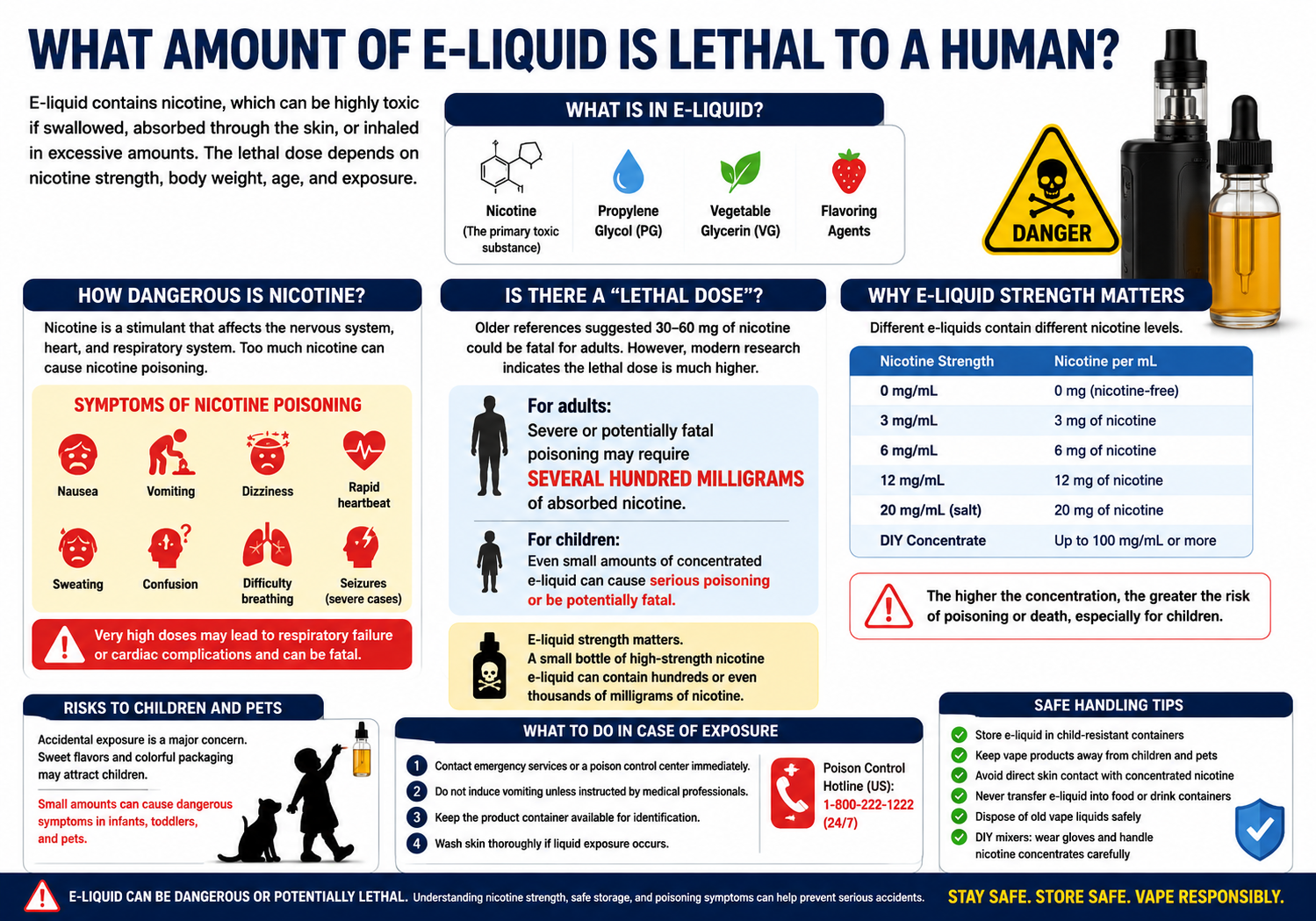
E-liquid, also known as vape juice, is the nicotine-containing fluid used in electronic cigarettes and vaping devices. While vaping products are widely available, many people are unaware that concentrated nicotine can be highly toxic if swallowed, absorbed through the skin in large amounts, or improperly handled.
Understanding how much e-liquid may become dangerous or potentially lethal is important for safety, especially in homes with children or pets.
What Is Inside E-Liquid?
Most e-liquids contain:
- Nicotine
- Propylene glycol (PG)
- Vegetable glycerin (VG)
- Flavoring agents
Among these ingredients, nicotine is the primary toxic substance. Nicotine is a stimulant that affects the nervous system, heart, and respiratory system.
E-liquids are sold in various nicotine strengths, ranging from nicotine-free formulas to highly concentrated nicotine salt products.
How Dangerous Is Nicotine?
Nicotine poisoning occurs when too much nicotine enters the body. This can happen through:
- Swallowing e-liquid
- Excessive vaping in a short period
- Skin exposure to concentrated nicotine
- Accidental ingestion by children
Symptoms of nicotine poisoning can include:
- Nausea
- Vomiting
- Dizziness
- Rapid heartbeat
- Sweating
- Confusion
- Difficulty breathing
- Seizures in severe cases
Very high doses may lead to respiratory failure or cardiac complications.
Is There a “Lethal Dose”?
Historically, older references suggested that 30–60 mg of nicotine could be fatal for adults. However, more recent toxicology research indicates that the actual lethal dose for adults is likely much higher than previously believed.
Modern toxicology studies estimate that severe or potentially fatal nicotine poisoning in adults may require several hundred milligrams of absorbed nicotine, depending on:
- Body weight
- Age
- Health condition
- Tolerance to nicotine
- Route of exposure
Children are far more vulnerable because of their smaller body size. Even small amounts of concentrated e-liquid can cause serious poisoning in infants and toddlers.
Why E-Liquid Strength Matters
Different vape liquids contain dramatically different nicotine concentrations. For example:
- 3 mg/mL e-liquid contains 3 milligrams of nicotine per milliliter
- 20 mg/mL nicotine salt e-liquid contains much higher concentrations
- DIY nicotine concentrates may contain extremely dangerous levels
A small bottle of highly concentrated nicotine liquid may contain hundreds or even thousands of milligrams of nicotine in total.
This is why proper storage is extremely important.
Risks to Children and Pets
Accidental poisoning is one of the biggest concerns associated with e-liquid products. Sweet flavorings and colorful packaging may attract children.
Medical organizations and poison control centers warn that even a small amount of nicotine liquid can cause dangerous symptoms in young children.
Pets, especially dogs and cats, are also highly sensitive to nicotine exposure.
What to Do in Case of Exposure
If someone accidentally swallows e-liquid or shows signs of nicotine poisoning:
- Contact emergency medical services or a poison control center immediately.
- Do not induce vomiting unless instructed by medical professionals.
- Keep the product container available for identification.
- Wash skin thoroughly if liquid exposure occurs.
In the United States, the Poison Control hotline is available 24/7 at 1-800-222-1222.
Safe Handling Tips
To reduce risks:
- Store e-liquid in child-resistant containers
- Keep vape products away from children and pets
- Avoid direct skin contact with concentrated nicotine
- Never transfer e-liquid into food or drink containers
- Dispose of old vape liquids safely
Users who mix DIY vape liquids should wear protective gloves and handle nicotine concentrates carefully.
Final Thoughts
E-liquid can become dangerous or potentially lethal when large amounts of nicotine are absorbed or ingested, especially in children. While the exact lethal dose varies significantly depending on the individual and exposure conditions, concentrated nicotine products should always be treated with caution.
Understanding nicotine strength, safe storage practices, and poisoning symptoms can help prevent serious accidents and improve overall vaping safety.