









Smoke odors can linger in a home long after the source is gone. Whether the smell comes from cigarette smoke, cooking accidents, a fireplace, or a recent fire, smoke particles can settle into walls, furniture, carpets, curtains, and air ducts. Simply opening a window may provide temporary relief, but completely removing smoke odors often requires a more thorough approach.
This guide explains how to eliminate smoke smells from your home and prevent them from returning.
Why Smoke Smells Are So Difficult to Remove
Smoke contains microscopic particles and gases that can penetrate porous materials throughout your home. These particles cling to surfaces and release odors over time, making the smell seem permanent.
Common places where smoke odors become trapped include:
- Upholstered furniture
- Carpets and rugs
- Curtains and drapes
- Bedding and clothing
- Painted walls
- Ceilings
- HVAC systems
- Air filters
To fully eliminate smoke odors, it’s important to address both the air and the surfaces where smoke residue has accumulated.
Step 1: Improve Ventilation
Fresh air is the first line of defense against lingering smoke odors.
What to Do
- Open windows and doors whenever possible.
- Use fans to increase airflow.
- Place box fans near windows to push stale air outside.
- Run bathroom and kitchen exhaust fans.
Good ventilation helps remove odor particles suspended in the air and speeds up the cleaning process.
Step 2: Replace Air Filters
Smoke particles can become trapped inside heating and cooling systems.
Check and Replace
- HVAC filters
- Air purifier filters
- Furnace filters
- Range hood filters
Replacing contaminated filters prevents odors from recirculating throughout the house.
Step 3: Deep Clean Hard Surfaces
Smoke residue often leaves a thin film on walls, ceilings, and furniture.
Cleaning Solution
Mix:
- Warm water
- White vinegar
- A small amount of dish soap
Use the solution to wipe:
- Walls
- Ceilings
- Doors
- Cabinets
- Baseboards
- Light fixtures
Pay special attention to rooms where smoking occurred frequently.
Step 4: Wash Fabrics Thoroughly
Fabrics absorb smoke odors easily and may require multiple washings.
Clean These Items
- Curtains
- Bedding
- Throw blankets
- Cushion covers
- Clothing
- Removable upholstery covers
Adding one cup of white vinegar to the wash cycle can help neutralize odors naturally.
Step 5: Clean Carpets and Upholstery
Carpets and upholstered furniture are often major sources of persistent smoke smells.
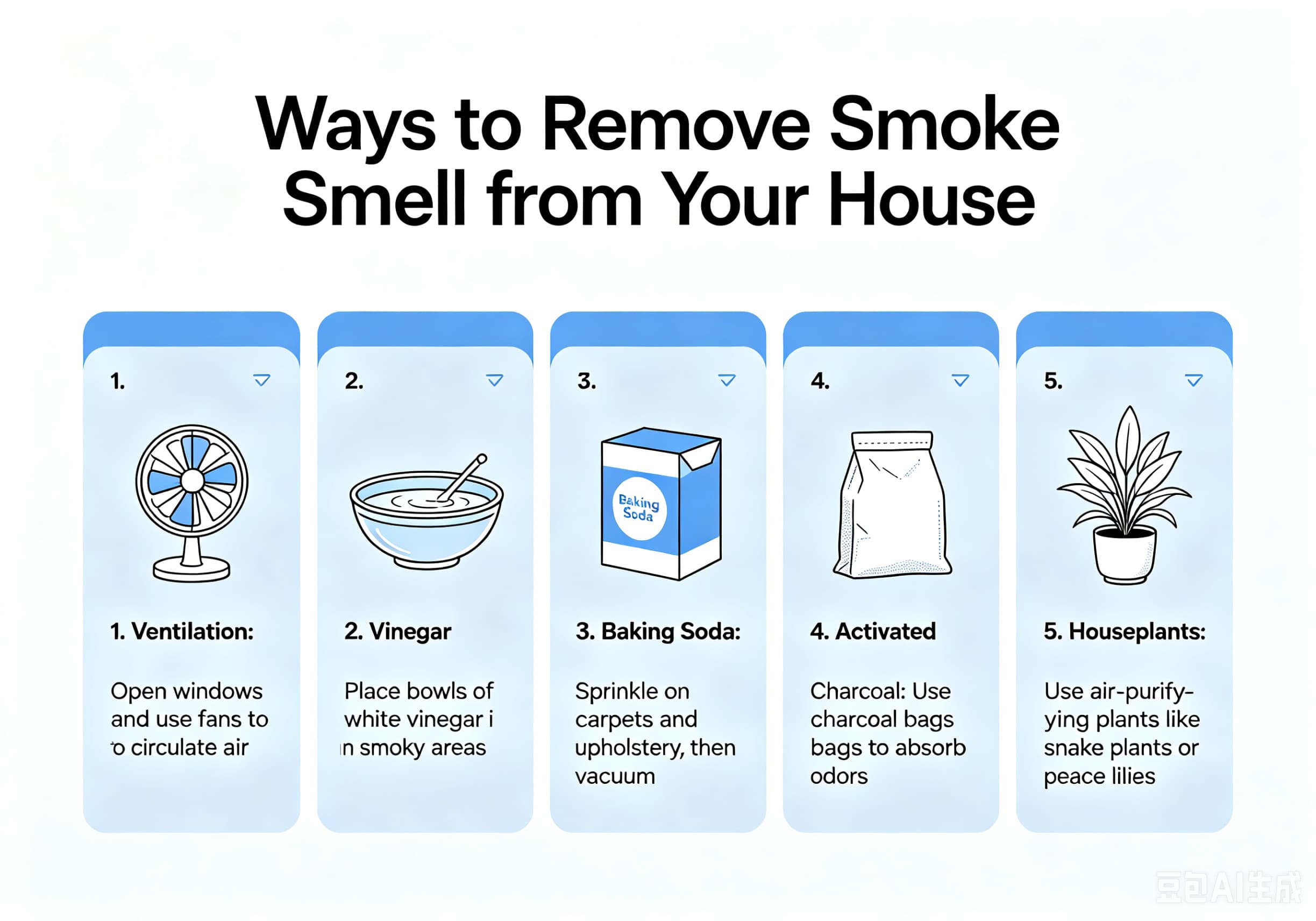
Effective Methods
- Vacuum thoroughly using a HEPA-filter vacuum.
- Sprinkle baking soda over carpets and furniture.
- Let it sit overnight.
- Vacuum the baking soda the next day.
- Consider professional steam cleaning for severe odors.
Deep cleaning removes smoke particles embedded in fibers.
Step 6: Use Baking Soda as an Odor Absorber
Baking soda is one of the most effective natural odor neutralizers.
How to Use It
Place open containers of baking soda in:
- Living rooms
- Bedrooms
- Closets
- Smoke-affected areas
You can also sprinkle baking soda on carpets before vacuuming.
Step 7: Try Activated Charcoal
Activated charcoal absorbs airborne odor molecules effectively.
Place bowls or charcoal odor absorbers in:
- Bedrooms
- Hallways
- Near smoke-damaged furniture
- Inside closets
Many homeowners find charcoal especially useful for persistent cigarette odors.
Step 8: Use Air Purifiers
An air purifier equipped with both a HEPA filter and an activated carbon filter can significantly reduce smoke odors.
Benefits
- Removes airborne particles
- Captures smoke residue
- Reduces lingering smells
- Improves indoor air quality
For best results, run the purifier continuously for several days after deep cleaning.
Step 9: Clean the HVAC System
If smoke odors continue after cleaning, your air ducts may be contaminated.
Consider:
- Professional duct cleaning
- Vent cleaning
- HVAC inspection
Smoke residue inside ducts can continue spreading odors throughout the home every time the system runs.
Step 10: Repaint Smoke-Damaged Walls
In severe cases, smoke odors may have penetrated paint and drywall.
Recommended Process
- Clean walls thoroughly.
- Apply an odor-blocking primer.
- Repaint with quality interior paint.
This is often necessary after heavy indoor smoking or fire damage.
Natural Odor-Removal Solutions
Many homeowners prefer natural alternatives before using commercial odor eliminators.
Popular options include:
White Vinegar
Place bowls of white vinegar around affected rooms overnight. Vinegar helps neutralize odor molecules rather than masking them.
Coffee Grounds
Dry coffee grounds can absorb odors when placed in shallow bowls throughout the house.
Citrus Peels
Fresh lemon or orange peels can help improve the scent of a room while natural ventilation removes smoke particles.
When to Call Professionals
Professional odor remediation may be necessary if:
- Smoke damage is extensive.
- The smell persists after repeated cleaning.
- The source was a house fire.
- Walls and insulation are heavily contaminated.
Professional restoration companies use ozone generators, thermal fogging, and industrial air scrubbers to remove stubborn odors.
Preventing Smoke Odors in the Future
To keep your home fresh:
- Avoid smoking indoors.
- Use kitchen exhaust fans while cooking.
- Clean fireplaces regularly.
- Replace HVAC filters on schedule.
- Maintain proper ventilation year-round.
Small preventive measures can greatly reduce the chance of smoke odors becoming a long-term problem.
Conclusion
Removing smoke odors from a house requires more than simply masking the smell with air fresheners. The key is eliminating the smoke particles that have settled into fabrics, furniture, walls, and ventilation systems. By improving airflow, deep cleaning affected surfaces, using natural odor absorbers, and maintaining your HVAC system, you can restore a fresh and clean indoor environment.
For severe smoke contamination, professional cleaning and odor-removal services may be the most effective solution. With the right approach, even stubborn smoke smells can be successfully eliminated from your home.