










According to C-Store Dive, as cigarette usage and sales in the United States continue to decline, smokeless nicotine products are gaining more attention in the convenience store channel. Among them, nicotine pouches have become one of the fastest-growing and most highly-regarded sub-categories by retailers.
The smoke-free category continues to grow
It is reported that the smoke-free category includes products such as chewing tobacco, snuff, wet snuff, snuff pouches, and nicotine pouches. Among them, nicotine pouches are becoming a focus of attention in the convenience store industry. According to research by Grand View Research, the sales of nicotine pouches in the United States are expected to grow at a compound annual rate of nearly 25% until 2033.
However, smoke-free products are not yet the largest component of the nicotine business in the United States. According to data from NielsenIQ and Goldman Sachs, in the 52 weeks ending on May 30th, cigarette sales in the US declined by 2.4%, but cigarettes still accounted for nearly 70% of the total nicotine category sales.
Smokeless nicotine products constitute the second largest segment of the nicotine category. C-Store Dive stated that smokeless products were the only category among the major nicotine categories that achieved growth over the past year, with a year-on-year sales increase of more than 8%. In contrast, cigar sales decreased by approximately 1%, cigarette sales dropped by more than 2%, and e-cigarette sales experienced a double-digit decline.
This change indicates that the structure of nicotine products in the back cabinets of convenience stores is undergoing adjustment. Cigarettes still dominate, but the growth momentum is gradually shifting from traditional combustible tobacco to smokeless products, especially modern nicotine products in the form of oral inhalation.
Three major companies dominate the market
According to C-Store Dive, in the category of smokeless nicotine products, the combined share of Altria Group, British American Tobacco and Swedish Match (a subsidiary of Philip Morris International) exceeds 90%.
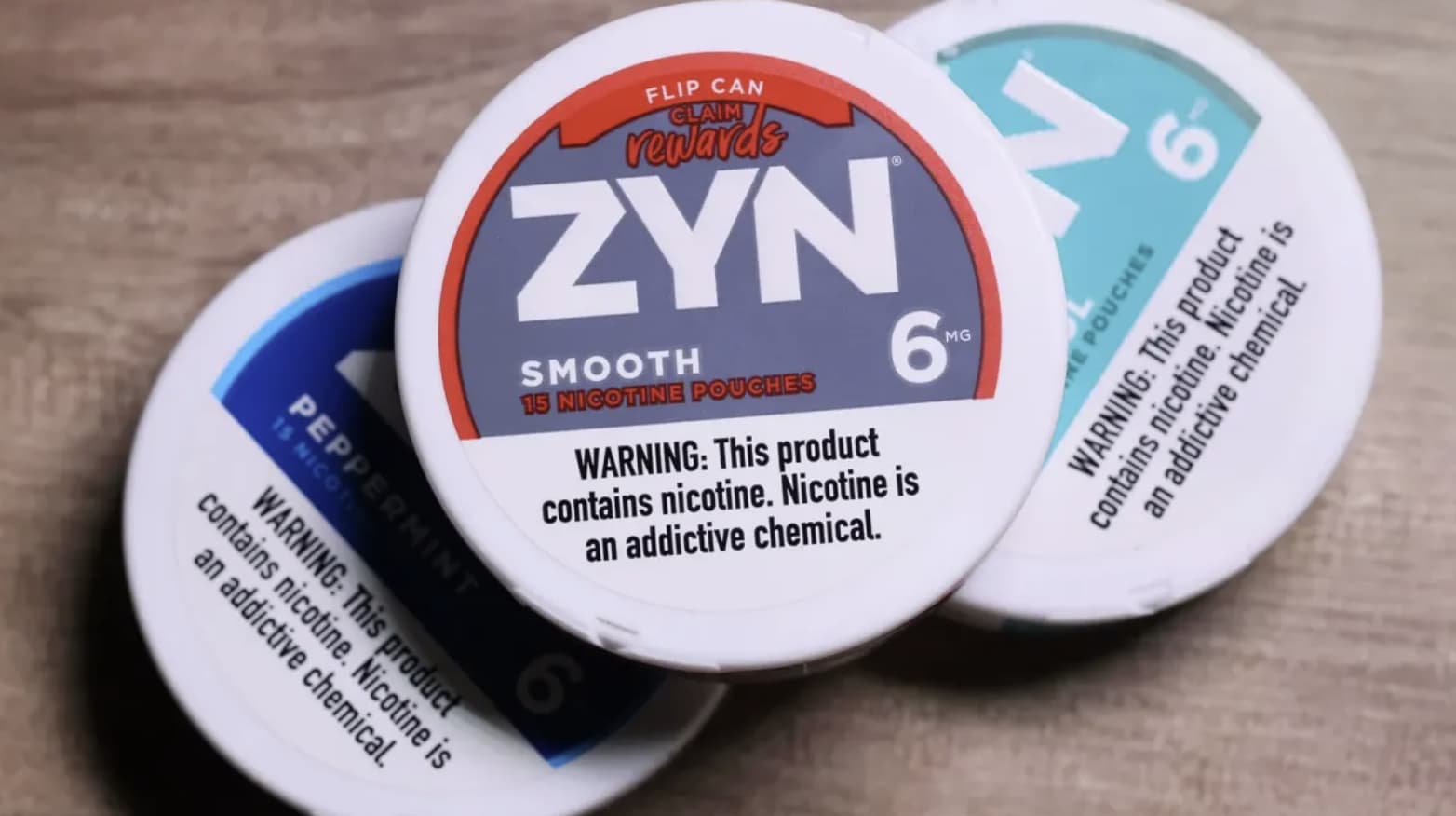
Altria has a comprehensive layout of traditional smokeless tobacco and modern oral products in the US smokeless nicotine market, including brands such as Copenhagen, Skoal, and on!. British American Tobacco participates in the competition through traditional smokeless brands like Grizzly and modern oral products. After being acquired by Philip Morris International, Swedish Match has experienced rapid growth in the US market with its ZYN nicotine pouches.
The report indicates that Altria Group still holds the leading position in terms of annual sales, but Swedish Match is catching up. ZYN has been listed for a longer period of time, and the growth in its nicotine bag sales has already been reflected in the year-on-year sales data. on! PLUS only began to be widely distributed in March 2026, so Goldman Sachs’ data does not include its year-on-year sales changes.
For convenience stores, the growth of nicotine pouches indicates changes in shelf layout and category management. As traditional cigarette sales decline, retailers need to reallocate display space and promotional resources among cigarettes, e-cigarettes, traditional smokeless tobacco, and nicotine pouches.
FDA authorizes enhanced compliance focus
In terms of regulation, nicotine pouches are receiving more attention. In January 2025, the U.S. Food and Drug Administration (FDA) approved the listing of 20 ZYN nicotine pouches through the pre-market tobacco product application (PMTA) pathway. This is the first time the FDA has authorized a product commonly referred to as a nicotine pouch.
In December 2025, the FDA granted marketing authorization for six on! PLUS nicotine pouches, including three flavors – mint, wintergreen and tobacco – and two nicotine strengths – 6mg and 9mg. These products were submitted for approval by Helix Innovations, a subsidiary of Altria. The FDA stated that these authorizations are the first decisions made under its nicotine pouch PMTA pilot program, aiming to enhance review efficiency while maintaining relevant scientific standards.
It should be noted that the FDA’s marketing authorization does not imply that the product is “safe” or has been “approved by the FDA”. The FDA typically states that the authorization for sale means that the relevant product meets the legal standards of “suitable for protecting public health” under specific application materials and regulatory conditions, but the company still needs to comply with marketing, age restrictions, and post-market regulatory requirements.
For the US convenience store industry, the approval of listing for ZYN and on! PLUS holds significant implications. On one hand, nicotine pouches may offer a non-burning alternative option for adult tobacco or nicotine users; on the other hand, regulatory authorities remain concerned about youth usage, flavor appeal, marketing methods, and product label compliance.
From the perspective of industry trends, the growth of smokeless nicotine products is changing the competitive landscape of the nicotine market in the United States. Convenience stores still rely on the high sales volume brought by cigarettes, but future growth is more likely to come from modern oral products such as nicotine pouches. As more products enter the PMTA review and authorization process, compliance status, brand concentration, and channel execution capabilities will become the key factors in the competition of smokeless nicotine.