









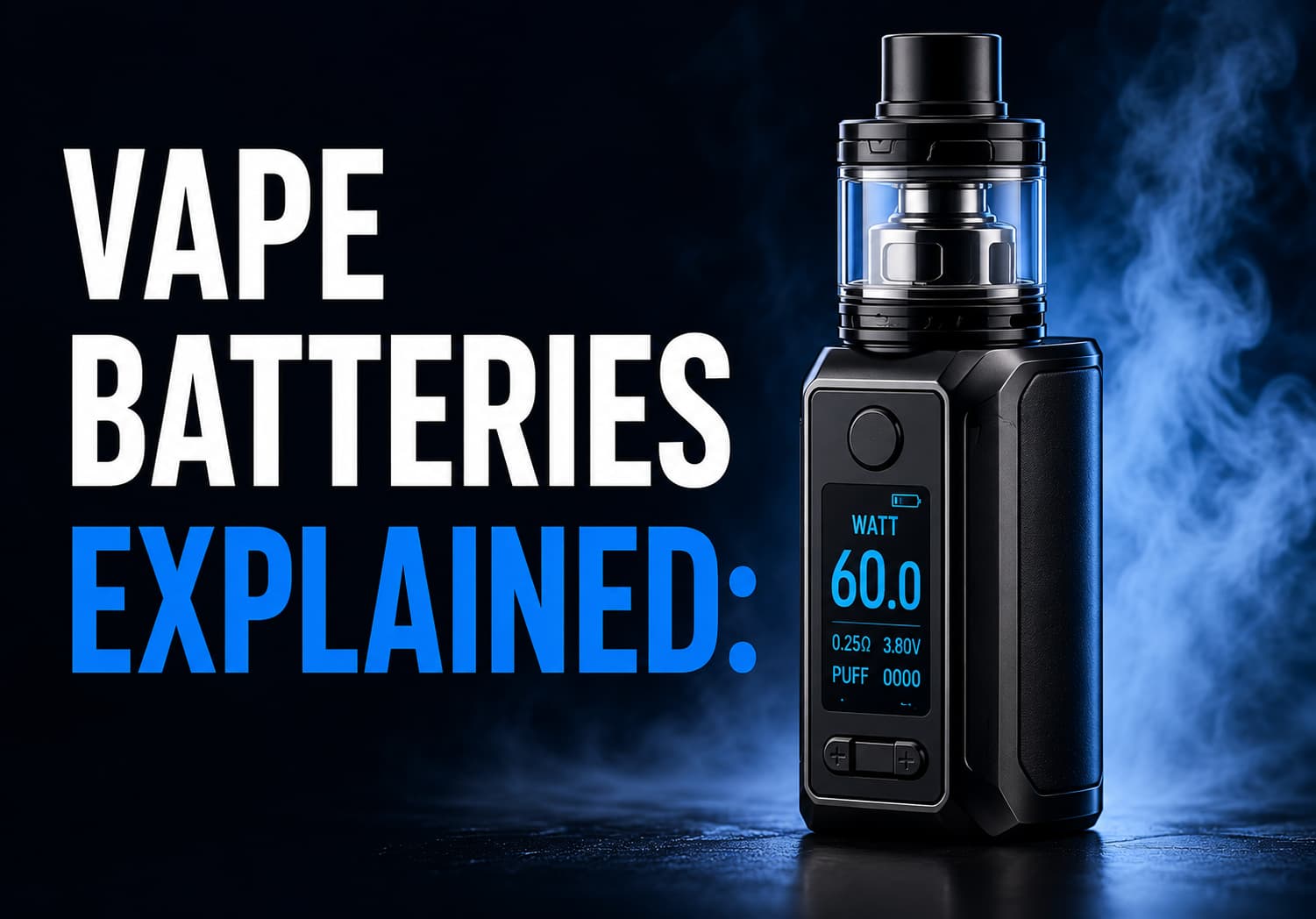
Whether you’re new to vaping or an experienced enthusiast, understanding your vape battery is essential. A battery is the heart of every vape device, providing the power needed to heat the coil and produce vapor. Choosing the right battery—and taking proper care of it—not only improves performance but also helps ensure safe operation.
In this guide, we’ll explain the different types of vape batteries, how they work, best charging practices, common safety tips, and how to maximize battery life.
Disclaimer: This article is for educational purposes only. Always follow the manufacturer’s instructions for your specific device and use authentic, high-quality batteries and chargers.
What Is a Vape Battery?
A vape battery is a rechargeable power source that supplies electricity to your vaping device. When you press the fire button (or inhale on an automatic device), the battery sends power to the atomizer coil, which heats the e-liquid and creates vapor.
Battery capacity, output, and design vary depending on the type of vape device, from small pod systems to larger box mods.
Types of Vape Batteries
Built-in (Internal) Batteries
Many beginner-friendly vape devices include an internal rechargeable battery.
Advantages:
- Easy to use
- USB charging
- Compact and lightweight
- No need to purchase separate batteries
Disadvantages:
- Cannot be replaced when worn out
- Device lifespan is tied to battery health
- Usually offers lower capacity than removable battery setups
Internal batteries are common in pod systems and compact vape kits.
Removable Batteries
Advanced vape mods often use removable rechargeable lithium-ion batteries.
Popular battery sizes include:
- 18650
- 20700
- 21700
These batteries allow users to carry spares, replace aging cells, and extend device runtime. However, removable batteries require more attention to proper handling and storage.
Understanding Battery Capacity (mAh)
Battery capacity is measured in milliamp-hours (mAh).
Generally:
- Higher mAh = longer runtime between charges
- Lower mAh = smaller size but shorter battery life
For example:
| Battery Capacity | Typical Usage |
|---|---|
| 500–1000 mAh | Small pod devices |
| 1200–2500 mAh | Mid-size vape kits |
| 3000–5000+ mAh | Larger internal battery mods |
| 3000–5000 mAh (per cell) | Common removable lithium-ion batteries |
Keep in mind that higher power settings will reduce overall battery life regardless of capacity.
Battery Voltage and Wattage
Modern regulated vape devices allow users to adjust power output.
Increasing wattage usually results in:
- More vapor production
- Warmer vapor
- Stronger flavor
- Faster battery drain
Lower wattage generally offers:
- Longer battery life
- Cooler vapor
- Reduced coil wear
- Lower e-liquid consumption
Always stay within the wattage range recommended for your coil.
Battery Safety Tips
Battery safety is one of the most important aspects of vaping.
Follow these best practices:
Use Authentic Batteries
Only purchase batteries from reputable brands and trusted retailers. Counterfeit batteries may not meet safety standards and can perform unpredictably.
Inspect Batteries Regularly
Check removable batteries for:
- Torn wraps
- Dents
- Corrosion
- Leaks
- Unusual swelling
If you notice any damage, stop using the battery and replace or recycle it appropriately.
Never Carry Loose Batteries
Loose batteries should never be carried in a pocket or bag with keys, coins, or other metal objects, as these can short-circuit the battery.
Always use a dedicated battery case for transport.
Avoid Extreme Temperatures
Keep batteries away from:
- Direct sunlight
- Hot cars
- Open flames
- Freezing conditions
Extreme temperatures can reduce battery performance and may damage lithium-ion cells.
Don’t Overcharge
Most modern vape devices include overcharge protection, but it’s still good practice to unplug your device once charging is complete.
Avoid leaving batteries charging unattended or overnight whenever possible.
Charging Your Vape Battery Properly
To maximize battery life:
- Use the charger recommended by the manufacturer.
- Charge on a stable, non-flammable surface.
- Avoid charging damaged batteries.
- Disconnect the charger once the battery reaches full capacity.
- If using removable batteries, consider a high-quality external charger for balanced charging and battery monitoring.
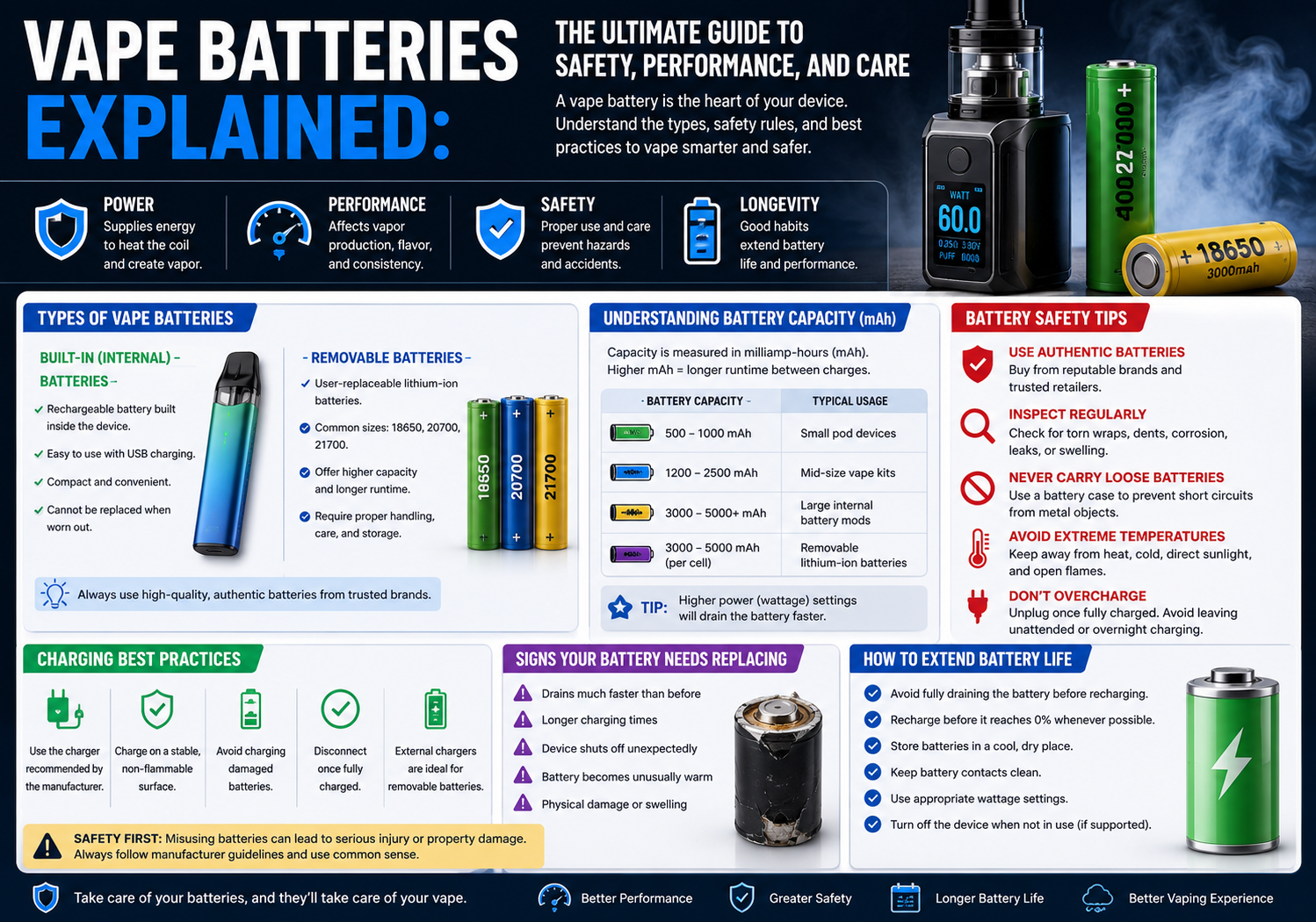
Signs Your Battery Needs Replacing
Rechargeable lithium-ion batteries gradually lose capacity over time.
Common signs include:
- Battery drains much faster than before
- Longer charging times
- Device shuts off unexpectedly
- Battery becomes unusually warm during normal use
- Physical damage or swelling
If your battery shows these symptoms, replace it with a compatible, authentic replacement.
How to Extend Battery Life
A few simple habits can help your battery last longer:
- Avoid fully draining the battery before recharging.
- Recharge before the battery reaches 0% whenever practical.
- Store batteries in a cool, dry place.
- Keep battery contacts clean.
- Use appropriate wattage settings.
- Turn off the device when not in use, if supported.
These practices can help preserve battery health over many charge cycles.
Proper Battery Storage
If you won’t be using your vape for an extended period:
- Store batteries in a protective case.
- Keep them partially charged rather than completely empty.
- Store in a cool, dry location.
- Avoid contact with metal objects.
- Check stored batteries periodically for signs of damage.
Proper storage helps maintain battery performance and reduces unnecessary wear.
Frequently Asked Questions
How long do vape batteries last?
Most rechargeable lithium-ion vape batteries last several hundred charge cycles. Actual lifespan depends on usage patterns, charging habits, and operating conditions.
Can I use any battery in my vape?
No. Always use the battery type, size, and specifications recommended by your device manufacturer.
Is it safe to charge a vape overnight?
While many modern devices include safety protections, it’s generally better to avoid charging overnight or leaving batteries charging unattended.
Why does my battery get warm?
A slight increase in temperature during charging or heavy use can be normal. However, excessive heat may indicate a problem. If your battery becomes unusually hot, stop using it and inspect the device and battery.
Final Thoughts
Your vape battery plays a crucial role in both performance and safety. Understanding how batteries work, choosing the correct type, and following proper charging and storage practices can help you enjoy a more reliable vaping experience while reducing unnecessary risks.
Whether you use a compact pod system or a powerful box mod, taking good care of your battery will improve performance, extend its lifespan, and help keep your device operating safely for years to come.