










Igeekphone News August 8, 2026 — Xiaomi is reportedly developing a custom 200-megapixel 1-inch camera sensor for its next-generation flagship smartphones, potentially setting the stage for another major leap in mobile photography.
According to information shared by a Chinese tech blogger, Xiaomi has customized a new 200MP sensor with a 1-inch optical format. Interestingly, the sensor is said to use an aspect ratio different from the traditional 4:3 format commonly found on smartphone image sensors.
The blogger also suggested that Xiaomi could potentially skip the rumored Xiaomi 18 Ultra, meaning the new sensor may not debut until the Xiaomi 19 Ultra.
If the report proves accurate, Xiaomi could once again be preparing to push the boundaries of smartphone camera hardware, particularly in the increasingly competitive ultra-premium flagship segment.
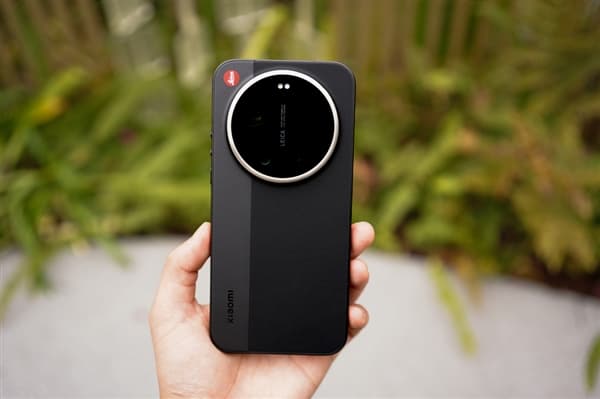
Xiaomi Could Be Preparing Another 1-Inch Camera Breakthrough
Xiaomi has a strong history with large-format smartphone camera sensors.
In July 2022, the company introduced the Xiaomi 12S Ultra, which became the first commercially available smartphone to use Sony’s IMX989 1-inch mobile image sensor.
The sensor was jointly developed by Xiaomi and Sony, with the two companies reportedly sharing the development costs equally.
At the time, Xiaomi founder and CEO Lei Jun said the company would make the sensor available to other smartphone manufacturers after its own launch. The move helped accelerate the adoption of large-format camera sensors throughout the smartphone industry.
Why Does a 1-Inch Smartphone Sensor Matter?
The main advantage of a larger image sensor is its ability to capture more light.
In general, a larger photosensitive area can collect more light during an exposure, which can improve image quality, particularly in challenging lighting conditions.
The Sony IMX989 used in the Xiaomi 12S Ultra featured a Quad Bayer pixel architecture with individual pixels measuring approximately 1.6 microns. Through pixel binning, four adjacent pixels can be combined to produce an effective pixel size of around 3.2 microns.
This design allows the sensor to gather significantly more light while maintaining strong image detail.
Compared with the sensor used in the iPhone 13 Pro Max, the IMX989 was reported to provide a substantially larger photosensitive area and improved light-gathering capability.
The difference becomes particularly noticeable in low-light photography, where larger sensors can help produce cleaner images with less noise and improved dynamic range.
Xiaomi Continues to Bet on Large Sensors
The 1-inch sensor strategy has remained an important part of Xiaomi’s Ultra-series photography philosophy.
Last year, Xiaomi introduced the Xiaomi 17 Ultra, which reportedly continued the company’s use of a 1-inch-class main camera sensor.
This made it unusual among Android flagship smartphones in the same premium category, as several competing manufacturers moved toward other sensor formats and multi-camera configurations rather than continuing with a 1-inch main sensor.
Xiaomi’s willingness to maintain the large-sensor approach suggests that the company sees sensor size as an important differentiator in the premium smartphone market.
200MP Could Take the Concept Further
The rumored new sensor could represent an even more ambitious approach.
A 200MP resolution combined with a 1-inch sensor would provide Xiaomi with a significantly higher native pixel count while retaining the light-gathering advantages associated with a large sensor.
However, resolution and sensor size alone do not determine image quality.
The final results would also depend on the sensor’s pixel architecture, pixel size, readout technology, lens design, image signal processor, computational photography algorithms, autofocus system, and image-processing software.
A 200MP sensor could nevertheless offer several potential advantages.
At native resolution, it could capture a large amount of image information. Through pixel binning, it could also generate lower-resolution images with larger effective pixels, potentially improving low-light performance while maintaining sufficient detail.
The combination could give Xiaomi greater flexibility between high-resolution photography and computationally enhanced low-light shooting.
Unusual Aspect Ratio Could Be Significant
Another intriguing detail from the leak is that the rumored sensor reportedly does not use the traditional 4:3 aspect ratio.
Most smartphone camera sensors are designed around a 4:3 native imaging format, although manufacturers can crop images into other aspect ratios.
A different native aspect ratio could indicate that Xiaomi is pursuing a customized sensor architecture designed specifically around its imaging system.
At this stage, however, there is not enough information to determine exactly how the unusual aspect ratio would affect the camera experience.
It could be related to image composition, sensor utilization, cropping flexibility, or integration with a particular lens and camera module.
Xiaomi 19 Ultra Could Be the First Device
The timing of the rumored sensor is also noteworthy.
The blogger reportedly hinted that the Xiaomi 18 Ultra may not launch, which would potentially push the debut of the new 200MP 1-inch sensor to a future Xiaomi 19 Ultra.
That means the rumored sensor could be several product cycles away from commercial availability.
As with other unconfirmed smartphone leaks, the final product name, launch schedule, sensor specifications, and camera configuration could all change before an official announcement.
Xiaomi has not publicly confirmed the existence of the rumored 200MP 1-inch sensor.
From IMX989 to a Custom 200MP Sensor
Xiaomi’s progression in large-format mobile photography is worth watching.
The Xiaomi 12S Ultra demonstrated that a 1-inch sensor could be successfully integrated into a mass-market smartphone. Since then, large camera sensors have become increasingly common among premium Android devices.
A move to a customized 200MP 1-inch sensor would represent another step in that evolution.
Rather than simply adopting an off-the-shelf component, Xiaomi could be moving toward more extensive control over sensor design and imaging hardware.
That approach could become increasingly important as smartphone camera competition shifts from simply increasing megapixel counts to optimizing the entire imaging pipeline.
What a 200MP 1-Inch Sensor Could Mean for Smartphone Photography
If Xiaomi successfully commercializes the rumored sensor, it could potentially offer several advantages:
- Higher native resolution for detailed photography
- Large light-gathering area from the 1-inch sensor format
- Improved low-light performance
- Greater cropping flexibility
- Advanced pixel-binning capabilities
- More computational photography possibilities
- Potentially stronger dynamic range and image quality
However, the real-world performance will depend heavily on Xiaomi’s lens, image processing, autofocus technology, and software tuning.
Final Thoughts
Xiaomi has already played a significant role in bringing 1-inch camera sensors into mainstream smartphones, and the reported development of a custom 200MP 1-inch sensor suggests that the company may be preparing another ambitious move in mobile imaging.
If the rumors surrounding the Xiaomi 18 Ultra’s absence prove correct, the sensor could eventually debut with the Xiaomi 19 Ultra, potentially giving the company’s next Ultra flagship a major camera advantage.
The most interesting aspect may not be the 200MP resolution itself, but the combination of very high resolution, a 1-inch sensor format, and a customized aspect ratio.
For now, the technology remains unconfirmed. But if Xiaomi can successfully bring such a sensor to market and pair it with strong optics and computational photography, the Xiaomi 19 Ultra could become one of the most ambitious camera phones in its generation.