









iScooter EB5MAX takes a more practical middle ground. Its specification sheet combines a 48V battery, a rear-wheel-drive hub motor, 20×4.0-inch fat tires, a steel frame, and a claimed range of up to 80km. The advertised top speed is 25km/h, while the motor is rated at 250W with peak output reaching 1000W.
That combination makes the EB5MAX interesting for riders who care less about outright speed and more about stability, everyday usability, hills, uneven surfaces, and carrying weight.
But the numbers need some context. An 80km range claim does not mean every rider will travel 80km on one charge, and “1000W peak” should not be confused with a continuous 1000W motor. The real appeal of the EB5MAX is how these components work together.
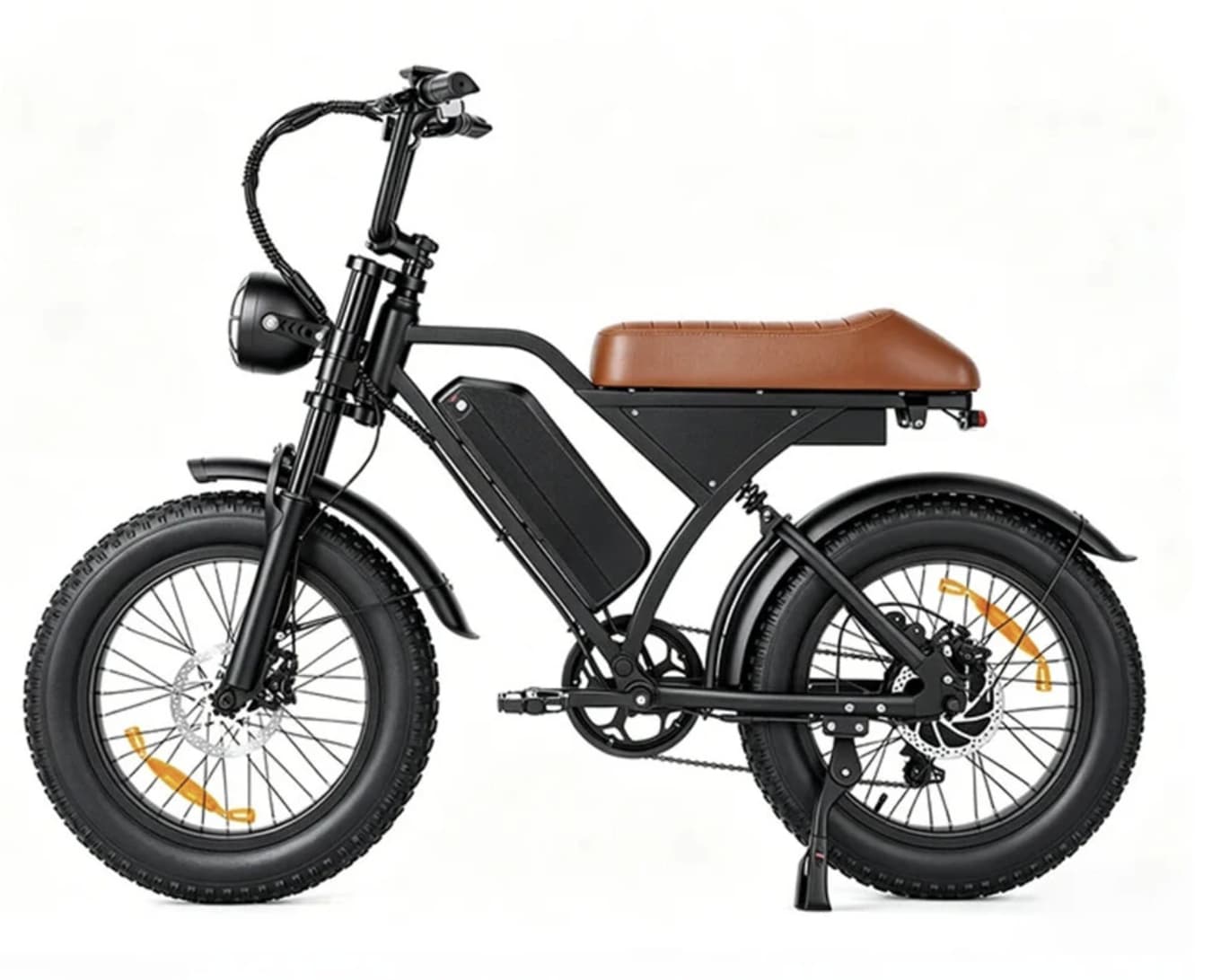
What Makes the EB5MAX Different?
At first glance, the EB5MAX looks like a conventional fat-tire electric bike. The important difference is the balance of its specifications.
The bike uses a 48V 10.4Ah battery, giving it approximately 499Wh of nominal battery capacity. That is a useful amount of stored energy for a bike designed around a 25km/h maximum speed rather than high-speed performance.
The battery is also removable, which makes charging considerably easier for riders who cannot conveniently bring the entire bicycle indoors.
Power comes from a rear-wheel-drive brushless hub motor rated at 250W, with a claimed 1000W peak output and 55Nm of torque. Banggood lists a maximum gradient of 27%, although actual hill-climbing performance will depend heavily on rider weight, battery charge, surface conditions, temperature, and gradient length.
This tells us something important about the EB5MAX’s intended character: it is not primarily trying to be a racing e-bike. It is designed to provide useful electric assistance while keeping the maximum speed relatively moderate.
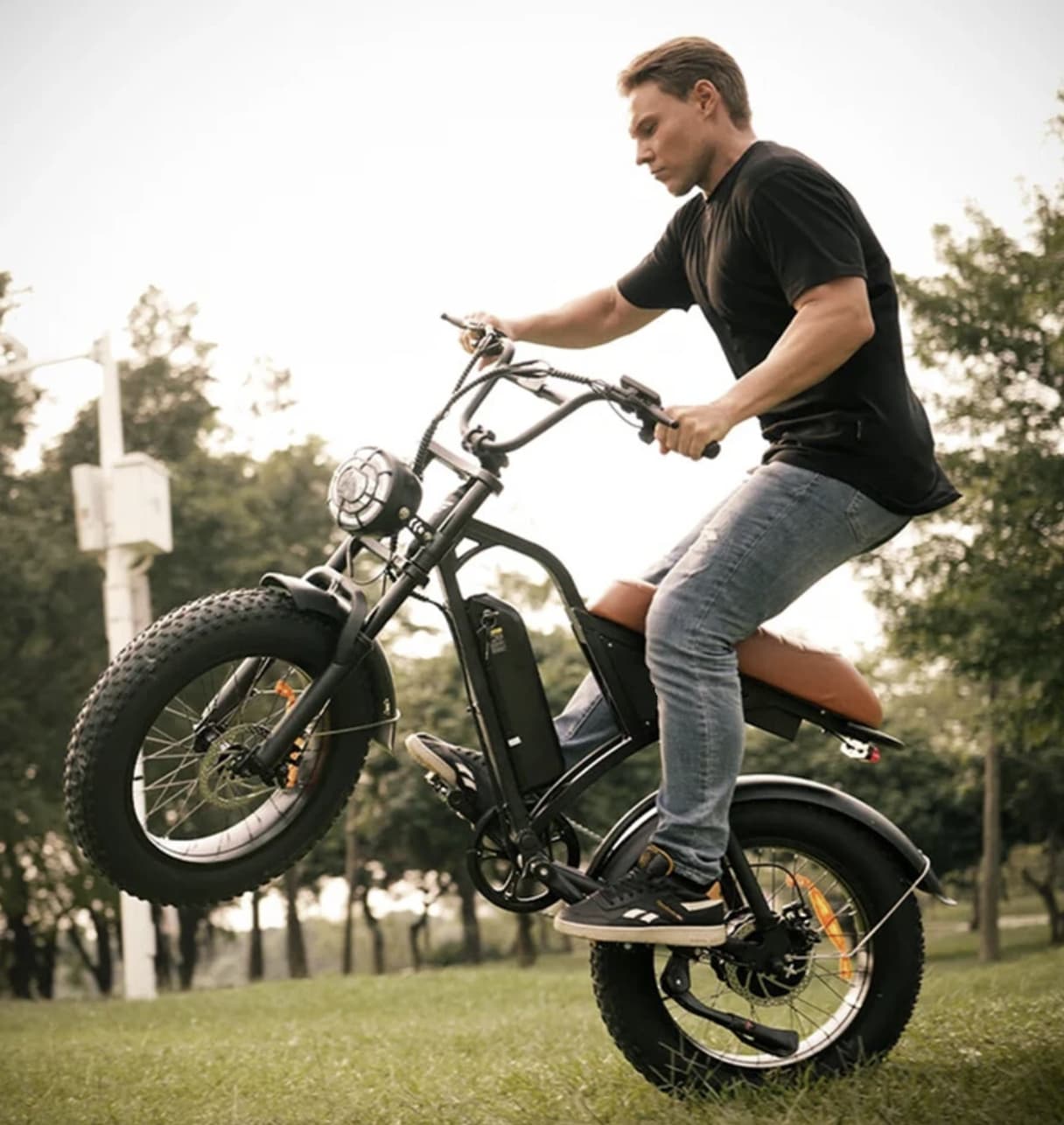
48V 10.4Ah Battery: More Important Than the 80km Number
Battery capacity is one of the most useful specifications to examine when comparing electric bikes.
The EB5MAX’s 48V 10.4Ah battery works out to roughly 499Wh of nominal energy. That’s enough to make the bike interesting for longer recreational rides and commuting, but the advertised 80km figure needs to be treated as an ideal-condition reference rather than a guaranteed distance.
Banggood says its range test used a 65kg load, flat road, and constant 20km/h speed. It also warns that range varies according to factors including rider/load, road surface, gradients, temperature, and battery level.
That distinction matters.
A heavier rider climbing hills with frequent acceleration will naturally consume considerably more energy than a lighter rider traveling steadily on flat pavement. The fat tires can also increase rolling resistance compared with narrow commuter tires.
Therefore, the best way to interpret the 80km claim is:
It represents the bike’s potential under favorable test conditions, not a promise of 80km for every ride.
The removable design is arguably just as useful as the capacity itself. Instead of having to position a 38.6kg bicycle next to a wall outlet, the battery can be removed for charging.
250W Rated Power, 1000W Peak: What Does That Actually Mean?
The EB5MAX’s motor specification can initially look confusing.
The listing describes it as a 250W motor with 1000W peak power.
These figures should not be interpreted as “this is a 1000W electric bike.”
The 250W figure represents the listed motor rating, while the 1000W figure refers to peak output available under certain operating conditions. Peak power can be useful when the bike needs a short burst of additional assistance, such as starting from a stop or tackling a steeper section.
The accompanying 55Nm torque rating is also more meaningful for everyday riding than the peak wattage headline.
For a fat-tire bicycle weighing 38.6kg, strong low-speed assistance can make a noticeable difference. The EB5MAX does not need to reach extreme speeds to benefit from a motor capable of producing useful torque.
20×4.0-Inch Fat Tires Are a Major Part of the Experience
The most visually obvious feature is probably the pair of 20×4.0-inch fat tires.
These fat-tire electric bikes are substantially wider than those found on many conventional commuter e-bikes. Their main advantage is not simply appearance. A wide tire can provide a more planted feeling over loose or imperfect surfaces and can make the bike feel more stable at lower speeds.
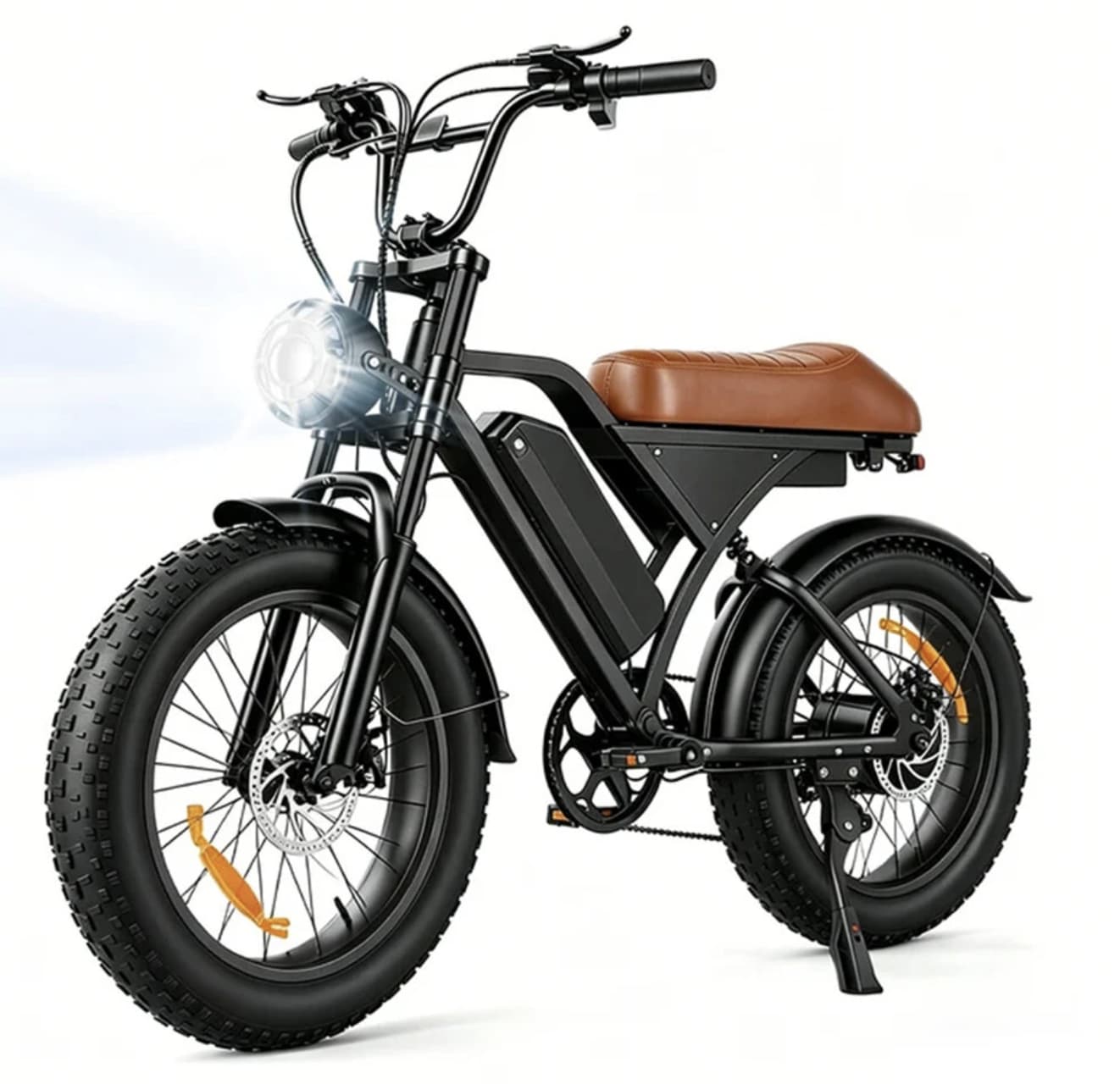
That makes the EB5MAX potentially appealing for:
- paved urban roads
- bike paths
- compact dirt
- gravel sections
- park trails
- uneven pavement
- recreational riding
However, fat tires have trade-offs.
They add weight and can create more rolling resistance than narrower tires, particularly when used on smooth pavement. Riders looking for an ultra-light road commuter may therefore find the EB5MAX excessive.
For someone who values stability over minimal weight, however, the 20×4.0-inch setup makes much more sense.
A Steel Frame Built for Carrying Weight
The EB5MAX uses a steel frame and has a listed maximum load of 150kg.
That is one of the bike’s more practical specifications.
A high load rating does not mean that the bike will perform identically regardless of rider and cargo weight. Acceleration, braking distance, climbing ability, and battery consumption can all change as total load increases.
Still, a 150kg maximum load gives the EB5MAX a broader operating envelope than many lightweight recreational e-bikes.
It could therefore make sense for riders who need to carry a backpack, groceries, equipment, or other cargo in addition to their own body weight.
The trade-off is obvious: at 38.6kg, this is not a bicycle designed to be casually carried upstairs.
25km/h Top Speed Is a Deliberate Choice
The EB5MAX has a listed maximum speed of 25km/h.
That number may look modest next to performance-oriented electric bikes, but it actually fits the rest of the design.
The bike is relatively heavy, uses large fat tires, and emphasizes stability and range. A 25km/h ceiling keeps the focus on controlled everyday riding rather than high-speed performance.
For city electric bike commuting and recreational cycling, 25km/h can already feel reasonably quick. Riders who specifically want motorcycle-like acceleration or significantly higher speeds should look elsewhere.
Local laws also vary, so riders should verify the regulations applicable to their location before using an electric bike on public roads.
Braking and Visibility
The EB5MAX uses handlebar-controlled disc brakes and includes a motor shut-off function. The specification sheet also lists integrated front lighting and rear lights.
These features are particularly relevant because this is not a lightweight bicycle.
A 38.6kg e-bike carrying a substantial rider and cargo has more mass to control than a conventional bicycle. Reliable braking is therefore an essential part of the overall package.
The lighting system is another practical addition for commuting and low-light riding, although riders should still follow local requirements for bicycle lighting and visibility.
IPX4 Protection: Useful, but Not Waterproof
The EB5MAX is rated IPX4 for water protection.
This means the bike has some protection against water splashes, but it should not be treated as fully waterproof.
In practical terms, light rain or road splash is very different from riding through deep water, pressure-washing the bike, or leaving it exposed to heavy rain for extended periods.
Owners should therefore avoid deliberately exposing the electrical system to excessive water and should follow the manufacturer’s care instructions.
Charging Takes About 4–5 Hours
The supplied charger is rated at 54.6V and 3A, while Banggood lists a charging time of approximately 4–5 hours.
That is reasonable for a battery around the 500Wh class.
For commuters, overnight charging is the obvious use case. A rider finishing a trip in the evening can remove the battery, charge it indoors, and have the bike ready for the next day.
The removable e-bike battery also gives users more flexibility when the bicycle itself is stored in a garage, shed, apartment parking area, or other location without convenient electrical access.
The Weight Is the Biggest Compromise
There is one specification that prospective buyers should not overlook:
38.6kg.
That is heavy for a bicycle.
The weight contributes to the EB5MAX’s solid feel, fat-tire configuration, steel construction, and large overall footprint. But it also affects transportation and storage.
If your routine involves carrying an e-bike up stairs, loading it into a small car, or moving it frequently without motor assistance, this could become frustrating.
If the bike will normally stay in a garage or other ground-level storage area, the weight becomes much less problematic.
This is an important distinction because “good e-bike” and “good e-bike for your lifestyle” are not necessarily the same thing.
Who Is the EB5MAX Actually For?
The EB5MAX makes the most sense for riders who prioritize stability, carrying capacity, and comfortable electric assistance.
It could be a strong fit for:
- commuters who travel mainly on paved roads
- recreational riders who occasionally use gravel or uneven surfaces
- heavier riders who need a higher load rating
- riders who prefer wide tires and a planted feel
- people who want a removable battery
- users who can store the bike at ground level
It is less attractive for:
- riders who need a lightweight bicycle
- people who frequently carry their bike upstairs
- high-speed e-bike enthusiasts
- riders focused purely on maximum acceleration
- cyclists who primarily ride long stretches of smooth road and want low rolling resistance
EB5MAX: Strengths and Weaknesses
Strengths
Large 48V battery: The 10.4Ah removable battery provides a useful energy reserve for everyday riding.
Fat-tire stability: The 20×4.0-inch tires are well suited to riders who value traction and a planted riding position.
Useful torque: The listed 55Nm torque and 1000W peak output suggest that the motor is designed to provide additional assistance when starting or climbing.
High load rating: The 150kg maximum load makes the bike more versatile for larger riders and cargo.
Moderate top speed: The 25km/h limit keeps the bike oriented toward practical transportation rather than extreme performance.
Weaknesses
Heavy: At 38.6kg, portability is clearly not its strongest attribute.
Range depends heavily on conditions: The 80km figure comes from controlled testing, so real-world results will vary.
Fat tires are not the most efficient choice for pure road riding: They offer stability but can add rolling resistance.
Peak power needs context: The 1000W figure should not be interpreted as continuous motor output.
No iScooter logo on the shipped unit: Banggood specifically notes that although the EB5MAX is manufactured by iScooter, the shipped product will not carry the iScooter logo. Buyers who expect branded badging should be aware of this before ordering.
Final Verdict
The iScooter EB5MAX is not trying to win a specification battle with extreme speed or ultralight construction. Its strengths are more practical.
A removable 48V 10.4Ah battery, rear hub motor, 55Nm torque rating, 20×4.0-inch fat tires, disc brakes, steel frame, and 150kg load capacity create a package aimed at riders who want a stable and capable everyday electric bike.
The biggest question is whether you can live with its 38.6kg weight.
If you plan to keep the bike stored on the ground and value wide tires, a generous load rating, and a comfortable 25km/h pace, the EB5MAX fits that use case well.
However, its substantial weight could be a drawback for anyone who regularly needs to lift, carry, or transport the bike.
Overall, the EB5MAX is better understood as a practical fat-tire e-bike built for stable everyday transportation and recreational riding rather than high-speed performance.