










Apple’s first foldable iPhone could offer users more than one way to authenticate, especially when using its fingerprint sensor is difficult.
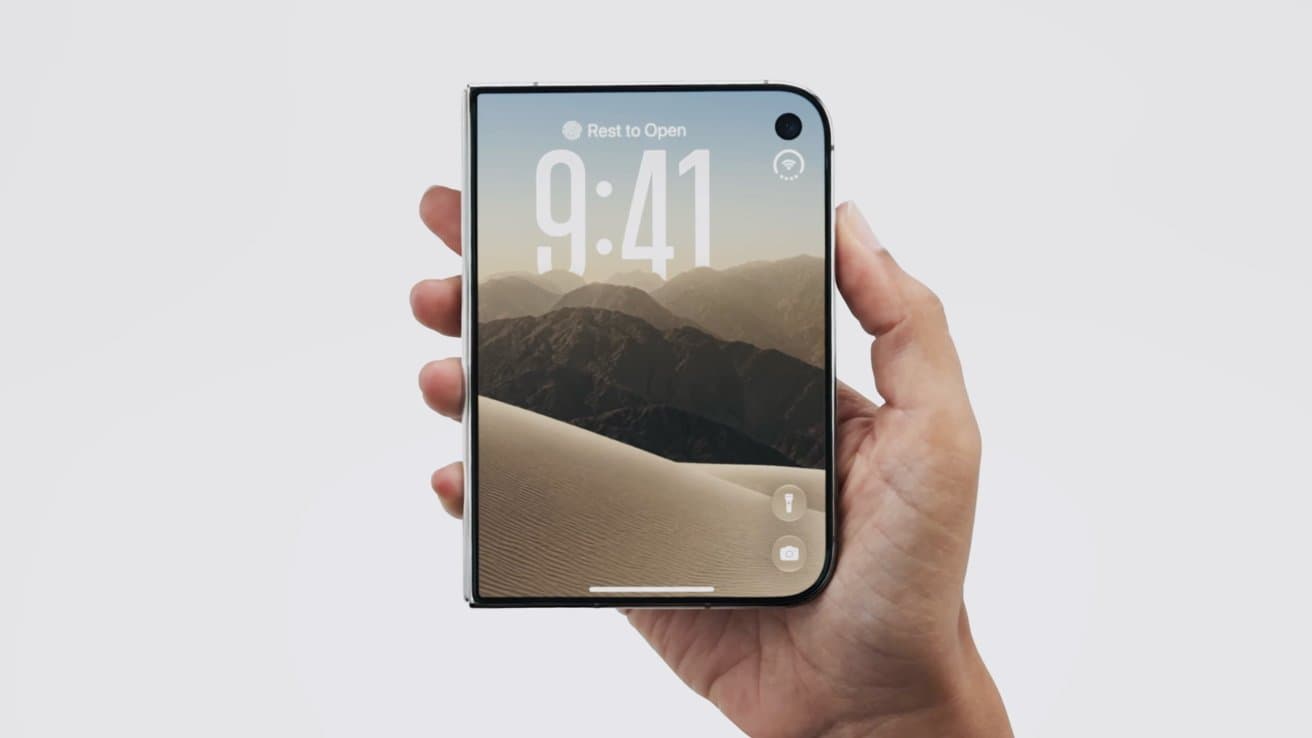
According to a report from AppleInsider, the rumored iPhone Duo may support an Apple Watch-assisted authentication method in addition to its built-in Touch ID system. The idea would give users an alternative when they are unable or unwilling to use the phone’s fingerprint sensor.
The report adds another interesting detail to the ongoing discussion around Apple’s first foldable iPhone. Because a foldable device can be used in different physical configurations, Apple may need to rethink how authentication works compared with its conventional iPhone models.
Touch ID Could Work Regardless of How the Foldable Is Positioned
The reported iPhone Duo is expected to use Touch ID rather than relying exclusively on Face ID.
A fingerprint-based system could make sense for a foldable phone because the device changes shape depending on whether it is open or closed. According to the report, the Touch ID implementation would be designed to authenticate the user without being dependent on the phone’s particular orientation or whether the device is folded or unfolded.
That could make unlocking more straightforward in situations where accessing a specific part of the display or camera system is inconvenient.
However, Apple has not officially confirmed the iPhone Duo, its biometric hardware or the exact authentication technology it will use. These details should therefore be treated as part of the current report and rumor cycle rather than finalized product specifications.
Apple Watch Could Provide Another Authentication Route
The more unusual part of the report involves the Apple Watch.
If a user does not want to use Touch ID or cannot comfortably reach the fingerprint sensor, a paired Apple Watch could potentially help verify that the person holding the iPhone is its authorized owner.
This would build on Apple’s existing ecosystem approach, where nearby trusted devices can play a role in authentication and security. For a foldable iPhone, such a system could be particularly useful because the phone’s physical configuration may change how easily users can access its biometric sensor.
The proposed system would likely need more than simply detecting that an Apple Watch is nearby. Factors such as the distance between the devices and other security conditions could be considered before the iPhone allows authentication.
Security Would Be the Key Challenge
Convenience alone would not be enough for an Apple Watch-based unlocking feature. Apple would need to make sure that proximity to a trusted watch does not accidentally give another person access to the phone.
For example, if someone picked up the iPhone while the owner’s Apple Watch was nearby, the system would need additional checks to determine whether the request was genuinely coming from the owner.
That makes the implementation more interesting than a simple “watch nearby equals unlocked” system. Apple could potentially combine device proximity with other authentication or security signals to reduce the risk of unauthorized access.
The exact mechanism remains unknown, however, and Apple has not announced such a feature for a foldable iPhone.
Why This Could Matter for Apple’s First Foldable
A foldable iPhone would introduce several practical differences compared with Apple’s current slab-style phones. The display can be opened, closed and used from different orientations, while the placement and accessibility of physical components could also change.
That makes authentication an important part of the overall user experience.
Touch ID could provide a convenient hardware-based solution, while Apple Watch authentication could act as a secondary option when fingerprint authentication is awkward. More importantly, integrating the feature across Apple’s existing hardware ecosystem could help make the first foldable iPhone feel like a natural extension of the company’s product lineup rather than an entirely separate device category.
For now, the iPhone Duo remains unconfirmed, and Apple has not disclosed its launch plans or authentication hardware. If the reported Apple Watch-assisted authentication system becomes part of the final product, it could be one of the more interesting software-and-hardware integrations surrounding Apple’s first foldable iPhone.