









A robotic dog offers a different kind of play from a traditional remote-control car or electronic toy. Instead of focusing on speed, it combines movement, sound, expressive lighting, and interactive commands in one compact device. The X1 AI Robot Dog brings these ideas together with advertised speech recognition, app control, programmable actions, LED expressions, singing, and dancing.
Available through Banggood, the X1 is designed for people looking for an interactive electronic pet rather than a conventional stuffed animal. Its mix of physical controls and app-based features may appeal to children who enjoy experimenting with technology, as well as families searching for a more engaging gift.
But what makes this robot dog worth considering? The answer depends on how its interaction features work in practice, how much control users have over its movements, and whether its programming functions offer something beyond a collection of preset tricks.
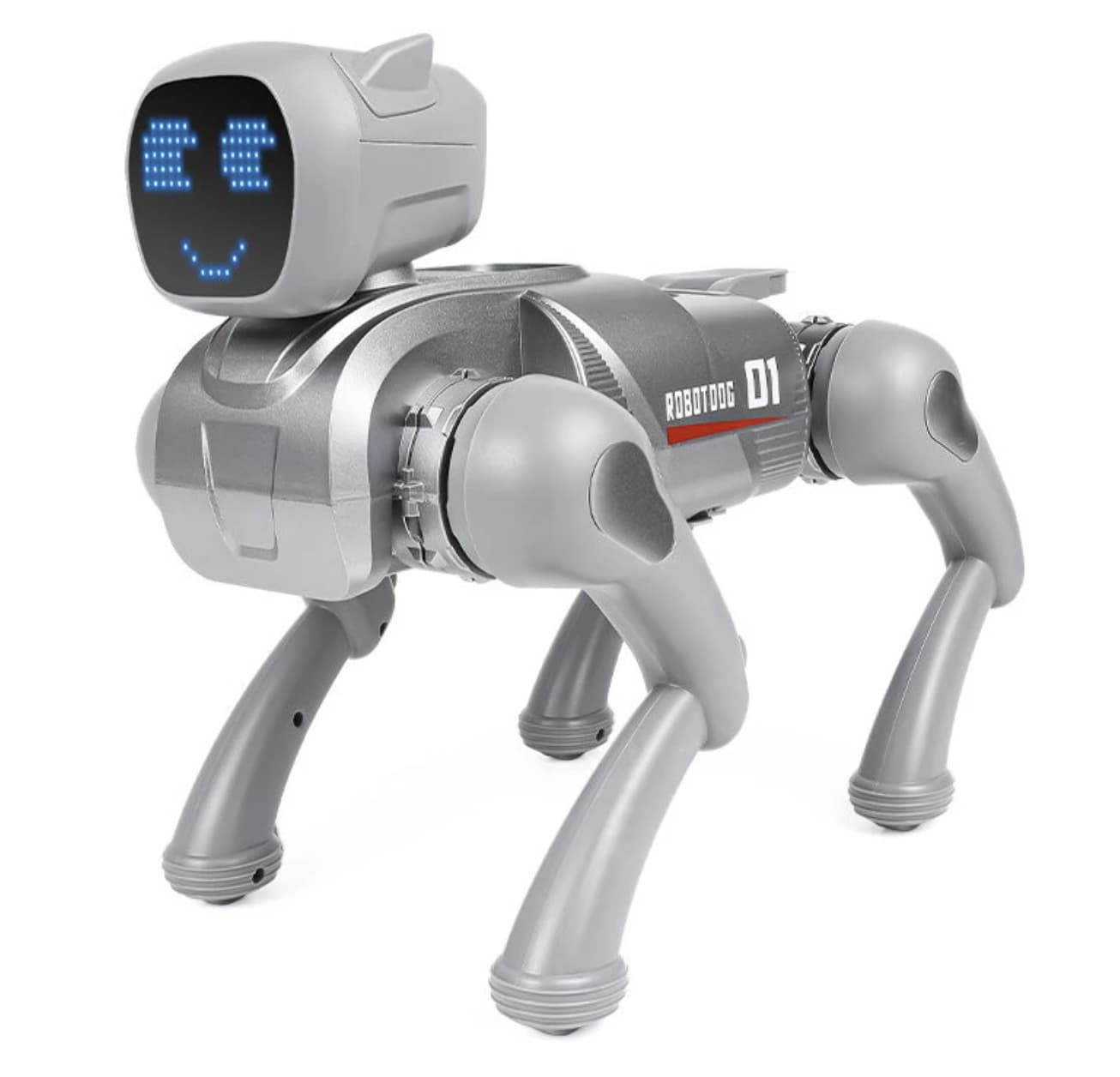
X1 AI Robot Dog: What Does It Offer?
The X1 combines several types of interaction in one robotic toy. Rather than relying on a single control method, the product listing advertises voice recognition, remote control, and a companion app.
Its main advertised features include:
- Speech recognition for voice-based interaction
- App control for operating the robot
- Programmable actions for creating customised movement sequences
- LED expressions that give the robot a more expressive appearance
- Singing and dancing functions for entertainment
- Remote-control operation for direct input
These features serve different purposes. Voice interaction makes the robot feel more responsive, remote control gives users direct command over its movements, and programming introduces an opportunity to experiment with action sequences.
The important distinction is that a toy can include advertised AI features without necessarily offering unrestricted conversations or advanced autonomous behaviour. Buyers should check the product instructions for the supported commands, language options, app requirements, and exact programming capabilities.
Voice Recognition Makes Play More Interactive
Voice control is one of the X1’s most notable selling points. Instead of reaching for a controller every time an action is needed, users can try supported voice commands to trigger specific responses.
This approach changes the way the toy is used. A conventional remote-control vehicle responds mainly to directional inputs, while a voice-enabled robot dog can combine movement with sounds and other preset actions.
For younger users, voice interaction may make the robot easier to explore once its commands are understood. It can also encourage experimentation: users can learn which phrases the device recognises and discover how different commands produce different responses.
However, speech recognition should not be confused with unlimited natural-language understanding. Performance can depend on the supported language, pronunciation, background noise, and the robot’s built-in command library. Before purchasing, check whether the advertised speech functions support the language spoken in your household.
Voice interaction is becoming an important feature in modern electronic toys, as demonstrated by the Tuya Smart AI Robot with multilingual voice control and AI learning features, which takes a different approach to interactive technology.
Singing, Dancing, and LED Expressions Add Personality
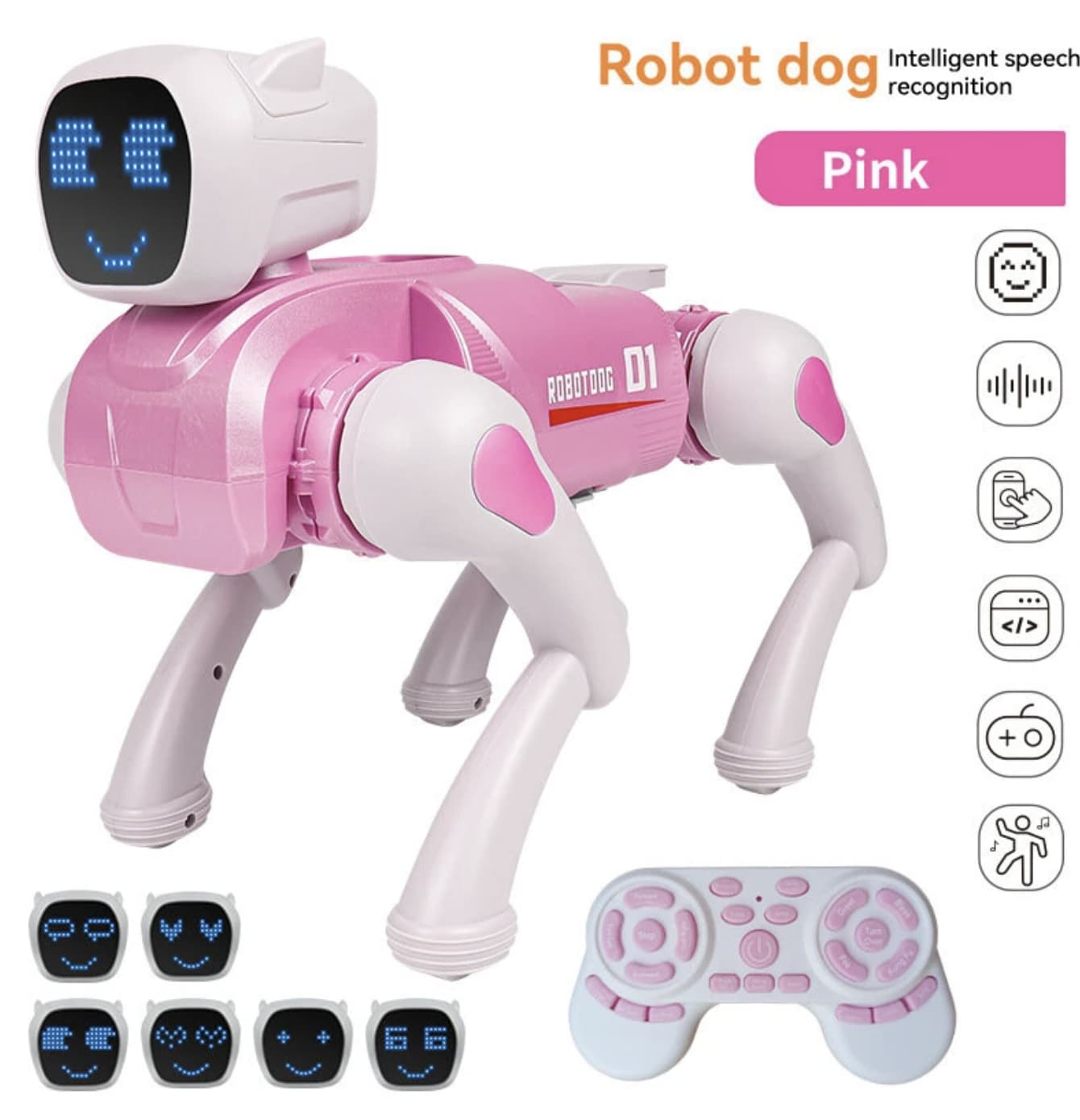
A robot dog becomes more engaging when it does more than move forwards and backwards. The X1 advertises singing, dancing, and LED expressions, giving it several ways to entertain users without requiring constant manual control.
The singing function provides an audio-based activity, while dancing adds movement. LED expressions contribute a visual element that can make the robot seem more animated during play.
These functions may be particularly useful when the toy is shared with friends or used during family activities. Instead of treating it solely as a machine to operate, children can use it as a character in games, performances, or imaginative stories.
The long-term appeal will depend on the variety of available actions. Buyers who want a toy that remains interesting after the first few sessions should look for details about the number of built-in routines and whether new action sequences can be created.
Programmable Actions: More Than Pressing a Button
Programming is arguably the most interesting feature for buyers who want an interactive toy with some educational value.
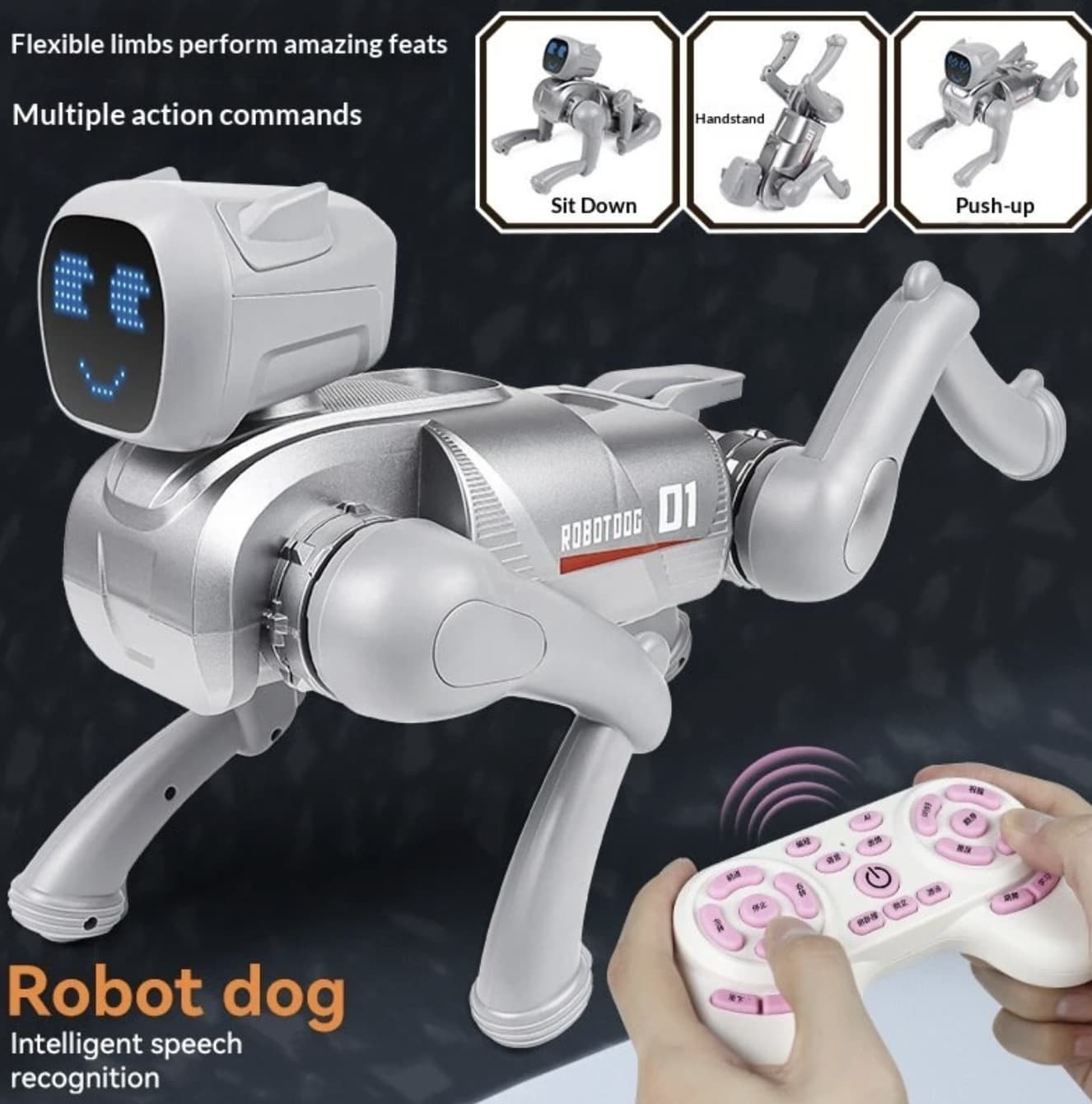
The X1 listing advertises programmable actions, which suggests that users can do more than simply select individual preset movements. Depending on the implementation, programming may allow actions to be arranged into a sequence so that the robot performs a planned routine.
For example, a user might create a short performance that combines several movements in a particular order. This type of activity introduces basic ideas about sequencing, instructions, and cause and effect.
It can also encourage trial and error. If a routine does not produce the expected result, users can adjust the sequence and try again.
However, the depth of the programming system matters. A simple action recorder is different from a visual coding interface with conditions, loops, or other programming concepts. The available product information does not establish which advanced programming tools are supported, so buyers should check the app demonstration and manual before treating the X1 as a comprehensive coding platform.
App Control and Remote Operation: Two Ways to Interact
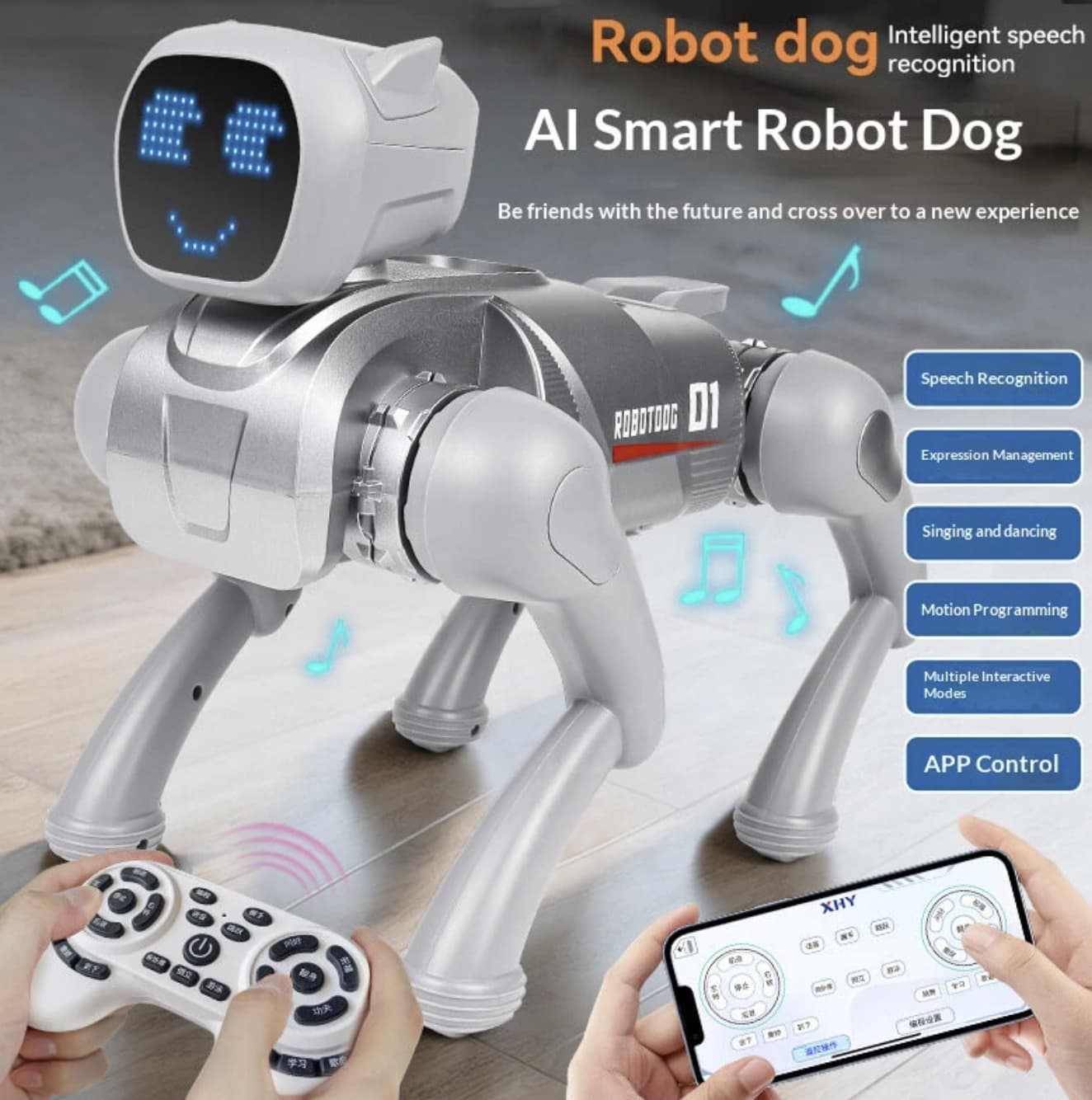
App control offers another way to operate the X1. Depending on the supported software, a mobile interface may provide access to actions or settings that are less convenient to select using physical controls alone.
Remote operation remains useful for users who prefer direct input rather than voice commands. It can also provide an alternative when the environment is too noisy for reliable speech recognition.
Before buying, check which mobile operating systems are supported, whether a dedicated app is required, and how the robot connects to the phone. Bluetooth and Wi-Fi are not interchangeable, so the actual connection method should be confirmed rather than assumed.
It is also worth checking whether all major functions work without the app. If voice recognition, programming, or specific routines depend on a phone connection, that could influence how conveniently the toy can be used.
Is the X1 AI Robot Dog an Educational Toy?
The X1 may offer educational value through experimentation rather than formal lessons.
Voice commands can introduce the idea of giving a system specific instructions. Programmable actions can help demonstrate sequencing, while remote and app control allow users to observe how different inputs affect the robot’s behaviour.
These activities may encourage curiosity about robotics and basic automation. They can also provide a starting point for conversations about how machines recognise commands and follow programmed instructions.
That said, the educational benefit depends on how the robot is used. A child who only activates preset dances may experience it mainly as an entertainment toy, while someone who regularly experiments with action sequences may learn more about structured instructions.
Parents looking specifically for a STEM learning device should compare the X1’s actual programming interface with toys that explicitly support visual coding or structured robotics lessons.
Who Should Consider Buying the X1?
The X1 is best evaluated according to the type of interaction a buyer wants.
Children who enjoy electronic pets: The combination of movement, sound, lighting, and voice commands may provide a more interactive alternative to a static toy.
Families looking for a technology-themed gift: The multiple control methods offer several ways to explore the robot, although age suitability should be checked against the manufacturer’s guidance.
Beginners interested in robotics: The advertised programming functions may provide an accessible introduction to action sequences and command-based interaction.
People who enjoy novelty gadgets: Singing, dancing, and LED expressions give the robot entertainment value beyond basic remote-controlled movement.
It may be less suitable for buyers expecting a lifelike robotic companion, unrestricted AI conversations, sophisticated autonomous navigation, or advanced coding capabilities. Those functions should not be assumed from the product name alone.
What to Check Before Ordering
Before choosing the X1 AI Robot Dog, review the following points on the product page:
Supported voice commands: Confirm the available languages and the types of commands the robot understands.
Programming features: Determine whether the app allows users to combine actions or only activate preset routines.
App compatibility: Check phone compatibility, connection requirements, and whether an app is necessary for everyday use.
Battery and charging: Verify the battery specifications, charging method, estimated operating time, and whether the required charging accessories are included.
Age suitability: Review the manufacturer’s recommended age and any small-parts or supervision warnings.
Package contents: Confirm that the robot, controller, and other accessories shown in the listing are included in the selected configuration.
Price and delivery: Check the current price, shipping options, delivery estimates, and return conditions for your location.
These details matter because the quality of an interactive toy depends not only on its advertised features but also on how conveniently those features can be accessed.
X1 AI Robot Dog vs a Traditional Electronic Pet
A traditional electronic pet may focus on a limited collection of sounds and movements. The X1’s advertised combination of voice recognition, app control, and programmable actions potentially offers more ways to interact with the device.
Its main advantage is variety: users can explore different control methods instead of relying entirely on preset responses. Programming can add another layer of play if the software allows meaningful customisation.
The trade-off is complexity. A simpler electronic pet may be easier to use straight out of the box, while a programmable robot can require time to learn its controls and setup process.
For buyers who value experimentation and multiple interaction methods, the X1 deserves consideration. Those who prefer a straightforward toy may want to compare it with simpler alternatives before deciding.
For another example of an interactive electronic pet, the LE NENG TOYS K16A robot dog with voice commands, touch interaction, and programmed movements offers a useful comparison of different approaches to robotic pet play.
Final Verdict: Is the X1 AI Robot Dog Worth Considering?
X1 AI Robot Dog brings together several appealing features for an interactive electronic pet: advertised speech recognition, app and remote control, programmable actions, LED expressions, singing, and dancing.
Its strongest potential advantage is the combination of entertainment and experimentation. Users can trigger actions, explore voice commands, and investigate whether the programming tools allow them to create their own routines.
The key consideration is the depth of those features. The term AI does not automatically mean human-like conversation, and programmable actions do not necessarily indicate a full coding environment. Checking the manual, app requirements, and package details is essential before purchasing.
If you want a robotic dog that offers more interaction than a basic electronic toy, the X1 is worth a closer look. Compare the confirmed functions and included accessories with your expectations to determine whether it is the right fit.