









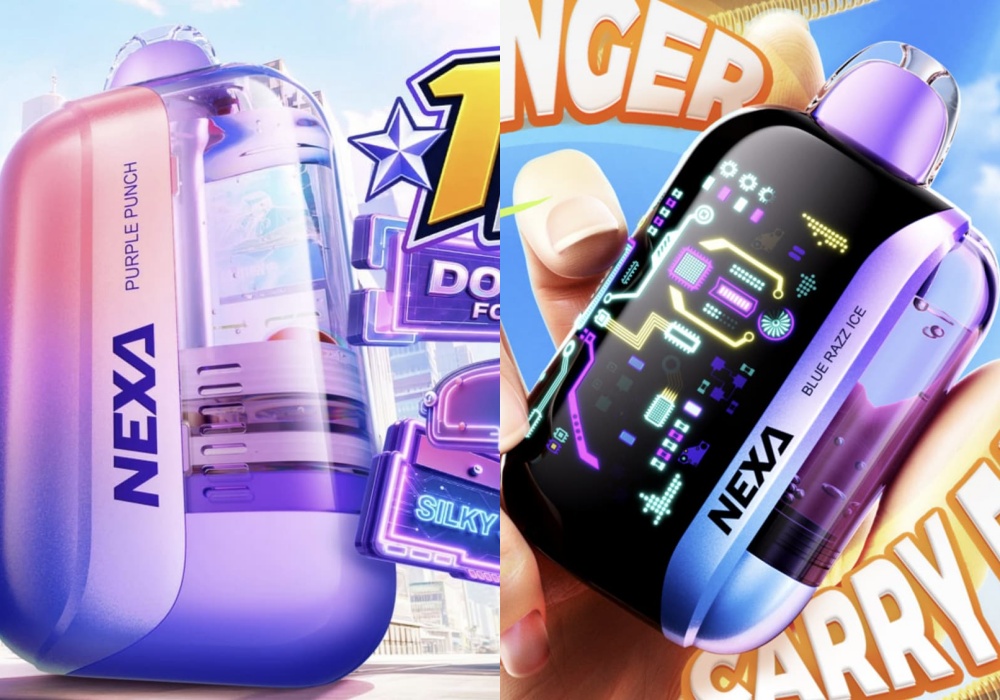
NEXA’s Ultra series has moved into a higher-capacity generation. The NEXA Ultra II was built around a 50,000-puff headline, a 20mL liquid system and a 900mAh battery. The newer NEXA Ultra 3 raises the advertised ceiling to 100,000 puffs and introduces a 35mL transparent tank, a 1,000mAh battery and a 25W dual-coil configuration.
Those numbers make the Ultra 3 look like a substantial step forward on paper. But a useful comparison needs to look beyond the headline puff count. The liquid-storage design, coil specifications, airflow, sealing system and information provided by the manufacturer all matter when assessing how the two devices differ.
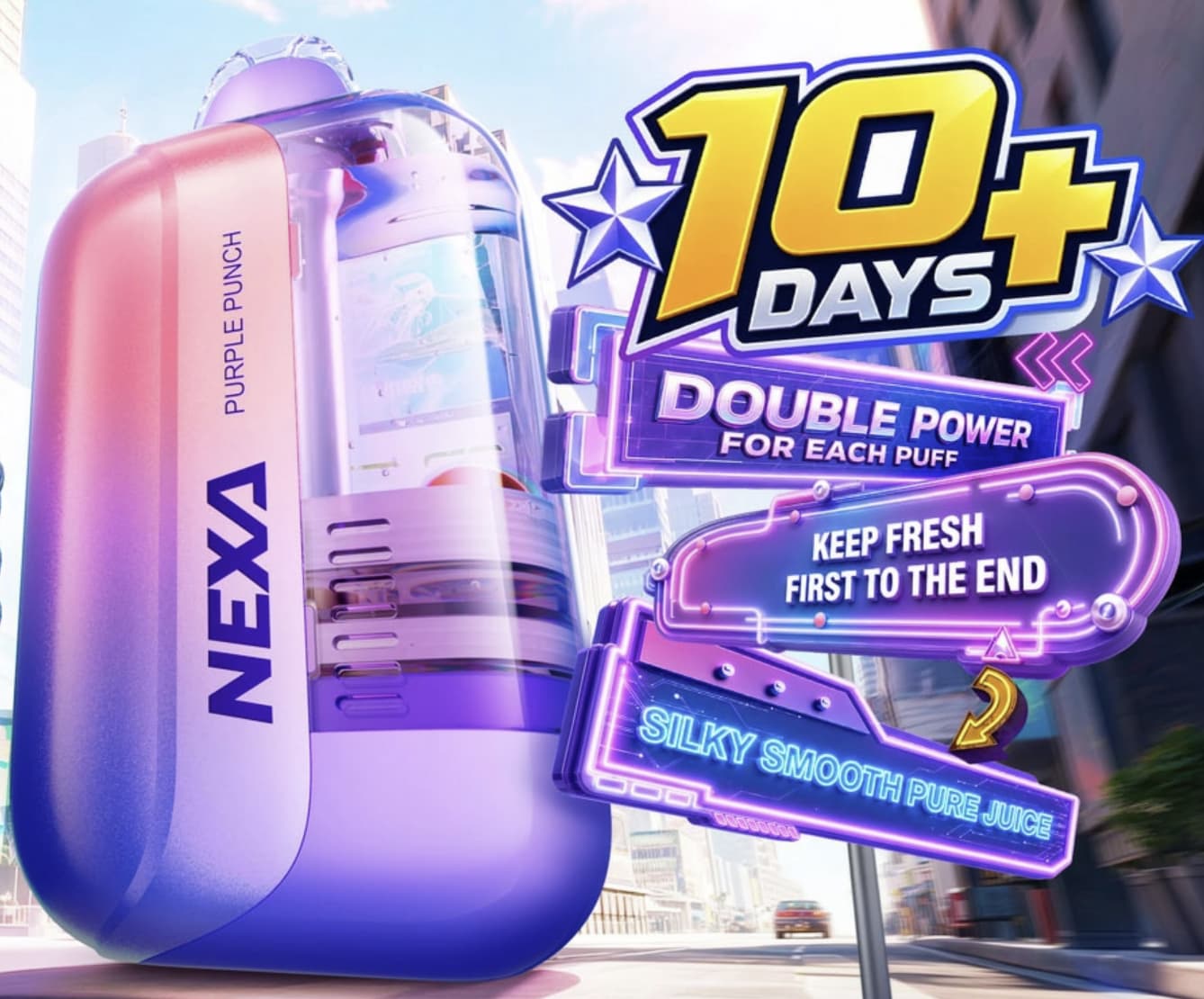
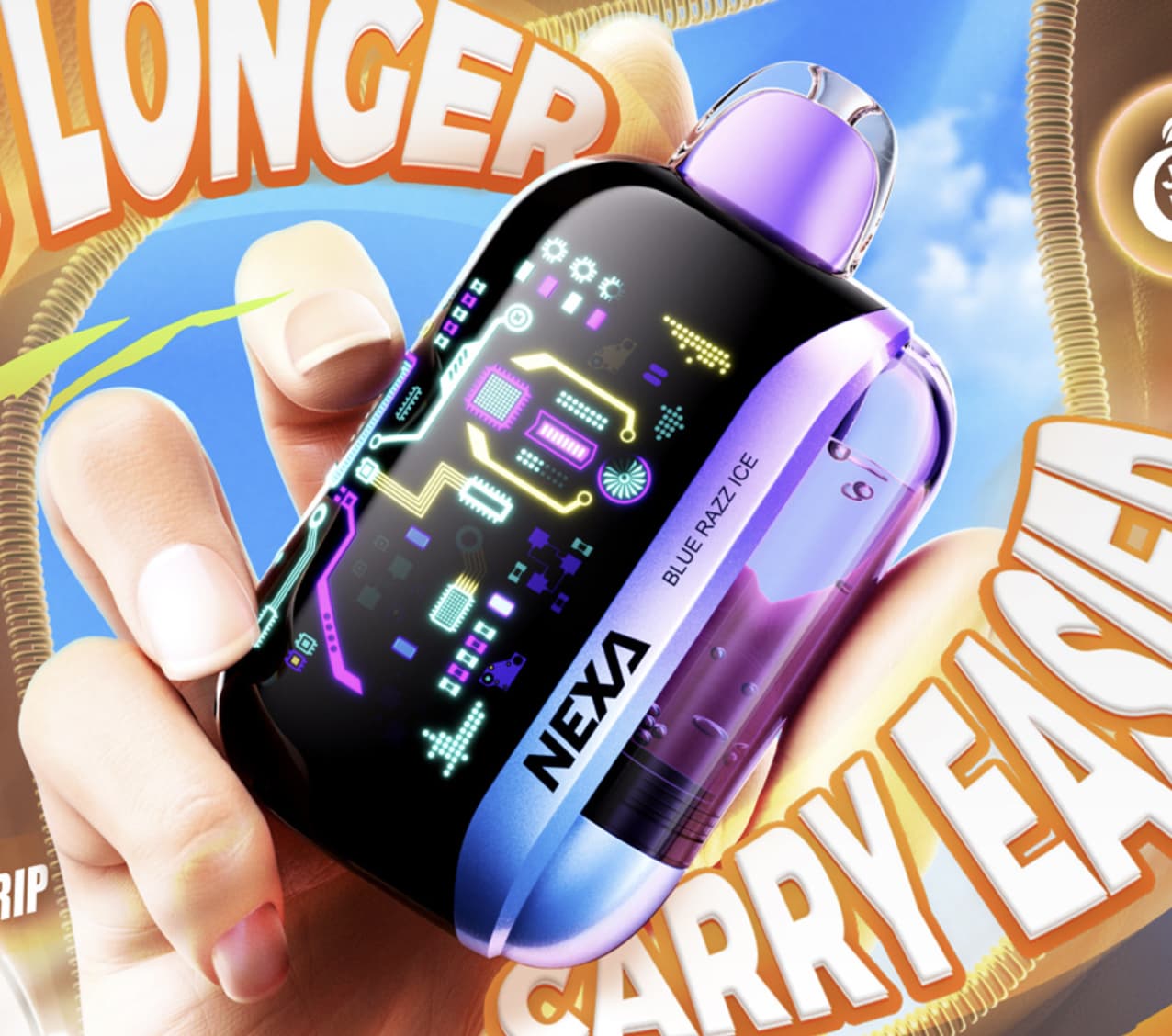
This comparison uses the specifications published on NEXA’s official product pages. It is not a laboratory test, and advertised puff counts should not be treated as guaranteed real-world results.
NEXA Ultra 3 vs Ultra II: Specifications Compared
| Specification | NEXA Ultra 3 | NEXA Ultra II |
|---|---|---|
| Advertised puff count | Up to 100,000 / 60,000 | Up to 50,000 Normal / 30,000 Turbo |
| E-liquid capacity | 35mL | 20mL total |
| Liquid structure | Visible Crystal Tank | 4mL storage cotton + 16mL Crystal Tank |
| Battery | 1,000mAh | 900mAh |
| Coil system | Dual mesh | Dual mesh |
| Published coil resistance | 0.8Ω | Not specified on the product page |
| Published output | 25W dual-coil system | Not specified on the product page |
| Airflow | Straight airflow design | Adjustable airflow |
| Freshness system | JUICY GUARD automatic sealing | JUICY LOCK |
| Display feature | Not clearly detailed on the product page | Light and Dark modes |
| Charging | USB Type-C | USB Type-C |
The figures above come from NEXA’s published product information. The Ultra II page describes its 4mL storage-cotton section and 16mL Crystal Tank, while the Ultra 3 page lists a 35mL capacity and a 0.8Ω dual-mesh configuration. Some technical details are not presented equally across the two product pages, so missing information should not be interpreted as proof that a feature is absent.
For a closer look at the newer model’s hardware, tank structure and sealing system, read our NEXA Ultra 3 review.
1. Capacity Is the Biggest Change
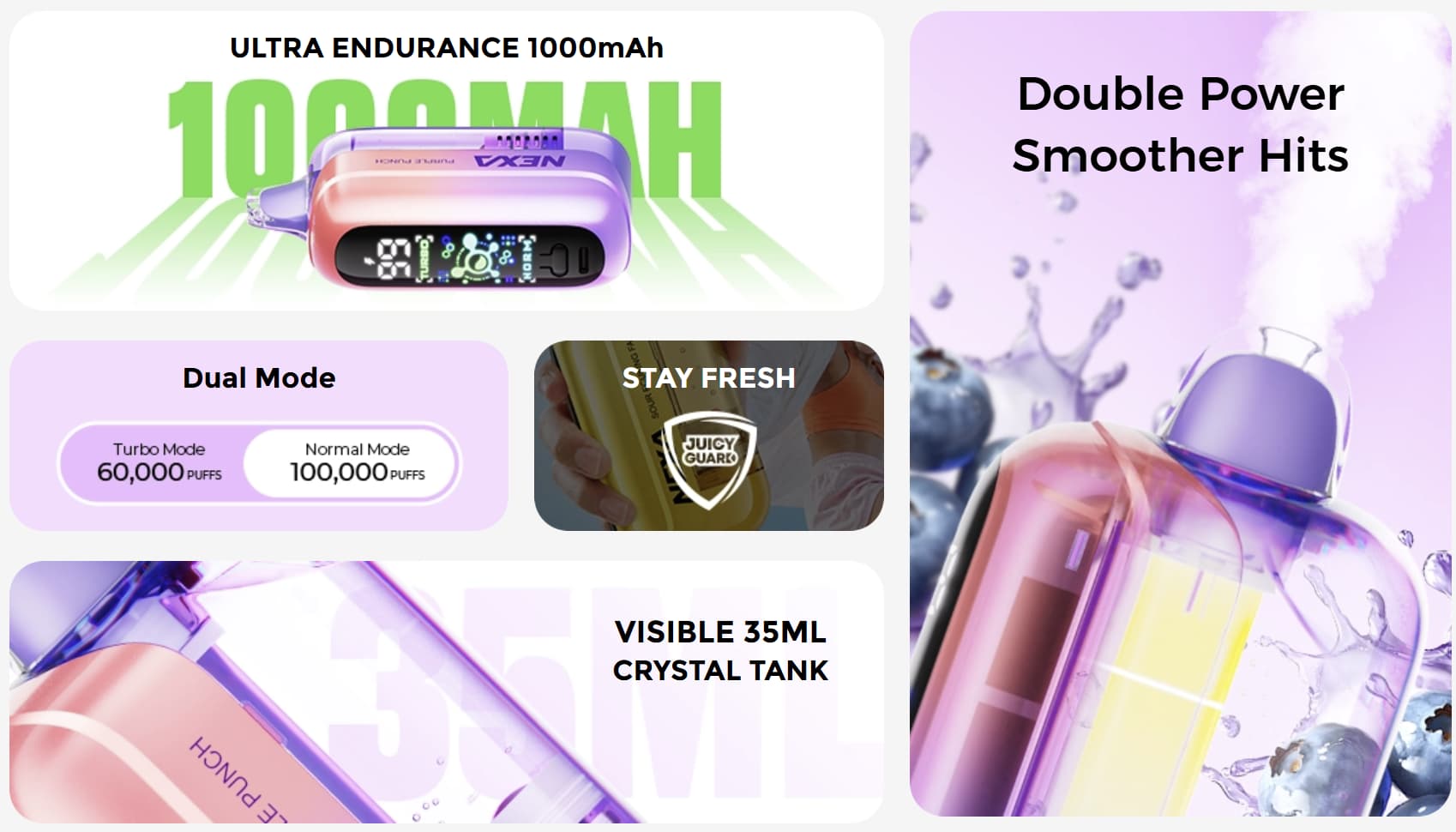
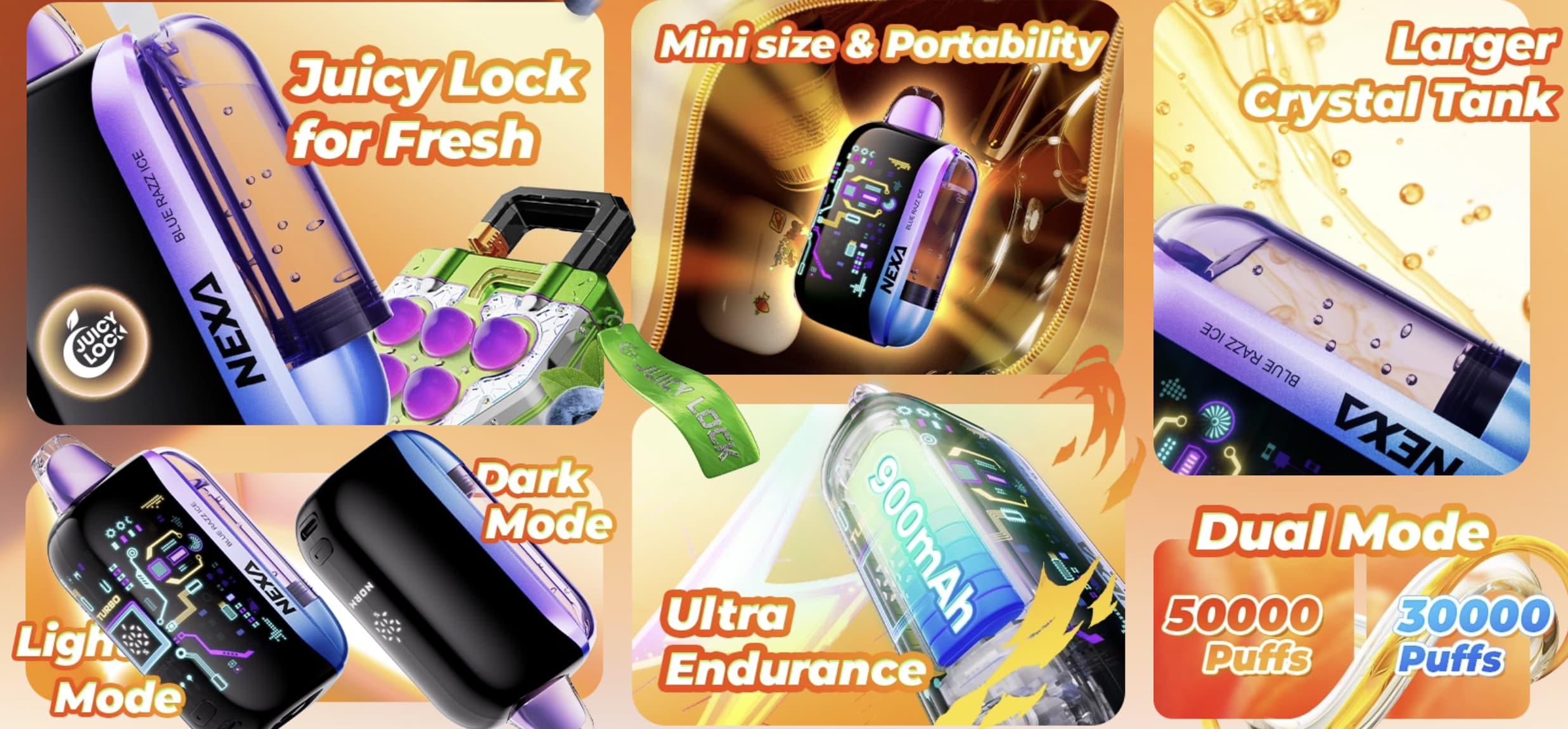
The most obvious difference is the liquid capacity. NEXA lists the Ultra 3 with a 35mL Crystal Tank, compared with the Ultra II’s combined 20mL arrangement: 4mL in storage cotton and 16mL in the visible tank.
That is a 15mL increase in the stated total capacity. It also changes the way the reservoir is presented. The Ultra II divides its liquid system between an internal cotton section and a transparent tank, whereas the Ultra 3 emphasizes a larger visible Crystal Tank.
A transparent reservoir has a practical information advantage: the remaining liquid can be checked visually instead of relying entirely on a screen or other indicator. It does not, however, guarantee that every part of the liquid will be used, or that the coil will maintain the same performance throughout the device’s service life.
The larger capacity is therefore a measurable hardware change, but it should not be confused with a precise prediction of how long the device will last.
2. The Advertised Puff Count Has Doubled
NEXA lists the Ultra 3 at up to 100,000 or 60,000 puffs, while the Ultra II is specified for up to 50,000 puffs in Normal Mode and 30,000 in Turbo Mode.
The new model’s headline figures are approximately twice those of its predecessor. However, puff counts are manufacturer estimates rather than standardized guarantees. Draw length, frequency of use, operating mode, battery condition and other variables can affect the number of usable draws.
There is also a difference in how the product pages present the figures. The Ultra II explicitly labels its two settings as Normal and Turbo. The Ultra 3 page lists 100K/60K alongside its Dual Mode feature, but does not explain the two figures in the same detailed way. Buyers comparing the claims should check the instructions and regional packaging rather than assume that every market uses identical settings.
The increase in advertised capacity is clear; the exact real-world difference cannot be established from the specification pages alone.
3. Battery Capacity and Charging
The Ultra 3 uses a listed 1,000mAh battery, up from the Ultra II’s 900mAh unit. That represents an increase of 100mAh, or roughly 11.1%.
Both models list USB Type-C charging. The larger battery gives the Ultra 3 a higher nominal capacity, but battery size alone does not determine charging time or operating endurance. Output level, coil behavior, display use and the frequency of activation also influence power consumption.
NEXA promotes the Ultra 3 as a longer-endurance model, but its official product page does not provide a standardized runtime test. The 1,000mAh rating is useful for comparing the hardware; it should not be translated directly into a guaranteed number of days.
4. Dual-Mesh Heating and Airflow
Both products use dual-mesh coil technology, so the Ultra 3 is not a complete departure from the Ultra II’s heating approach.
The newer model’s product page provides more specific technical information: a 25W dual-coil system and dual mesh rated at 0.8Ω. NEXA also describes a straight airflow path, which it says is intended to create a smoother draw.
The Ultra II page highlights adjustable airflow, giving users a way to alter the air intake. That is a different design emphasis from the Ultra 3’s straight-airflow description.
It would be premature to declare one coil arrangement superior based only on wattage or resistance. Actual output, temperature, flavor consistency and coil longevity require controlled testing. The official pages establish the hardware specifications, not a verified performance ranking.
5. JUICY GUARD vs JUICY LOCK
The two generations also use different names for their liquid-freshness systems.
To understand the earlier generation’s liquid-preservation approach in more detail, see our NEXA Ultra II JUICY LOCK longevity test.
The Ultra II features JUICY LOCK, which is presented as a press-to-activate system. Its product page also highlights the transparent tank and a compact form factor.
The Ultra 3 introduces JUICY GUARD. NEXA describes it as an automatic sealing function that engages after 15 minutes of use to help lock in e-liquid freshness.
The distinction is worth noting: JUICY LOCK is the named system on the Ultra II, while JUICY GUARD is the newer automatic-sealing feature promoted for the Ultra 3. These are manufacturer descriptions, not independent proof of leak prevention or a measurable improvement in liquid stability.
6. Display and Everyday Design
The Ultra II product page specifically mentions a display with Light and Dark modes. Users can switch to Dark Mode by pressing and holding for three seconds, according to the manufacturer’s instructions.
The Ultra 3 product page gives more attention to the 35mL visible tank, dual-coil output, straight airflow and JUICY GUARD. It does not provide the same level of detail about display functions.
This means the Ultra II has a clearly documented screen-related feature, while the Ultra 3’s published product information focuses more heavily on its tank and heating system. A missing detail on a product page does not necessarily mean the newer model has no display; it simply means the manufacturer’s current specification page does not establish that point clearly.
For a fair comparison, it is better to distinguish confirmed published features from assumptions based on product images or marketing language.
7. What the Specification Upgrade Actually Means
Viewed as a hardware update, the Ultra 3 makes three clear changes:
- More liquid capacity: 35mL rather than the Ultra II’s combined 20mL system.
- A larger battery: 1,000mAh compared with 900mAh.
- A more detailed coil specification: 25W dual-coil output and 0.8Ω dual mesh are listed for the Ultra 3.
It also changes the named freshness system from JUICY LOCK to JUICY GUARD and replaces the Ultra II’s adjustable-airflow emphasis with a straight-airflow design in its product description.
The Ultra II, on the other hand, has a more explicitly documented Light/Dark display feature and a clearly stated Normal/Turbo puff-count breakdown. Those details remain relevant when comparing the published feature sets.
8. Important Nicotine and Compliance Information
NEXA lists the Ultra 3 at 50mg/mL nicotine on its official product page. The Ultra II page should be checked for the exact nicotine concentration and packaging details in the intended sales market before making a direct regional comparison.
Nicotine is addictive. These products are intended only for adults where their sale and use are legal. Product availability, nicotine limits, tank capacity rules, labeling and age restrictions vary by country and region. A device’s appearance on a manufacturer’s website does not establish that it is legal to sell in every market.
Readers should verify local regulations and the exact version offered by a seller before relying on online specifications.
Final Verdict: A Higher-Capacity Redesign, Not Just a Bigger Puff Number
NEXA Ultra 3 represents a substantial capacity-focused update over the Ultra II. Its 35mL Crystal Tank, 1,000mAh battery and published 25W dual-mesh system are the most concrete hardware changes. Its advertised puff-count ceiling is also considerably higher, although actual results will depend on operating conditions and cannot be confirmed from marketing figures alone.
The Ultra II remains distinct in its documented adjustable airflow and Light/Dark display options. It also has a clearly described 4mL-plus-16mL liquid arrangement and Normal/Turbo puff-count labels.
The most accurate way to describe the generational difference is this: Ultra 3 expands the capacity and revises the airflow and sealing design, while Ultra II provides a more explicitly documented display and mode interface. Neither specification sheet is enough to prove which device performs better over its full lifespan. A meaningful performance verdict would require independent testing of liquid consumption, coil consistency, battery endurance and leakage.
For readers comparing the two generations, the official product pages are the best place to confirm the precise version and specifications available in their region.