







When “Heard It Over the Radio” Isn’t Enough
It’s 10 AM on a busy morning. The front desk radios housekeeping: “Room 304 needs a priority clean for a VIP early check-in.” Simultaneously, maintenance reports a leak in the lobby restroom. By 10:15, the lobby leak is being fixed, but Room 304 remains untouched. The front desk thought it was handled; housekeeping swamped with other tasks. The VIP arrival is compromised, and the guest experience starts on a sour note.
If this scenario feels familiar, you’re not alone. The critical failure point isn’t a lack of communication—it’s the lack of structured task management following that communication. Traditional “voice-only” two-way radios create a black hole of accountability. Requests are spoken into the void, with no tracking, no confirmation, and no clear ownership.
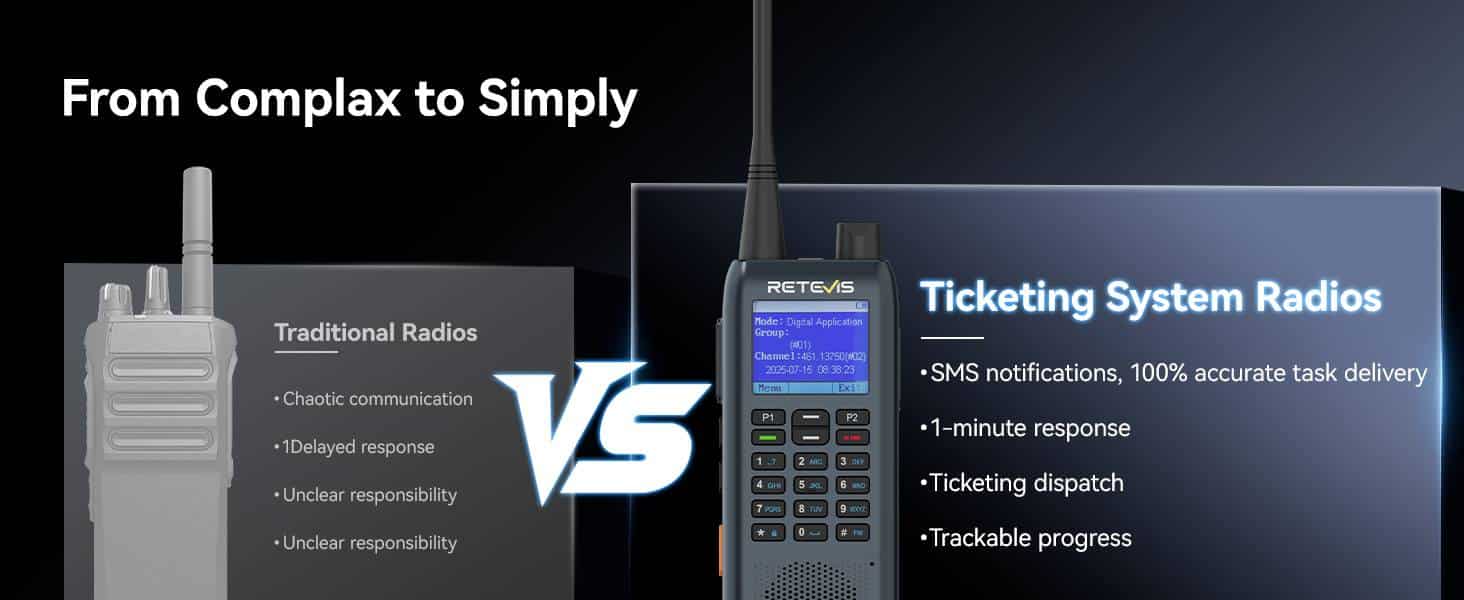
But what if every critical request could be transformed from a fleeting voice message into a trackable, accountable, and actionable digital task? This is the precise gap filled by a Ticketing System integrated into professional two-way radios. Let’s explore why this evolution from mere communication to communication with guaranteed execution is becoming non-negotiable for efficient hotel operations.
The Core Pains of Traditional Hotel Communication
Most hotel managers grapple with these silent efficiency killers daily:
The Accountability Gap: A voice command like “Please check the AC in suite 502” has no digital footprint. If the staff is busy, the task can be forgotten or ignored with no record. This leads to internal friction and denied responsibilities.
The Priority Ambiguity: In a constant stream of voice communications, everything sounds urgent. How does your staff distinguish between a critical maintenance issue and a routine request? Without a clear, visual prioritization system, severe issues can be deprioritized by accident.
The Operational Black Hole: For a manager, the most frequent and frustrating question is: “What’s the status of…?” With traditional radios, you must interrupt the staff member with a follow-up call, distracting them and clogging the channel, often to get a vague “I’m on it” response.
The Information Loss: Complex instructions (“Restock the minibar in 301, but note the guest has an allergy so skip the nuts”) are easily garbled or forgotten when relayed by voice alone, especially for new staff.
These pains aren’t solved by buying louder radios; they are solved by making your communication smarter and more structured.
The Strategic Solution: What is a Two-Way Radio Ticketing System?
A Ticketing System is a digital task management workflow built directly into the radio network. It transforms a work request from a transient voice command into a structured data object with a clear lifecycle.
Crucially, this is not an automatic speech-to-text function. Instead, it’s a deliberate process where a manager or dispatcher manually creates and assigns a ticket via a connected interface (like a PC software or a dedicated function on a manager’s radio).
The Core Workflow Principle:
Creation & Assignment: A manager creates a ticket with clear details (e.g., “Leak under sink – Kitchen Prep Area-High Priority”) on a management device and assigns it to a specific staff member or team.
Push Notification: The assigned employee’s radio receives a clear visual, written ticket details. It’s unambiguous and impossible to miss.
Acknowledgment & Action: The employee acknowledges receipt with a single button press, instantly notifying the manager that the task is in hand. They then proceed with the job.
Closure & Digital Record: Upon completion, the employee marks the ticket as “Done.” The system automatically logs the closure, creating a full audit trail from creation to completion.
This simple, principle-based workflow is what systematically dismantles the chronic pains of traditional hotel communication.
From Principle to Advantage: The Tangible Benefits for Your Hotel
Implementing a radio with a built-in Ticketing System directly translates to operational advantages:
Eliminates the Accountability Gap: Every task has a clear owner and a digital record. The culture shifts from “I thought someone else was doing it” to one of ownership and responsibility.
Clarifies Priorities Instantly: Managers can tag tickets with priority levels. Staff see exactly what demands immediate attention, enabling effective triage without constant managerial oversight.
Creates Operational Transparency: The “status black hole” is filled. Managers gain a real-time dashboard view of all open tickets, providing peace of mind and enabling proactive resource allocation.
Drastically Reduces Radio Chatter: By replacing “status update” voice calls with silent digital updates, the primary radio channel is reserved for truly urgent, dynamic communication. This reduces noise and stress for the entire team.
Builds a Foundation for Data-Driven Decisions: The complete log of completed tickets becomes a valuable asset. You can analyze response times, identify recurring issues, and optimize staff deployment based on empirical data.
Conclusion: It’s Time to Upgrade Your Operational Protocol
The challenge in modern hospitality isn’t just to communicate; it’s to communicate in a way that guarantees execution and provides clarity. The traditional two-way radio was a tool for speaking. A two-way radio with a Ticketing System is a tool for managing and doing.
It addresses the fundamental flaws of “voice-only” systems by adding the essential layers of structure, tracking, and accountability. Before considering another set of traditional walkie-talkies, ask yourself: Are you merely maintaining a channel for noise, or are you building a framework for results?