








Most budget smartwatches try to win attention with a familiar list of features: heart-rate tracking, sports modes, notifications, Bluetooth calling, sleep monitoring, and a colorful display.
The HT30 smartwatch takes a slightly different route. Its headline specifications are unusually practical for an affordable wearable, combining a 1.7-inch 360×360 IPS display, 600mAh battery, Bluetooth 5.2, built-in compass, floodlight, Bluetooth calling, IP68 protection, and multiple fitness functions.
That combination suggests the HT30 is designed less as a miniature smartphone and more as an everyday utility watch.
The large battery is particularly interesting. While many smartwatches focus on keeping the case as thin and light as possible, the HT30 puts a substantial 600mAh cell inside a relatively large 51.5 × 51.5 × 13.6mm body. Banggood lists approximately 5–7 days of use and 15–20 days of standby time, with charging taking around 2–3 hours.
There are also some important limitations. The health functions are explicitly described as reference tools rather than medical measurements, and the manufacturer listing says the watch should not be used for swimming.
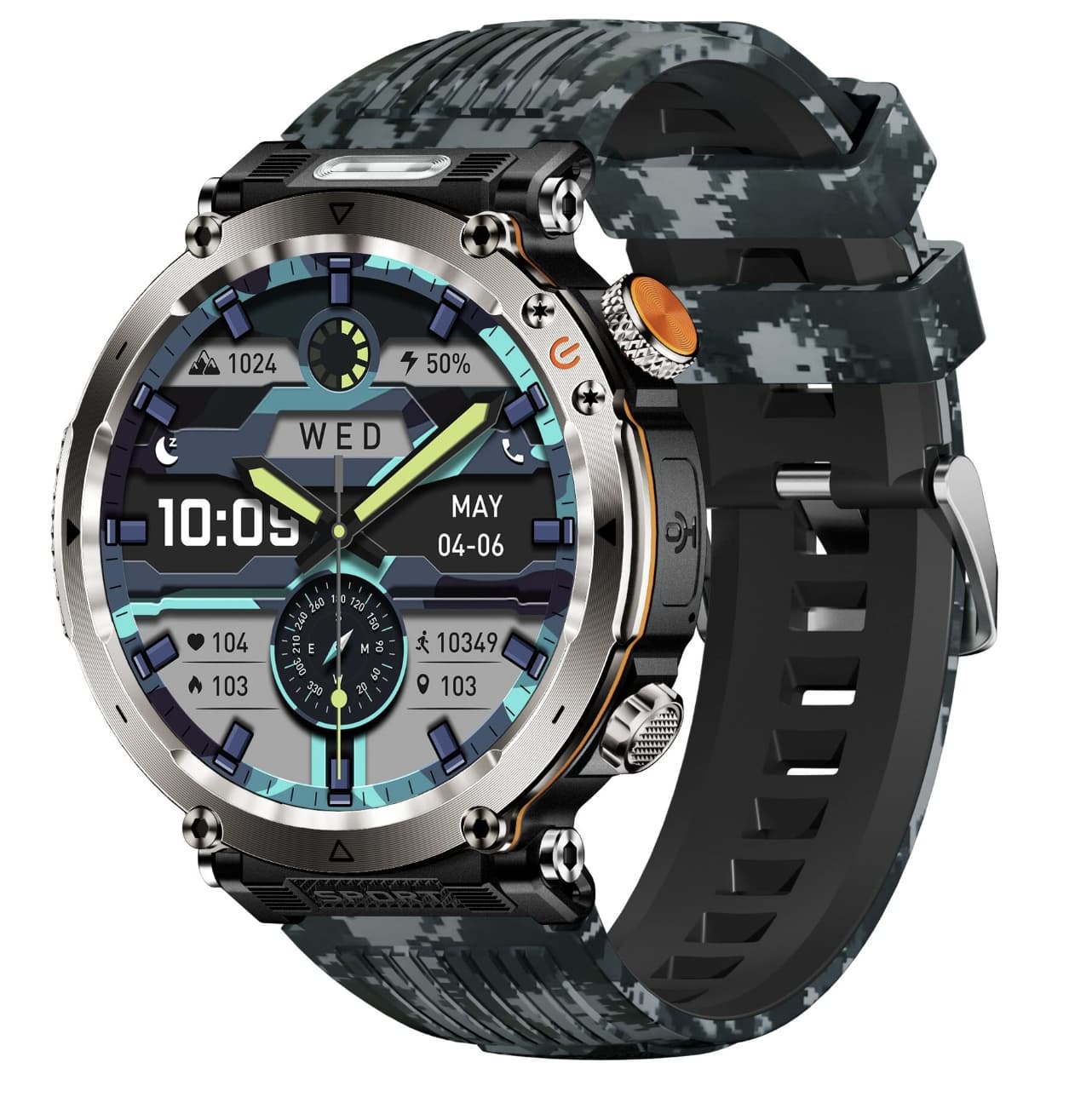
So, rather than simply counting its features, it is more useful to look at how the HT30’s hardware fits together.
If you’re comparing different wearable options, our guide to the best smartwatches can help you understand which features matter most for everyday use.
A 1.7-Inch Display Makes the HT30 More About Visibility
The first thing that stands out is the 1.7-inch IPS display.
With a resolution of 360 × 360 pixels, the screen offers enough space for notifications, watch faces, activity information, weather details, and other interface elements without forcing everything into a tiny viewing area.
That matters because screen size affects more than aesthetics.
A larger display can make it easier to read incoming notifications at a glance, check steps during a walk, view exercise information, or interact with touch controls. For users who find smaller smartwatches difficult to operate, the HT30’s relatively large square display is one of its more practical characteristics.
The screen uses IPS technology rather than an AMOLED panel. That distinction is worth keeping in mind when comparing the HT30 with more expensive smartwatches.
An AMOLED display can offer deeper blacks and stronger contrast, while an IPS panel can still provide a perfectly usable interface without pushing the product into a higher price category.
The HT30 therefore appears to prioritize screen area and functionality over premium display technology.
The 600mAh Battery Is the Real Headline
If there is one specification that deserves particular attention, it is the 600mAh battery.
Banggood lists approximately 5–7 days of normal use, 15–20 days of standby, and a charging time of around 2–3 hours. The watch uses magnetic charging.
Battery capacity alone does not determine actual runtime, so the quoted figures should be treated as manufacturer estimates rather than guaranteed results.
Still, a 600mAh battery changes how the HT30 fits into everyday use.
A smartwatch that needs to be charged every night can become annoying, especially if the user wants to keep sleep monitoring active. A multi-day battery gives the owner more flexibility to leave the watch on continuously and charge it less frequently.
The trade-off is that a large battery generally requires more physical space. The HT30 measures approximately 13.6mm thick, so this is not an ultra-thin minimalist wearable.
That is an important part of the design philosophy: battery endurance appears to be prioritized over a slim profile.
Bluetooth Calling Turns It Into More Than a Notification Watch
The HT30 supports Bluetooth calling, along with call reminders, message reminders, and app notifications.
This allows the watch to function as an extension of a connected smartphone rather than simply displaying fitness information.
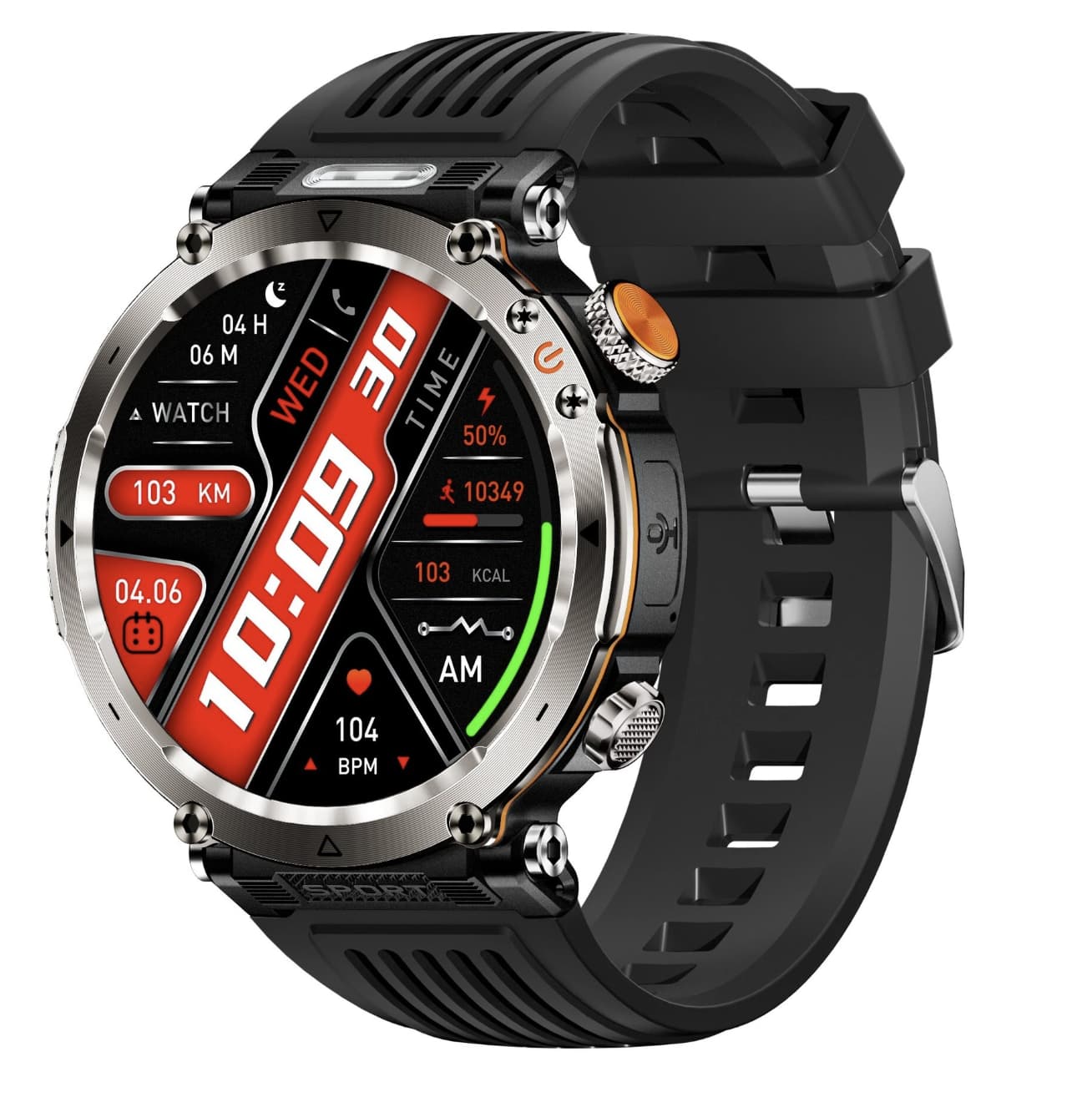
Once paired with a compatible phone, the wearable can provide quick access to incoming-call information without requiring the user to immediately reach for the phone.
That can be useful while working, walking, exercising, or carrying a phone in a bag.
The HT30 uses Bluetooth 5.2 and supports Android 5.1 and above as well as iOS 8.2 and above, according to the product listing. It works with the FitCloudPro companion app.
The important thing to understand is that Bluetooth calling does not make the HT30 an independent cellular smartwatch. It relies on a connected smartphone for this type of communication.
FitCloudPro Handles the Smartphone Connection
The HT30 works with FitCloudPro, which handles the connection between the watch and smartphone.
This companion-app approach is common among budget smartwatches.
The watch itself provides the physical interface, while the phone app manages settings, notifications, activity information, watch faces, and other connected functions.
The HT30 supports a large selection of system and app languages, including English, Chinese, German, Spanish, French, Japanese, Korean-language alternatives are not listed, and numerous other European and Asian languages.
For buyers using a non-English phone, broad language support can make the product easier to configure.
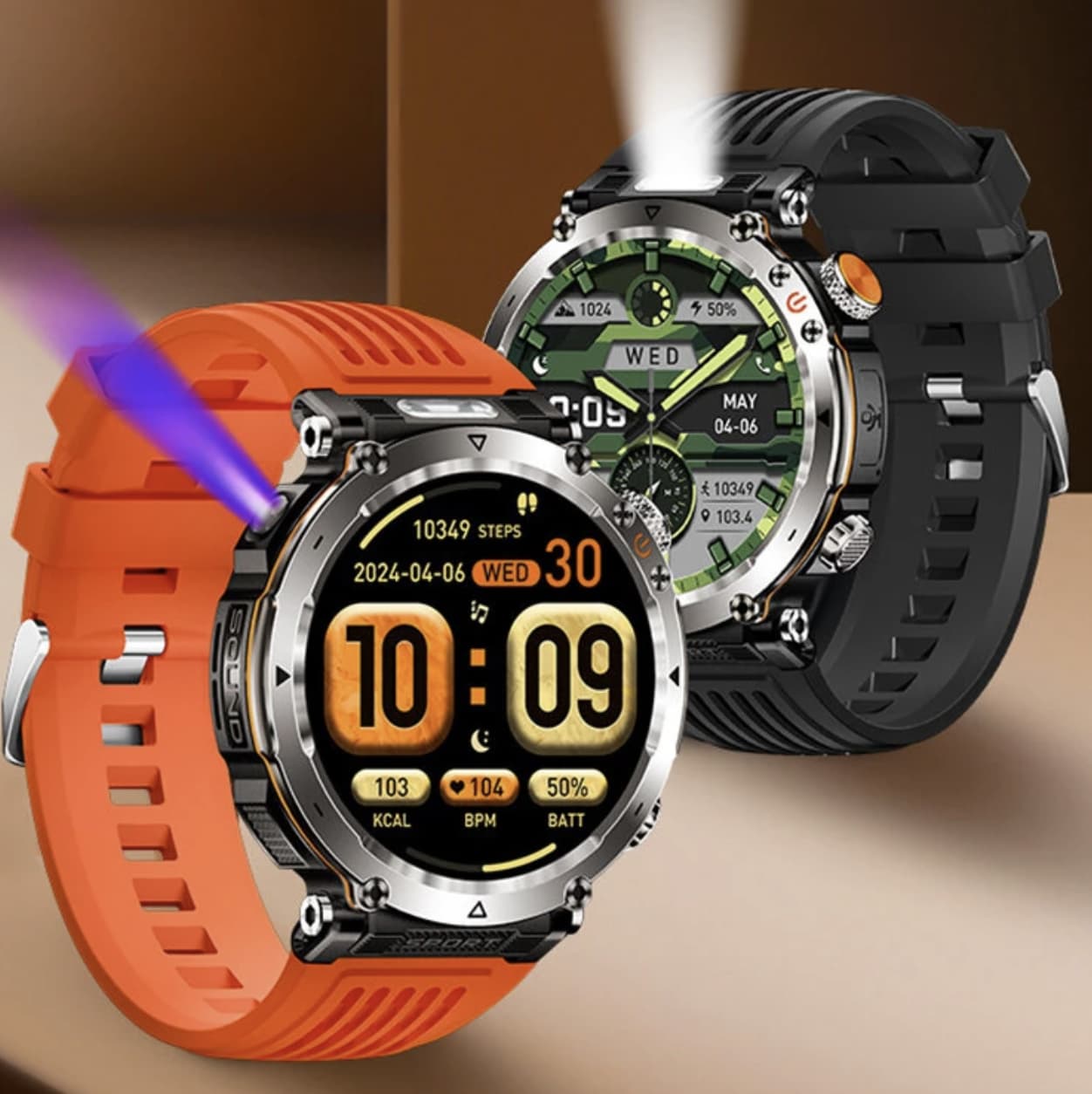
A Built-In Compass Gives the Watch an Outdoor Angle
One of the more unusual features in the HT30’s long specification list is the built-in compass.
A compass is not something every budget smartwatch includes, and it gives the HT30 a slightly more outdoor-oriented character.
For hiking, walking, travel, or simply checking direction while exploring an unfamiliar area, having directional information available directly on the wrist can be convenient.
The compass should not be confused with professional navigation equipment, though. The listing does not position the HT30 as a dedicated GPS sports watch, and there is no independent navigation testing provided.
Its value is therefore best understood as an additional convenience feature rather than a replacement for a dedicated outdoor navigation device.
The Built-In Floodlight Is Surprisingly Practical
Another unusual feature is the built-in floodlight.
At first glance, a light on a smartwatch may sound like a novelty. In practice, it can be useful in situations where a smartphone flashlight is inconvenient.
For example, it could provide quick illumination when looking for something in a dark bag, finding a keyhole, checking an object in a dim room, or walking through a poorly lit area.
The advantage is primarily accessibility: the light is already attached to your wrist.
This is another indication that the HT30 is being designed as an everyday utility device, rather than focusing exclusively on fitness or smartphone notifications.
Health Tracking Covers the Basics
The HT30 includes a collection of health-related functions:
- Heart-rate monitoring
- Blood-pressure monitoring
- Sleep monitoring
- Breathing exercises
- Step counting
- Calorie tracking
- Distance tracking
These functions can make a smartwatch useful as a general activity companion.
However, there is an important distinction between wellness tracking and medical measurement.
Banggood explicitly states that the HT30 is not medical equipment and that its health-test functions are intended for reference only.
That means readings such as blood pressure should not be used to diagnose a health condition or replace a clinically validated medical device.
For a clearer explanation of what smartwatch health sensors can and cannot measure, see our guide to ECG smartwatches vs heart-rate monitors.
For everyday purposes, these features can be treated as general indicators within the smartwatch ecosystem, but users should not interpret them as medically validated measurements.
Sleep Monitoring Benefits From the Long Battery Life
Sleep tracking is one feature where battery endurance becomes particularly useful.
If long battery life is a priority, you can also compare the HT30 with other long-battery smartwatches before choosing a model.
If a watch needs to be removed and charged every evening, collecting overnight sleep data becomes difficult.
The HT30’s claimed 5–7-day usage time means it is designed to remain on the wrist for several days between charges, at least according to the manufacturer’s specifications.
That creates a more practical environment for sleep monitoring.
The watch can also record basic activity information such as steps, distance, and calories, creating a broader picture of daily activity rather than focusing exclusively on workouts.
Again, these should be treated as consumer wellness features rather than medical-grade measurements.
Multiple Sports Modes Expand Its Everyday Use
The HT30 supports multiple sports modes and can record information such as steps, calories, and distance.
That makes the watch more flexible than a basic notification wearable.
Different users may approach these functions differently. One person may primarily use the watch for walking, another for general fitness, while someone else may simply want a daily activity counter.
The value here is less about professional sports analysis and more about having several activity profiles available in one device.
The listing does not provide detailed information about advanced training metrics or dedicated GPS hardware, so athletes looking for sophisticated performance analysis should not assume that the HT30 offers the same capabilities as specialized sports watches.
IP68 Does Not Mean It Is a Swimming Watch
The HT30 is listed with an IP68 waterproof rating, but there is an important qualification that should not be overlooked.
The product’s own Q&A specifically says that the watch is not recommended for swimming because it is not a professional swimming watch.
This is an important distinction.
An IP rating describes protection against particular conditions under standardized testing, but it does not automatically mean a device is suitable for every type of water activity.
For HT30 owners, the safer interpretation is that the rating provides a degree of protection for everyday exposure, while swimming should be avoided.
That is especially important because marketing descriptions can make “IP68 waterproof” sound more universal than it actually is.
Music and Camera Controls Add Convenience
The HT30 also provides music control and camera control functions.
These features do not turn the watch into a standalone media player or professional camera controller. Instead, they extend the phone’s controls to the wrist.
For music, that can mean controlling playback without taking the phone out of a pocket.
Camera control can similarly be useful when the phone is positioned farther away for a group photograph or another hands-free shot.
These are small functions, but they fit the overall character of the HT30: a smartwatch intended to reduce the number of times you need to reach for your smartphone.
The Physical Design Is Clearly Built Around Function
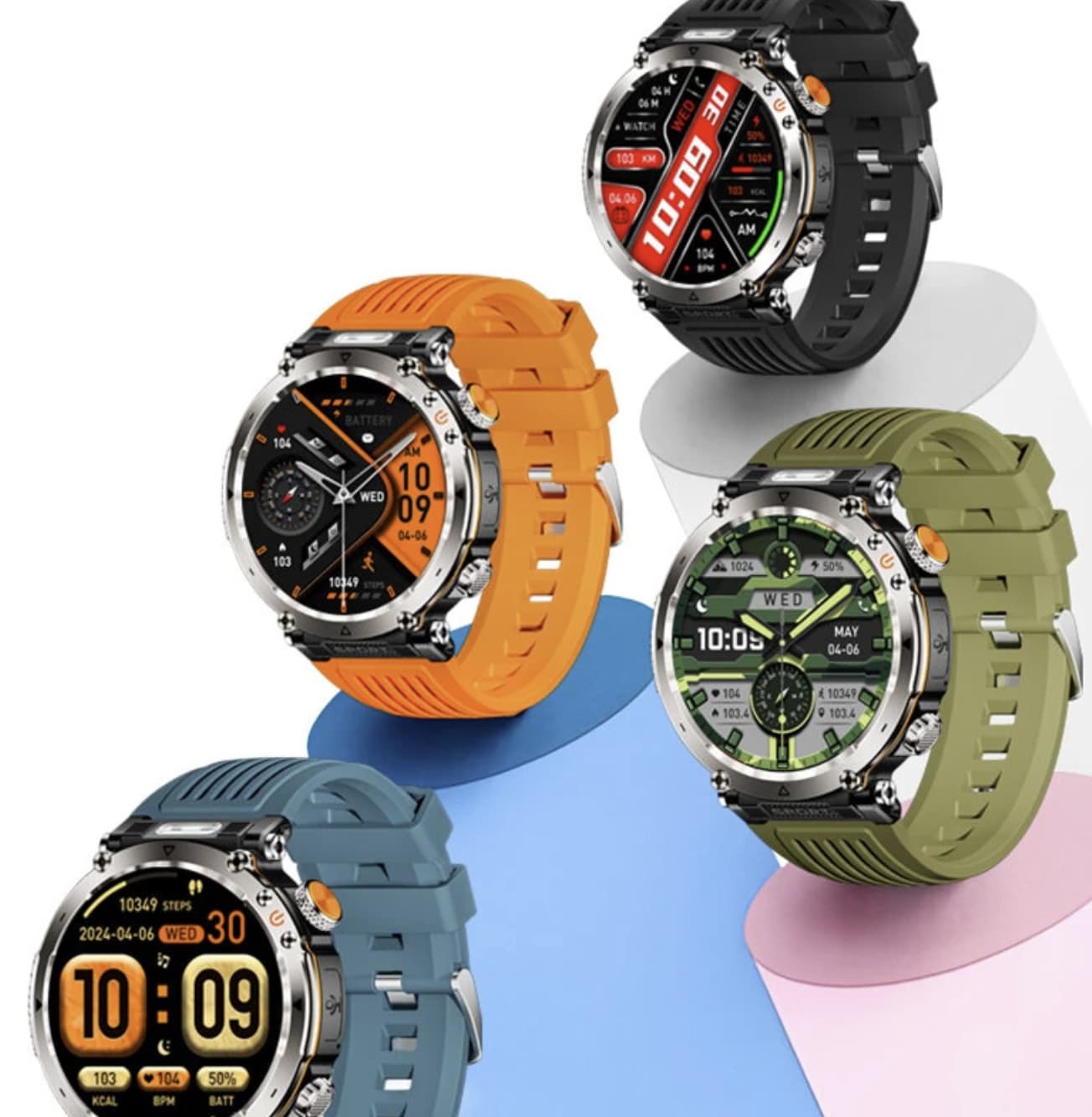
The HT30 measures approximately 51.5 × 51.5 × 13.6mm, with a 22mm-wide silicone strap measuring about 256mm in length. The case combines plastic and zinc alloy.
That is a fairly substantial watch body.
The size should appeal to users who prefer larger displays and physical controls, but people with smaller wrists may want to consider the dimensions before buying.
The environmental silicone strap is a conventional choice for an activity-oriented smartwatch because it is flexible and easy to clean.
The zinc-alloy element in the case also adds a more substantial construction material than an all-plastic enclosure.
HT30 Specifications
| Feature | HT30 |
|---|---|
| Display | 1.7-inch IPS |
| Resolution | 360 × 360 |
| Bluetooth | 5.2 |
| Companion app | FitCloudPro |
| Compatibility | Android 5.1+, iOS 8.2+ |
| Battery | 600mAh |
| Claimed usage | About 5–7 days |
| Claimed standby | About 15–20 days |
| Charging | Magnetic |
| Charging time | About 2–3 hours |
| Waterproof rating | IP68 |
| Calls | Bluetooth calling |
| Health features | Heart rate, blood pressure, sleep, breathing |
| Sports | Multiple sports modes |
| Extra functions | Compass, floodlight, music control, camera control, weather, alarm, stopwatch |
| Case | Plastic + zinc alloy |
| Strap | Silicone |
| Strap width | About 22mm |
| Watch size | About 51.5 × 51.5 × 13.6mm |
Specifications are based on the current Banggood product listing.
What Makes the HT30 Different?
The HT30 is not particularly difficult to understand once its specifications are grouped by purpose.
The 1.7-inch screen is about visibility.
The 600mAh battery is about reducing charging frequency.
Bluetooth calling is about keeping basic communication accessible from the wrist.
The compass and floodlight are utility features that can be useful outside the usual smartwatch routine.
The health and sports tools turn it into a basic activity companion.
And the FitCloudPro connection ties the watch back to the smartphone.
None of these features individually makes the HT30 unusual. The interesting part is the combination.
Many inexpensive smartwatches concentrate heavily on fitness tracking. Others focus on calls and notifications. The HT30 attempts to cover several everyday scenarios in one relatively large device.
Who Is the HT30 Best Suited To?
The HT30’s specifications make it particularly relevant to people who prioritize battery capacity, screen size, and practical features.
It could be worth considering if you want:
- A large 1.7-inch touchscreen
- Bluetooth calling from the wrist
- A large 600mAh battery
- Multi-day claimed usage
- Basic health and fitness tracking
- A built-in compass
- A wrist-mounted light
- Music and camera controls
- Weather and notification functions
- A silicone strap for everyday activity
It is less suitable for users who specifically need advanced sports analytics, standalone cellular connectivity, medically validated health measurements, or a dedicated swimming watch.
What You Should Know Before Buying
There are several things worth checking before treating the HT30 as a replacement for a more advanced smartwatch.
First, there is no indication that it has cellular connectivity. Bluetooth calling depends on a paired smartphone.
Second, the health-monitoring features are not medical devices. The manufacturer explicitly says the readings are for reference only.
Third, despite the IP68 rating, the product listing specifically advises against swimming with the watch.
Fourth, the 5–7-day battery figure is a manufacturer’s estimate. Actual runtime can change depending on Bluetooth calls, screen brightness, notifications, health tracking, and other usage.
Finally, the current Banggood page shows zero customer reviews, meaning there is currently little user-generated evidence on that listing regarding long-term durability, comfort, or real-world battery performance.
These points are important because they provide a more realistic picture than simply repeating the product’s headline features.
Final Thoughts
The HT30 smartwatch is an example of a budget wearable that tries to be useful in more situations than just counting steps.
Its 1.7-inch 360×360 display provides plenty of screen area for everyday interaction, while the 600mAh battery is clearly designed to reduce the need for frequent charging. Bluetooth 5.2 and Bluetooth calling extend smartphone functions to the wrist, while the compass and built-in floodlight add a practical outdoor and utility angle.
The watch also covers the expected smartwatch basics, including notifications, music control, camera control, weather, alarms, multiple sports modes, heart-rate tracking, sleep monitoring, and other wellness functions.
Its limitations are equally clear. It is not positioned as a professional sports watch, its health measurements are not medical-grade, and the product listing advises against swimming despite the IP68 rating.
Ultimately, the HT30’s appeal is less about one standout specification and more about how many everyday functions it puts into a single large-screen, high-capacity wearable.
For shoppers who value battery capacity and practical extras more than an ultra-thin design or advanced sports analytics, the HT30 presents an interesting specification package to consider.