










Apple’s first foldable iPhone, the iPhone Duo, has officially arrived with an authentication system that differs from the Face ID experience found on recent iPhone models. Instead of Face ID, Apple has integrated Touch ID into the side button, allowing users to authenticate whether the phone is open or closed.
There is another option, however. Apple has confirmed that users can also unlock iPhone Duo with an Apple Watch, giving owners a second way to authenticate when using the fingerprint sensor is inconvenient.
The feature is particularly interesting because of the Duo’s foldable design. Unlike a conventional iPhone, the device changes between a compact closed form and a larger tablet-like configuration. Apple therefore needs an authentication method that remains practical in different positions and usage scenarios.
Why iPhone Duo Uses Touch ID Instead of Face ID
The biggest authentication change on iPhone Duo is the absence of Face ID.
Apple places Touch ID in the side button, allowing the fingerprint sensor to remain accessible regardless of whether the phone is folded or unfolded. This is different from the traditional Face ID experience, where users can authenticate simply by looking at the front of the device.
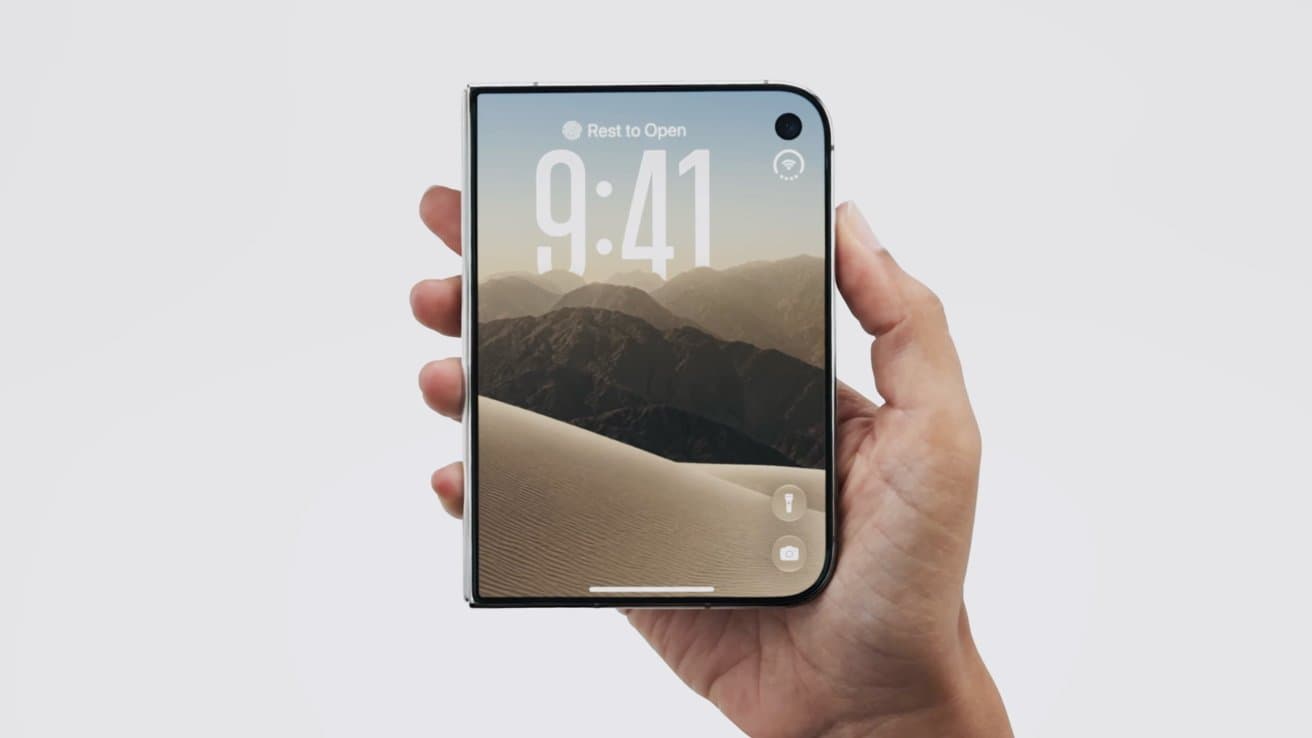
For a foldable phone, the side-mounted Touch ID approach has an obvious advantage: the authentication hardware stays in a consistent physical location while the display changes configuration.
That means users can authenticate the Duo without depending on whether the phone is currently open, closed, or being held in a particular orientation.
Apple’s official announcement confirms that Touch ID is designed for authentication in both the open and closed states.
Apple Watch Adds a Second Way to Unlock the Duo
Touch ID is not the only authentication option.
Apple has brought its Unlock with Apple Watch capability to iPhone Duo. When the appropriate conditions are met, a paired Apple Watch can authenticate the wearer and unlock the iPhone without requiring the user to place a finger on the Touch ID sensor.
This is more than a small convenience feature. It addresses one of the limitations created by moving away from Face ID.
With Face ID, unlocking normally happens without deliberately touching a sensor. On iPhone Duo, Touch ID requires physical interaction with the side button. Apple Watch authentication provides another route for people who prefer a more hands-off unlocking experience.
Why Apple Watch Authentication Makes Sense on a Foldable
The benefit becomes clearer when considering how people use a foldable phone.
An iPhone Duo can be used in a closed configuration for quick tasks or opened to take advantage of its larger display. The position of the phone in the user’s hand can also change depending on whether they are reading, watching video, multitasking, or using the device on a desk.
In some situations, reaching the side button may simply be less convenient than authenticating through a nearby Apple Watch.
This gives Apple a useful combination:
- Touch ID provides direct biometric authentication on the phone.
- Apple Watch authentication provides an alternative when touching the sensor is inconvenient.
- The same system works within Apple’s existing hardware ecosystem.
Rather than treating Touch ID as a replacement for every previous authentication method, Apple is effectively giving iPhone Duo owners multiple ways to access the device.
Security Is More Important Than Convenience
Apple Watch unlocking also raises an important security question: proximity alone cannot be enough.
A system that simply unlocked an iPhone whenever a paired Apple Watch was nearby would create obvious risks. For example, another person could potentially pick up the phone while the owner’s watch was somewhere nearby.
Apple’s existing authentication architecture therefore relies on trusted-device and security conditions rather than simply detecting another Apple product in the vicinity. The exact Duo implementation and its requirements should become clearer as the feature reaches users.
This distinction matters because Apple Watch authentication is intended as a convenience feature within Apple’s security model, not a replacement for all biometric protection.
iPhone Duo’s Authentication Is Different From a Traditional iPhone
The Duo’s approach also shows how Apple’s foldable design is influencing the rest of the phone’s hardware.
On a conventional iPhone, Face ID has become closely associated with unlocking because the front-facing sensor system remains in a predictable position.
A foldable introduces another variable. The user can interact with two displays and change the physical shape of the device.
Touch ID avoids that problem by putting the biometric sensor in the side button. Apple Watch authentication then adds an ecosystem-based option for situations where direct fingerprint authentication is less convenient.
This combination may ultimately prove more practical than trying to force a Face ID system onto a device with two distinct physical states.
What This Means for Everyday iPhone Duo Users
For most users, the difference may be subtle.
If Touch ID is easy to reach, pressing the side button and authenticating with a fingerprint should remain the most direct option. If the phone is being used in a position where the sensor is awkward to access, Apple Watch unlocking can provide another path.
The bigger benefit is flexibility.
Apple is not asking users to adapt completely to a new authentication method simply because the iPhone has a foldable display. Instead, the company is combining on-device biometric authentication with its broader device ecosystem.
That approach is consistent with Apple’s strategy of making the iPhone, Apple Watch and other products work together rather than treating each device as an isolated product.
Is Apple Watch Unlock One of the Duo’s Most Useful Features?
It may not be the headline feature of the iPhone Duo, but it could become one of its more practical additions.
The foldable display is the most visible change, while the A20 Pro chip, dual-display experience and redesigned hardware attract most of the attention. Authentication, however, is something users interact with many times every day.
By combining Touch ID with Apple Watch unlocking, Apple has addressed a very specific problem created by the Duo’s form factor: how to make authentication convenient when the phone is not always being held in the same way.
That makes the feature more significant than a simple convenience shortcut.
For users already invested in the Apple ecosystem, Apple Watch authentication could also make the transition to Apple’s first foldable phone feel more familiar. Instead of forcing owners to choose between Touch ID and a completely different unlocking workflow, the Duo provides multiple authentication routes within the same ecosystem.
The iPhone Duo’s broader ecosystem integration also fits into Apple’s expanding Apple Intelligence strategy, which is bringing more intelligent features across the company’s devices.
Bottom Line
The iPhone Duo’s move from Face ID to Touch ID is one of the most noticeable differences between Apple’s foldable phone and its recent conventional iPhones. But Apple Watch unlocking helps reduce the inconvenience of that change.
With Touch ID built into the side button and Apple Watch available as an alternative authentication method, iPhone Duo users have more flexibility when unlocking the device in different positions.
The important point is that Apple has not simply added Touch ID to a foldable iPhone. It has combined the biometric sensor with its wider device ecosystem to make authentication work more naturally across the Duo’s unique form factor.