









Motorola’s first wide-format foldable phone, reportedly called the Motorola Razr Flex, has appeared in the Geekbench benchmark database. The listing offers an early look at the phone’s expected performance, identifying a Qualcomm Snapdragon 8 Gen 5 processor and 12GB of RAM.
According to Igeekphone’s October 20 report, citing technology publication GSMArena, the device was spotted in Geekbench on October 19. The engineering sample reportedly scored 2,669 points in the single-core test and 8,837 points in the multi-core test using Geekbench version 7.1.
These results provide an initial indication of the phone’s processing capabilities, but they should not be treated as final performance figures. The tested device is reportedly an engineering sample, and results from different Geekbench versions are not directly comparable. Retail hardware, software optimization, and thermal management could all affect the final scores.
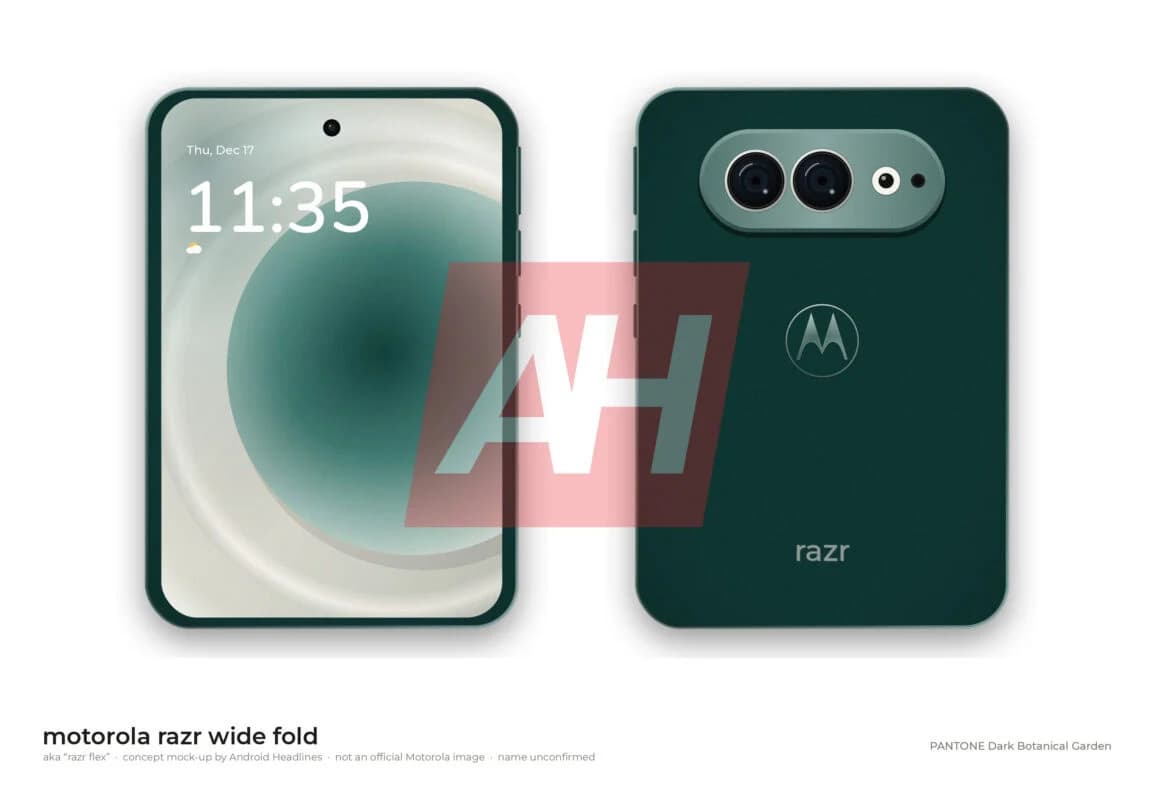
The benchmark leak adds to earlier reports about Motorola’s first wide-screen foldable phone, including leaked renders that offer a closer look at its possible design.
Motorola Razr Flex Geekbench Listing Points to Snapdragon 8 Gen 5
The benchmark entry reportedly identifies the processor as QTI SM8845, with a CPU configuration consisting of two high-performance cores and six additional performance cores. The reported maximum clock speed is 3.8GHz.
This identifier is associated with Qualcomm’s Snapdragon 8 Gen 5, rather than the higher-tier Snapdragon 8 Elite Gen 5, which uses the SM8850 model number. The distinction is important because the two chipsets belong to different performance tiers.
The reported SM8845 platform is based on TSMC’s 3nm N3P manufacturing process. It is said to feature Qualcomm’s third-generation custom Oryon CPU architecture, with two Prime cores clocked at up to 3.8GHz and six performance cores running at up to 3.40GHz.
Graphics processing is reportedly handled by an Adreno 829 GPU. The platform is also expected to include Qualcomm’s Hexagon NPU for AI workloads and a Spectra image signal processor for camera processing.
If these specifications carry over to the commercial device, the Razr Flex could offer substantial processing resources for multitasking, photography, and demanding applications. However, actual gaming performance, sustained workloads, and power efficiency will need to be evaluated on a finished handset.
Motorola’s reported use of the Snapdragon 8 Gen 5 would also connect the Razr Flex to the company’s broader push into premium Android hardware.
Motorola Razr Flex May Offer 12GB of RAM
The Geekbench listing identifies 12GB of RAM, suggesting that the tested Razr Flex configuration is designed to handle demanding apps and multiple tasks.
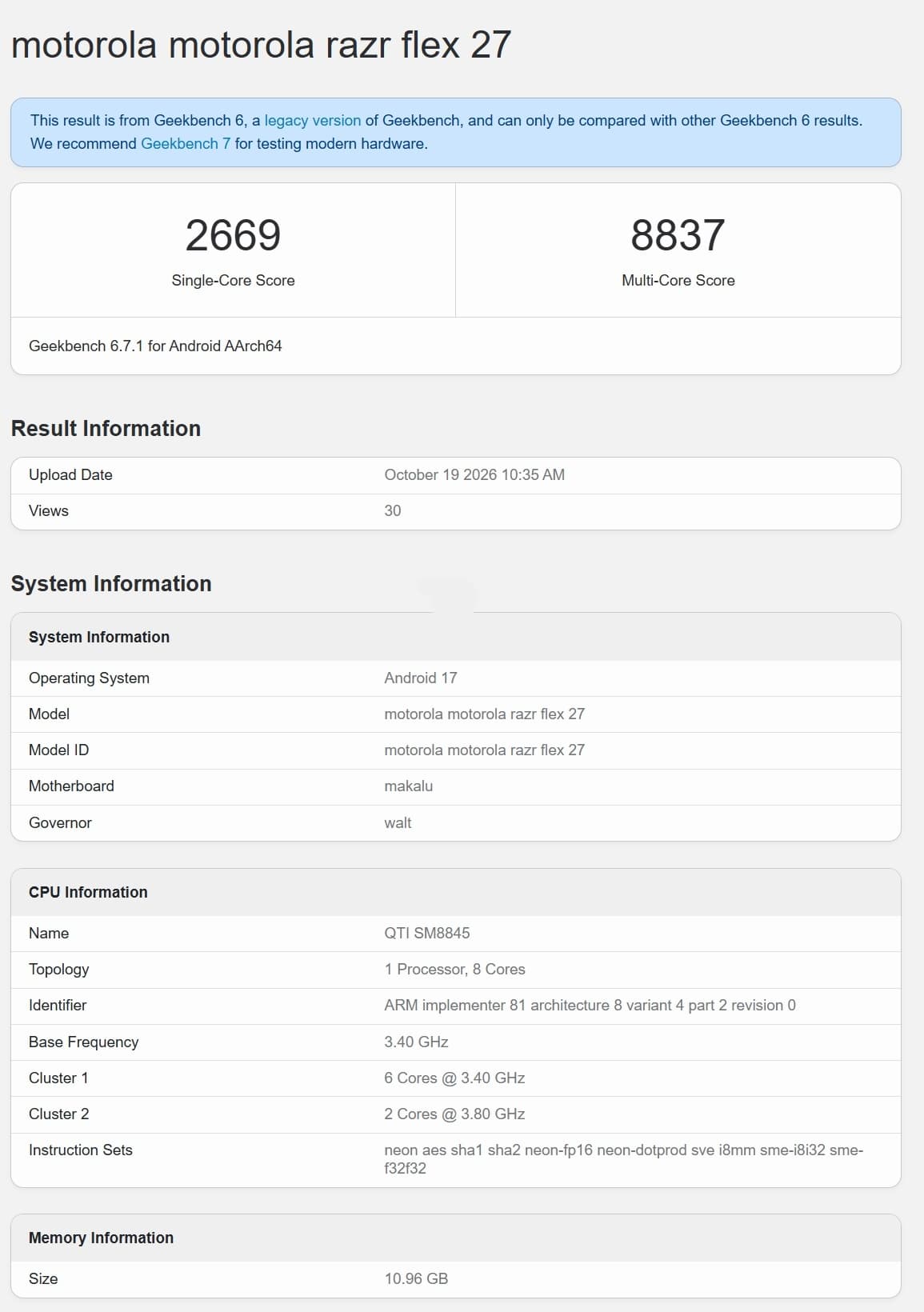
For a foldable phone, memory capacity can be particularly relevant when switching between applications or using the larger internal screen for productivity. Nevertheless, a benchmark listing does not establish the full range of memory and storage configurations Motorola may eventually offer.
The amount of available RAM, background app management, and software optimization will all influence the everyday experience.
Wide-Format Foldable Design With a Thin Unfolded Profile
Earlier reports cited by IT Home suggest that the Motorola Razr Flex could measure 149 × 110 × 5.8mm when unfolded and 110 × 76 × 12.6mm when folded.
These rumored dimensions point to a wide-format foldable design, with a relatively short and broad body when opened. Compared with the Samsung Galaxy Z Fold8, the Razr Flex is reportedly expected to be shorter and narrower overall, although its folded thickness could be 2.9mm greater.
The unfolded thickness of approximately 5.8mm could help create a slim profile when the internal display is in use. In contrast, the reported 12.6mm folded measurement suggests that pocket thickness may be an area where the phone trails some competing designs.
Because these measurements come from preliminary reports, the final dimensions could change before launch.
Horizontal Rear Camera Bar and Physical Buttons
Leaked design details suggest that the Motorola Razr Flex could feature a horizontal camera bar across the rear panel. The module reportedly houses two cameras and protrudes from the back of the device.
A raised camera section is common on modern smartphones because camera sensors and optical components require physical space. The leak does not, however, confirm the resolution, sensor sizes, or zoom capabilities of the Razr Flex’s cameras.
The phone is also expected to feature physical buttons along the right-hand side, positioned relatively high on the frame. The frame itself reportedly maintains a consistent width around the device.
These details suggest that Motorola may be aiming for a clean, wide-format design while retaining familiar physical controls. Official product images will be needed to confirm the final appearance.
Motorola Razr Flex Colors May Include Beige and Dark Green
The reported color options include two Pantone-inspired finishes:
- PANTONE Coriander: Described as a shade close to beige.
- PANTONE Dark Botanical Garden: A deep green finish.
If these options reach retail, they would give buyers a choice between a lighter neutral color and a darker, more understated appearance. The exact finishes, regional availability, and final marketing names have not yet been officially confirmed.
What the Motorola Razr Flex Leak Tells Us
The Geekbench appearance provides several early clues about Motorola’s rumored wide-format foldable phone. The reported Snapdragon 8 Gen 5 chipset, 12GB of RAM, and 2,669 single-core and 8,837 multi-core scores suggest that Motorola is testing a device aimed at the premium foldable market.
Its rumored dimensions also point to a design that prioritizes a broad internal display, although the additional folded thickness compared with the Galaxy Z Fold8 could be a trade-off.
For now, the Razr Flex remains an unconfirmed device based on leaked benchmark and design information. Motorola has yet to officially confirm its name, chipset, memory configuration, camera specifications, colors, or release date. Independent performance tests and an official announcement will be needed to establish how the finished phone compares with rival foldables.