









From Radio Chatter to Actionable Tasks
Imagine a hotel where a maintenance request doesn’t vanish into the static of a busy radio channel. Imagine a world where a housekeeping priority is assigned, accepted, and confirmed without a single confusing “copy that.” This isn’t a vision of the future; it’s the practical reality for hotels that have mastered the operational workflow of a Ticketing System integrated directly into their two-way radios.
This guide breaks down exactly how this system functions in a live hotel environment. We’ll walk through the seamless, step-by-step process that transforms a guest’s need into a tracked, managed, and closed-loop task, ensuring nothing is lost in translation and everything is accounted for.
The 5-Step Operational Workflow of a Radio Ticketing System
The power of this system lies in its structured, intuitive workflow. Let’s follow a common scenario—a guest reporting a malfunctioning air conditioning unit—from start to finish.
Scenario: A guest calls the front desk to report that the AC in Room 318 is not cooling.
Step 1: Create & Assign — The Digital Ticket
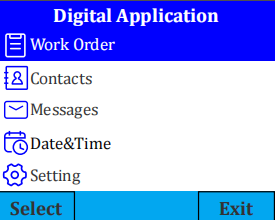
Action: The front desk agent, who operates a device with administrator or assigned ticketing permissions, creates a new ticket. This can be done either through the connected Ticketing management software on a PC or directly on the authorized radio itself by pressing the programmable P1 key to access the Ticketing interface.
Process: They navigate to Ticketing > Send Function > New Task and fill in the key fields:
Task Title: AC Repair – Room 318
Description: Guest reports no cold air. Unit is unresponsive to thermostat controls.
Assigned To: (Selects the specific engineer or group from the pre-configured Contacts list)
Due Time: Sets a completion deadline.
The Shift: The request is transformed from a potential voice broadcast into a structured, digital ticket with clear accountability and context.
Step 2: Receive & Notify — The Unmissable Alert
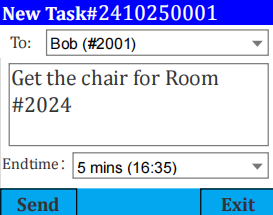
Action: The assigned engineer’s MateTalk C3 radio immediately displays a clear notification on its 1.77-inch LCD screen, indicating a new ticket has been received.
Process: The technician can read the full ticket details directly on the radio screen, including the room number, specific issue, and assignee. This eliminates the guesswork and incomplete information common in voice-only communication.
The Shift: Staff are notified with detailed, written instructions that do not require interrupting their current task to ask for repeated information.
Step 3: Accept & Execute — The One-Button Accountability
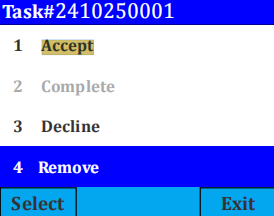
Action: The engineer opens the ticket from the Ticketing > Receive Function menu. After reviewing the details, they press the Menu key to access the action menu and select “Accept”.
Process: This action updates the ticket’s status to “Accepted,” sending a digital confirmation back to the management system. The front desk agent sees the update and can confidently inform the guest that help is officially on the way.
The Shift: This creates instant accountability. Management knows exactly who is handling the task, and the employee has formally taken ownership.
Step 4: Update & Complete — Real-Time Status Change
Action: After fixing the AC unit in Room 318, the engineer updates the ticket status directly from their radio to reflect completion.
Process: With the ticket open, they press the Menu key and select “Complete” from the action menu. This action finalizes the task status.
The Shift: The system enables proactive status updates, providing transparency and marking a clear step toward job closure without requiring a separate voice call.
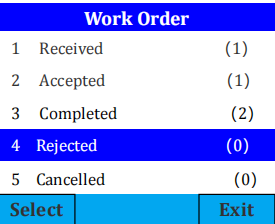
Step 5: Close & Confirm — The Verifiable Digital Record
Action: The ticket is now listed under the “Completed” status in the system. The front desk or management has a verifiable record that the job was accepted and finished.
Process: The entire process—from creation and assignment to acceptance and completion—is logged in the system. This provides a clear data trail for operational reporting, efficiency analysis, and quality assurance. Individual tickets can be cleared using the “Remove” function, or all data can be wiped via the “Clear All” option.
The Shift: The process achieves verifiable closure with a digital audit trail, eliminating uncertainty and providing valuable operational insight.
Why the Hardware is Your Foundation
A ticketing system is only as reliable as the device it runs on. In a demanding hotel environment, this means:
A Clear Screen: A large, bright LCD (like the 1.77-inch display on the MateTalk C3) is non-negotiable for reading ticket details at a glance.
All-Day Power: A robust 2200mAh battery ensures the device stays online through an entire shift, so a critical ticket is never missed due to a dead radio.
Full Property Coverage: With 5W power and repeater support, these digital tickets can be received from the basement to the penthouse, ensuring the system works everywhere your staff does.
Conclusion: Mastering a New Workflow
Implementing a ticketing system on your two-way radios is more than a tech upgrade—it’s an operational philosophy. It replaces reactive chaos with proactive, managed workflows. By following this clear, five-step process, hotel teams can transition from merely communicating to delivering accountable, efficient, and guest-centric service.
The result is not just a quieter radio channel, but a more competent, coordinated, and data-driven operation.