









For RC enthusiasts, a convincing scale helicopter offers something that many conventional radio-controlled aircraft cannot: the experience of flying a miniature version of a recognizable real-world helicopter. The YXZNRC F118S takes inspiration from the MH-6 Little Bird and MD500 design, combining military-style looks with electronic flight assistance and a multi-channel control system.
Its appeal goes beyond its appearance. The F118S is advertised with GPS stabilization, optical-flow positioning, a flybarless rotor system, and a 2.4GHz nine-channel transmitter. These features make it an interesting option for hobbyists who want a detailed scale helicopter with more flight-control technology than a basic toy-grade model.
But is the F118S the right choice for your collection? The answer depends on your experience, expectations for flight performance, and willingness to learn how a more advanced RC helicopter behaves.
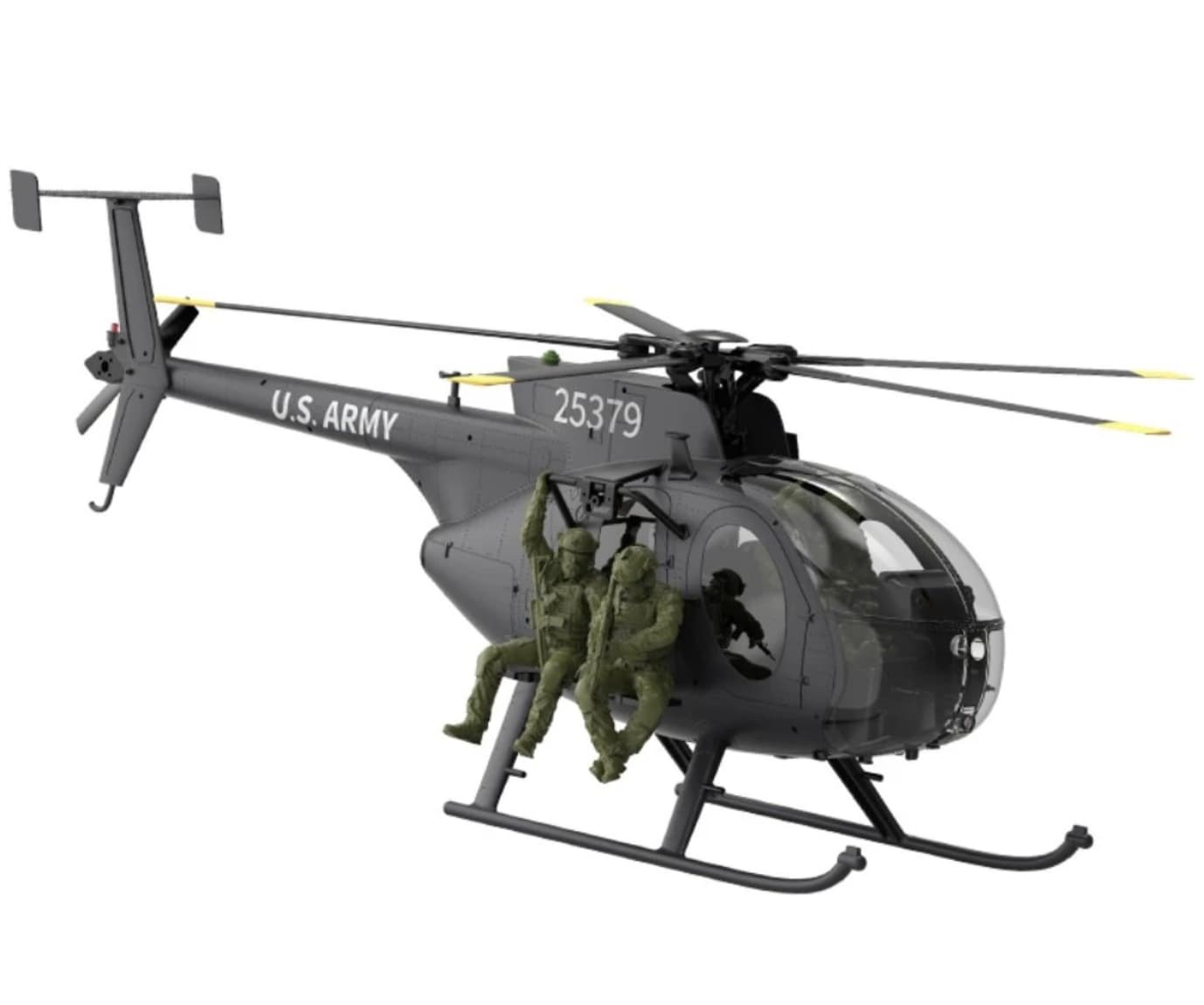
A Scale Helicopter Inspired by the MH-6 Little Bird
The first thing that distinguishes the YXZNRC F118S is its helicopter-inspired design. Built around the appearance of the MH-6 Little Bird and MD500, it offers a different aesthetic from the generic fuselages found on many entry-level RC aircraft.
At a listed 1:16 scale, the model is intended to deliver a recognizable helicopter silhouette in a size suitable for hobby use. Its approximately 485mm fuselage length and 437mm rotor diameter give it a substantial presence compared with small indoor helicopters.
For scale-model collectors, proportions and visual details matter almost as much as flight performance. The F118S is therefore worth considering for enthusiasts who want an aircraft that looks interesting on display but is also designed to fly.
However, scale styling does not automatically mean the helicopter will handle like its full-size counterpart. Its flight characteristics depend on the rotor system, electronic stabilization, weight, control setup, and environmental conditions.
GPS Stabilization: More Than a Visual Feature
GPS is one of the most notable features advertised for the F118S. On a helicopter, positioning technology can help the flight controller estimate the aircraft’s location and support more controlled movement.
The listed system also includes a compass, downward optical-flow positioning, and barometric altitude-hold functionality. These technologies serve different purposes rather than acting as one universal stabilization system.
- GPS positioning: Helps the flight controller determine the helicopter’s outdoor position.
- Optical flow: Uses downward-facing visual information to estimate movement relative to the ground, particularly when suitable surfaces and lighting are available.
- Barometric altitude sensing: Helps maintain altitude by measuring changes in air pressure.
- Compass: Provides directional information to support navigation and flight-control functions.
When these systems operate as intended, they can make position and altitude management more approachable than relying entirely on manual control. That can be useful for pilots who want to concentrate on smooth turns, controlled approaches, and learning the helicopter’s response.
There are limitations, though. GPS performance depends on satellite reception, while optical flow can be affected by poor lighting, reflective surfaces, and ground textures that are difficult to track. Wind, sensor conditions, and setup can also affect stability.
GPS assistance should not be treated as a guarantee against crashes. Pilots still need to understand the controls, maintain a safe flying area, and be ready to respond when conditions change.
If you are comparing scale-inspired helicopters with electronic flight assistance, our KOOTAI F04 Bell 206 RC helicopter review explains how a 6-axis gyro and altitude hold support everyday RC flying.
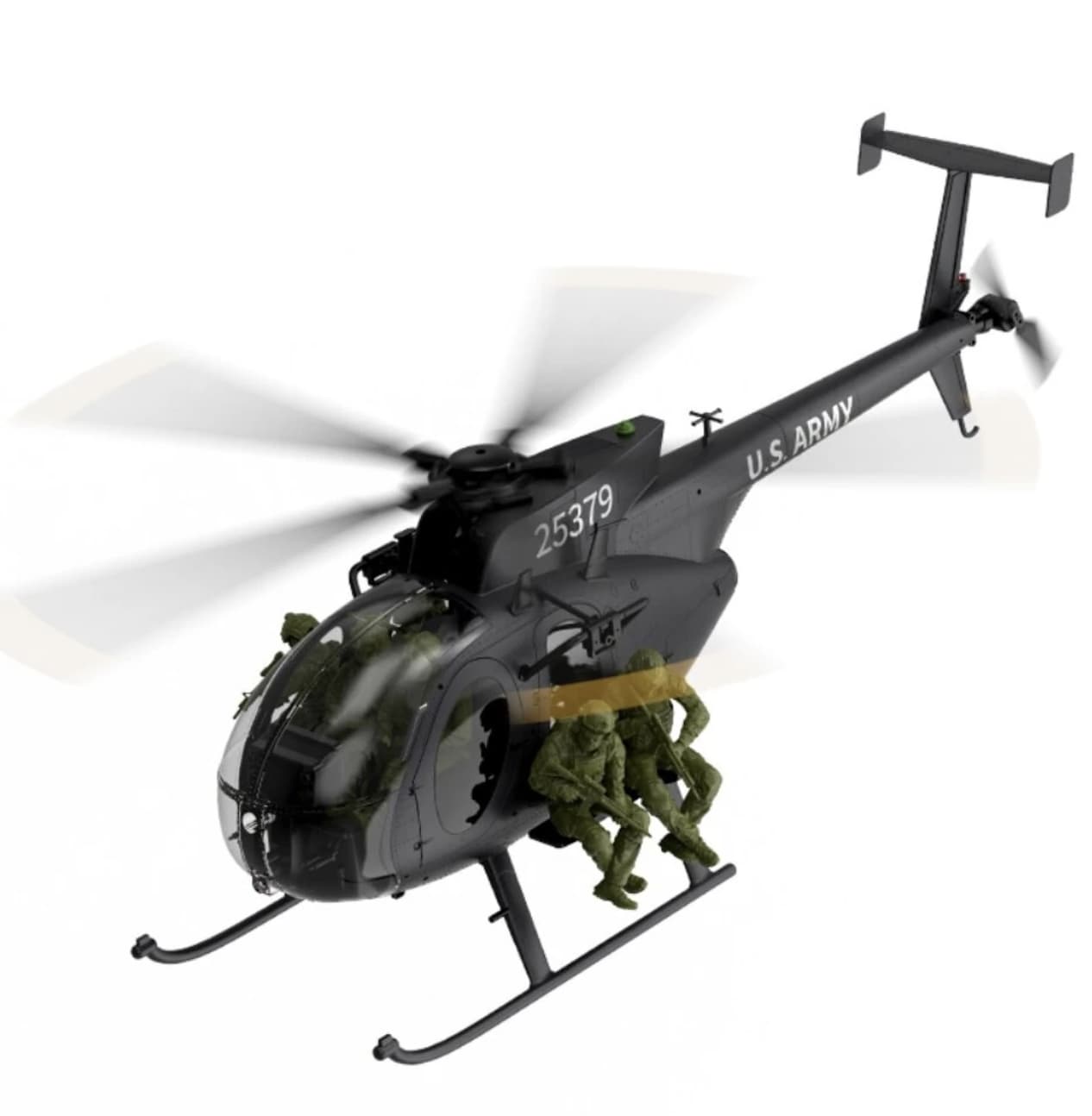
Flybarless Rotor Design and Flight Response
The F118S is advertised as a flybarless helicopter. Instead of relying on a traditional mechanical flybar for stabilization, a flybarless design uses the rotor system and electronic control equipment to manage aircraft response.
This arrangement can support a more compact mechanical layout and precise control when the system is configured correctly. It also places greater importance on the flight controller, sensor calibration, and mechanical setup.
For prospective buyers, the practical question is not simply whether a helicopter is flybarless. It is how consistently it responds to control inputs and whether the available assistance matches the pilot’s skill level.
The F118S is listed with GPS stabilization, optical-flow flight, and manual stabilization modes. Having different modes can be valuable because pilots may want more assistance during positioning practice and a different response when developing their handling skills.
Before the first flight, check the manual for the correct mode-selection procedure and any calibration requirements. Do not assume that every mode provides the same level of assistance or that switching modes in the air is appropriate under all circumstances.
For another example of a scale-style flybarless aircraft, read our XK K150 Little Squirrel AS350 RC helicopter review for a closer look at its control system and stabilization features.
Nine-Channel 2.4GHz Control
Another feature that separates the F118S from a simple recreational helicopter is its nine-channel, 2.4GHz radio system.
Multiple channels allow a transmitter and receiver to manage different control functions. Depending on the aircraft’s configuration, these may include flight inputs, operating modes, and additional functions. The exact channel assignments should be confirmed in the supplied instructions rather than inferred from the channel count alone.
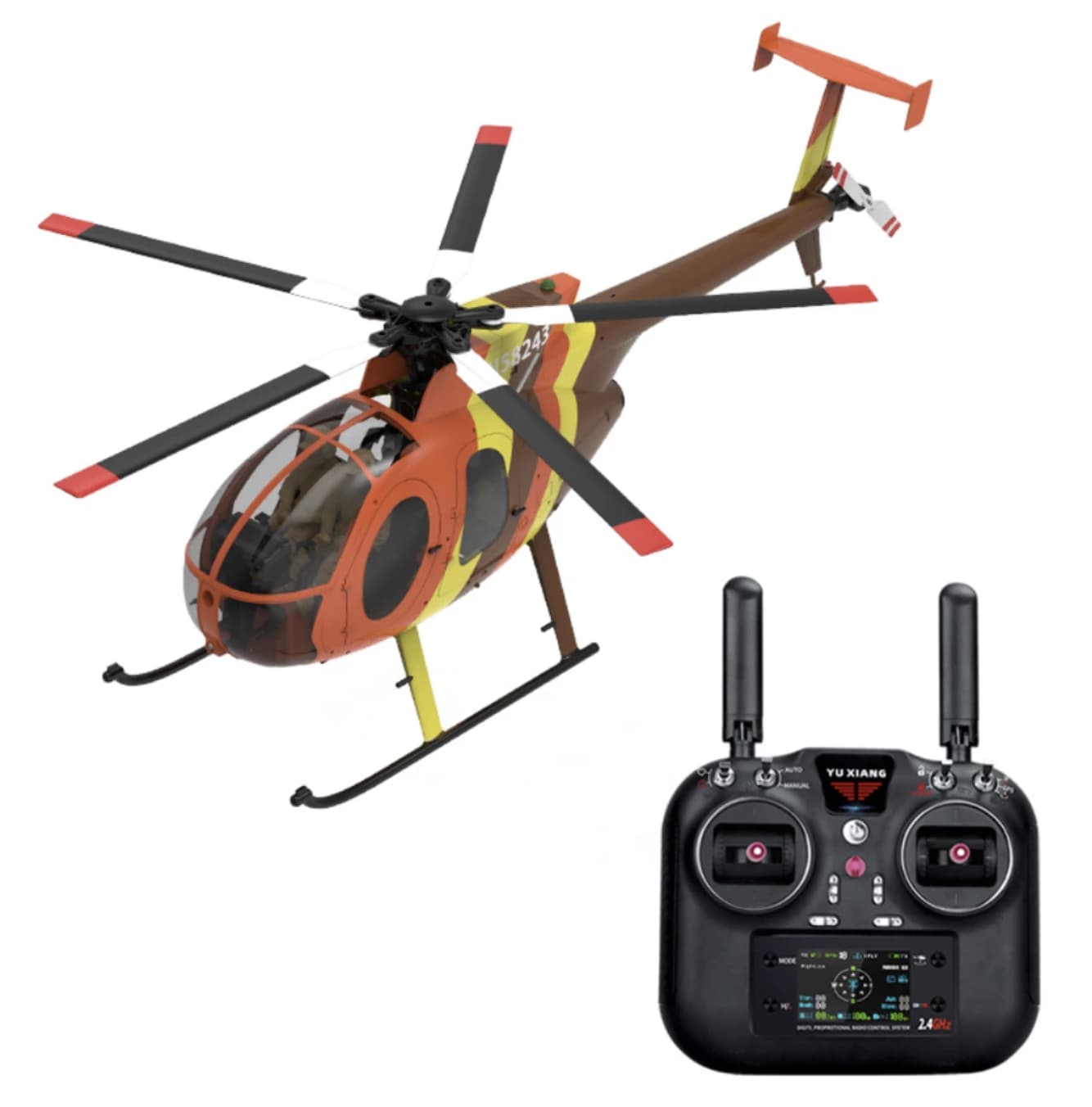
The advertised radio system also supports bidirectional communication. The manufacturer’s product information describes a display that can provide flight-related information such as battery status, altitude, distance, orientation, and GPS status.
For a pilot, access to useful telemetry can make it easier to monitor the aircraft during a flight. It may also help when learning how battery condition and flight distance affect the return journey.
The listed control range is approximately 350 metres. This should be regarded as a stated specification, not a promise that every flight will achieve that distance. Local interference, antenna orientation, obstacles, battery condition, and applicable operating rules can all influence practical range.
A sensible first flight should take place much closer to the pilot, leaving enough time and space to assess control response before attempting longer-distance operation.
Motor, Battery, and Expected Flight Time
The F118S specification lists a 4306 560KV brushless main motor and an 11.1V, 3500mAh, 30C smart LiPo battery. The product information gives an estimated flight time of approximately 15–17 minutes and a charging time of around 70 minutes.
These figures provide a useful starting point when planning a flying session, but actual endurance can vary. Repeated acceleration, hovering, wind, temperature, battery age, and flying style can all affect how long the helicopter stays airborne.
| Specification | Advertised details |
|---|---|
| Model | YXZNRC F118S |
| Scale | 1:16 |
| Design inspiration | MH-6 Little Bird / MD500 |
| Rotor diameter | Approximately 437mm |
| Fuselage length | Approximately 485mm |
| Main motor | 4306 560KV brushless |
| Radio system | 2.4GHz, 9-channel |
| Positioning assistance | GPS, compass, optical flow, barometric altitude hold |
| Battery | 11.1V 3500mAh 30C LiPo |
| Estimated flight time | Approximately 15–17 minutes |
| Estimated charging time | Approximately 70 minutes |
| Advertised control range | Approximately 350m |
Specifications are based on the available product information. Check the current seller listing and the manual for the exact configuration being purchased.
If you plan to fly regularly, pay attention to battery availability and charging requirements before ordering. A second compatible battery may reduce downtime between flights, but only if the seller confirms that the additional battery matches the helicopter and charger.
LiPo batteries also require proper handling. Use a compatible charger, inspect the battery before use, and follow the manufacturer’s storage and charging instructions.
What About the Camera Option?
The Banggood listing presents camera and battery-count options, including a version described as having a 5.8G camera and packages with different numbers of batteries.
That distinction matters because a camera-equipped package and a version without a camera may offer different experiences and costs. Buyers interested in aerial viewing should confirm whether the camera is included in the selected configuration, how its video feed works, and whether additional equipment is needed.
Do not assume that a camera option automatically means high-resolution recording, smartphone connectivity, or a particular first-person-view experience. Those details should be verified against the specifications for the exact package.
For buyers who mainly enjoy scale flying, the camera may be a secondary consideration. For those interested in an FPV-style experience, its compatibility and video performance deserve closer attention before checkout.
Is the YXZNRC F118S Suitable for Beginners?
The combination of GPS assistance and altitude-related sensors may sound beginner-friendly, but this is still a helicopter with a relatively large rotor diameter and several flight-control systems.
Electronic assistance can reduce some of the workload involved in maintaining position, yet it does not eliminate the need to learn orientation, throttle management, turning, landing, and emergency procedures.
A first-time pilot should consider starting with a smaller, more forgiving training helicopter or simulator before moving to a scale model in this class. Experienced RC pilots, meanwhile, should review the available flight modes and confirm how the F118S behaves when positioning assistance is limited or unavailable.
Before flying, make sure you understand how to:
- Calibrate the compass and other sensors when required.
- Check rotor blades, linkages, servos, and fasteners.
- Confirm GPS reception and the selected flight mode.
- Respond to low-battery warnings and return-to-home functions.
- Land safely if positioning assistance becomes unreliable.
The exact procedure for each function should come from the model’s manual. A feature advertised on a product page is only useful when the pilot understands its limitations and knows how to operate it correctly.
What to Check Before Buying
The F118S combines scale styling with a feature set aimed at hobbyists who want more than a basic RC helicopter. Nevertheless, the best buying decision depends on the package details as much as the aircraft itself.
Confirm the selected version. Check whether the order includes the camera, how many batteries are supplied, and which accessories come in the box. Product variations can change the final cost and the equipment available for your first flight.
Check replacement parts. Rotor blades, landing components, servos, motors, and compatible batteries are important considerations for a helicopter that will be flown regularly. Confirm availability before purchasing rather than assuming every part will remain in stock.
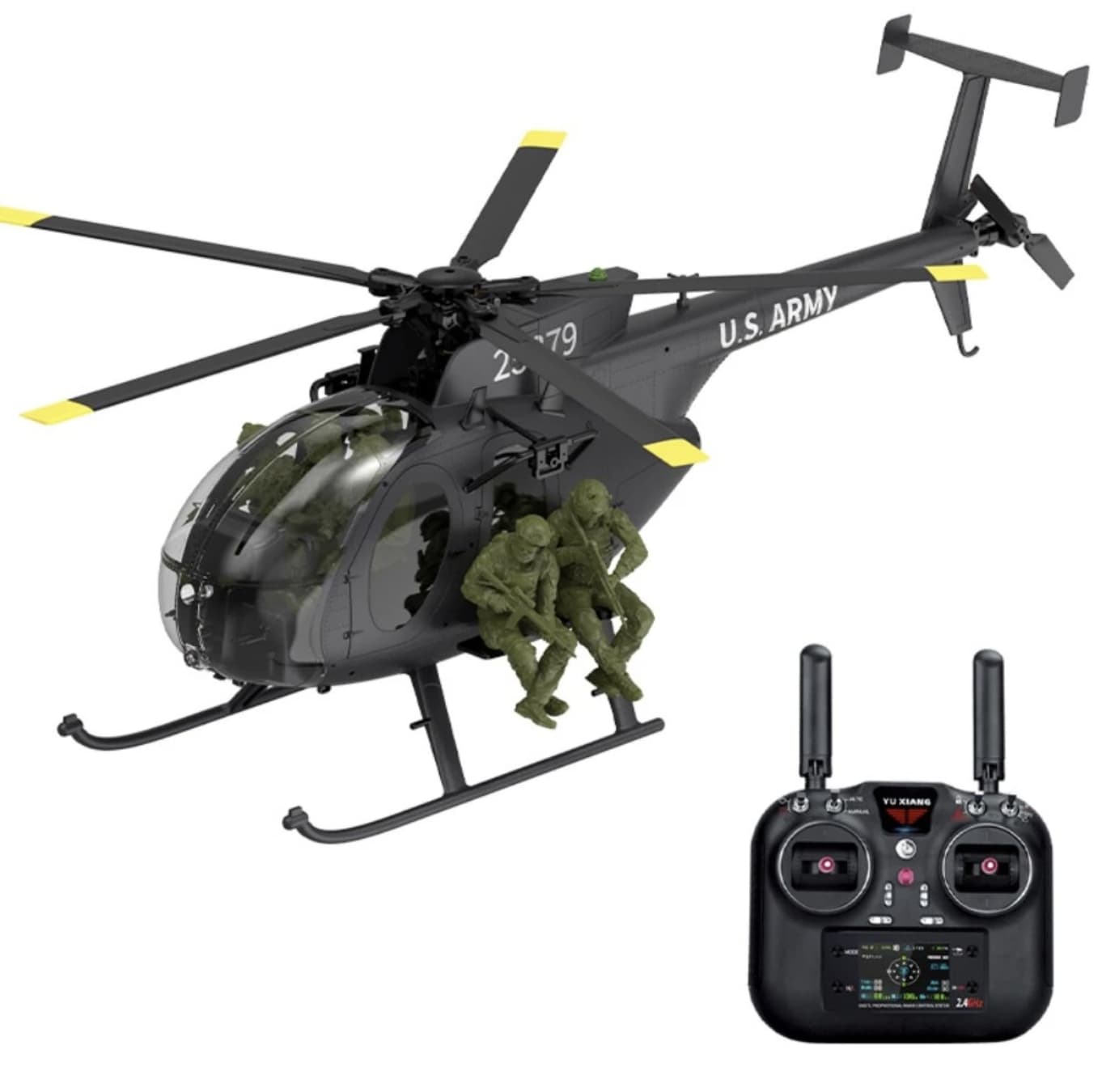
Review the transmitter and manual. Nine channels and telemetry can offer useful flexibility, but beginners may need time to understand the controls and display information.
Plan a suitable flying location. Choose an open area away from people, roads, buildings, power lines, and other obstacles. Follow local rules for model aircraft, radio equipment, and any camera use.
Budget for practical ownership. The purchase price is only part of the cost. Batteries, replacement components, safe charging equipment, and occasional maintenance may also be needed.
Final Verdict: A Scale RC Helicopter With Ambitious Flight Assistance
YXZNRC F118S rc helicopter stands out through its MH-6 Little Bird-inspired appearance and a flight-control package that includes GPS stabilization, optical-flow positioning, altitude assistance, and a nine-channel radio system.
Its strongest appeal is the combination of scale-model character and electronic flight support. The advertised brushless motor, smart battery, and multiple positioning functions also give hobbyists several concrete specifications to evaluate before buying.
The main consideration is complexity. GPS and sensor assistance can help with certain aspects of flight, but they do not make the helicopter immune to wind, signal issues, setup mistakes, or pilot error. Buyers should also verify the exact camera and battery configuration, replacement-part availability, and the instructions supplied with the selected package.
For experienced hobbyists who appreciate scale helicopters and want to explore a more technology-assisted flying experience, the F118S deserves a closer look. For complete beginners, learning the fundamentals on a smaller training model first is likely to be the more sensible route.
Bottom line: Consider the YXZNRC F118S if realistic helicopter styling and assisted flight modes are your priorities. Make the decision based on the confirmed package contents, your flying experience, and the support available for long-term maintenance—not just the feature list.