









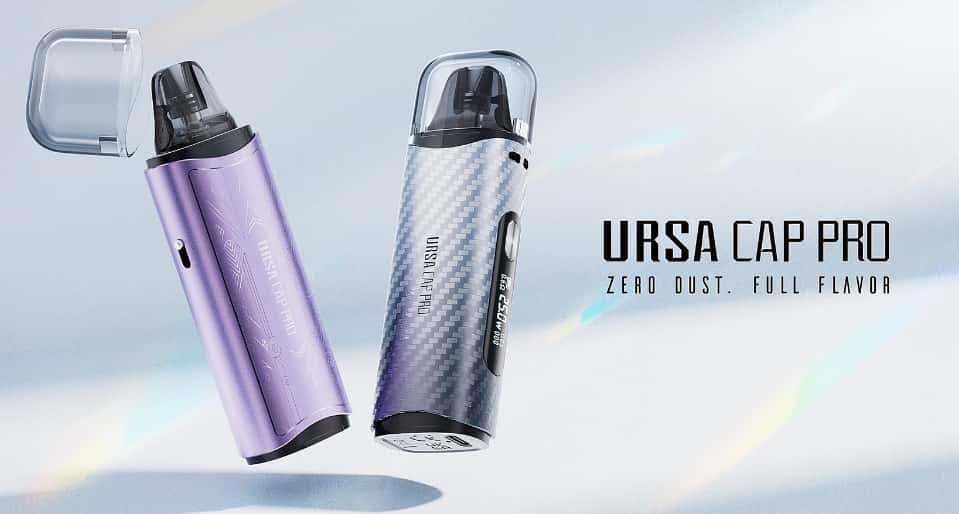
In the world of vaping, the pod kit has become the undisputed champion of convenience. But for manufacturers and consumers alike, a constant tug-of-war exists between two crucial factors: compact size and high performance. How do you fit a powerful, satisfying vape into a device that slips effortlessly into your pocket?
This balancing act is the central engineering challenge in modern pod system design. Let’s break down the key trade-offs, innovations, and how to find the perfect equilibrium for your needs.
The Fundamental Trade-Off: The “Iron Triangle” of Pod Kits
Think of it as a triangle where you can only maximize two of the three corners at once:
-
Size (Portability): The physical dimensions of the device.
-
Performance: Power output (wattage), vapor production, flavor intensity, and battery life.
-
Cost: The final price to the consumer.
A tiny device sacrifices battery capacity and often power. A high-performance device with a giant battery becomes large and heavy. Engineering solutions to make a small device perform well often increase the cost. The art is finding a compromise that works for a specific type of vaper.
How Manufacturers Strike the Balance: Key Engineering Solutions
Brands aren’t just making things smaller; they’re making them smarter. Here’s how they tackle the size-performance puzzle:
1. Battery Technology and Efficiency
-
The Challenge: A bigger battery means more power and longer life, but it also means a larger device.
-
The Solution: Manufacturers use advanced, high-density lithium-ion batteries that pack more energy into a smaller space. More importantly, they develop highly efficient chipsets that optimize power usage. Features like boost circuits can provide a strong hit even from a small battery, and intelligent power management extends battery life without increasing size.
2. Coil and Pod Design
-
The Challenge: More vapor and flavor require more coil surface area and better e-liquid saturation, which traditionally needed larger pods and coils.
-
The Solution:
-
Mesh Coils: This is the biggest innovation. Mesh coils provide a larger heating surface area than traditional wire coils within the same compact pod, leading to vastly improved flavor and vapor production without increasing the device’s footprint.
-
Integrated Coils: Some brands (e.g., Voopoo’s PnP, Vaporesso’s GO) use a “pod-and-coil” system where the coil is separate from the pod. This allows for a slim pod that can still house a relatively large, performance-oriented coil.
-
Wickless/Flow-Through Designs: Some newer systems use alternative wicking methods to ensure fast saturation and prevent dry hits, allowing the coil to perform optimally even with a smaller juice reservoir.
-
3. Airflow Management
-
The Challenge: A tight, restrictive draw (MTL) requires different airflow than a loose, airy draw (DTL). Managing this in a tiny device is difficult.
-
The Solution: Precision engineering allows for adjustable airflow even on minute devices. A tiny dial or slider on the side of the pod or device can dramatically change the vaping experience, letting one small device cater to both MTL and restricted DTL vapers.
4. Materials and Build Quality
-
The Challenge: Using lightweight materials can make a device feel cheap, while durable metals add weight.
-
The Solution: Using high-quality, lightweight polymers and advanced alloys keeps the device light and portable without sacrificing a premium feel or structural integrity.
The Spectrum of Pod Kits: From Stealth to Powerhouse
The market has evolved to offer options all along the size-performance spectrum:
| Type of Pod Kit | Size Priority | Performance Priority | Best For |
|---|---|---|---|
| Ultra-Portable/Stealth | ⭐⭐⭐⭐⭐ | ⭐⭐ | Nicotine salt users, high-nicotine satisfaction, extreme discretion. |
| Balanced/All-Rounder | ⭐⭐⭐⭐ | ⭐⭐⭐⭐ | Most vapers. Good battery life, great flavor, and still pocketable. (e.g., Caliburn series) |
| Power Pod/AIO | ⭐⭐ | ⭐⭐⭐⭐⭐ | Those wanting near-sub-ohm tank performance in a pod format. Larger, but with replaceable batteries and high wattage. (e.g., Voopoo Drag series, Luxe X) |
How to Choose Your Perfect Balance: A User’s Guide
There is no “best” pod kit—only the best one for you. Ask yourself these questions:
-
What is my top priority: discretion or cloud production?
-
If it’s discretion, prioritize size.
-
If it’s cloud production, expect a larger device.
-
-
How do I vape? Mouth-to-Lung (MTL) or Direct-Lung (DTL)?
-
MTL (like a cigarette) can be achieved in very small devices.
-
DTL (inhaling directly) requires more airflow and power, typically needing a slightly larger device.
-
-
What’s my daily routine?
-
If you’re out and about all day, battery life is critical. You may need to sacrifice a little size for a device with a 1000mAh+ battery.
-
If you’re always near a USB port, you can get away with a smaller battery and just top it up.
-
-
How important is flavor?
-
For the best flavor, look for a device that supports mesh coils, even if it’s slightly less compact.
-
Conclusion: The Best Balance is a Personal Victory
The balance between size and performance in pod kits is a beautiful example of consumer-driven innovation. Manufacturers are constantly pushing the boundaries, making devices that are ever more powerful without growing in size.
Ultimately, the “perfect” balance is a personal equation. By understanding the trade-offs and knowing your own vaping preferences, you can cut through the marketing specs and find the pod kit that sits perfectly in that sweet spot between your pocket and your performance desires. The goal is a device you don’t have to think about—it’s just there, reliably providing a satisfying vape whenever you need it.