









Introduction
There’s an invisible thread that ties together our digital experiences—the need to share video, instantly and impeccably, from one screen to another. Whether it’s a presentation that needs to captivate a boardroom, a film scene monitored in real-time, or a game streamed across the house, we’ve long been bound by cables. But what if that thread could be cut—without cutting corners on quality?
Enter the next generation of wireless HDMI technology—a category that’s quietly evolved from a convenient alternative into a full-fledged replacement. In this post, we explore how devices like the SVBONY TansAir3 Wireless HDMI Transmitter and Receiver are not just removing cables—they’re enhancing the way we see and share content.
The Quiet Revolution in Wireless Video
For years, “wireless” often meant “compromised.” Early attempts at HDMI wireless video transmission struggled with lag, limited range, or fuzzy visuals. But today’s systems are different. They’re built not just to mimic wired connections—but to surpass them in flexibility and function.
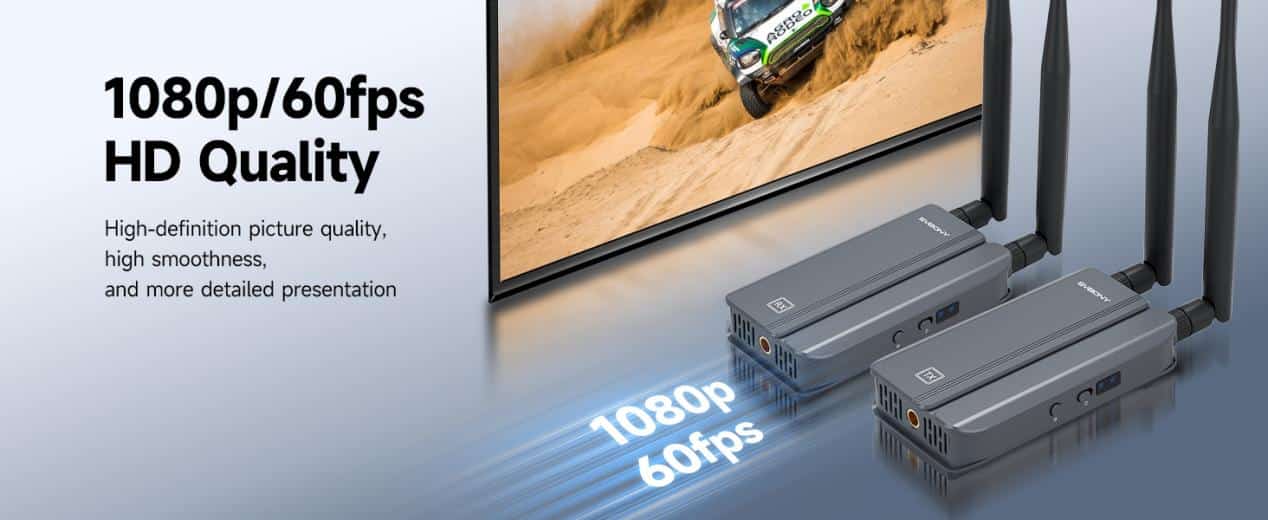
The TansAir3, for example, supports 1080P at 60Hz—a pairing that ensures motion is smooth and details are sharp. It’s a spec that matters whether you’re presenting charts in a conference room or navigating fast-paced gameplay.
Why Frame Rate and Resolution Aren’t Just Numbers
When it comes to video, we often focus on resolution. But refresh rate—how many frames per second your signal carries—is what brings content to life.
A wireless HDMI extender that maxes out at 30Hz might show you a clear image, but it won’t feel real. Motion will stutter. Fast action will blur. That’s why the move to 60Hz is so meaningful—especially for:
- Gaming: Where every millisecond counts
- Live streaming: Where authenticity is key
- Sports and action video: Where clarity in motion can’t be negotiated
It’s not just about looking good—it’s about feeling real.
The Art of Staying in Sync
One of the most common fears about wireless video is lag. We’ve all seen it—the presenter’s mouth moving out of sync with the audio, or the game responding a half-second too late.
This is where low latency HDMI technology makes its case. With delays as low as 0.06 seconds—faster than the blink of an eye—the latest HDMI transmitter and receiver systems keep audio and video in perfect harmony. That’s critical not just for gamers, but for anyone who relies on real-time feedback.
How 5GHz Transmission Works—and Why It Matters
You’ve probably heard of 5GHz Wi-Fi—it’s faster, less crowded, and more reliable than 2.4GHz. The same principle applies to 5GHz HDMI transmission. By operating in this frequency band, devices like the TansAir3 avoid interference from common household wireless signals. That means:
- A cleaner, more stable picture
- Consistent performance across longer distances
- Support for HDMI multi-room streaming without signal degradation
It’s one of those behind-the-scenes upgrades that makes all the difference.

The Beauty of Plug-and-Play Simplicity
Complex setups defeat the purpose of going wireless. If you need an IT degree to make it work, it’s not truly accessible.
That’s why the shift toward plug and play HDMI solutions has been so welcome. No drivers, no software, no complicated pairing rituals. Just connect, power on, and your video appears where it should. It’s the kind of simplicity that makes wireless HDMI viable for everyone—from tech enthusiasts to small business owners.
Real-World Use Cases: Where Wireless HDMI Shines
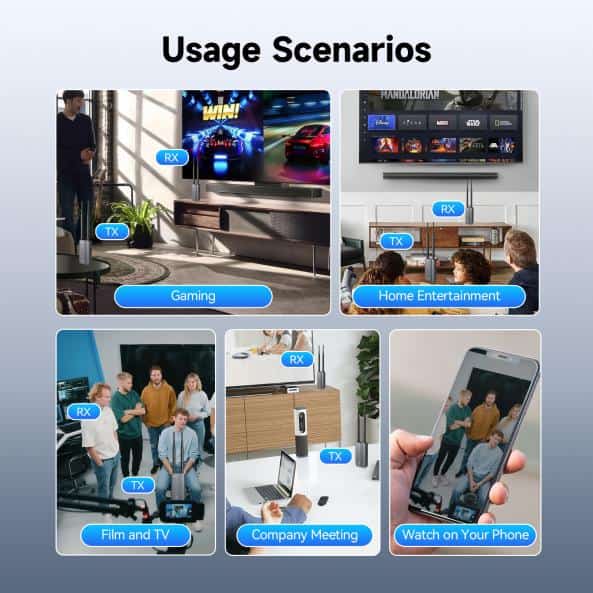
- The Modern Conference Room
Imagine walking into a meeting with your laptop, tapping a button, and seeing your screen mirrored on the main display—without ever plugging in a cable. That’s the promise of HDMI for conference room applications. It’s not just convenient—it’s professional.
- Content Creation Without Constraints
For videographers and streamers, the ability to monitor footage on a larger screen—while moving freely—is a game-changer. With a wireless HDMI setup, you’re no longer tethered to your camera or console.
- Whole-Home Entertainment
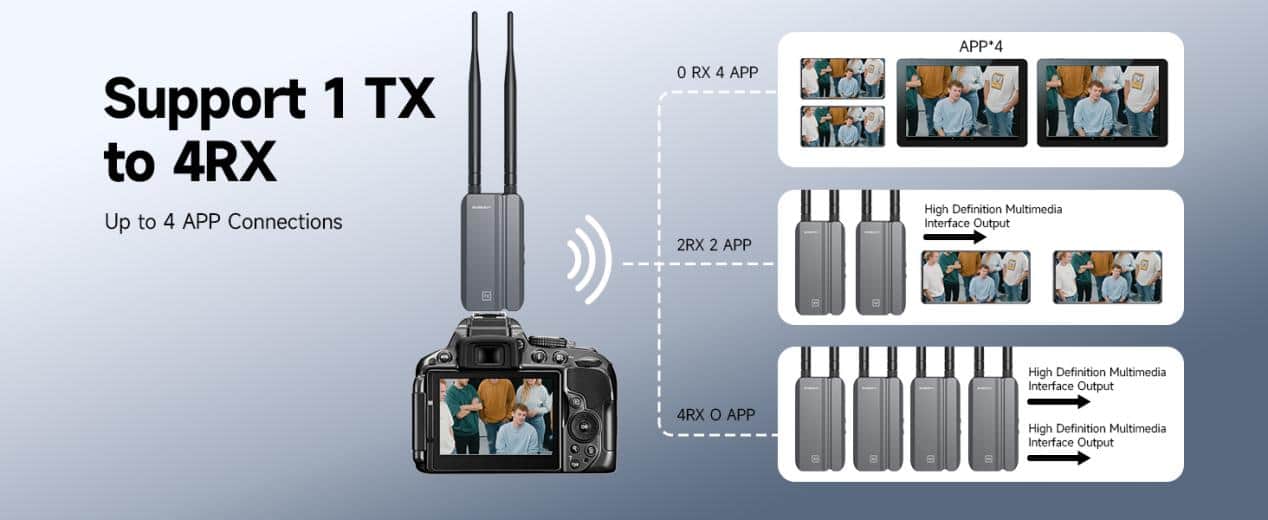
Why limit your media to one screen? With support for one transmitter to four receivers, systems like the TansAir3 allow you to stream a movie from a single set-top box to multiple TVs—in the living room, bedroom, or even patio.
What Many Users Overlook: The Role of Encoding
Resolution and refresh rate are visible specs. But encoding is where the magic happens behind the curtain.
The TansAir3 uses H.264 compression—a technology that smartly reduces file size without sacrificing quality. That means you get a crisp, detailed image without hogging bandwidth. It’s especially important for HDMI for live streaming, where every pixel counts—and every millisecond of delay matters.
A Closer Look at the SVBONY TansAir3
While many devices promise wireless freedom, the TansAir3 delivers a thoughtfully engineered experience. Beyond its 1080P/60Hz output and 5GHz transmission, it includes features like:
- Dual power options (NP-F battery and Type-C) for indoor/outdoor flexibility
- Infrared remote extension for controlling devices across rooms
- Heat dissipation design to maintain performance during extended use
It’s a system designed not just to work—but to work reliably, wherever you need it.

Conclusion: Cutting the Cord Without Cutting Corners
Wireless HDMI has come of age. It’s no longer a compromise—it’s an upgrade. By combining high-resolution video, low-latency transmission, and effortless setup, devices like the SVBONY TansAir3 are redefining how we share and experience visual content.
Whether you’re presenting, creating, or simply relaxing with a movie, the future of video isn’t just wireless—it’s worry-free.
Ready to See the Difference?
Explore the SVBONY TansAir3 and discover how modern wireless HDMI technology can elevate your viewing—and sharing—experience.