









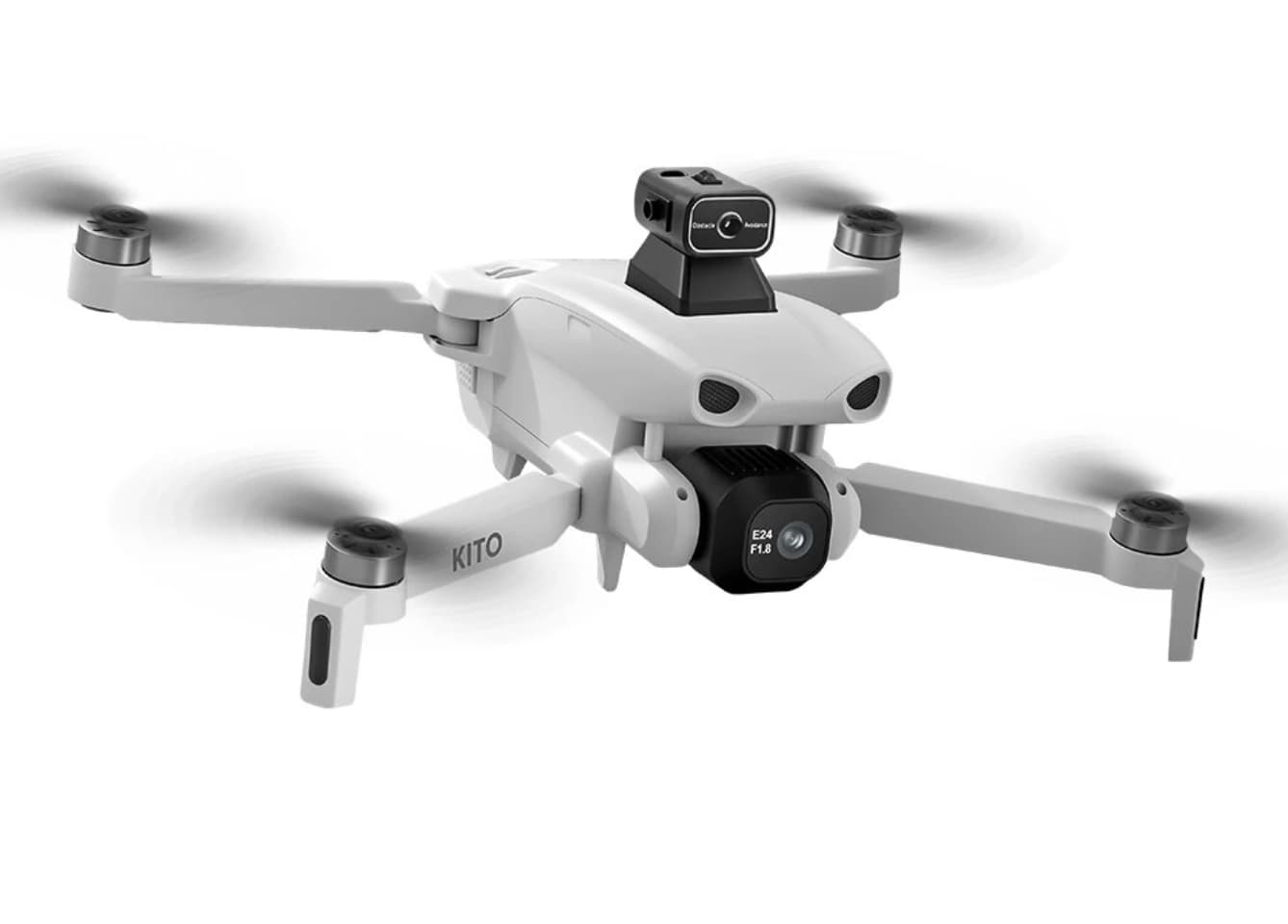
Buying an RC quadcopter is not simply a matter of choosing the drone with the highest advertised speed, the longest control range or the most impressive camera claims. A model that looks powerful on a product page may be difficult for a beginner to control, while a smaller quadcopter with straightforward controls may provide a more enjoyable first flying experience.
The right choice depends on what you want to do with the aircraft. Some people want a compact drone for learning basic flight controls. Others want live first-person-view (FPV) video, aerial photography, outdoor exploration or a platform for developing more advanced piloting skills.
Before ordering, it helps to understand the specifications that affect everyday use. This guide explains ten features worth checking, how to compare competing models and which compromises matter most for different types of pilots.
1. Choose a Quadcopter That Matches Your Experience Level
Your experience level should influence almost every other buying decision. A beginner usually benefits more from predictable controls and easy recovery than from extreme speed or complicated flight modes.
Entry-level quadcopters often include features such as one-key take-off, one-key landing, altitude hold and multiple speed settings. These functions can make the first few flights easier to manage, although they do not replace learning how the controls work.
More experienced pilots may prefer direct control, responsive motors, adjustable flight settings and access to replacement components. A racing or freestyle quadcopter, for example, is designed around a different experience from a camera drone intended for relaxed outdoor flights.
Before choosing a model, ask yourself three questions:
- Will you mainly fly indoors, outdoors or in both environments?
- Do you want to learn basic manoeuvres, record video or practise FPV flying?
- Would you rather have a simple ready-to-fly package or a system that can be upgraded over time?
Answering these questions first can help you avoid paying for features you will rarely use.
2. Understand Brushed and Brushless Motors
The motor system influences efficiency, maintenance, responsiveness and overall cost. Most consumer RC quadcopters use either brushed or brushless motors.
Brushed motors are common in inexpensive beginner models. They can keep the initial purchase price low and may be sufficient for casual practice. However, the brushes are wear components, and small brushed motors generally have a shorter service life than comparable brushless designs.
Brushless motors use electronic commutation rather than physical brushes. They are often preferred for better efficiency, durability and performance, particularly in more demanding flying applications. The actual result still depends on motor quality, propeller selection, aircraft weight and electronic speed controller design.
| Feature | Brushed motors | Brushless motors |
|---|---|---|
| Typical purchase cost | Lower | Often higher |
| Maintenance | Brushes may wear out | No motor brushes to replace |
| Performance potential | Suitable for light recreational use | Often better for demanding flight |
| Best fit | Budget and entry-level models | Performance-focused and longer-term use |
Neither type is automatically the right choice for everyone. If affordability and simple practice are your priorities, a brushed quadcopter may be adequate. If you want stronger performance and expect to fly regularly, a brushless model is worth considering.
When comparing product listings, check the actual motor specifications rather than relying on phrases such as “high-speed motor” or “professional performance.”
3. Treat Flight Time as a Practical Planning Figure
Flight time is one of the most visible numbers in a drone listing, but the advertised figure should not be treated as a guarantee.
Actual endurance depends on battery capacity, aircraft weight, wind, throttle input, motor efficiency, temperature and battery condition. Frequent acceleration and fast manoeuvres can consume more power than steady, gentle flight.
For example, a small recreational quadcopter advertised with approximately 10 minutes of flight time is better suited to short practice sessions than extended exploration. A larger battery may provide additional endurance, but it can also increase weight and change the aircraft’s handling.
Consider the following before buying:
- Battery capacity: Compare the voltage and capacity specified for compatible batteries.
- Replacement availability: Check whether additional batteries can be purchased separately.
- Charging time: A long charging period can limit how often you fly in one session.
- Battery cost: Cheap replacement batteries may not offer the same performance or reliability as the original.
- Low-battery warnings: Check whether the drone provides clear warnings and what happens when the battery becomes low.
If you plan to fly regularly, an additional compatible battery may be more useful than choosing a model based on a small difference in advertised flight time.
Never assume that every battery with a matching connector is compatible. Voltage, dimensions, discharge capability and the manufacturer’s recommendations all matter.
4. Check the Camera Resolution and Stabilization Separately
A quadcopter with a camera can provide a live view, record footage or do both. However, camera specifications require careful interpretation because product titles sometimes use broad terms such as “HD” without clearly explaining the recording resolution.
Look for the actual video resolution supported by the camera. Common labels include 480p, 720p, 1080p and 4K, but the presence of a resolution claim does not by itself establish image quality.
Also check whether the camera captures locally to a memory card, streams video to a controller or phone, or relies entirely on the connected app. Live transmission quality and recorded-video quality are separate considerations.
Stabilization matters, too. A camera that can tilt remotely is not necessarily equipped with a mechanical gimbal. Electronic stabilization, a single-axis mechanism and a multi-axis gimbal can produce different results, especially when the aircraft changes direction.
Before buying, confirm:
- The actual still-photo and video resolutions.
- Whether a memory card is supported or included.
- Whether the camera angle can be adjusted during flight.
- Whether stabilization is mechanical, electronic or not specified.
- Whether the advertised sample footage comes from the exact model.
For casual FPV viewing, a modest camera may be acceptable. For travel footage or content creation, higher-resolution recording and effective stabilization should receive much greater priority.
5. Understand Control Range and FPV Video Range
A drone’s control range and its FPV video range describe two different things.
Control range refers to the distance over which the transmitter can maintain a usable connection with the aircraft. FPV range refers to how far the live camera feed can be transmitted while remaining useful to the pilot.
On some Wi-Fi FPV models, the live image may become unreliable before the control link reaches its advertised limit. Walls, trees, radio interference, antenna orientation and the surrounding environment can all affect performance.
This distinction is particularly important when comparing inexpensive drones with built-in screen controllers. A large display may make the system more convenient, but it does not automatically increase the transmission range or improve the camera’s resolution.
Look for separate specifications for control distance and video transmission distance. If the seller publishes only one range figure, do not assume it applies equally to both.
For safer flying, keep the quadcopter within visual line of sight where required, avoid flying behind obstacles and leave a comfortable margin before reaching the advertised limit.
6. Decide Whether You Need GPS or Optical-Flow Positioning
Positioning systems can help a quadcopter maintain its location, but different technologies offer different capabilities.
GPS-based positioning uses satellite signals to estimate the aircraft’s location. On compatible drones, GPS can support position holding and return-to-home functions. Performance depends on satellite reception, configuration and the environment.
Optical-flow positioning uses visual information from a sensor, often directed toward the ground, to estimate movement. It may help the aircraft hold position over a surface with sufficient visual detail and suitable lighting.
These technologies are not interchangeable. Optical flow does not provide the same satellite-based navigation capabilities as GPS, and its performance can decline over featureless, reflective or poorly illuminated surfaces.
A drone that advertises altitude hold may simply regulate its height rather than maintain a precise horizontal position. Similarly, a “return” function should not be assumed to provide GPS-guided navigation unless the manufacturer confirms the system and its operating requirements.
If reliable position holding and navigation are important to you, verify the specific sensors and functions fitted to the exact model.
7. Evaluate Obstacle Avoidance Realistically
Obstacle avoidance is an appealing feature, especially for inexperienced pilots. It may help a drone detect certain nearby objects and reduce the likelihood of a collision.
However, obstacle avoidance is not a universal shield. Performance varies with sensor type, detection angle, lighting, object size, surface properties and the aircraft’s speed. Thin wires, small branches, transparent surfaces and objects outside the sensors’ coverage may be difficult to detect.
The wording used in a product listing also matters. A seller’s claim of “360-degree obstacle avoidance” does not necessarily mean that the drone can identify every obstacle in every direction under all conditions.
Before paying extra for this feature, check what sensors the aircraft uses and whether the manufacturer explains its limitations. Look for independent demonstrations of the exact model rather than assuming that all drones with similar marketing terms perform equally well.
Even with obstacle detection, pilots should maintain control, choose open flying areas and avoid operating near people, vehicles, power lines or other hazards.
If portability and flight-assistance features are your main priorities, our guide to choosing a foldable RC drone with obstacle avoidance explains which specifications to compare before making a purchase.
8. Examine the Controller and Flight Interface
The controller determines how comfortably you can operate the aircraft. Its layout, connection method, screen, sticks and button placement can make a noticeable difference during longer sessions.
Some quadcopters use a basic remote with a smartphone holder. Others include a dedicated LCD display, while FPV-focused models may use specialised goggles and radio equipment.
A built-in screen can simplify setup because you do not need to mount a phone just to view the live feed. However, screen size alone does not tell you how clear the image will be in bright sunlight, how responsive the interface is or how far the video signal will travel.
Check whether the controller uses Mode 1 or Mode 2. Mode 2, which places the throttle on the left stick, is common in consumer drone systems, but the important consideration is choosing a layout you can learn comfortably.
Also confirm the connection method. A Wi-Fi-based phone app may have different setup requirements and transmission limitations from a dedicated radio-control link.
For a first purchase, a straightforward controller with clearly labelled functions is often more valuable than a large collection of buttons you do not yet understand.
9. Check Repairability, Spare Parts and Foldable Design
A quadcopter can be easy to transport but difficult to maintain. Before buying, investigate what happens when a propeller breaks, a motor fails or the battery loses capacity.
Useful replacement parts include propellers, motor assemblies, landing components, batteries and compatible charging cables. More advanced models may also require replacement arms, electronic speed controllers or camera components.
Foldable designs offer a storage advantage, especially for people who travel or want to carry a drone in a small bag. However, folding arms and hinges add components that should be checked for secure locking and visible damage.
A compact design is not necessarily durable, and a larger aircraft is not automatically stronger. Look at the construction, availability of spare parts and the seller’s after-sales policy.
Before checkout, confirm:
- Whether replacement propellers are available.
- Whether the battery is replaceable.
- Whether spare parts are sold individually.
- Whether the seller provides a warranty or return policy.
- Whether the aircraft can be repaired without replacing the entire unit.
For frequent pilots, access to spare parts can make a modestly priced quadcopter a better long-term purchase than a model that must be discarded after a small component fails.
10. Consider Where You Will Fly and Which Rules Apply
The best quadcopter for an indoor practice area may be very different from one intended for outdoor flying.
Small, lightweight models can be convenient for learning basic controls indoors, provided there is sufficient space and the aircraft is suitable for that environment. Outdoor flying introduces wind, changing light, obstacles and greater distances that can challenge a lightweight quadcopter.
If you plan to fly outdoors, consider the aircraft’s wind tolerance, visibility, battery endurance and positioning capabilities. Do not assume that a drone described as suitable for outdoor use will remain stable in strong winds.
You should also check the aviation rules that apply where you intend to fly. Requirements can depend on the aircraft’s weight, camera equipment, operating location and flight purpose. Registration, operator identification, training, altitude restrictions and no-fly zones may apply in some jurisdictions.
A model’s small size does not automatically exempt it from local requirements. Review official guidance before flying, keep the aircraft within the required visual range and avoid restricted or unsafe locations.
Which RC Quadcopter Features Matter Most?
Not every buyer needs every feature. Use your intended flying style to decide where your budget should go.
| Your priority | Features to prioritise |
|---|---|
| First-time flying | Simple controls, speed settings, altitude assistance and affordable replacement parts |
| Casual outdoor use | Stable handling, practical battery life and reliable control connection |
| FPV flying | Suitable camera feed, controller compatibility and clearly specified video range |
| Aerial photography | Verified recording resolution, effective stabilization and dependable positioning |
| Performance flying | Brushless motors, responsive controls, suitable batteries and repairable components |
| Travel and portability | Folding design, manageable size and easily available batteries |
A balanced quadcopter is often a better choice than one that excels at only a single specification. For instance, a drone with a very long advertised range but poor battery availability may be less practical than a model with shorter flights and readily available replacement batteries.
Common Mistakes to Avoid When Buying an RC Quadcopter
Several common buying mistakes can be avoided by checking the specifications carefully.
Choosing a drone by camera marketing alone. Terms such as “HD camera” do not provide enough information. Confirm the actual recording resolution and stabilization system.
Assuming advertised flight time is guaranteed. Manufacturer figures are usually obtained under particular conditions. Real flights may be shorter.
Confusing altitude hold with GPS positioning. Maintaining height does not necessarily mean the aircraft can hold its horizontal position or navigate back to the launch point.
Paying for features without checking their limitations. Obstacle avoidance, gesture control and automated flight functions vary between models. Verify how they work on the exact aircraft.
Ignoring battery and spare-part costs. The purchase price is only part of the long-term cost of ownership.
Buying a model that exceeds your current needs. High-speed or advanced FPV systems may introduce additional setup, maintenance and learning requirements that are unnecessary for a beginner.
Final Buying Checklist
Before placing your order, use this quick checklist:
-
The drone matches your experience level and intended use.
-
The motor type and performance claims are clearly specified.
-
The advertised flight time is realistic for your planned sessions.
-
Camera resolution and stabilization have been checked separately.
-
Control range and FPV video range are not being confused.
-
GPS, optical-flow and return functions are accurately described.
-
Obstacle-avoidance limitations are understood.
-
The controller and app are compatible with your intended setup.
-
Replacement batteries and essential spare parts are available.
-
Local flight regulations and restrictions have been checked.
Final Verdict
Choosing an RC quadcopter becomes easier when you look beyond the headline specifications and consider how the aircraft will perform during everyday use. Motor type, battery endurance, camera capability, transmission range, positioning technology and repairability all influence the ownership experience.
For beginners, straightforward controls and affordable replacement parts may matter more than top speed. FPV enthusiasts should pay close attention to video transmission and controller compatibility, while photography-focused buyers should prioritise verified recording quality and stabilization.
Take time to compare the specifications of the exact models you are considering, and treat unclear seller claims with caution. A quadcopter that fits your skills, budget and intended flying environment is more likely to deliver a satisfying experience than one chosen purely for its longest feature list.