









The CDRC V818 PRO rc drone is a foldable quadcopter designed for buyers who want to explore first-person-view flying without immediately investing in an expensive camera drone. Its main attraction is the included remote controller with a built-in 5.8-inch screen, supported by Wi-Fi FPV, dual cameras, a brushless motor system and several automated flight functions.
However, a long feature list does not automatically make a drone suitable for every pilot. Camera resolution, flight endurance, video transmission distance and the limitations of obstacle avoidance all influence the real-world experience. This guide examines the advertised specifications of the CDRC V818 PRO and explains what potential buyers should consider before ordering.
A Drone Designed Around Convenience Rather Than Professional Imaging
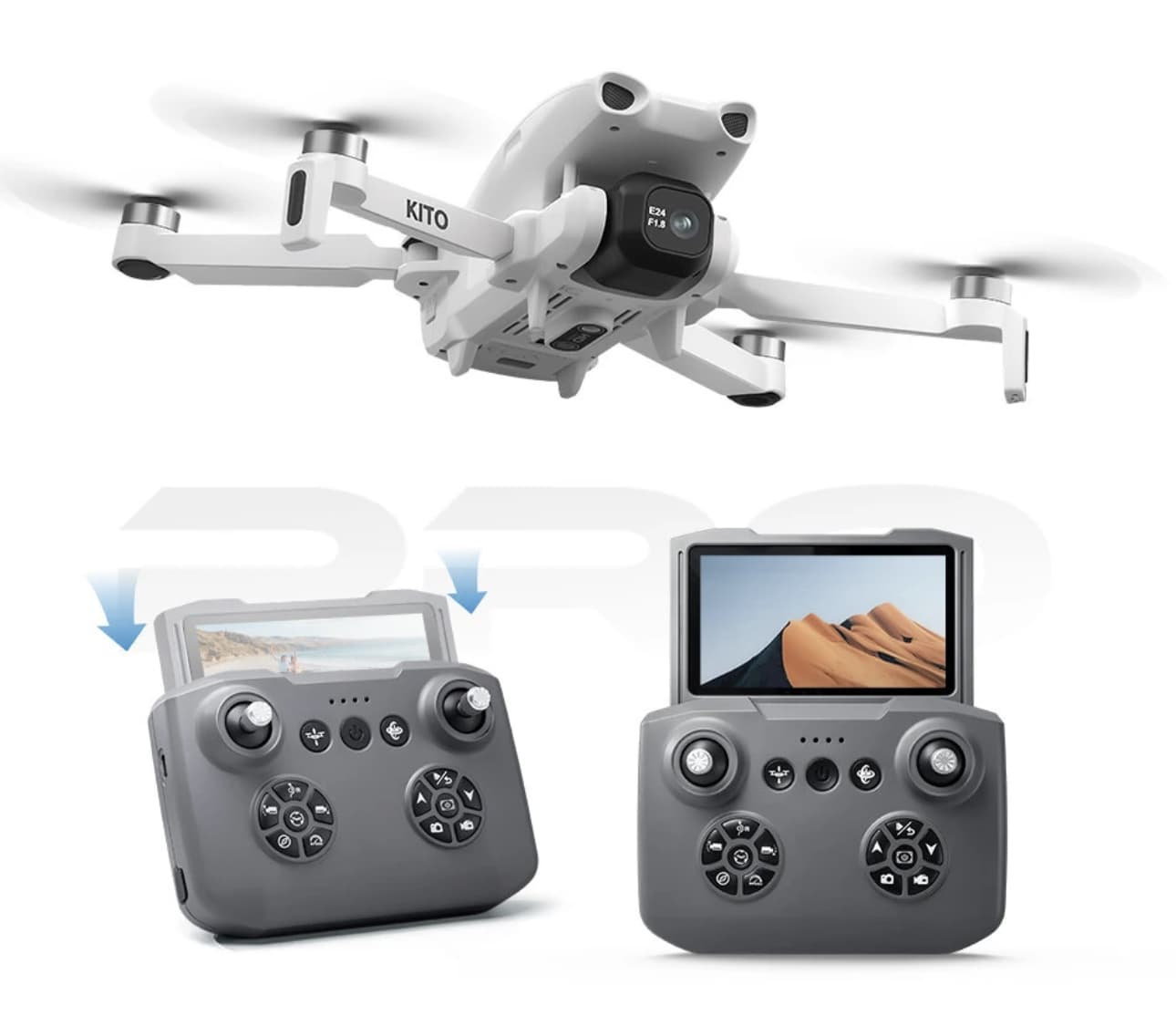
Many entry-level drones require users to mount a smartphone on the controller before they can see the camera feed. The V818 PRO takes a different approach by including a remote control with a telescopic 5.8-inch LCD screen.
This integrated display gives the package a more self-contained feel. Pilots can view the live feed without relying entirely on a separate phone mounted above the controls. The drone also supports Wi-Fi connectivity with a compatible mobile app, providing another way to access its camera functions.
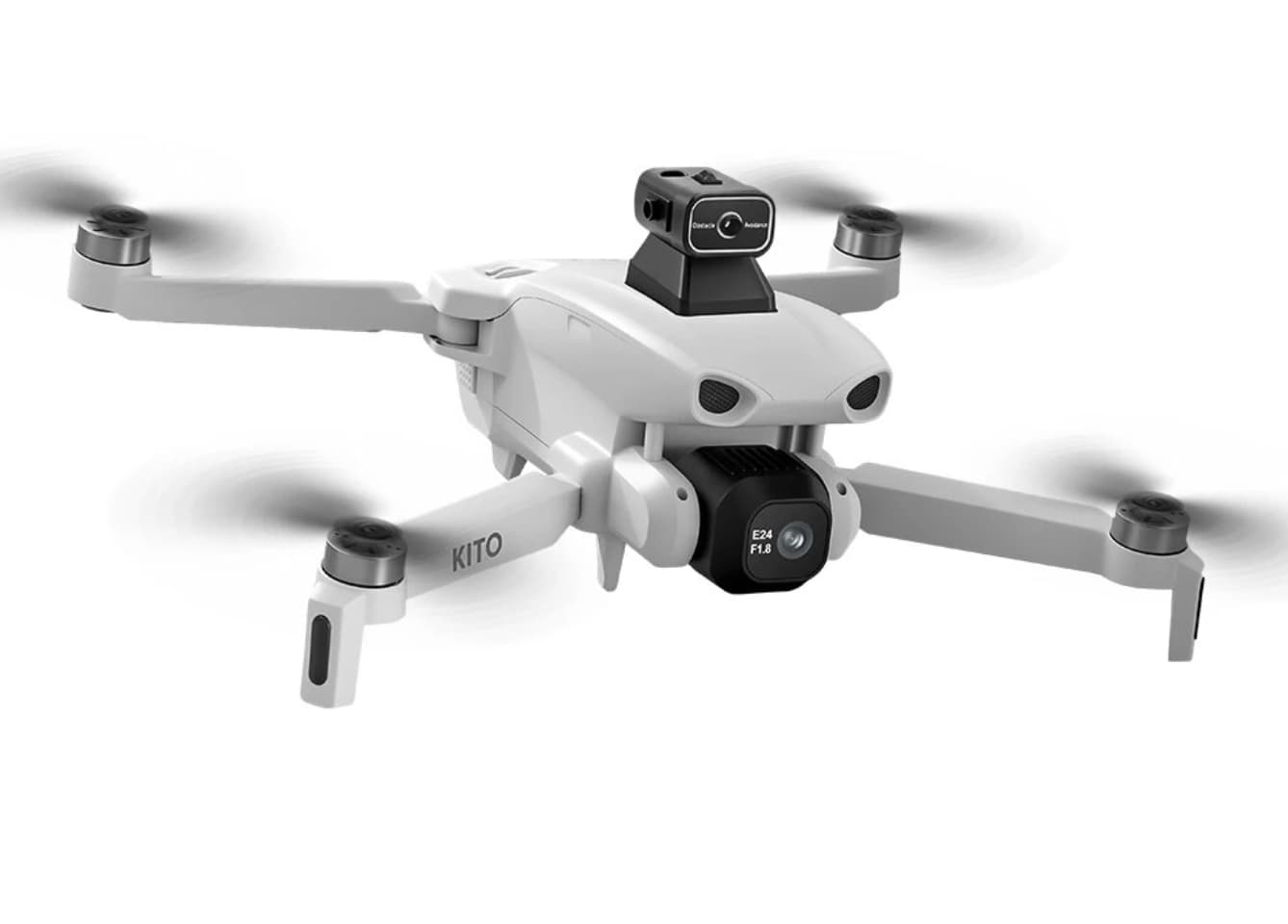
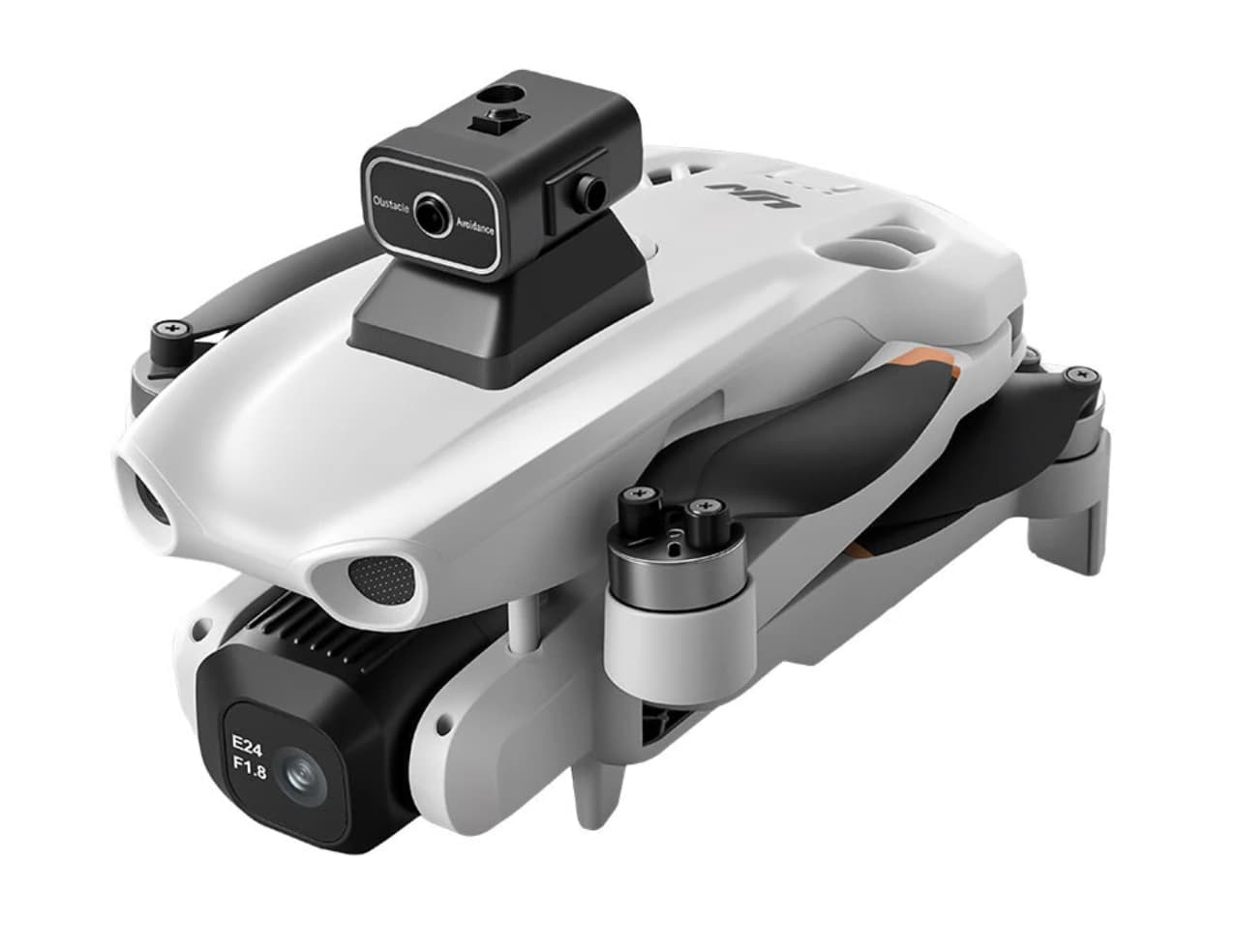
The V818 PRO has a foldable design, measuring approximately 160 × 90 × 65 mm when folded and 245 × 340 × 65 mm when unfolded. Its compact dimensions make it easier to store in a bag between flying sessions.
That combination of a built-in display and folding arms is especially appealing to casual users who want a portable drone for experimenting with aerial views, learning basic controls and enjoying recreational flights.
The 5.8-Inch Screen Controller Is the Main Selling Point
The controller is one of the most distinctive elements of the CDRC V818 PRO. Instead of making a smartphone the only viewing option, it incorporates a 5.8-inch LCD screen into the remote-control design.
For beginners, this can reduce setup friction. There is no need to position a phone in a separate holder just to start viewing the camera feed, although app connectivity remains available for supported features.
The controller uses Mode 2 controls, with the throttle on the left stick. This is a common layout among consumer drones, so pilots who have used other Mode 2 models may find the arrangement familiar.
The seller advertises a control distance of approximately 100 metres in an environment without interference. That figure should be treated as a best-case specification rather than a guaranteed distance. Buildings, radio interference, battery condition and the surrounding environment can all affect the usable range.
It is also important to distinguish the controller’s stated range from the FPV video range. The listing gives an approximate Wi-Fi FPV distance of 30 metres. In practice, the live image may become unreliable before the drone reaches its maximum advertised control distance.
Camera Features: Dual Cameras and a Remote-Adjustable Angle
The V818 PRO is advertised with a dual-camera setup and a servo gimbal. Its camera angle can be adjusted remotely through a range of up to 90 degrees, allowing the pilot to change the viewing direction without manually repositioning the camera.
This adjustment is useful when switching between forward-facing views and downward-looking scenes. For example, a pilot could frame a landscape from a forward angle and then tilt the camera toward the ground during a later part of the flight.
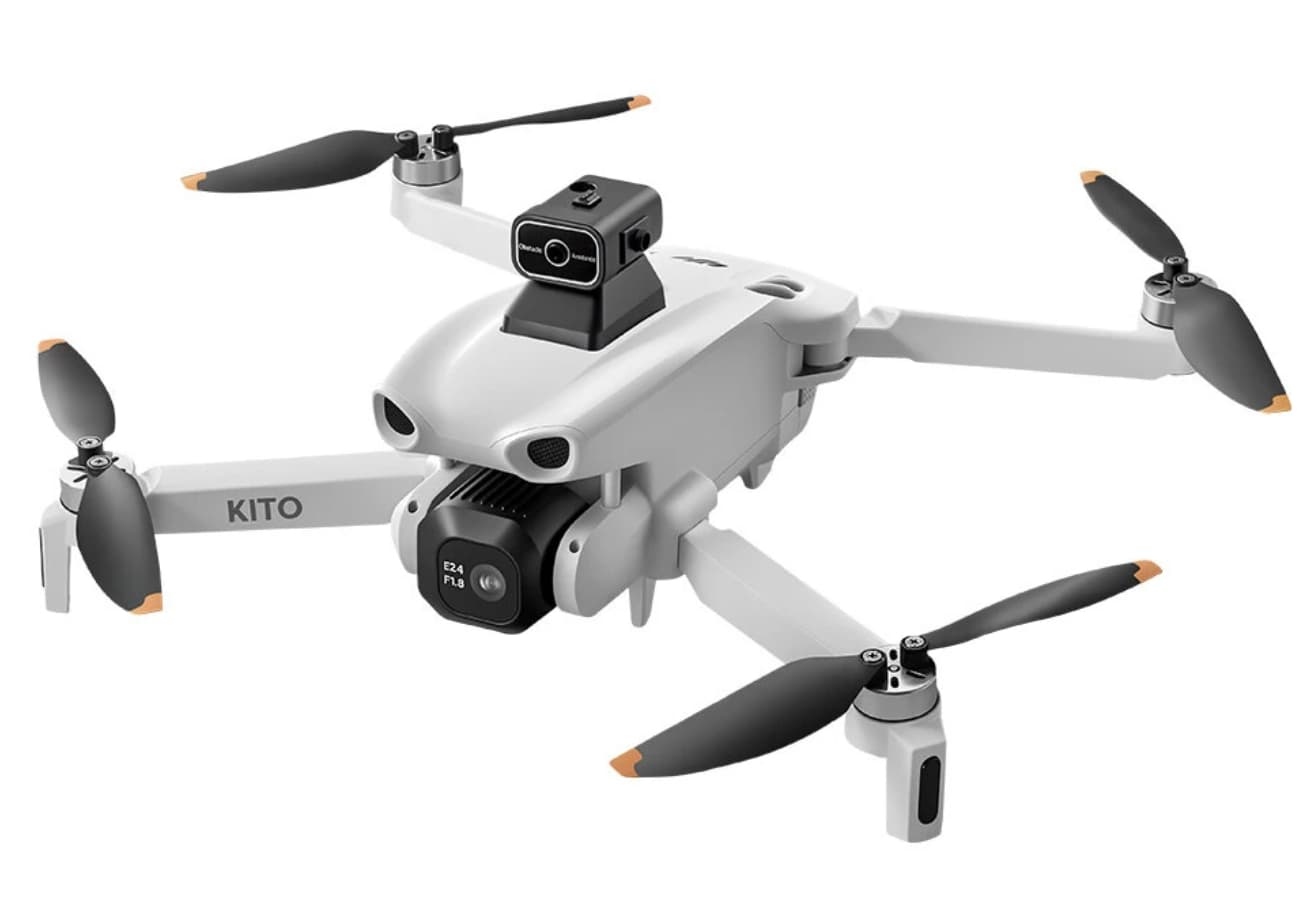
There is an important limitation, however: the seller lists the camera resolution as 480P. Buyers should not interpret phrases such as “HD dual camera” in the product title as evidence of true 1080p or 4K recording.
The listing also does not establish that the servo gimbal provides the same mechanical stabilization performance as a professional three-axis camera gimbal. A remotely adjustable camera angle and a stabilized camera are different features.
For casual experimentation and basic FPV viewing, the camera arrangement may be sufficient. For detailed landscape photography, cinematic footage, travel videos or content intended for large displays, buyers should consider a drone with independently verified higher-resolution imaging and stronger stabilization.
Buyers comparing affordable foldable quadcopters can also read our F88 dual-camera RC drone review to explore another design that combines a folding frame with front and bottom cameras.
Brushless Motors and Optical-Flow Positioning
The CDRC V818 PRO uses 1504 brushless motors and a six-axis gyroscope. Brushless motors are generally valued for their efficiency, durability and reduced mechanical wear compared with conventional brushed motors, although the actual performance of a drone also depends on its weight, propellers, battery and flight-control system.
The listing also advertises optical-flow positioning. This technology uses visual information to help estimate movement relative to the surface below the aircraft. Under suitable lighting and over surfaces with enough visible detail, it can help the drone maintain a more consistent position.
Optical flow is not a replacement for GPS positioning. Its effectiveness can decline over reflective, featureless or poorly illuminated surfaces, so users should not assume that the drone will hold its position perfectly in every environment.
For a beginner, these systems can make basic hovering practice more manageable, but they do not eliminate the need to learn throttle control, orientation and safe landing procedures.
For another foldable drone with an integrated display, see our S32 WiFi FPV RC quadcopter review, which explores its LCD controller, brushless motors and beginner-friendly flight features.
What Does 360-Degree Obstacle Avoidance Really Mean?
The V818 PRO’s product listing advertises 360-degree obstacle avoidance. This sounds reassuring, particularly for new pilots who are still learning to judge distance and direction.
Nevertheless, obstacle-avoidance performance depends on the sensors used, the types of objects encountered and the conditions in which the drone is flying. Thin branches, wires, transparent surfaces, small objects and obstacles outside a sensor’s effective detection area may not be identified reliably.
The feature should therefore be treated as an additional layer of assistance, not as a guarantee against collisions. Keep the drone within sight, fly in open areas and leave sufficient room around buildings, trees and people.
The same caution applies to automated functions such as one-key return and low-battery return. Before relying on them, learn how they work, understand their limitations and test them in a safe, open location. The listing does not establish GPS-based navigation, so buyers should not assume that the V818 PRO offers the return-to-home accuracy associated with GPS-equipped drones.
Flight Time: Approximately 10 Minutes per Battery
The drone uses a 3.7V lithium-polymer battery, with the seller advertising around 10 minutes of flight time under conditions without interference. Charging takes approximately 80 minutes according to the listing.
That endurance is typical of a small recreational drone’s short-session use case, but it requires some planning. Ten minutes can pass quickly when a pilot is practising take-offs, hovering, turns and camera adjustments.
Actual flight time can be shorter depending on wind, throttle input, battery condition, temperature and how much time is spent manoeuvring. New pilots should also reserve enough battery power for a controlled landing rather than attempting to use every last minute of the advertised runtime.
The listing offers one-battery and two-battery options. A second battery may be useful for users who want additional flying time between charging sessions, but confirm the selected package contents and price before checkout.
Flight Modes and Automated Functions
Beyond conventional directional controls, the V818 PRO listing identifies several functions intended to make recreational flying more engaging:
- One-key take-off and landing: Designed to simplify the beginning and end of a flight.
- Three flight-speed levels: Gives users different speed settings to explore as their confidence improves.
- Optical-flow positioning: Helps with hovering under suitable conditions.
- Waypoint flight: The app is advertised as supporting route planning through points on a map.
- Point-of-interest flight: The drone is advertised as being able to circle a selected location.
- One-key return: Provides a return function, although buyers should verify how it operates on this particular model.
- LED lighting: Improves visibility of the drone’s position in some conditions, but should not be treated as permission to fly at night where regulations prohibit it.
These functions expand the range of activities available beyond manually steering a basic quadcopter. However, app compatibility, connection stability and the accuracy of automated modes can affect the experience. Test each function in a clear, controlled environment before attempting more complex flights.
Is the CDRC V818 PRO Suitable for Beginners?
The V818 PRO may appeal to first-time pilots who want an all-in-one recreational package with a dedicated screen, folding arms and several assisted-flight features.
It is worth considering if your priorities include:
- A built-in controller display rather than relying solely on a smartphone.
- A compact body that folds for storage.
- Brushless motors and basic flight-positioning assistance.
- Camera-angle adjustment through the remote control.
- Automated features to explore after learning the basic controls.
It is less suitable for buyers whose main priorities are high-quality aerial photography, long-distance FPV, extended flight sessions or advanced GPS navigation. Its advertised 480P camera, roughly 10-minute flight time and approximately 30-metre Wi-Fi FPV range are important limitations to weigh against its convenience features.
New pilots should also check local drone rules before flying. The listing gives a take-off weight of approximately 201 grams, but legal requirements vary by country and may depend on camera equipment, location and how the drone is operated.
What to Check Before Buying
Before placing an order, use the following checklist to make sure the advertised features match your expectations.
1. Confirm the camera resolution. The seller lists 480P, so do not buy it expecting verified 1080p or 4K footage.
2. Check the battery package. Choose the correct one-battery or two-battery configuration and confirm what is included.
3. Understand the two distance figures. The advertised control range is around 100 metres, while Wi-Fi FPV is listed at approximately 30 metres. These are different measurements and neither is guaranteed in all conditions.
4. Verify the app and screen functions. If route planning or mobile-app controls are important to you, check compatibility with your phone and the latest product documentation.
5. Treat obstacle avoidance as assistance. Maintain visual contact and avoid flying close to people, traffic, power lines or other hazards.
6. Check delivery and return conditions. Confirm stock status, shipping availability for your country, the final price and the seller’s warranty or return terms.
Final Verdict: A Feature-Focused Starter Drone With Clear Trade-Offs
The CDRC V818 PRO stands out mainly because it combines a built-in 5.8-inch screen controller, a foldable design, brushless motors, camera-angle adjustment and a collection of assisted-flight functions in one package.
Its strongest appeal is convenience. Buyers who want to practise basic flight and explore live camera viewing without purchasing a separate display may find the setup attractive.
The main compromises are equally important: the listed 480P camera is modest, the advertised flight time is around 10 minutes, and Wi-Fi FPV is listed at a shorter distance than the control link. Obstacle avoidance and automated flight modes should also be treated as aids rather than guarantees.
If these limitations fit your expectations, the V818 PRO is worth comparing with other entry-level foldable drones.