










With the continuous improvement of electronic cigarette devices, filling in the e-liquid has become a core skill for users in their daily maintenance. Based on industry standards and practical experience of users, the reporter has systematically sorted out the process and precautions of filling in e-liquid for electronic cigarettes, helping consumers avoid operational risks and ensuring the performance of the devices.
I. Basic Filling Process: Step-by-step Analysis and Standardized Operations
Disassembly of the atomizer and oil filling
Rotate the device counterclockwise to remove the bottom cover of the atomizer. When holding the device, avoid the central electrode column. Slowly inject the e-liquid along the inner wall of the atomization chamber.
The oil filling volume should be controlled within two-thirds of the total volume. Taking a popular brand’s equipment as an example, the maximum capacity of its atomization chamber is 2ml. Overfilling may cause the e-liquid to be sucked back into the inhalation port.
After the oiling process is completed, the equipment should be left to stand for 60 seconds to allow the cotton core to fully absorb the oil. This is to prevent damage to the equipment caused by overheating.
Pre-installed smoke cartridge modification techniques
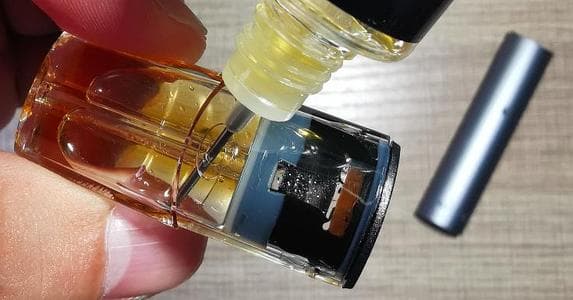
Drilling and Injection Method: Use a special drilling tool (available at stationery stores) to make a 2mm diameter hole at the air intake point on the bottom of the e-cigarette cartridge. Slowly inject the e-liquid through an injection needle. This method can increase the capacity of the cartridge by 30%, but the hole diameter must be strictly controlled to avoid damaging the sealing structure.
Disassembly oiling method: Use a plastic pry bar to apply gentle force along the gap of the cigarette cartridge base, then separate them. Afterwards, use a needle-point bottle to precisely inject the oil. During the operation, wear nitrile gloves to prevent the oil from contacting the skin. When restoring, ensure that the sealing ring is completely repositioned. Laboratory tests have shown that poor sealing will increase the oil leakage rate by 85%.
II. Equipment Compatibility Differences: Operational Differences Between Small and Large Vaporizers
Small Vaporizer: Due to the diameter of the oil injection port being only 0.8mm, it is difficult to directly add oil using the traditional oil bottle nozzle. It is recommended to use a separate bottle with an L-shaped hose, or to add through an injection device as a transitional method.
Dust-free device: For high VG content e-liquid (with a VG ratio of typically ≥ 70%), the atomization core should be preheated at a power below 40W to prevent poor oil flow due to excessive viscosity.
III. Safety Warning: Risk Analysis of Illegal Modifications
The “Consumer Warning” recently released by the China E-cigarette Industry Association states that unauthorized drilling and oil injection pose three major risks:
Material compatibility risk: Unofficially certified e-liquids may corrode the plastic components of the e-cigarette cartridge. A laboratory comparison test revealed that after 24 hours of contact with PC material, the component swelling rate reached 12% for inferior e-liquids.
Battery safety risks: Modifying the device may cause changes in the resistance value of the smoke cartridge, which could lead to battery overload. According to statistics, the number of battery failure incidents caused by privately modifying equipment increased by 41% in the first quarter of 2025.
Health risks: If the homemade e-liquid has not undergone GC-MS component testing, it may contain excessive harmful substances such as diacetyl. Long-term inhalation of such substances may lead to obliterative bronchiolitis.
IV. Expert Recommendations: Guidelines for Compliance Use and Maintenance
Experts from the National Tobacco Quality Supervision and Inspection Center emphasized:
When purchasing certified products: Opt for the tobacco oil labeled with “GB 41700-2022” as the national standard. The nicotine content error value of such products can be controlled within ±0.3%.
Set up usage logs: Record the usage duration of each atomizer (recommended not to exceed 2 weeks). The carbonization of the cotton core can lead to an increase in the amount of heavy metals released by 3 to 5 times.
Storage Specifications: Unopened e-liquid should be stored in a light-protected environment at a temperature range of 5 to 25 degrees Celsius. Opened e-liquid is recommended to be stored in brown glass bottles and labeled with the date of opening.