








SP2S takes two noticeably different approaches with the NIVON and SENX AIR. Both devices combine compact hardware with modern lighting and rechargeable batteries, but they are built around different priorities.
SP2S NIVON focuses on extended capacity, a dual-battery design and a larger e-liquid reservoir. Its detachable pod battery, curved display and two operating modes give it a more feature-oriented design.
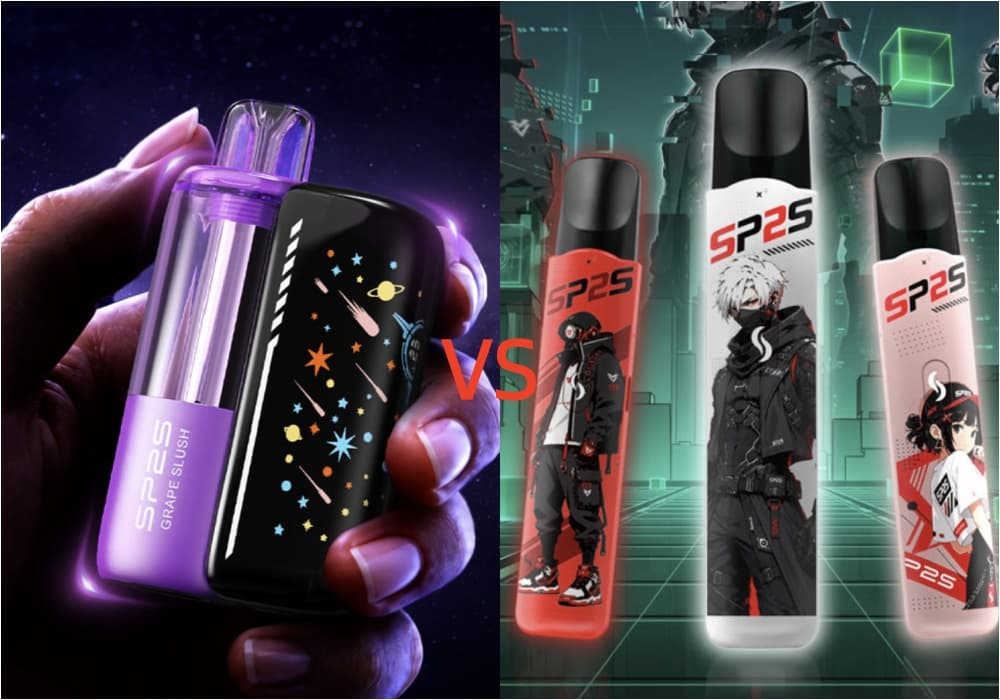
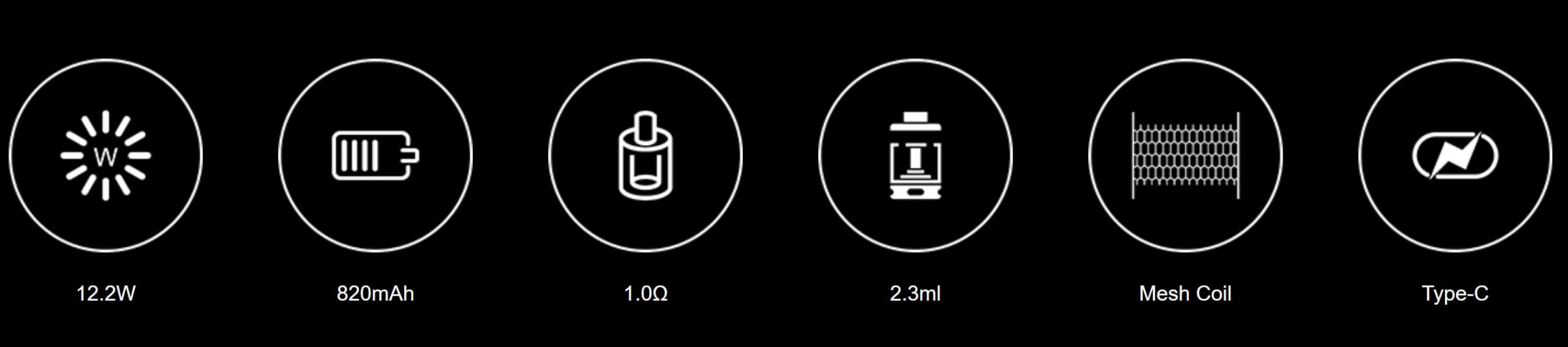
The SP2S SENX AIR, meanwhile, is a simpler and more compact pod system. It features an 820mAh battery, 12.2W constant output, a 2.3ml pod and an RGB lighting system. Its emphasis is on straightforward operation and a distinctive exterior.
Rather than treating these devices as direct equivalents, this comparison examines how their specifications, battery arrangements, pod designs and interfaces differ. The goal is to clarify what each product offers and where their designs diverge.
This article is intended for adult readers in markets where these products are legal. Nicotine is addictive. These products are not intended for minors or non-smokers.
SP2S NIVON vs SENX AIR: Key Specifications
The specification differences are substantial. NIVON is built around a larger liquid capacity and a dual-battery arrangement, while SENX AIR uses a smaller pod and a more conventional integrated power system.
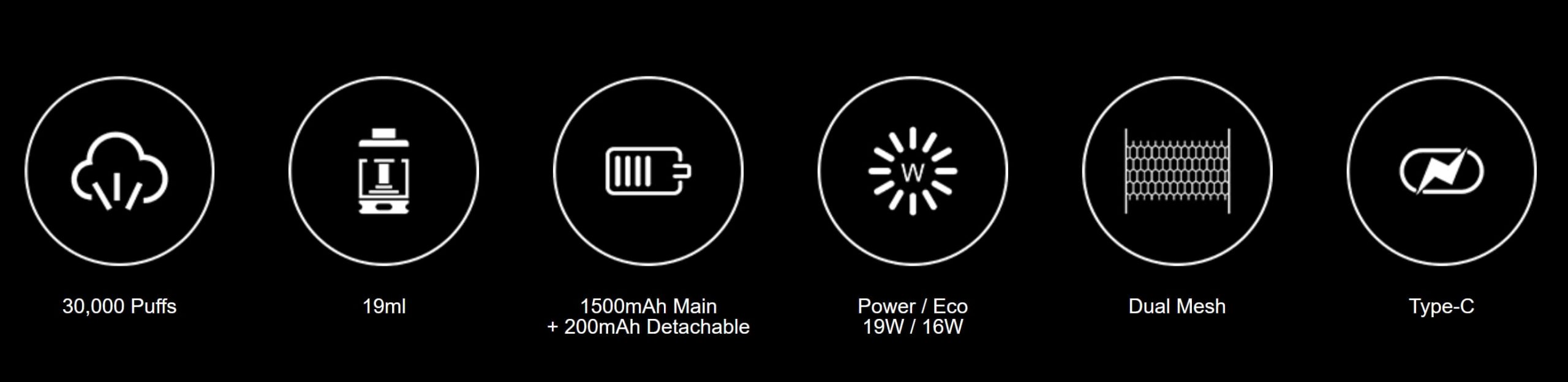
| Specification | SP2S NIVON | SP2S SENX AIR |
|---|---|---|
| Product type | Prefilled pod kit | Pod system |
| Advertised capacity | Up to 30,000 puffs | Not specified on product page |
| E-liquid capacity | 19ml | 2.3ml |
| Main battery | 1500mAh | 820mAh |
| Additional battery | 200mAh detachable pod battery | Not specified |
| Combined battery capacity | 1700mAh | 820mAh |
| Output | 19W / 16W | 12.2W constant |
| Operating modes | Power / Eco | Constant output |
| Coil technology | Dual Mesh | Mesh Coil |
| Pod resistance | Not specified on product page | 1.0Ω |
| Display | Curved display | RGB phantom lights |
| Charging | USB Type-C | USB Type-C |
| Leakage protection | Not specified as an 8X system | 8X Leak-Guard System |
Specifications are taken from the manufacturer’s product pages. Puff figures are advertised estimates, not guaranteed usage results.
1. Design Philosophy: NIVON’s Display vs SENX AIR’s RGB Identity
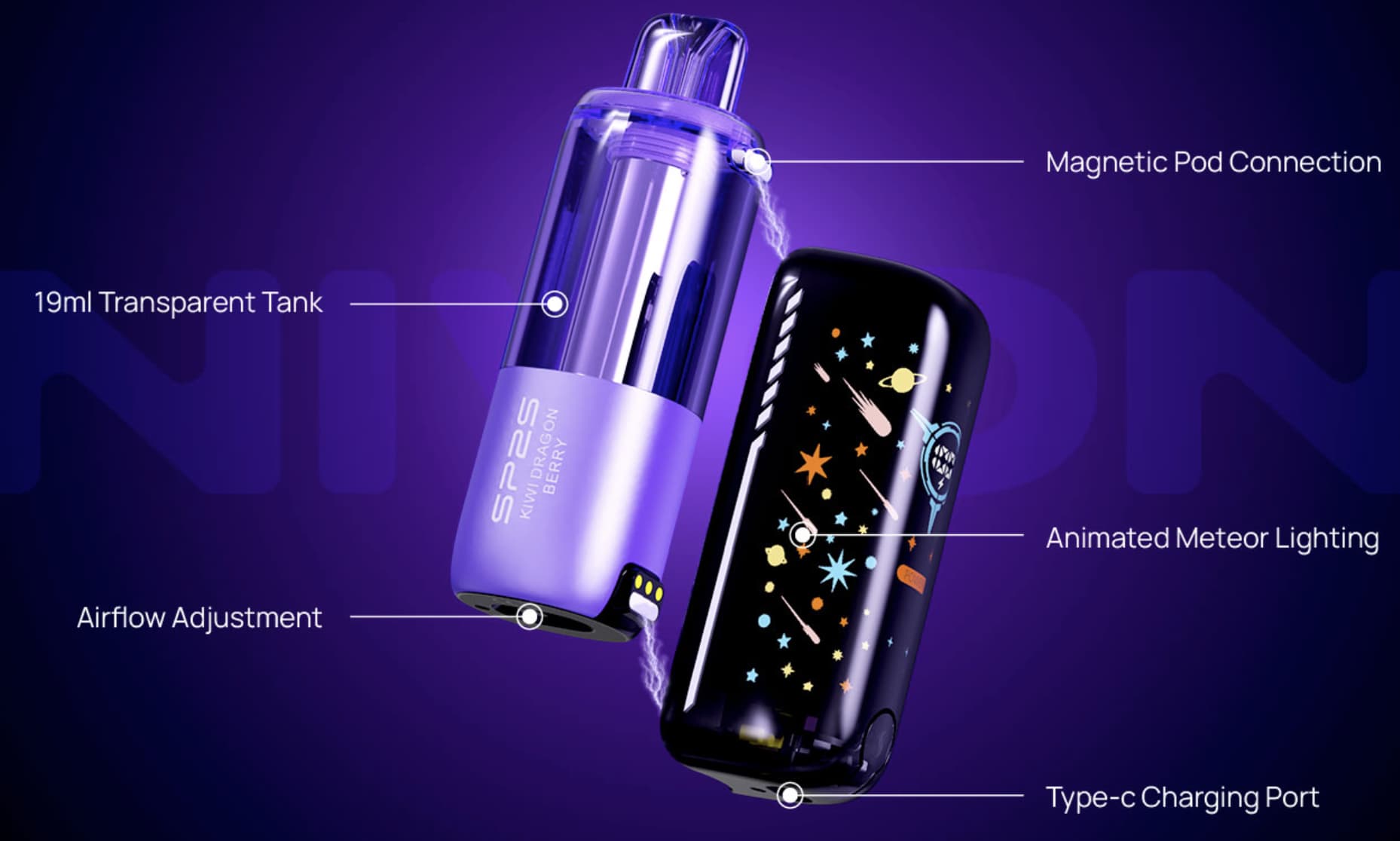
The NIVON has a more information-focused exterior. Its curved display is designed to show battery status and operating mode, while dynamic meteor-style lighting adds movement when the device is activated.
The rounded body also gives the product a softer appearance. SP2S describes its contours as edge-free, with an ergonomic shape intended to sit comfortably in the hand.
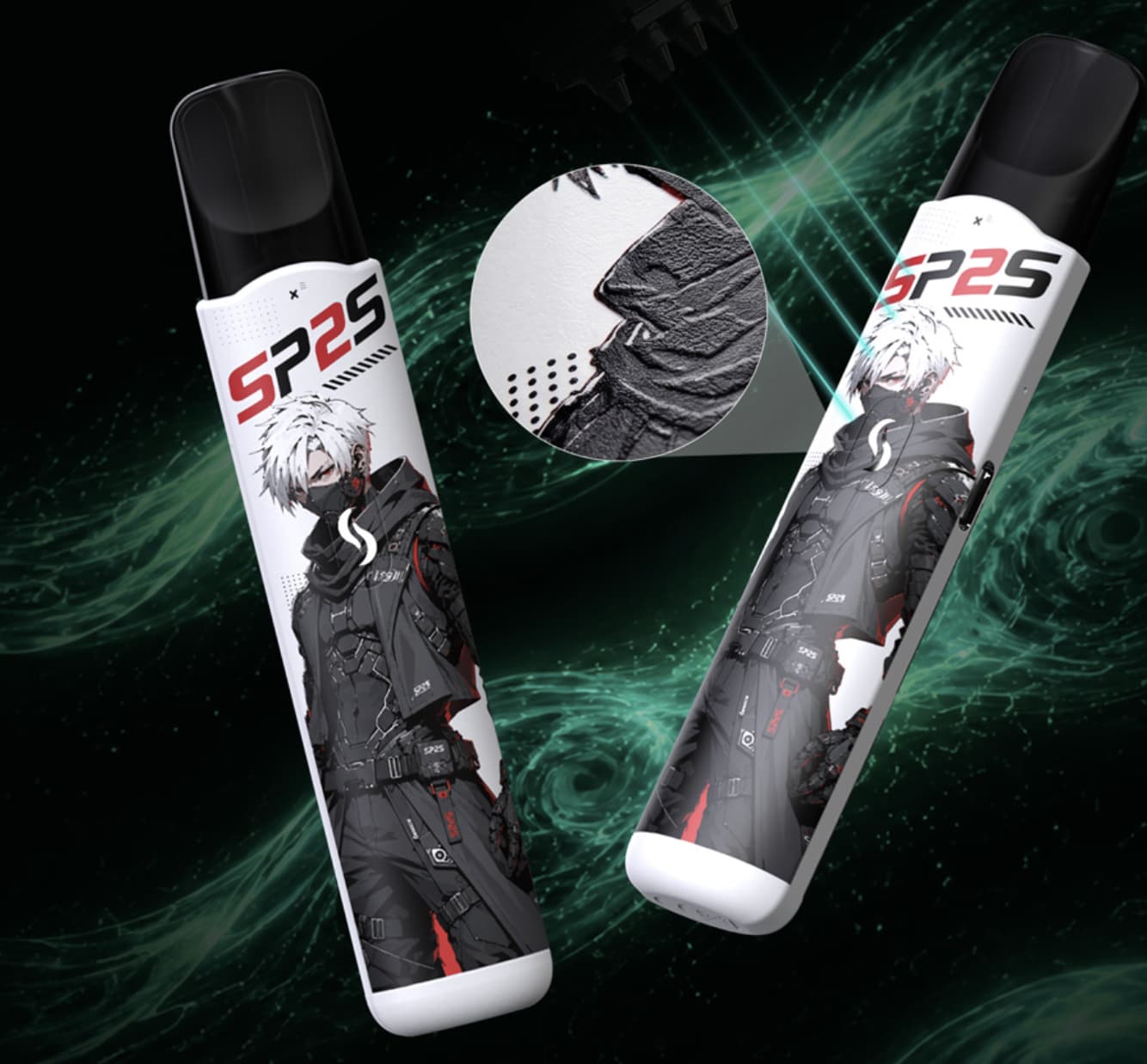
SENX AIR takes a different visual direction. Its RGB Phantom Lights provide battery-level feedback through a colorful lighting effect, creating a more distinctive appearance without relying on a traditional screen.
Another design detail is its UV-printed exterior. SP2S highlights textured patterns designed to provide a three-dimensional look and improved resistance to fading.
The difference: NIVON emphasizes visible operating information and a curved display, while SENX AIR uses lighting and exterior graphics as its main design features.
2. Battery Architecture: A Major Difference Between the Two
Battery design is arguably the most interesting distinction in this comparison.
The NIVON combines a 1500mAh main battery with a 200mAh detachable battery inside the pod, giving it a stated combined capacity of 1700mAh.
Its detachable power arrangement is designed to let the pod operate independently of the main device. SP2S describes this as a self-powered pod that can be used even when separated from the main body.
This is a different approach from the conventional integrated-battery layout. It gives NIVON a more modular design, although the actual convenience depends on how users manage and recharge the two power components.
SENX AIR uses a more straightforward 820mAh battery. The manufacturer describes it as a high-capacity battery for the device’s compact form factor.
There is no detachable battery system advertised on its product page.
For readers comparing the hardware rather than simply looking at the numbers, the distinction is important: NIVON has a larger combined battery specification and a modular arrangement, while SENX AIR keeps its power system simpler.
For a closer look at the detachable battery design, transparent tank and operating modes, read our detailed SP2S NIVON review.
3. E-Liquid Capacity: 19ml vs 2.3ml
NIVON has a stated 19ml transparent tank, with a 360-degree design intended to make the remaining liquid visible from different angles.
The manufacturer also advertises up to 30,000 puffs. This is a theoretical product claim and should not be interpreted as a guaranteed number of uses. Actual consumption varies with operating mode and individual usage.
SENX AIR has a 2.3ml pod capacity, making it a much smaller liquid format.
This difference also reflects the products’ different positioning. NIVON is designed around a larger prefilled format, whereas SENX AIR uses a smaller pod system.
Buyers should check local regulations before considering either product. E-liquid capacity and permitted product configurations can be restricted in some markets.
4. Output and Coil Technology
NIVON offers two operating modes:
-
Power Mode: 19W
-
Eco Mode: 16W
These options provide two fixed output levels, allowing the device to operate with a different power setting depending on the selected mode.
The device also uses a Dual Mesh configuration. SP2S presents this as part of its vaporization system, although its product page does not provide enough technical detail to independently assess the internal coil arrangement or quantify its performance.
SENX AIR has a different output design. It delivers 12.2W constant output and uses a 1.0Ω mesh coil.
The constant-output specification indicates that the device is designed around a fixed power level rather than user-selectable Power and Eco modes.
This makes the distinction relatively straightforward: NIVON offers two operating modes and a Dual Mesh system, while SENX AIR uses a fixed 12.2W output with a 1.0Ω mesh coil.
5. Leakage Protection and Liquid Visibility
SENX AIR specifically advertises an 8X Leak-Guard System. SP2S says this design helps reduce leakage and improve durability.
The manufacturer does not provide a detailed breakdown of the eight protective elements on the product page, so it would be premature to assume that the system makes the pod completely leak-proof.
NIVON approaches liquid management from another angle. Its transparent 19ml tank allows users to see the remaining e-liquid, making it easier to monitor the visible liquid level.
These are different types of convenience. SENX AIR highlights leakage protection, while NIVON emphasizes liquid visibility and a larger reservoir.
Our detailed SP2S SENX AIR review also examines its 820mAh battery, 1.0Ω mesh coil and compact pod construction.
6. Charging and Everyday Operation
Both devices use USB Type-C charging, which provides a familiar charging connection.
However, the official product pages do not specify the exact charging current or a full charging time for either model. It would therefore be misleading to claim that one charges faster than the other.
Their interfaces also differ:
-
NIVON uses a curved display to show battery and mode information.
-
SENX AIR uses RGB lighting to indicate battery levels.
NIVON’s Power and Eco modes give it more operating flexibility on paper. SENX AIR’s constant-output approach keeps the number of settings lower.
7. Which Product Has the More Distinctive Feature Set?
The two SP2S products are not simply different sizes of the same device. Their hardware choices reveal different design priorities.
NIVON combines a 19ml transparent tank, a 1500mAh main battery, a detachable 200mAh pod battery, Dual Mesh technology and two power modes. Its curved display also gives users more direct access to operating information.
SENX AIR is built around an 820mAh battery, a 2.3ml pod, a 1.0Ω mesh coil and 12.2W constant output. Its RGB Phantom Lights, UV-printed exterior and 8X Leak-Guard System provide its main points of differentiation.
For an objective comparison, NIVON has the larger advertised liquid and battery capacities, while SENX AIR has a more conventional pod format and a clearly specified fixed-output configuration.
Final Comparison: SP2S NIVON vs SENX AIR
The SP2S NIVON and SENX AIR illustrate two different approaches to pod-system design.
NIVON places more emphasis on capacity and hardware complexity. Its dual-battery architecture, detachable pod battery, 19ml transparent tank, Dual Mesh technology and Power/Eco modes distinguish it from more conventional pod systems.
SENX AIR takes a simpler hardware approach, pairing an 820mAh battery with a 2.3ml pod, 12.2W constant output and a 1.0Ω mesh coil. Its RGB lighting and UV-printed exterior give it a distinctive visual identity, while the advertised 8X Leak-Guard System focuses on pod protection.
The most meaningful differences are therefore battery architecture, liquid capacity, output configuration and interface design. Those specifications provide a clearer basis for comparing the products than appearance alone.