










Vaping has grown significantly in popularity over the past decade, and as more people turn to vaping as an alternative to smoking, the debate around its safety continues. A common misconception is that vaping is entirely harmless, and some individuals may choose to vape without nicotine, thinking it’s a safer option. But does vaping without nicotine actually pose fewer risks, or is it just another form of harm?
In this article, we’ll explore the potential benefits and risks of vaping without nicotine and examine whether it’s truly a help or a hazard.
What is Nicotine-Free Vaping?
Nicotine-free vaping refers to using e-cigarettes or vaporizers that do not contain nicotine in their e-liquid (also known as vape juice). The liquid typically consists of propylene glycol (PG), vegetable glycerin (VG), flavorings, and sometimes water. This type of vaping is appealing to former smokers who want to continue the physical action of smoking but without the addictive substance, nicotine.
Nicotine-free vaping is marketed as a way for smokers to reduce their dependency on nicotine while still enjoying the experience of vaping. It’s also popular among non-smokers who simply enjoy the flavors and the act of inhaling vapor without the desire for nicotine.
The Potential Benefits of Vaping Without Nicotine
1. Harm Reduction for Former Smokers
For individuals who are trying to quit smoking, switching to a nicotine-free vape may be seen as a potential harm reduction strategy. Studies have shown that smokers who transition to vaping may reduce their exposure to harmful chemicals found in traditional tobacco smoke. While nicotine is addictive, it is the combustion process in cigarettes that creates a multitude of harmful toxins, including tar and carbon monoxide.
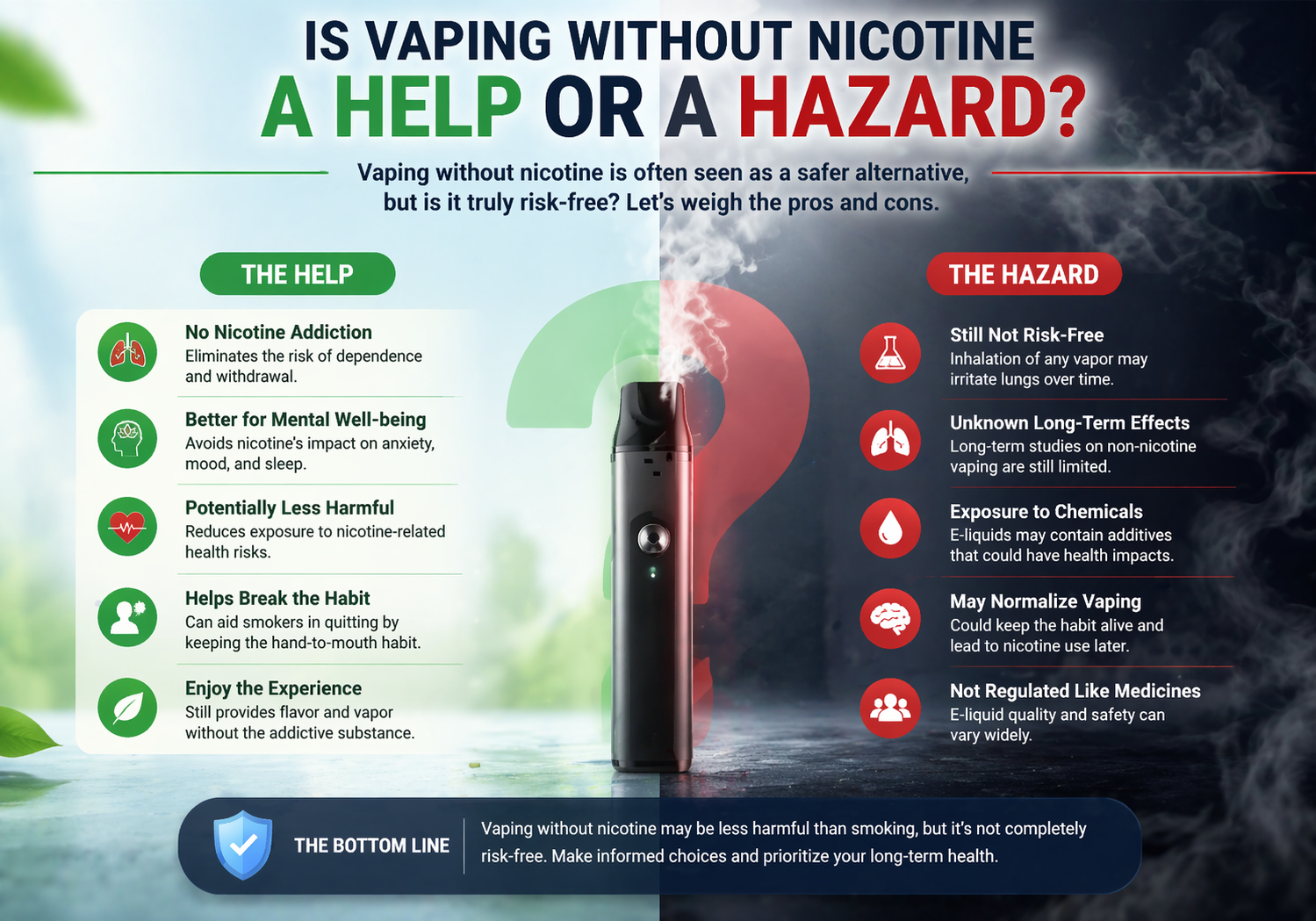
By using a nicotine-free vape, individuals can continue the hand-to-mouth habit and inhale vapor that doesn’t contain the harmful substances found in cigarette smoke. This may help some smokers ease the transition away from nicotine dependence and reduce their exposure to harmful toxins, although it’s important to note that the long-term effects of vaping are still not fully understood.
2. A Less Addictive Option
One of the main attractions of vaping without nicotine is that it eliminates the addictive substance that many smokers struggle with. Nicotine is a highly addictive chemical, and breaking free from its dependency can be a significant challenge for many individuals. Vaping without nicotine offers an option to enjoy the sensation of inhaling vapor without becoming dependent on nicotine.
For those who have successfully quit smoking but miss the sensation, vaping without nicotine can offer a way to enjoy the act of vaping without the risk of addiction. It also removes the physiological need for nicotine, which can make the quitting process easier for some individuals.
3. Flavor Enjoyment Without the Risks of Smoking
Nicotine-free e-liquids are available in a wide variety of flavors, making them an appealing choice for those who simply enjoy different tastes. Whether it’s fruity, dessert, or menthol flavors, vaping without nicotine allows individuals to enjoy these flavors without the negative health consequences associated with smoking.
For those who never smoked but enjoy the experience of vaping, the ability to taste a wide range of flavors without the added risk of nicotine dependence may be an enjoyable and relatively safer alternative.
The Risks of Vaping Without Nicotine
While vaping without nicotine may seem like a harmless alternative, it is important to consider the potential risks involved.
1. Unknown Long-Term Health Effects
Although nicotine is often cited as the main harmful component of cigarette smoke, vaping—whether with nicotine or not—still introduces foreign substances into the body. The long-term health effects of inhaling vapor from e-cigarettes are not yet fully understood, and research into their safety is still ongoing.
E-liquids often contain chemicals like propylene glycol and vegetable glycerin, which are generally considered safe for ingestion but can pose health risks when heated and inhaled. Some studies suggest that inhaling these chemicals can lead to respiratory irritation and damage over time. Additionally, flavoring agents used in e-liquids may contain compounds that, when heated, could produce harmful byproducts.
The lack of regulation and standardized testing of vape liquids means that users may be inhaling potentially harmful substances that have not been fully studied.
2. Potential for Gateway Behavior
One of the concerns about vaping without nicotine is that it may serve as a gateway to nicotine use. For non-smokers or younger individuals, vaping with nicotine-free e-liquids could normalize the act of vaping, making it more likely for them to try nicotine-containing e-liquids in the future. While nicotine-free vaping may seem innocuous, it could increase the likelihood of users eventually becoming addicted to nicotine.
There is concern that young people may view vaping as a harmless activity, but their continued use could eventually lead to a desire for the addictive substance in nicotine-based e-liquids. As vaping continues to grow in popularity, especially among youth, the long-term impact on nicotine addiction and smoking behaviors remains a major public health concern.
3. The Risk of Overuse or Habit Formation
Even without nicotine, vaping can still be habit-forming. For some individuals, the act of vaping—whether it’s the hand-to-mouth action, the oral fixation, or the feeling of inhaling vapor—can become a behavioral habit. While this might not be as dangerous as nicotine addiction, it can still create an unhealthy reliance on the act of vaping itself.
Additionally, some users may end up using their vape pens excessively throughout the day. Overuse of any product, especially when it involves inhaling vapor, can lead to irritation or damage to the respiratory system over time.
Is Vaping Without Nicotine a Help or a Hazard?
The answer to whether vaping without nicotine is a help or a hazard depends largely on how it’s used and the individual’s circumstances. For people trying to quit smoking, nicotine-free vaping can provide a transitionary tool to help reduce dependence on nicotine while still enjoying the act of vaping. It can also be a safer alternative for those who simply enjoy the sensation and flavor of vaping without the risk of addiction.
However, the long-term health effects of vaping, in general, remain uncertain. There is still a need for more research into the safety of inhaling e-cigarette vapor over extended periods of time, even when nicotine is absent. Furthermore, there is the risk of vaping becoming a gateway behavior for younger individuals, leading them to develop a nicotine habit later on.
Conclusion
Vaping without nicotine is likely less harmful than traditional smoking, as it eliminates nicotine addiction and many of the toxic chemicals found in cigarette smoke. However, it is not without risks, particularly when it comes to the potential long-term effects on the respiratory system and the possibility of vaping becoming a habit-forming activity.
Ultimately, it’s important for individuals to weigh the potential benefits and risks when considering vaping, with the understanding that the safest option is to avoid inhaling any substances into the lungs. If you are considering quitting smoking or vaping, it’s always best to consult with a healthcare professional who can help guide you through the process safely.