










Vaping has become a popular alternative to traditional smoking, often promoted as a safer way to enjoy nicotine. However, while e-cigarettes and pod systems can be convenient, they are not risk-free. One serious concern is nicotine overdose, a potentially dangerous condition that every vaper should understand.
What Is Nicotine Overdose?
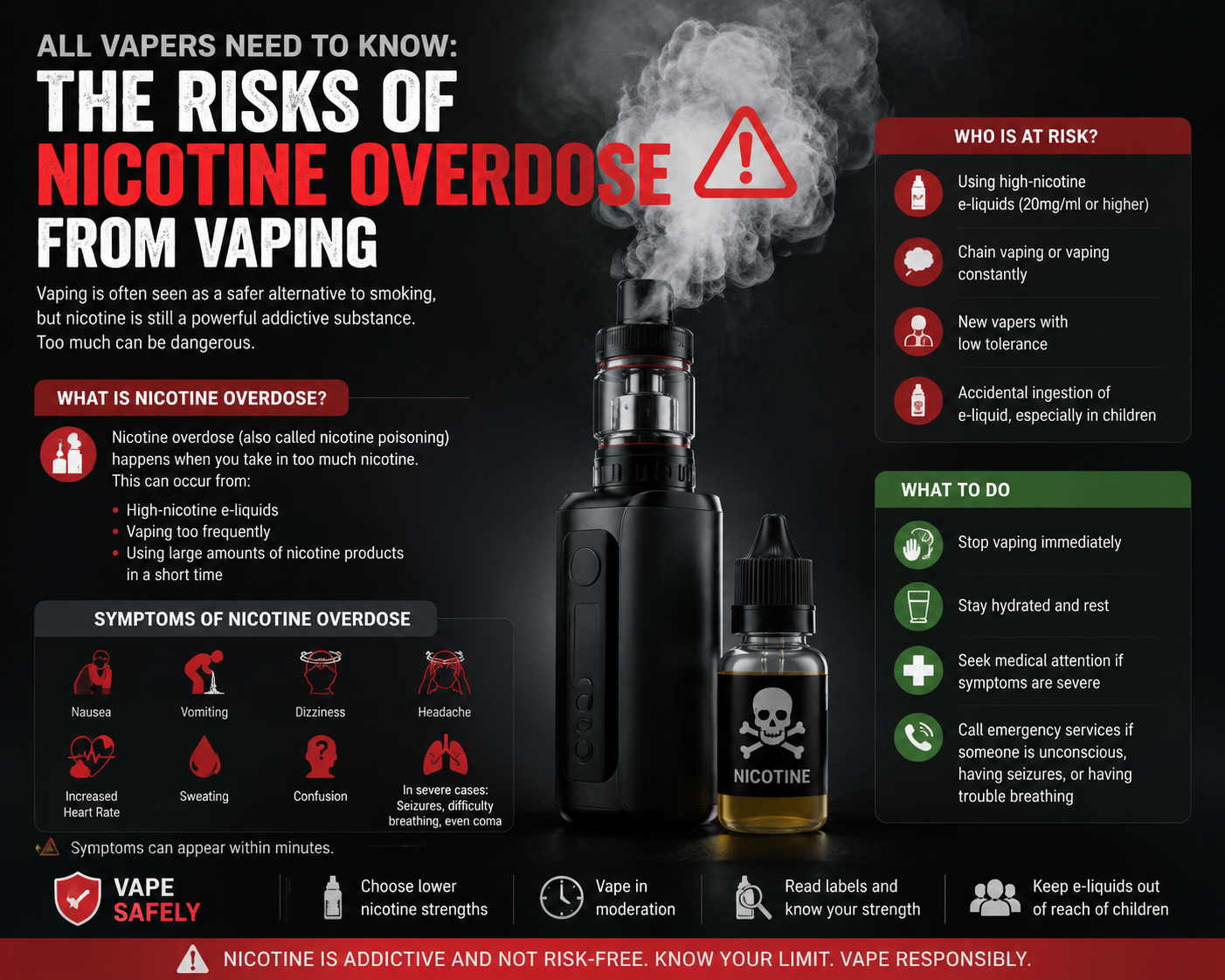
Nicotine overdose, also called nicotine poisoning, occurs when the body absorbs more nicotine than it can handle. This can happen through vaping, especially if a user:
- Uses high-strength nicotine e-liquids.
- Takes frequent or prolonged vaping sessions.
- Combines multiple nicotine sources (vapes, nicotine gum, patches).
- Experiences accidental ingestion or skin contact with liquid nicotine.
Nicotine is a potent stimulant, and even small amounts can affect the nervous system, heart, and digestive system.
Signs and Symptoms of Nicotine Overdose
Nicotine overdose symptoms can appear within minutes and may range from mild to severe:
- Mild symptoms: Nausea, dizziness, headache, rapid heartbeat, sweating, or anxiety.
- Moderate symptoms: Vomiting, abdominal pain, tremors, and confusion.
- Severe symptoms: Difficulty breathing, seizures, dangerously high blood pressure, or loss of consciousness.
Immediate medical attention is crucial if severe symptoms occur, as nicotine overdose can be life-threatening.
Factors That Increase the Risk
Several factors can make vapers more vulnerable to nicotine overdose:
- High-concentration e-liquids: Nicotine salts in pods can exceed 50 mg/mL, delivering much more nicotine than traditional e-liquids.
- Low vaping experience: New users may not know how quickly nicotine is absorbed.
- Continuous use: Frequent, consecutive puffs can accumulate nicotine faster than the body can process it.
- Combining nicotine products: Using multiple sources increases total nicotine intake, raising overdose risk.
Preventing Nicotine Overdose
Vapers can take several steps to stay safe:
- Check nicotine concentration: Use lower-strength e-liquids if you are new to vaping.
- Moderate consumption: Avoid chain vaping or long sessions.
- Know your limits: Pay attention to your body’s signals—dizziness or nausea are warning signs.
- Store safely: Keep e-liquids out of reach of children and pets; accidental ingestion can be fatal.
- Avoid combining products: Don’t mix vaping with other nicotine sources unless advised by a medical professional.
When to Seek Help
If you experience severe symptoms such as chest pain, difficulty breathing, seizures, or confusion, call emergency services immediately. Even mild symptoms should be discussed with a healthcare provider if they persist or worsen.
Conclusion
While vaping may be a safer alternative to smoking for some, it is not without risks. Nicotine overdose is a serious concern that vapers need to recognize, prevent, and respond to appropriately. By understanding the signs, monitoring consumption, and using products responsibly, you can enjoy vaping safely while minimizing the risk of nicotine-related harm.