









If your iPhone 17 Pro is running low on storage or feels slower than usual, clearing system trash can help recover valuable space and improve overall performance. While iOS doesn’t include a traditional “trash cleaner” like some desktop operating systems, it does accumulate temporary files, app caches, browser data, and system logs over time.
This guide explains the safest and most effective ways to clear system trash on your iPhone 17 Pro without deleting your important photos, messages, or apps.
What Is System Trash on iPhone?
System trash refers to temporary files that iOS creates during normal use. These files aren’t necessarily harmful, but they can occupy significant storage over time.
Common examples include:
- App cache
- Safari website data
- Temporary download files
- Streaming media cache
- System logs
- Siri cache
- Old software update files
- Message attachments
- Recently deleted files
Unlike Android, iOS automatically manages many temporary files, but manual cleanup can still reclaim several gigabytes of storage.
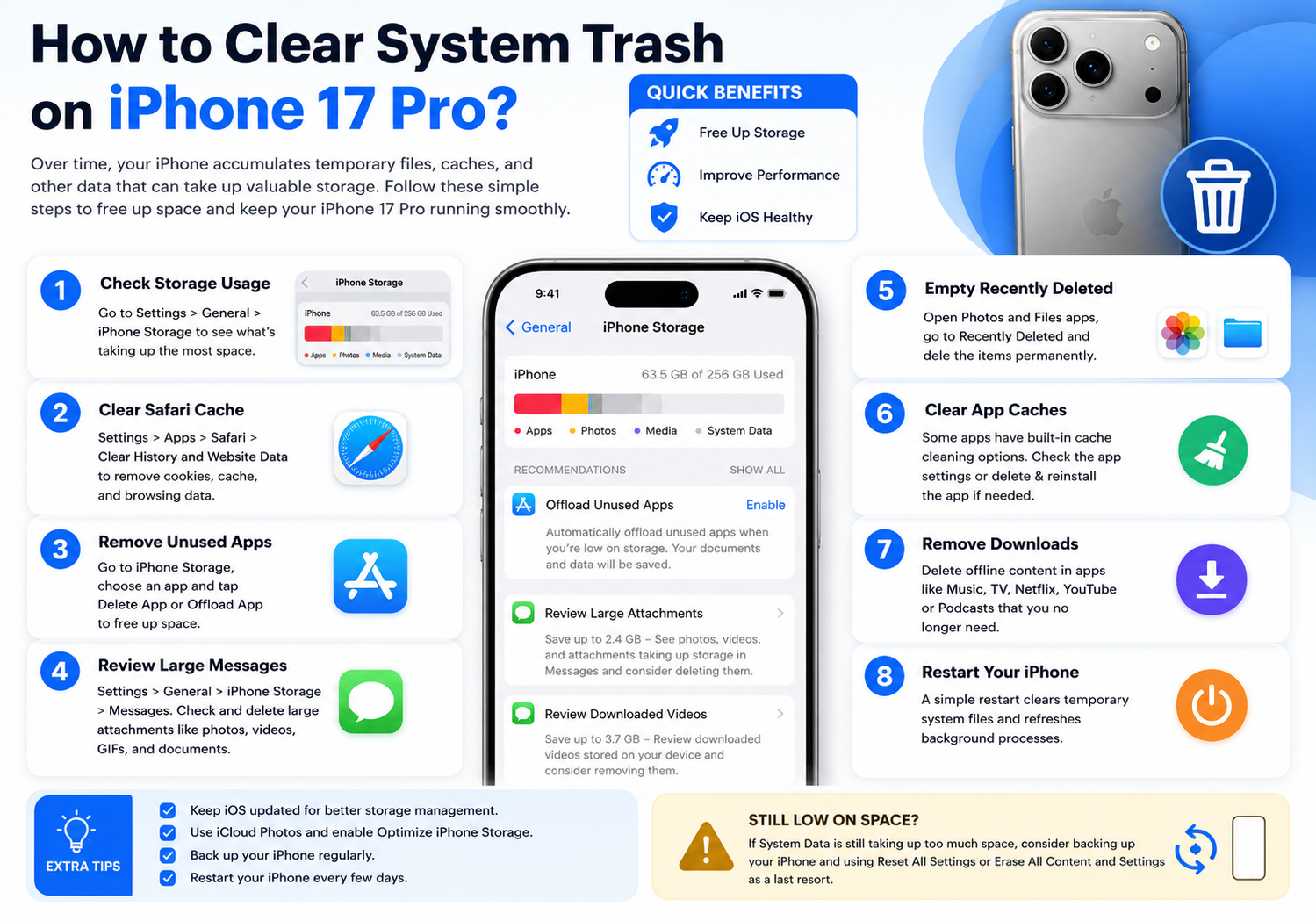
Check What’s Using Your Storage
Before deleting anything, see what’s consuming the most space.
Steps:
- Open Settings.
- Tap General.
- Select iPhone Storage.
- Wait a few moments while iOS analyzes your storage.
You’ll see a breakdown of:
- Apps
- Photos
- Media
- Messages
- System Data
- iOS
This helps determine where cleanup will have the greatest impact.
Clear Safari Cache
Safari often stores website data, cookies, and cached images that accumulate over months of browsing.
To clear Safari data:
- Open Settings.
- Tap Apps > Safari (or Safari, depending on your iOS version).
- Select Clear History and Website Data.
- Confirm the action.
This removes:
- Browsing history
- Cookies
- Cached files
- Website data
Your bookmarks and saved passwords remain intact if synced with iCloud.
Remove Unused Apps
Apps you rarely use can occupy hundreds of megabytes—or even several gigabytes.
Option 1: Delete Apps
- Go to Settings > General > iPhone Storage.
- Tap an app.
- Select Delete App.
Option 2: Offload Apps
Choose Offload App instead.
This removes the app while keeping:
- Documents
- User data
- Settings
When you reinstall the app, your data is restored.
Delete Large Message Attachments
Photos, videos, GIFs, and voice messages can silently consume storage.
To review them:
- Open Settings.
- Go to General > iPhone Storage.
- Select Messages.
- Review:
- Photos
- Videos
- GIFs
- Stickers
- Documents
Delete any attachments you no longer need.
Empty the Recently Deleted Folder
Deleted files remain on your device for about 30 days unless you remove them permanently.
Photos
- Open Photos.
- Go to Recently Deleted.
- Tap Delete All or remove selected items.
Files App
- Open Files.
- Tap Recently Deleted.
- Permanently delete unwanted files.
Restart Your iPhone
A simple restart clears various temporary system files and refreshes background processes.
To restart your iPhone 17 Pro:
- Press and hold the Side button and either Volume button.
- Slide to power off.
- Wait about 30 seconds.
- Turn the phone back on.
Many temporary caches are automatically cleared during reboot.
Update to the Latest Version of iOS
Apple frequently improves storage management and system optimization through software updates.
To check for updates:
- Open Settings.
- Tap General.
- Select Software Update.
- Install any available updates.
New versions of iOS often resolve bugs that cause excessive System Data growth.
Clear App Cache (When Supported)
Some apps allow you to remove cached files without deleting the app.
Examples include:
- Spotify
- Telegram
- TikTok
- Netflix
- Chrome
- Microsoft Edge
Look in each app’s Settings menu for options like:
- Clear Cache
- Free Up Space
- Remove Downloads
If an app doesn’t provide this feature, deleting and reinstalling it often clears accumulated cache.
Remove Offline Downloads
Downloaded media can occupy large amounts of storage.
Check apps such as:
- Apple Music
- Apple TV
- Netflix
- Disney+
- YouTube Premium
- Podcasts
Delete movies, TV shows, playlists, or podcasts you’ve already finished.
Enable Automatic Storage Optimization
iOS includes built-in tools that help manage storage automatically.
Go to:
Settings > General > iPhone Storage
Recommended options may include:
- Offload Unused Apps
- Review Large Attachments
- Optimize Photos
- Empty Recently Deleted items
Enabling these features helps prevent storage from filling up again.
Optimize Photos with iCloud
If you use iCloud Photos, enable storage optimization.
Navigate to:
Settings > Photos
Turn on:
Optimize iPhone Storage
Your iPhone stores smaller versions of photos locally while full-resolution originals remain safely in iCloud, freeing up significant storage.
Reset System Cache (If Storage Is Still Full)
If System Data continues to consume an unusually large amount of storage after trying the steps above, you can perform a full reset.
- Back up your iPhone using iCloud or a computer.
- Go to Settings > General > Transfer or Reset iPhone.
- Choose Erase All Content and Settings.
- Restore from your backup during setup.
This can significantly reduce excessive system storage caused by accumulated temporary files or corrupted caches.
Note: This is a last-resort option. Make sure your backup is complete before erasing the device.
Tips to Keep Your iPhone 17 Pro Clean
To minimize future storage issues:
- Restart your iPhone every few days.
- Delete unused apps regularly.
- Clear Safari data occasionally.
- Remove downloaded videos after watching them.
- Empty the Recently Deleted folders monthly.
- Keep iOS updated.
- Review storage usage every few weeks.
These simple habits help maintain smooth performance and maximize available storage.
Final Thoughts
Although the iPhone 17 Pro doesn’t offer a one-tap “system cleaner,” iOS includes several built-in tools that make it easy to reclaim storage safely. By clearing browser data, deleting old downloads, managing app caches, reviewing message attachments, and using features like Offload Unused Apps and Optimize iPhone Storage, you can free up space without sacrificing important data.
Regular maintenance not only helps recover storage but also keeps your iPhone running efficiently, ensuring faster app launches, smoother multitasking, and plenty of room for new photos, videos, and apps.