









Igeekphone News, July 20 – Huawei is reportedly preparing to unveil its next-generation Mate 90 series in September, with the flagship lineup expected to debut the company’s new Kirin 9050 processor. The chip is said to be built around Huawei’s newly proposed “Tao Law” design philosophy, which aims to improve chip performance through architectural innovation rather than relying solely on conventional semiconductor scaling.
Launch Timeline Reportedly Set for September
According to Chinese tech blogger Super Dimensional World, Huawei is expected to begin a promotional campaign for the Mate 90 series in early September, with the official product launch likely to take place between mid and late September.
While Huawei has not confirmed the schedule, the reported timeline aligns with the company’s traditional release window for its flagship Mate smartphones.
Kirin 9050 Expected to Debut with the Mate 90 Series
The biggest highlight of the upcoming lineup is expected to be the introduction of the Kirin 9050 series chipset, which is rumored to power all flagship Mate 90 models.
Huawei reportedly describes the new processor as the first flagship chip developed using its “Tao Law” (also translated as Law of Evolution) chip design concept—a long-term research initiative intended to address the growing challenges facing traditional semiconductor manufacturing.
Huawei’s Alternative to Conventional Chip Scaling
For decades, the semiconductor industry has relied on Moore’s Law, the observation that transistor density on integrated circuits tends to double approximately every two years, delivering continuous improvements in computing performance.
However, as manufacturing processes approach physical limits at increasingly smaller nanometer nodes, maintaining that pace has become significantly more difficult and expensive.
Huawei’s proposed Tao Law seeks to explore an alternative approach by improving chip efficiency through architectural and system-level innovation rather than depending exclusively on process node miniaturization.
According to the company, the framework introduces a multi-layer optimization strategy spanning components, circuit design, chip architecture, and system integration.
“Logic Folding” at the Core
One of the key technologies reportedly underpinning Tao Law is logic folding.
Huawei says this circuit-level design technique reorganizes traditional logic layouts to shorten critical signal paths, reducing electrical resistance and capacitance while increasing transistor utilization efficiency.
In theory, the approach could improve circuit density and overall performance without relying solely on increasingly advanced lithography processes.
Huawei has previously suggested that, if development progresses as planned, high-end chips designed using Tao Law principles could achieve transistor densities comparable to those expected from 1.4nm-class manufacturing technologies by around 2031. These projections, however, represent Huawei’s long-term research goals rather than commercially available products.
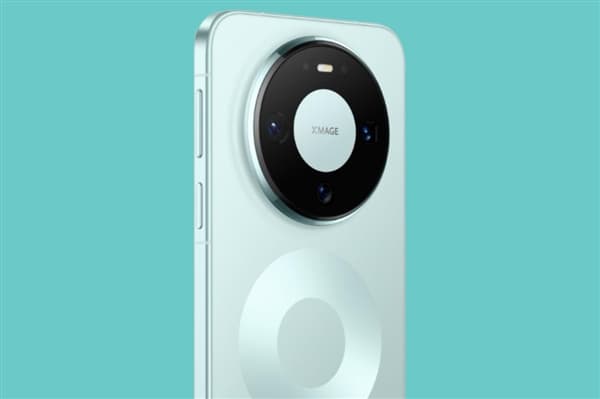
Four Flagship Models Expected
The Huawei Mate 90 family is rumored to continue the company’s established four-model strategy, consisting of:
- Huawei Mate 90
- Huawei Mate 90 Pro
- Huawei Mate 90 Pro Max
- Huawei Mate 90 RS Ultimate Design
Beyond the new Kirin processor, the lineup is expected to feature upgraded cameras, enhanced AI capabilities, and improvements to battery life and overall performance, although Huawei has yet to officially confirm any specifications.
Waiting for Official Confirmation
At present, Huawei has not announced the Mate 90 series or disclosed details of the Kirin 9050 chipset. As with all pre-launch reports, the leaked specifications and launch timeline should be treated as unofficial until the company makes a formal announcement.
If the current rumors prove accurate, the Mate 90 series could represent one of Huawei’s most significant flagship launches in recent years, showcasing not only a new generation of Kirin silicon but also the company’s broader vision for the future of chip design beyond the traditional limits of Moore’s Law.