









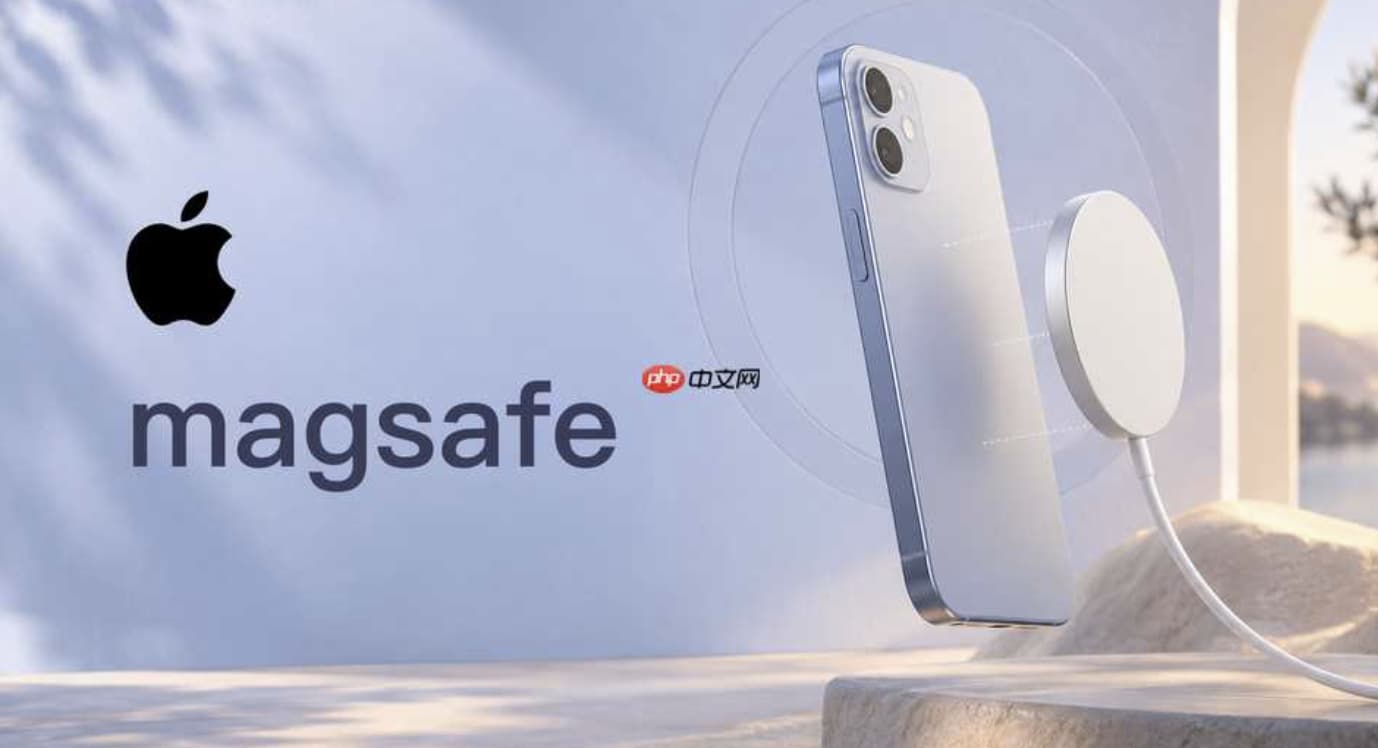
Wireless charging has made powering up a smartphone more convenient by removing the need to plug a cable into the device. However, not all wireless charging systems offer the same experience. Apple’s MagSafe technology adds magnetic alignment to wireless charging, helping compatible accessories attach securely to the back of an iPhone.
So, what exactly is MagSafe, how does it work, and is it better than a regular wireless charger? Here’s a practical guide to its features, advantages, limitations, and key differences from standard wireless charging.
What Is MagSafe?
MagSafe is Apple’s magnetic attachment and charging technology designed for compatible iPhones and accessories. It uses a ring of magnets around the wireless charging area to help a charger or accessory align correctly with the back of the phone.
Unlike a conventional wireless charger, which may require users to position their phones carefully on a charging pad, a MagSafe charger snaps into place magnetically. This alignment helps keep the charging coils in the correct position, reducing the chance of inefficient charging caused by poor placement.
MagSafe also supports a wider range of accessories, including magnetic wallets, stands, car mounts, battery packs, and protective cases designed for the system.
It is important to note that MagSafe is not exclusive to charging. Its magnetic attachment system also makes compatible accessories easier to connect, reposition, and remove.
How Does MagSafe Work?
MagSafe uses wireless power transfer through electromagnetic induction, the same basic principle used by many conventional wireless chargers. A coil inside the charger generates a changing magnetic field, which induces an electrical current in the receiving coil inside the phone.
The main difference is the magnetic alignment system. Magnets help the charger attach to the intended position on the iPhone, keeping the transmitting and receiving coils aligned.
This design offers three practical benefits:
- More accurate positioning: The charger automatically aligns with the phone’s charging area.
- A more secure connection: The magnetic attachment helps the charger stay in place during everyday use.
- Accessory compatibility: Compatible magnetic accessories can attach to the phone without relying entirely on adhesive or a separate mounting mechanism.
Charging speed still depends on the iPhone model, charger, power adapter, temperature, and other conditions. Magnetic alignment alone does not guarantee faster charging.
MagSafe vs. Standard Wireless Charging: What’s the Difference?
Both technologies can charge a compatible phone without a physical charging cable connected to the device. However, they differ in how the charger attaches, how easily the coils align, and which accessories they support.
| Feature | MagSafe | Standard Wireless Charging |
|---|---|---|
| Magnetic attachment | Yes, with compatible devices and accessories | Usually no |
| Coil alignment | Magnets help position the charger | Users generally position the phone manually |
| Charging speed | Depends on the iPhone, charger, and power adapter | Depends on the phone and charger specifications |
| Accessory support | Supports compatible magnetic accessories | Typically requires separate stands or mounts |
| Ease of positioning | Convenient snap-on alignment | May require adjustment |
| Device compatibility | Designed for supported Apple devices and accessories | Available across many phones and wireless charging products |
| Case requirements | A compatible MagSafe case may be needed for reliable attachment | Most cases work if they do not interfere with wireless charging |
The biggest difference is magnetic convenience rather than the basic charging method. A standard wireless charger can work well for everyday use, while MagSafe adds easier positioning and a more integrated accessory experience.
Does MagSafe Charge Faster Than Regular Wireless Charging?
MagSafe can offer higher charging speeds than some basic wireless chargers, but the result depends on the specific hardware.
Charging performance varies by iPhone generation, MagSafe charger model, power adapter output, and software or thermal conditions. Some newer Apple devices and chargers support higher wireless charging power than older models, while other combinations may deliver similar speeds to conventional wireless charging.
A charger advertised as supporting a high wattage does not necessarily mean the iPhone will receive that full amount. The phone controls how much power it accepts, and the charging rate may decrease as the battery fills or the device becomes warm.
When comparing chargers, check the maximum supported wireless charging power for your exact iPhone model and whether the charger requires a particular USB-C power adapter.
For users who prioritize charging speed above convenience, wired charging may also be worth considering.
What Are the Main Advantages of MagSafe?
1. Easy Magnetic Alignment
One of MagSafe’s most useful features is its automatic positioning. Instead of repeatedly adjusting a phone on a charging pad, users can bring a compatible charger close to the back of the device and let the magnets guide it into place.
This is particularly helpful when charging in low light or attaching a charger while using the phone.
2. A More Convenient Accessory System
MagSafe supports more than charging. Compatible accessories include magnetic stands, wallets, car mounts, and battery packs. These products can make it easier to use an iPhone at a desk, in a vehicle, or while traveling.
Accessory compatibility varies, so buyers should check whether a product is designed specifically for MagSafe or merely uses magnets for attachment.
3. Less Dependence on Charging Ports
Because charging happens wirelessly, users do not need to connect a cable directly to the phone’s charging port each time they recharge it. This can be convenient for people who regularly charge their phones at a desk or bedside.
However, wireless charging does not eliminate the need for the charging port altogether, since the port may still be used for wired charging, data transfer, or other functions.
4. A Consistent Charging Setup
The magnetic connection helps keep the charger in position if the phone is moved slightly. This can be useful when using a stand or when picking up the phone frequently throughout the day.
The connection is not intended to make every charger or accessory compatible with every iPhone, so checking the supported device list remains important.
Are There Any Disadvantages to MagSafe?
MagSafe offers useful features, but it is not necessarily the best choice for everyone.
Higher accessory costs: MagSafe-certified chargers and accessories may cost more than basic wireless charging pads. Third-party alternatives can offer different price points, but buyers should check their specifications and safety certifications.
Heat during charging: Wireless charging can generate heat, and excessive temperature may cause the phone to reduce charging power. Using a suitable adapter and keeping the charging area well ventilated can help.
Compatibility limitations: Not every iPhone supports every MagSafe feature. Older models may support conventional Qi wireless charging without offering the same magnetic attachment experience. Cases and accessories can also affect compatibility.
Potential interference from accessories: Metal objects, unsuitable cases, or poorly designed accessories may interfere with charging or magnetic attachment. Follow the charger’s instructions and remove accessories that prevent proper alignment.
Charging efficiency: Wireless charging generally loses more energy as heat than a direct wired connection. Actual efficiency varies with the charger, device, alignment, and operating conditions.
Is MagSafe Compatible With Android Phones?
MagSafe is Apple’s technology, but some Android phones and accessories offer similar magnetic charging experiences.
Certain Android devices support Qi2 wireless charging, which uses a Magnetic Power Profile to provide magnetic alignment. Other Android phones may work with magnetic cases or adhesive magnetic rings, although these additions do not automatically provide the same charging performance or compatibility as a fully supported system.
Before purchasing an accessory, check whether your phone supports the required wireless charging standard. A magnetic attachment ring can help hold a phone on a mount, but it does not add wireless charging capability to a device that lacks it.
For a closer look at the newer standard, read our report on the Qi 2.2 wireless charging upgrade for the iPhone 17 series.
MagSafe vs. Qi and Qi2: Understanding the Standards
Qi is a widely used wireless charging standard supported by many smartphones and charging accessories. Qi-compatible chargers can transfer power without a cable plugged into the phone, provided the device supports wireless charging.
Qi2 introduces a Magnetic Power Profile that helps compatible devices and chargers align magnetically. This makes the charging experience more similar to MagSafe, although compatibility and available power depend on the specific product.
MagSafe is Apple’s branded system, while Qi and Qi2 are industry standards. Some MagSafe chargers also support Qi-based charging, but this does not mean every Qi charger provides magnetic attachment or the same charging speeds.
When buying a charger, check the product’s supported standards, device compatibility, maximum output, and required power adapter instead of relying on the term “wireless charging” alone.
Should You Choose MagSafe or Standard Wireless Charging?
The right option depends on how you use your phone.
Choose MagSafe if you have a compatible iPhone and want secure magnetic alignment, easy attachment, or accessories such as a magnetic stand or car mount. It is particularly useful for people who frequently place their phones on chargers throughout the day.
Choose a standard wireless charger if you want a simple charging pad, need to charge several compatible devices, or prefer to spend less on accessories. It can be a practical option for a bedside table, office desk, or shared charging area.
If charging speed is your main priority, compare the supported power levels of individual chargers and your device. Do not assume that a magnetic charger will always outperform a standard wireless model.
Before choosing a charger, check your phone’s charging capabilities and compare them with the iPhone 17 specifications, including its supported wireless charging options.
Final Thoughts
MagSafe combines wireless charging with magnetic alignment and a broader accessory ecosystem. Its biggest advantage is convenience: compatible chargers attach in the correct position, while magnetic stands, wallets, and mounts can make an iPhone easier to use in different settings.
Standard wireless charging remains a practical choice for users who simply want to power up their phones without connecting a cable. The best option depends on device compatibility, charging speed, accessory needs, and budget.
Before buying a charger, confirm your phone’s wireless charging capabilities and check the manufacturer’s specifications. That simple step can help you choose a charger that offers the right balance of convenience, performance, and value.