









Reducing nicotine consumption is a goal many people set for health, financial, or personal reasons. Whether you’re using disposable vapes, refillable pod systems, nicotine pouches, heated tobacco products, or traditional cigarettes, gradually lowering your nicotine intake can make the transition more manageable than stopping abruptly.
This guide explains why people reduce nicotine, practical strategies for doing so, and common challenges you may encounter along the way.
Note: If you use nicotine and are planning to quit completely, consider seeking support from a healthcare professional or a smoking cessation service, especially if you’ve previously found quitting difficult.
Why Lower Your Nicotine Intake?
Nicotine is the substance that can lead to dependence in tobacco products and many vaping products. Reducing your intake may help you:
- Prepare for quitting nicotine altogether
- Reduce nicotine dependence over time
- Better control cravings
- Spend less on nicotine products
- Feel more confident managing nicotine use
Everyone’s journey is different. Some people reduce gradually over several weeks, while others prefer a slower approach over several months.
Understand Your Current Nicotine Consumption
Before making changes, take a few days to understand your current habits.
Ask yourself:
- How often do I use nicotine each day?
- What nicotine strength do I use?
- When are my strongest cravings?
- Do I use nicotine out of habit, boredom, stress, or routine?
Keeping a simple diary or using a smartphone note can help identify patterns that are easier to change than you might expect.
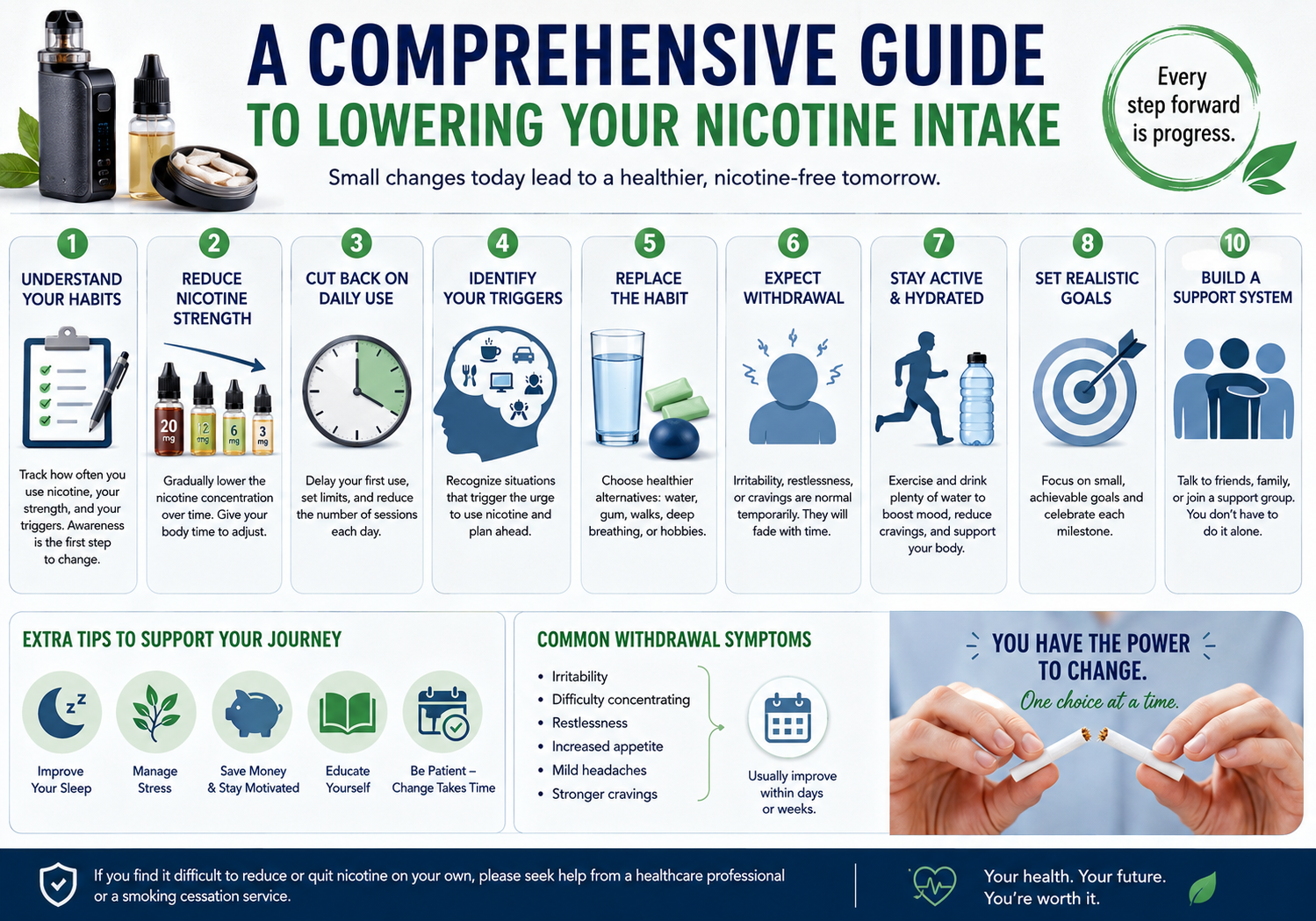
Reduce Nicotine Strength Gradually
One of the most common methods is to decrease the nicotine concentration of the product you’re using.
For example, someone using a refillable vape might reduce strength gradually over time:
- 20 mg/mL
- 12 mg/mL
- 6 mg/mL
- 3 mg/mL
- Nicotine-free e-liquid (optional)
If you’re using nicotine pouches or other nicotine products, look for lower-strength options as you progress.
Reducing too quickly may lead to stronger cravings, so many people find it helpful to make smaller changes over time.
Cut Back on Daily Use
Lowering nicotine isn’t only about strength—it can also involve reducing how often you use it.
Some practical ideas include:
- Waiting an extra 15–30 minutes before your first use of the day
- Setting specific nicotine-free periods
- Reducing the number of sessions each day
- Avoiding automatic or mindless use
Small reductions can add up over time.
Identify Your Triggers
Many nicotine habits are linked to daily routines rather than physical cravings alone.
Common triggers include:
- Morning coffee
- Driving
- Work breaks
- Social gatherings
- Stress
- Watching TV
- After meals
Recognizing these situations allows you to plan alternatives before cravings occur.
Replace the Habit
Replacing nicotine with another activity can make reducing intake feel less disruptive.
Healthy alternatives include:
- Drinking water
- Chewing sugar-free gum
- Taking a short walk
- Deep breathing exercises
- Stretching
- Reading
- Listening to music
- Keeping your hands busy with a stress ball or pen
The goal isn’t simply to remove nicotine—it is to build new routines that satisfy the same behavioral cues.
Expect Temporary Withdrawal Symptoms
As nicotine intake decreases, some people experience temporary withdrawal symptoms, particularly during the first few days after reducing their intake.
These may include:
- Irritability
- Difficulty concentrating
- Restlessness
- Increased appetite
- Mild headaches
- Stronger cravings
These symptoms often improve with time as the body adapts to lower nicotine levels.
If symptoms become severe or difficult to manage, consult a healthcare professional.
Stay Physically Active
Regular exercise can make reducing nicotine easier for many people.
Physical activity may help:
- Reduce cravings
- Improve mood
- Manage stress
- Increase energy
- Improve sleep
Even a 20-minute walk can make a noticeable difference during periods of stronger cravings.
Stay Hydrated
Drinking plenty of water is a simple but effective habit while reducing nicotine.
Hydration can:
- Help relieve dry mouth
- Encourage healthier routines
- Support overall well-being
- Provide a useful substitute when cravings arise
Keeping a reusable water bottle nearby makes this strategy easier to maintain.
Improve Your Sleep
Poor sleep can make nicotine cravings feel more intense.
Try to:
- Maintain a regular bedtime
- Limit caffeine late in the day
- Reduce screen time before bed
- Keep your bedroom cool and quiet
Better sleep often improves your ability to manage cravings during the day.
Set Realistic Goals
Rather than aiming for perfection, focus on steady progress.
Examples include:
- Reduce nicotine strength every few weeks
- Eliminate one daily nicotine session
- Stay nicotine-free during work hours
- Reach a lower nicotine level by a target date
Celebrating small milestones can help maintain motivation.
Don’t Be Discouraged by Setbacks
Reducing nicotine isn’t always a straight path.
You may occasionally return to previous habits during stressful periods. This doesn’t mean you’ve failed.
Instead:
- Identify what triggered the setback.
- Adjust your plan if needed.
- Continue from where you left off.
Long-term progress matters more than short-term perfection.
Build a Support System
Many people find it easier to reduce nicotine with encouragement from others.
Support can come from:
- Family members
- Friends
- Healthcare professionals
- Smoking cessation counselors
- Support groups
- Mobile apps that track progress
Sharing your goals with someone you trust can increase accountability and motivation.
Frequently Asked Questions
Is it better to reduce nicotine gradually or quit immediately?
Both approaches can work. Some people prefer quitting abruptly, while others find gradual reduction more comfortable and sustainable. The best approach depends on your preferences, nicotine dependence, and previous experiences.
How long does it take to adjust to lower nicotine levels?
The adjustment period varies from person to person. Some people notice improvement within a few days, while others may take several weeks to feel fully comfortable with a lower nicotine intake.
Should I switch to nicotine-free products immediately?
Not necessarily. Many people find it easier to reduce nicotine gradually before transitioning to nicotine-free alternatives or stopping altogether.
Can reducing nicotine improve my chances of quitting?
For some people, yes. Gradually lowering nicotine can reduce dependence over time and make the eventual transition to being nicotine-free feel more manageable.
Final Thoughts
Lowering your nicotine intake is a personal journey, and there is no single approach that works for everyone. Whether your goal is to cut back, prepare for quitting, or simply become more mindful of your nicotine use, gradual and consistent changes can make the process easier.
Start by understanding your current habits, reduce nicotine at a pace you can maintain, replace old routines with healthier alternatives, and seek support if you need it. Every small step toward reducing nicotine is progress, and with patience and persistence, those steps can lead to lasting change.