










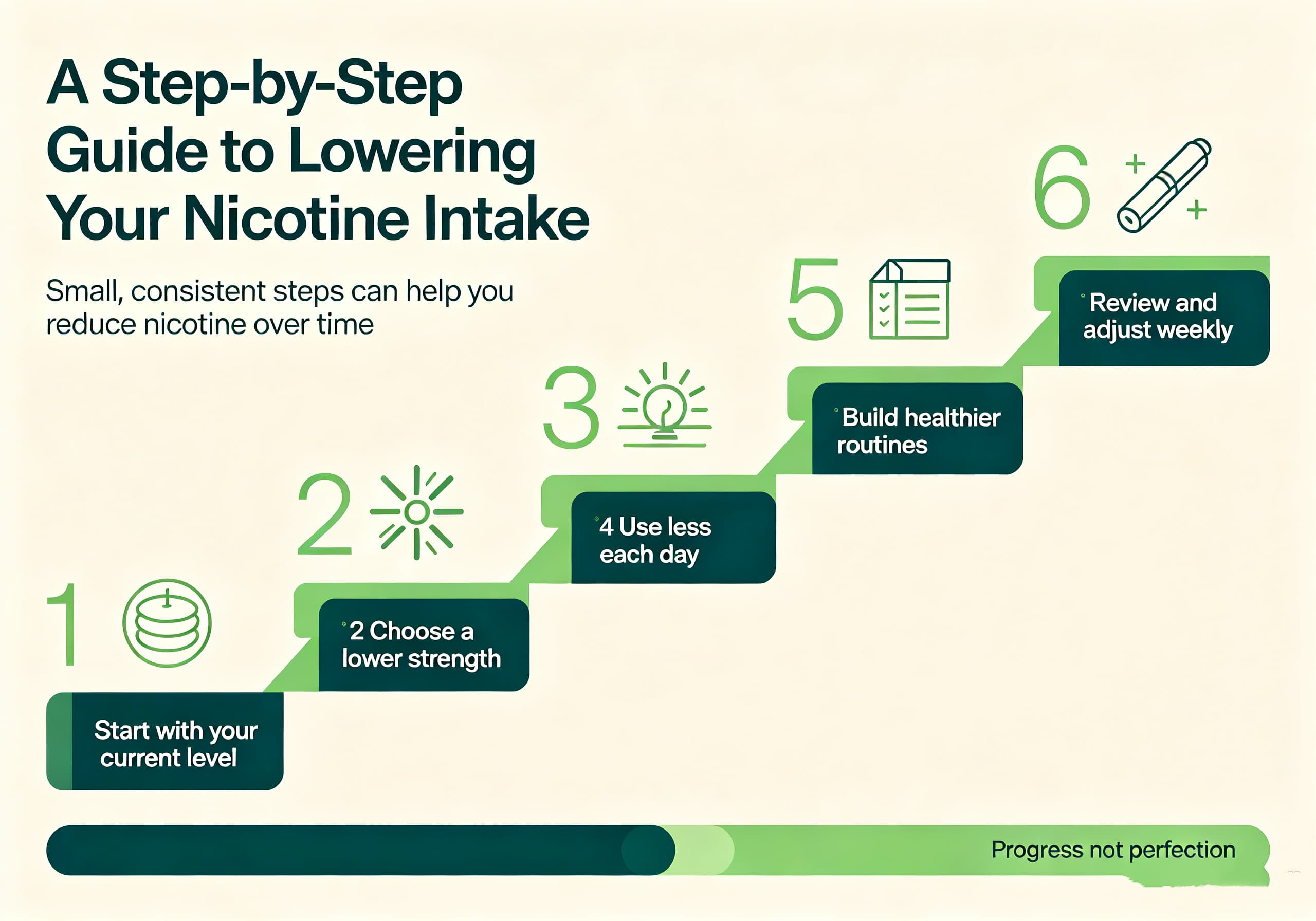
Reducing nicotine intake is a goal shared by many adult vapers and smokers who want to gradually decrease their dependence while continuing to enjoy the ritual of vaping. Unlike quitting abruptly, a step-by-step approach allows your body to adapt over time, making the process more manageable and reducing the likelihood of strong cravings.
Whether you use refillable pod systems, disposable vapes, or traditional e-liquids, lowering your nicotine intake can be achieved with careful planning and realistic expectations. This guide walks you through practical strategies to help you reduce nicotine consumption while maintaining a satisfying vaping experience.
Why Lower Your Nicotine Intake?
There are many reasons why people choose to reduce their nicotine levels, including:
- Preparing to quit nicotine completely
- Reducing nicotine dependence
- Enjoying vaping with less nicotine
- Minimizing throat irritation caused by higher nicotine strengths
- Gaining greater control over vaping habits
Whatever your motivation, the key is to reduce nicotine gradually rather than making drastic changes that may lead to discomfort or relapse.
Step 1: Understand Your Current Nicotine Consumption
Before making changes, determine how much nicotine you currently use each day.
Ask yourself:
- What nicotine strength do you use?
- How many milliliters of e-liquid do you vape daily?
- How many puffs do you take each day?
- Do you vape continuously or only at certain times?
Keeping a simple diary for one week can reveal your vaping patterns and help you identify opportunities to reduce nicotine intake.
Example
If you vape:
- 10 ml of 20 mg/ml nicotine salt per day
You’re consuming approximately 200 mg of nicotine in your e-liquid. While the amount absorbed by your body varies, tracking the nicotine concentration provides a useful baseline for reducing your intake over time.
Step 2: Reduce Nicotine Strength Gradually
One of the easiest methods is to lower the nicotine concentration in small increments.
Instead of jumping from 20 mg to nicotine-free e-liquid overnight, try reducing the strength every few weeks.
Example Reduction Plan
| Current Strength | Next Step |
|---|---|
| 20 mg | 15 mg |
| 15 mg | 10 mg |
| 10 mg | 6 mg |
| 6 mg | 3 mg |
| 3 mg | 0 mg |
Your body typically adapts more comfortably to gradual reductions than sudden changes.
Step 3: Choose the Right Device
The type of vape device you use can affect nicotine satisfaction.
High-Nicotine Devices
- Tight MTL (Mouth-to-Lung) pod systems
- Nicotine salt pod kits
- Low-power refillable pods
These are designed for higher nicotine strengths.
Lower-Nicotine Devices
- Adjustable pod mods
- Sub-ohm tanks
- Restricted Direct-to-Lung (RDL) devices
Because these devices produce more vapor, many users find they can comfortably use lower nicotine strengths while maintaining satisfaction.
Step 4: Slow Down Your Vaping Frequency
Sometimes reducing nicotine isn’t enough if vaping frequency increases.
Instead of taking more puffs to compensate, try spacing out your sessions.
Helpful techniques include:
- Waiting an extra 10–15 minutes before vaping
- Avoiding constant “chain vaping”
- Setting designated vape breaks
- Keeping your device out of immediate reach
These habits help reduce both nicotine intake and psychological dependence.
Step 5: Stay Hydrated
Nicotine can contribute to dry mouth and throat irritation.
Drinking plenty of water throughout the day can:
- Reduce cravings
- Improve comfort
- Help prevent dehydration
- Support overall well-being
Many people find that staying hydrated also reduces the urge to vape continuously.
Step 6: Identify Your Triggers
Many vaping habits are linked to routines rather than nicotine itself.
Common triggers include:
- Morning coffee
- Driving
- Work breaks
- Social gatherings
- Stress
- Watching television
Recognizing these situations allows you to develop healthier alternatives.
For example:
- Take a short walk during work breaks.
- Chew sugar-free gum while driving.
- Practice deep breathing during stressful moments.
Step 7: Don’t Rush the Process
Reducing nicotine is not a race.
Some people decrease their nicotine every two weeks, while others need several months before moving to the next level.
Listen to your body.
If cravings become overwhelming, consider staying at your current nicotine level a little longer before reducing again.
Steady progress is more sustainable than making changes too quickly.
Step 8: Consider Nicotine-Free E-Liquids
Once you’re comfortable using very low nicotine strengths (such as 3 mg), you may be ready to experiment with nicotine-free e-liquids.
Many users alternate between nicotine-containing and nicotine-free liquids before eventually switching entirely to nicotine-free options.
This gradual transition can make the final step feel much easier.
Step 9: Find New Ways to Manage Stress
Nicotine is often used to cope with stress, but healthier alternatives can be just as effective over time.
Consider:
- Regular exercise
- Meditation
- Yoga
- Reading
- Listening to music
- Spending time outdoors
- Talking with friends or family
Replacing nicotine with positive coping strategies can support long-term success.
Step 10: Celebrate Small Milestones
Every reduction is an achievement.
Celebrate milestones such as:
- Using a lower nicotine strength for one month
- Cutting daily vaping sessions in half
- Going several hours without vaping
- Switching to nicotine-free e-liquid
Recognizing your progress helps maintain motivation and reinforces healthy habits.
Common Mistakes to Avoid
When lowering nicotine intake, try to avoid these common pitfalls:
- Reducing nicotine strength too quickly
- Compensating by vaping more often
- Choosing a device that doesn’t suit your preferred nicotine level
- Ignoring stress or emotional triggers
- Becoming discouraged by occasional setbacks
Remember that reducing nicotine is a gradual journey, and occasional challenges are normal.
Tips for Long-Term Success
To improve your chances of success:
- Set realistic goals.
- Reduce nicotine in small steps.
- Monitor your vaping habits.
- Stay hydrated.
- Keep yourself busy with hobbies and exercise.
- Be patient with yourself.
- Ask for support from friends, family, or healthcare professionals if needed.
Consistency is more important than speed.
Frequently Asked Questions
Will I experience cravings?
You may notice mild cravings or irritability when reducing nicotine, especially during the first few days after lowering your nicotine strength. Gradual reductions usually make these symptoms easier to manage.
How long should I stay at each nicotine level?
There is no universal timeline. Many people remain at the same nicotine strength for several weeks before reducing again, while others take longer. Choose a pace that feels sustainable.
Can I reduce nicotine without changing devices?
Yes. Many users successfully lower nicotine by gradually decreasing the strength of their e-liquid while continuing to use the same device. However, some may find a different device better suits lower nicotine concentrations.
Is nicotine-free vaping the final goal?
That depends on your personal objectives. Some adult vapers aim to eliminate nicotine completely, while others are comfortable maintaining very low nicotine levels. The right goal is the one that aligns with your needs and preferences.
Final Thoughts
Lowering your nicotine intake is a personal journey that benefits from patience, consistency, and realistic expectations. By gradually reducing nicotine strength, understanding your vaping habits, managing triggers, and adopting healthier routines, you can make steady progress without feeling overwhelmed.
Remember that every small reduction is a positive step forward. Whether your goal is to use less nicotine or eventually become nicotine-free, a thoughtful, step-by-step approach gives you the best chance of long-term success.