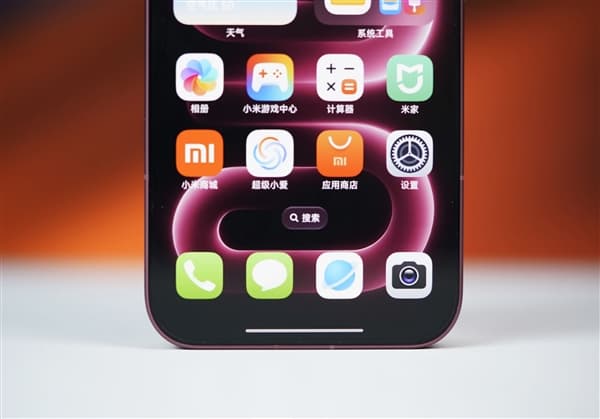
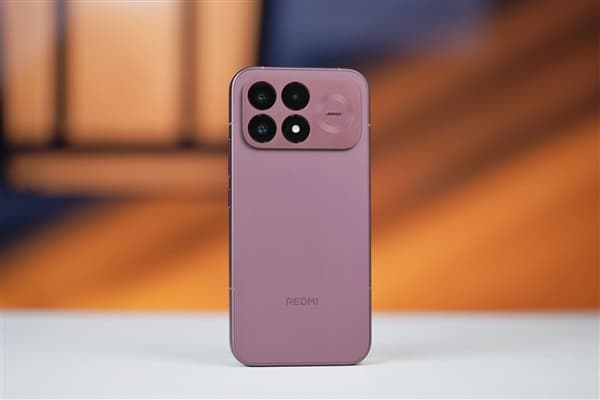
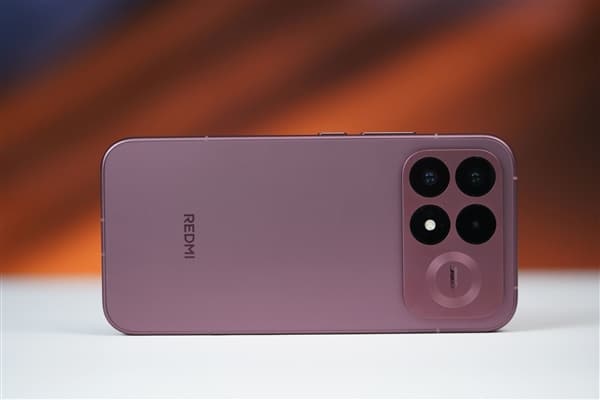
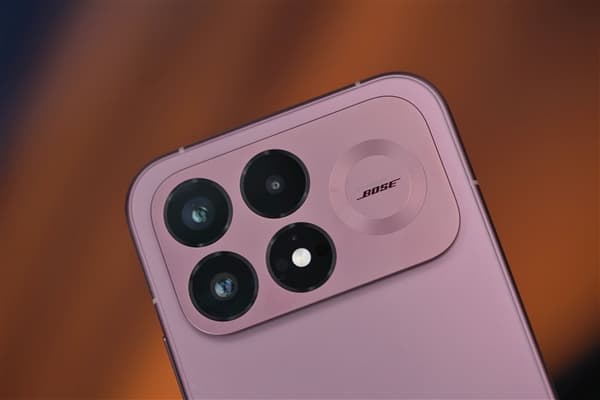
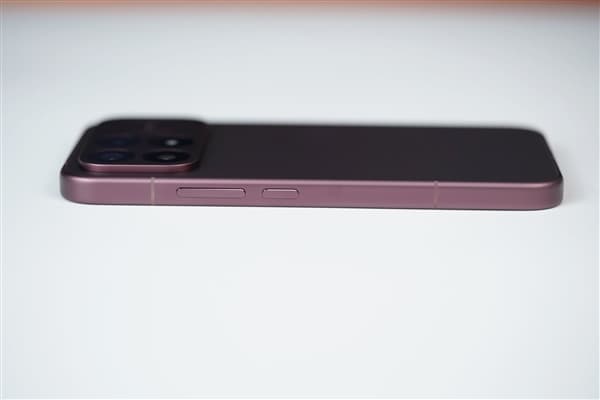
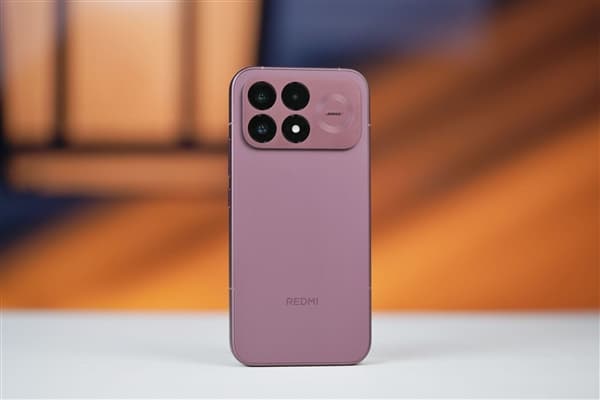
The rear camera module uses a rectangular DECO design with three cameras and an LED flash. A SOUND BY BOSE logo sits beside the camera system, adding a distinctive visual element without making the phone look overly aggressive.
The device measures 8.55mm thick and weighs 218g. Considering its 8,580mAh battery, the weight and thickness are relatively well controlled.

The volume and power buttons are positioned on the right side, while the top and bottom sections house the stereo speakers. The bottom edge also contains the USB-C port, microphone, and SIM tray.
A 100W charger is included in the box.
Performance: A Compact Gaming Phone With Serious Power
The REDMI K100 Pro is powered by the fifth-generation Snapdragon 8 Elite V Series platform. Its CPU uses the third-generation Oryon architecture, while the GPU is based on Qualcomm’s latest Adreno architecture.
REDMI complements the main processor with its dedicated D2 AI graphics chip.
The D2 chip is designed specifically for gaming workloads, supporting hardware-level AI super resolution and frame interpolation. REDMI says its algorithms can improve image detail and anti-aliasing in demanding titles while generating smoother motion.
The phone also features a new-generation performance engine jointly tuned by REDMI and Qualcomm. This system is designed to coordinate CPU, GPU, and memory resources under sustained workloads.
Cooling is handled by a 5,150mm² circulation cooling pump combined with approximately 26,000mm² of overall thermal material. The heat-dissipation architecture is designed to distribute heat away from areas where users normally hold the phone during landscape gaming.
To evaluate the gaming experience, several demanding mobile titles were tested.
Honor of Kings
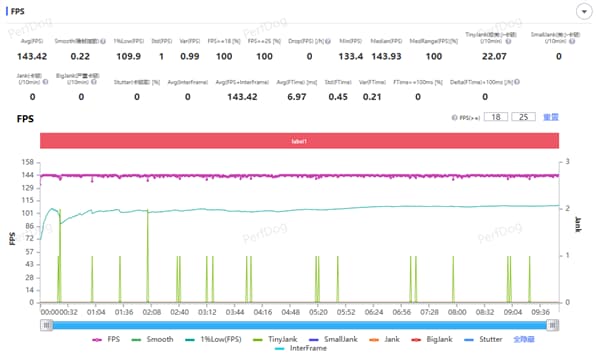
With the graphics and frame-rate settings pushed to their highest available levels and performance mode enabled, the REDMI K100 Pro achieved an average frame rate of 143.42fps in 5v5 gameplay.
The frame-rate fluctuation index was just 0.22, indicating a highly stable experience during team fights and other intensive situations.
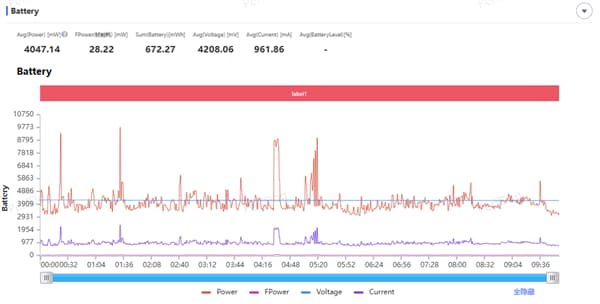
Average power consumption was measured at 4.05W, with energy consumption per frame at 28.22mW.
Genshin Impact
Genshin Impact was tested at the highest preset with the frame rate set to 60fps.
During a 10-minute run through Sumeru City, one of the game’s more demanding environments, the phone maintained an average frame rate close to 60fps. The reported fluctuation index was 0.4.
Average power consumption was 3.59W, with energy consumption per frame at 60.13mW.
Honkai: Star Rail
Honkai: Star Rail was tested at high graphics settings and 60fps in the densely populated Golden Hour area.
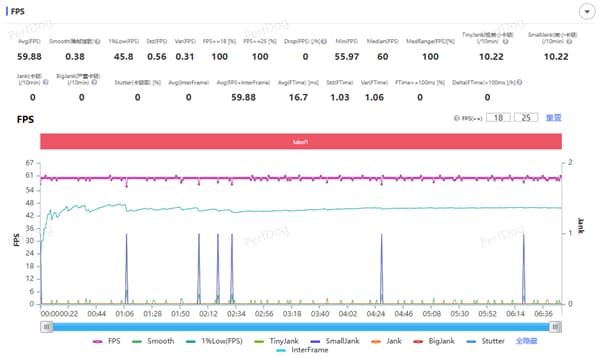
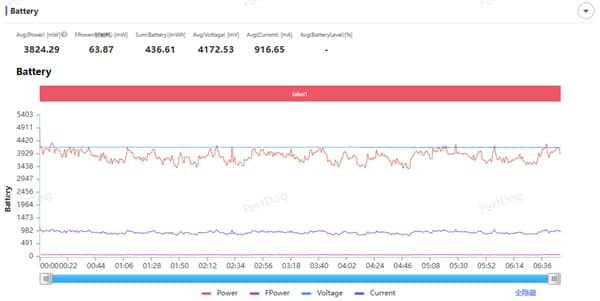
The REDMI K100 Pro maintained around 60fps throughout the seven-minute test, with a fluctuation index of 0.38.
Average power consumption was 3.82W, while energy consumption per frame was 63.87mW.
PUBG Mobile
PUBG Mobile’s current in-game settings provide a lower frame-rate ceiling, but the K100 Pro itself supports higher refresh rates.
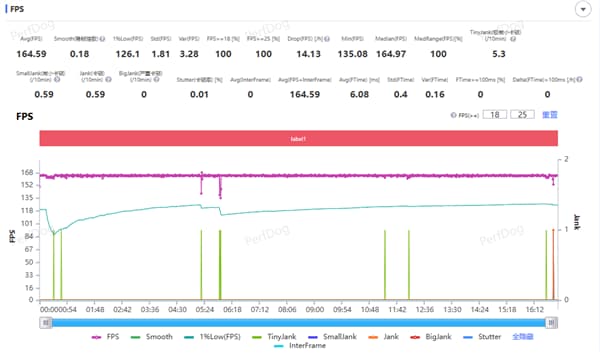
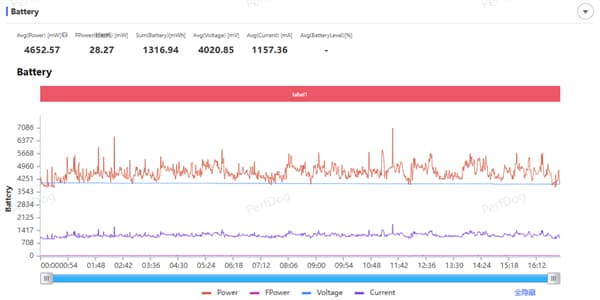
In the test, the phone delivered an average frame rate of 164.59fps, with a fluctuation index of only 0.18.
Jumping from the aircraft, driving, and late-game firefights remained smooth, demonstrating that the phone can maintain very high frame rates during competitive gameplay.
Average power consumption reached 4.65W, with energy consumption per frame at 28.27mW.
The SOUND BY BOSE-tuned gaming audio system also contributes to the experience, with enhanced footstep sounds helping players identify enemy positions.
CrossFire Mobile
CrossFire Mobile provides a more direct demonstration of the K100 Pro’s 185Hz capability.
With the game configured for 185fps and performance mode enabled, the phone achieved an average frame rate of 184.57fps.
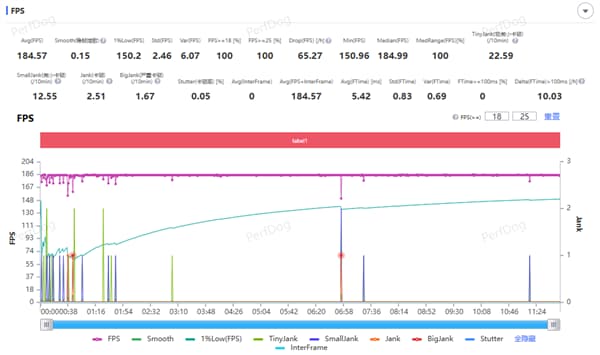
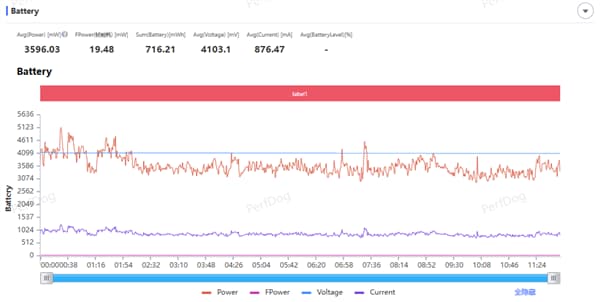
The frame fluctuation index was just 0.15, while the 1% low frame rate remained at 150fps.
Average power consumption was 3.6W, corresponding to 19.48mW per frame.
These results suggest that the K100 Pro can make practical use of its 185Hz panel rather than treating the refresh rate as a purely theoretical specification.
Display Experience: High Clarity Meets 185Hz Smoothness
The K100 Pro’s display is more than just a high-refresh-rate panel.
Super Pixel RGB Arrangement
The phone uses what REDMI calls a “Super Pixel” lossless RGB arrangement.
In a conventional RGB layout, each pixel contains its own red, green, and blue sub-pixels. Many OLED panels instead use arrangements such as diamond-shaped sub-pixel structures, which can share certain sub-pixels between neighboring pixels.
The K100 Pro’s approach aims to preserve a more complete RGB structure, which can be especially beneficial for small text and fine interface elements.
In practical use, this should result in cleaner edges and sharper fine details.
M11 Material and High Brightness
The K100 Pro is also among the first devices to use the new M11 luminous material described in the source material.
REDMI says the display’s overall luminous efficiency reaches 81.8cd/A, while green sub-pixel efficiency reaches 227cd/A with the pTSF technology used in the panel.
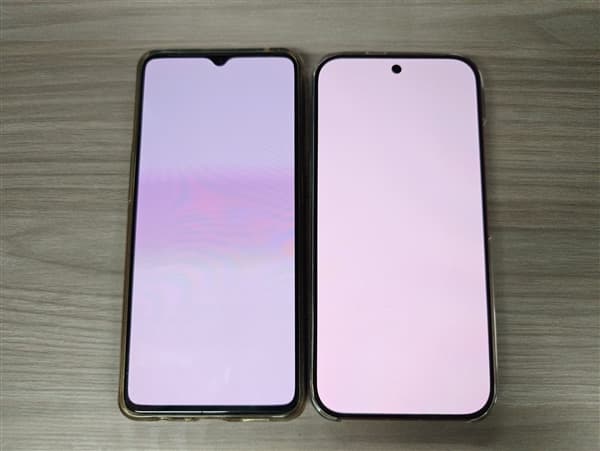
Peak brightness reaches 4,500 nits at a 25% OPR and 10,000 nits at a 1% OPR.
During outdoor use, the display remains readable even under strong sunlight, making the high brightness specification meaningful beyond laboratory figures.
185Hz Refresh Rate
Moving from 144Hz to 185Hz means the display can refresh substantially more frequently.
For supported games, the higher refresh rate can make fast movement, aiming, camera rotation, and other interactions appear smoother.
The combination of 185Hz refresh rate and high touch sampling is particularly relevant for competitive shooters, where small differences in responsiveness can affect the overall experience.
Full-Brightness DC Dimming
REDMI also uses full-brightness DC dimming on the K100 Pro.
Unlike PWM dimming, which adjusts brightness by rapidly switching the display on and off, DC dimming regulates brightness through current or voltage changes.
The K100 Pro is designed to maintain DC dimming across the brightness range. According to the source material, testing with a camera in professional mode did not reveal the low-frequency PWM striping typically associated with some displays.
The phone also supports a minimum brightness of 1 nit and includes additional eye-care features intended for low-light environments.
Camera: A 200MP Main Camera on a Gaming-Focused Phone
Gaming smartphones do not always prioritize camera hardware, but REDMI has given the K100 Pro a relatively ambitious imaging system.
The primary camera uses a 200-megapixel HP5 sensor measuring 1/1.56 inches, paired with an f/1.68 aperture and support for 2x in-sensor zoom.

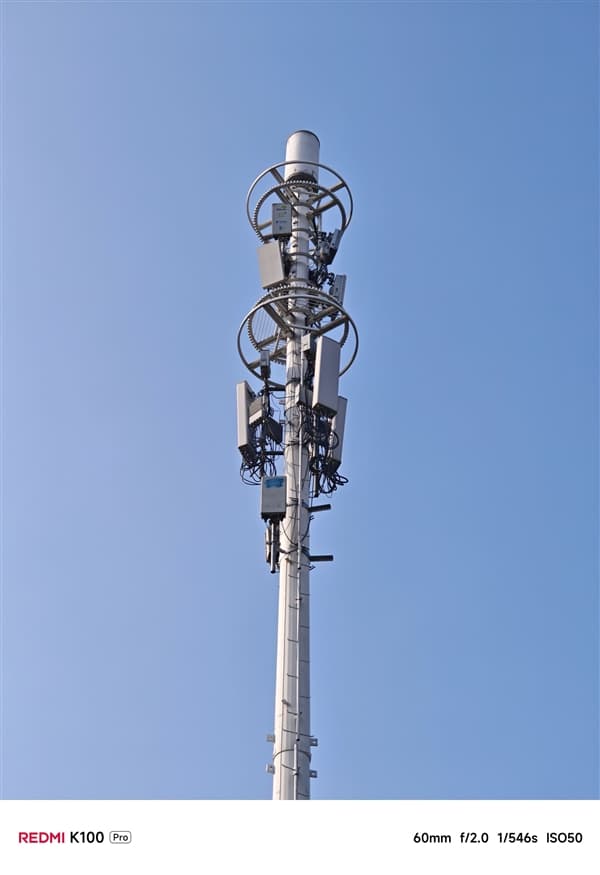
The telephoto camera uses a 50-megapixel JN5 sensor with a floating telephoto structure. It offers 2.5x optical magnification, 5x lossless zoom, and up to 60x digital zoom. It also supports close-up photography from approximately 10cm, giving the telephoto camera a macro capability.
An 8-megapixel ultra-wide-angle camera completes the triple-camera setup.
Main Camera
The 200MP main camera provides plenty of resolution for daylight photography.
High-resolution images retain considerable detail when cropped, allowing users to reframe photographs after shooting.
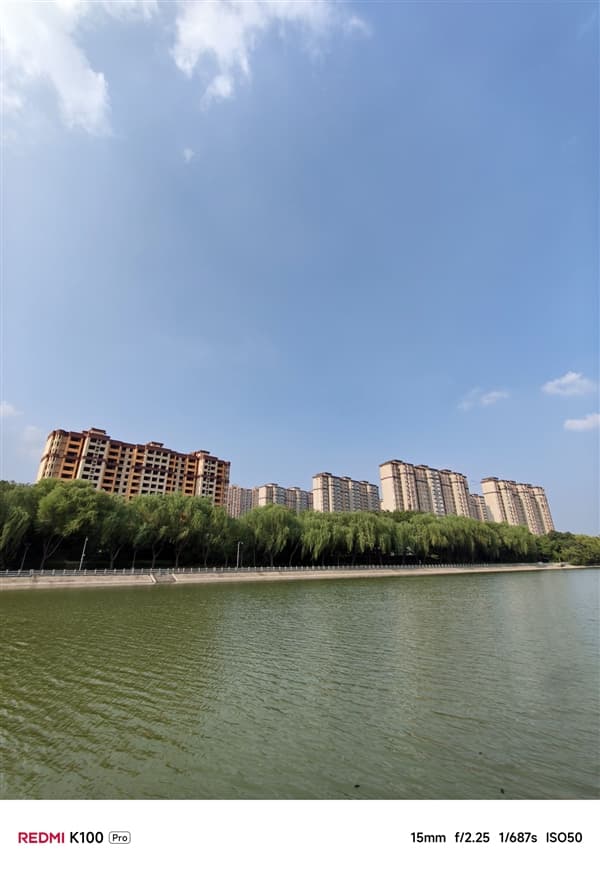
This can be useful for landscapes, architecture, and other scenes where additional cropping flexibility is valuable.
Telephoto Camera
The floating telephoto module provides a more versatile focal range and is particularly useful for distant subjects.
The combination of optical zoom and high-resolution capture allows users to photograph people, buildings, and other subjects without relying entirely on digital magnification.
Ultra-Wide and Macro Photography
The ultra-wide camera is useful for landscapes and large subjects, while the floating telephoto camera’s close-focusing capability adds another dimension to the camera system.
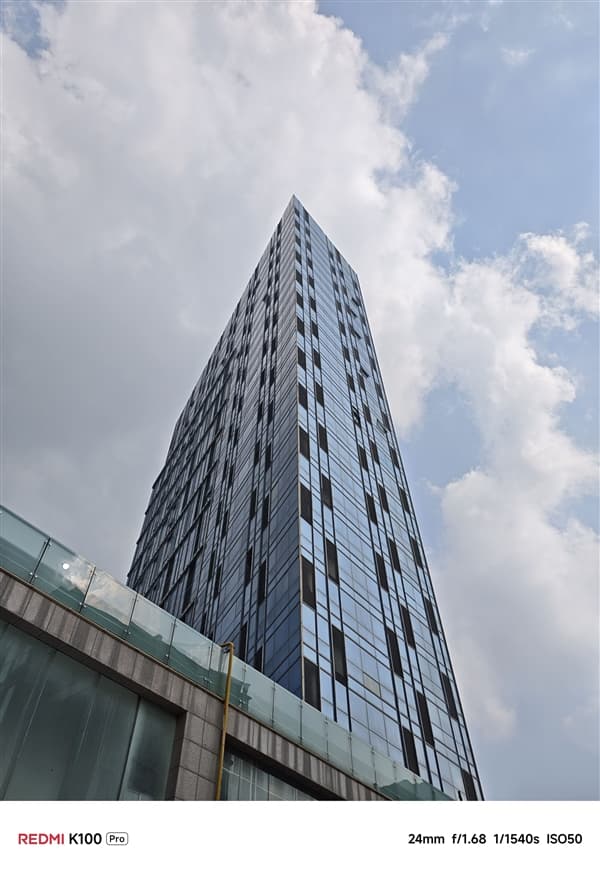
Although the K100 Pro is primarily designed as a performance-focused device rather than a dedicated camera flagship, its camera setup is considerably more capable than what is traditionally expected from gaming-oriented phones.


Battery Life and Charging: 8,580mAh for All-Day Gaming
Battery capacity is another major strength of the REDMI K100 Pro.
The phone features an 8,580mAh Jinjiang battery with a high silicon-content anode. REDMI says the battery achieves an energy density of up to 945Wh/L.
Despite the large battery, the phone remains 8.55mm thick.
In a comprehensive battery test using a combination of CPU-intensive workloads, AI processing, image browsing, video playback, and web browsing, the K100 Pro consumed 80% of its battery over approximately 14 hours.
That translates to a theoretical full-charge endurance of around 17 hours and 30 minutes under the same test conditions.
For everyday use, this gives the phone enough capacity to comfortably handle a full day of heavy use, including gaming, video playback, and social media.
100W Fast Charging
The phone supports 100W wired charging and also offers 50W wireless charging.
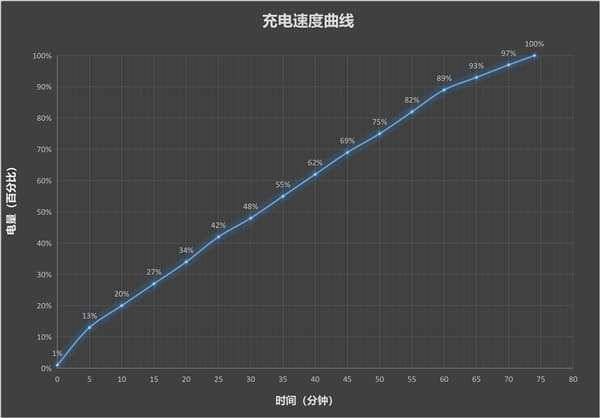
Using the bundled 100W charger, the K100 Pro reached:
- 13% after 5 minutes
- 20% after 10 minutes
- 48% after 30 minutes
- 89% after 60 minutes
- 100% after 75 minutes
Charging slows down toward the end of the cycle as the phone manages battery temperature and charging health.
REDMI also states that the battery can retain more than 80% of its capacity after 1,600 complete charge cycles.
For gaming, the phone supports bypass charging, allowing power to be supplied directly to the motherboard while gaming instead of routing the full load through the battery. This can help reduce heat generation and battery stress during extended gaming sessions.
The K100 Pro can also act as a power source for other devices, supporting 27W wired reverse charging and 22.5W wireless reverse charging.
Verdict: A Rare Mid-Size Gaming Phone That Avoids Major Compromises
The REDMI K100 Pro stands out because it challenges one of the assumptions surrounding gaming smartphones: that a high-refresh-rate gaming experience requires a huge device.
By fitting a 185Hz display into a 6.59-inch body, REDMI has created a device that is easier to hold and carry while still offering the high-refresh-rate experience expected from a gaming flagship.
The gaming tests are particularly impressive. CrossFire Mobile reached an average of 184.57fps, with a 1% low of 150fps, demonstrating that the 185Hz display can be used for genuine high-frame-rate gaming.
At the same time, demanding titles such as Genshin Impact and Honkai: Star Rail remained close to their 60fps limits during testing.
The display is another major strength. The Super Pixel RGB arrangement is designed to improve fine-detail clarity, while the M11 material, high brightness, 185Hz refresh rate, and full-brightness DC dimming give the screen a well-rounded feature set.
The large 8,580mAh battery is equally important. Combined with 100W wired charging, 50W wireless charging, bypass charging, and reverse charging, it gives the K100 Pro considerable flexibility for both gaming and everyday use.
There are still compromises. The 8MP ultra-wide camera is noticeably less ambitious than the 200MP main camera, while the 218g weight is still substantial for prolonged one-handed use. But these are understandable trade-offs considering the phone’s large battery and performance-focused hardware.
Ultimately, Redmi K100 series is not simply a gaming phone with a smaller screen. It is an attempt to redefine what a compact gaming flagship can be.
A 185Hz display, flagship-class performance, capable cameras, and an 8,580mAh battery in a 6.59-inch body make the REDMI K100 Pro one of the more distinctive performance-focused smartphones of its generation.