









August 28, 2026
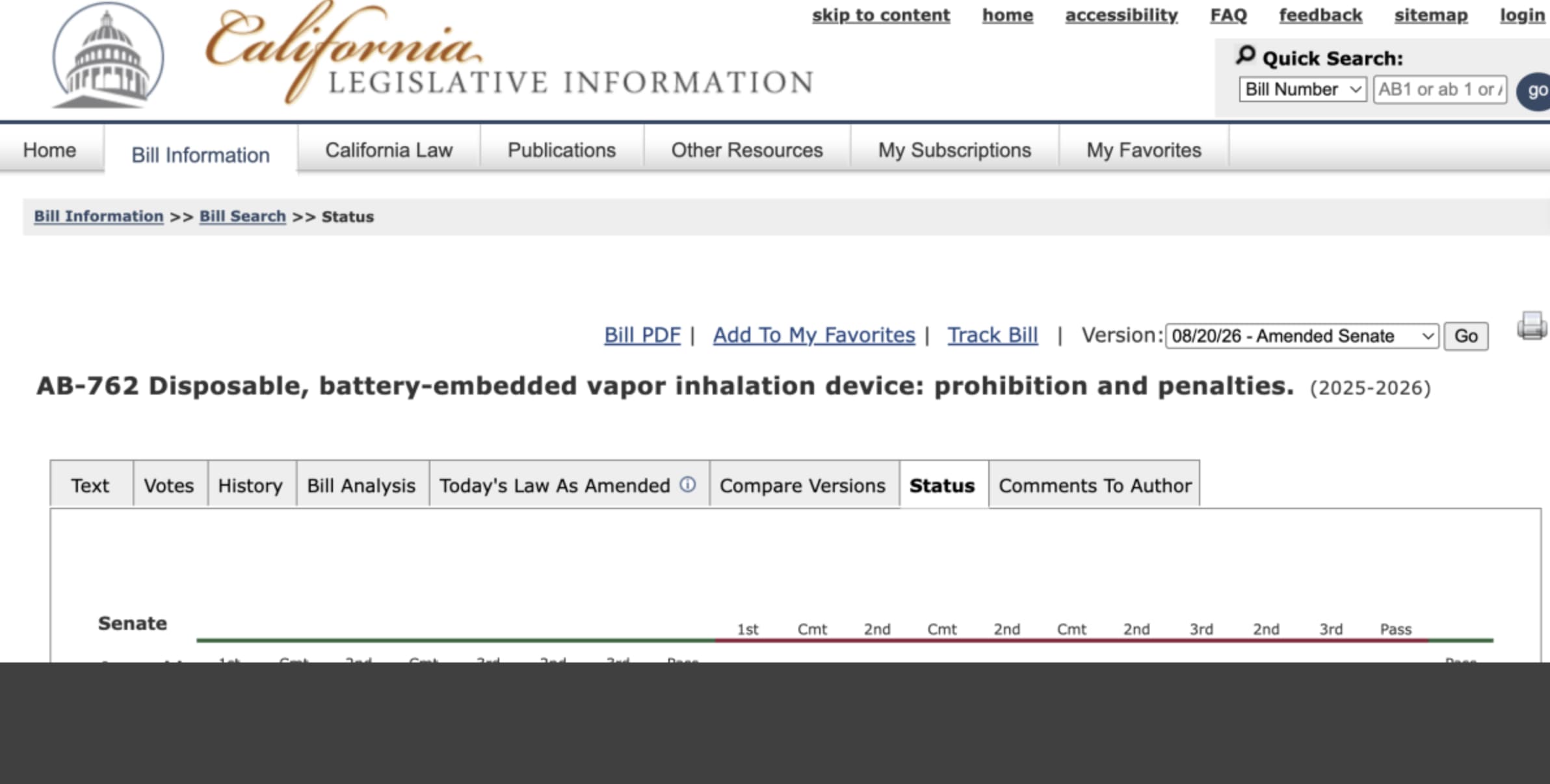
California lawmakers have approved AB 762, a bill that would phase out the sale of disposable, built-in-battery nicotine vaping products in the state. According to a report by CBS Los Angeles on August 27, if Governor Gavin Newsom signs the legislation, California would prohibit the manufacture and import of covered products beginning January 1, 2027, followed by a statewide sales ban on January 1, 2028.
The bill was introduced by California Assemblymember Jacqui Irwin. Unlike earlier vaping regulations that have largely focused on flavored tobacco products and youth access, AB 762 is primarily aimed at the environmental and safety problems associated with disposable vape devices, particularly electronic waste and lithium-ion battery fires.
Two-Stage Ban Would Eventually Reach Retail Sales
AB 762 would not immediately remove disposable nicotine vapes from California stores if it becomes law. Instead, the legislation establishes a transition period with two major deadlines.
Beginning January 1, 2027, manufacturers would no longer be permitted to manufacture covered disposable vaping products in California, while importing those products into the state would also be prohibited.
The second phase would take effect January 1, 2028, when the sale of the affected disposable vaping products would also become illegal in California.
Violations could result in penalties of up to $500.
The legislation focuses on nicotine or tobacco vaping products that contain a built-in battery and are designed to be discarded after use. Cannabis vaping devices are excluded from the proposed restrictions.
From a product-design perspective, the legislation could encourage manufacturers to shift toward devices that use rechargeable batteries and allow either e-liquid refilling or replacement cartridges. If the bill ultimately becomes law, disposable products could largely disappear from California’s legal market after the transition period, while rechargeable or refillable vape devices and other reusable formats become more prominent.
Waste From Disposable Vapes Drives Environmental Concerns
One of the central arguments behind AB 762 is the amount of electronic waste generated by disposable vaping products.
Supporters have cited data from the CDC Foundation, which estimated in 2024 that consumers in the United States discarded approximately 500,000 disposable vapes every day.
Disposable devices commonly contain lithium-ion batteries, copper and residual nicotine. When these products are thrown into ordinary garbage or recycling streams, their batteries can be crushed, punctured or otherwise damaged during collection and processing. Supporters argue that this creates an additional fire risk for garbage trucks, recycling facilities and waste-processing operations.
Environmental groups, including CALPIRG, have also highlighted the materials contained in disposable vape devices. Lithium and copper can enter the waste stream after products that may have been used for only a short period are discarded, increasing the challenges and costs associated with collection and recycling.
Irwin has argued that lawmakers should consider the risks these products create for communities, as well as the cleanup and waste-management costs that can ultimately fall on public services and their customers.
Bill Could Reshape California’s Legal Vape Market
The potential impact of AB 762 extends beyond environmental policy. It could also change the types of vaping products manufacturers are able to sell legally in California.
The state already has strict restrictions on flavored tobacco products and operates an Unflavored Tobacco List. Products covered by California’s tobacco regulations must meet the state’s requirements to remain eligible for legal sale.
AB 762 would add another layer of regulation by focusing specifically on device construction and reusability.
As a result, a vaping product could potentially satisfy California’s flavor-related requirements while still being excluded from the market because it uses a non-rechargeable, built-in battery and is designed for one-time use.
For manufacturers, the proposed changes could affect several areas, including:
- Product design and hardware architecture
- Rechargeable battery technology
- Refillable or replaceable-pod systems
- California-specific SKU planning
- Distributor and retailer inventory management
Retailers would also need to plan ahead for the 2028 sales deadline. Businesses carrying disposable products could face the need to reduce inventory and gradually replace those products with reusable or rechargeable alternatives.
Industry Groups Question Whether the Ban Will Eliminate Illegal Products
The legislation has also faced opposition from representatives of California’s retail and convenience-store industry.
During a California Senate committee hearing, the California Fuels and Convenience Alliance acknowledged that disposable vapes create waste and battery-related concerns. However, the organization argued that many disposable products already being sold in California do not comply with the state’s existing regulations.
The group suggested that only a relatively small number of disposable products were eligible for lawful sale at the time. As a result, critics argue that AB 762 could primarily eliminate the legal, regulated and tax-paying segment of the disposable vape market without necessarily eliminating products sold through unauthorized channels.
Irwin has countered that consumers are ultimately seeking nicotine rather than a particular type of hardware. From that perspective, eliminating disposable devices could reduce the number of lithium batteries entering the waste stream, although she has acknowledged that the legislation would not solve every issue surrounding vaping products and illegal sales.
Governor Newsom’s Decision Is Now the Key Step
AB 762 has now passed both chambers of the California Legislature. The next major step is for Governor Gavin Newsom to decide whether to sign the bill.
For that reason, it would be inaccurate at this stage to describe California as having already implemented a statewide ban on disposable nicotine vapes.
If Newsom signs AB 762, manufacturers and importers would face the first major compliance deadline on January 1, 2027, while retailers would have until January 1, 2028 before sales of covered disposable products are prohibited.
For vaping manufacturers, the potential loss of disposable products from one of the largest U.S. state markets could accelerate the industry’s shift toward rechargeable, refillable and replaceable-pod devices. Companies targeting California may therefore need to reconsider product design, inventory planning and long-term compliance strategies well before the proposed sales deadline.