









Gaming mice have become increasingly focused on three things: lower weight, faster communication and more accurate tracking. The ATK Blazing Sky X1 V2 series brings all three ideas together in a compact wireless design, while adding an unusually large battery for a mouse in this weight class.
Depending on the version, the X1 V2 family combines a high-performance sensor, an 8,000Hz polling rate, Nordic 54-series hardware, lightweight construction and 2.4GHz wireless connectivity. The Banggood listing identifies the Ultra Max version with a PAW3395 Ultra sensor, an 800mAh battery and a weight of around 55g, while the other versions use different sensor and switch configurations.

That makes the X1 V2 more interesting than a mouse that simply advertises a high DPI number. Its real appeal is the balance between movement, wireless responsiveness and long-term usability.
A Mouse Built Around Low Weight
A gaming mouse does not need to be extremely small to feel fast.
The X1 V2 measures approximately 127 × 64 × 40mm and uses a symmetrical body shape. Depending on the version, its listed weight is around 54–55g, putting it firmly in the lightweight gaming mouse category.
The advantage becomes particularly noticeable when a game requires frequent large movements, which is where lightweight gaming mice can make a difference.
In competitive shooters, players using relatively low sensitivity often move the mouse across a large section of the desk to make a turn or correct their aim. A lighter mouse reduces the amount of physical effort required for those repeated movements.

The X1 V2 therefore makes more sense as a precision-oriented gaming tool than as a general office mouse. Its shape and weight are designed around quick repositioning rather than adding unnecessary mass.
8,000Hz Polling Is About More Than a Bigger Number
One of the headline specifications is the 8,000Hz polling rate, a feature increasingly found on high-end competitive gaming mice.
A 1,000Hz mouse reports its position to the computer roughly every 1 millisecond. At 8,000Hz, that interval is reduced to approximately 0.125 milliseconds.
The practical difference is not that an 8K mouse suddenly makes someone a better player. Instead, a higher polling rate can provide more frequent position updates, particularly on a sufficiently powerful gaming PC and high-refresh-rate display.
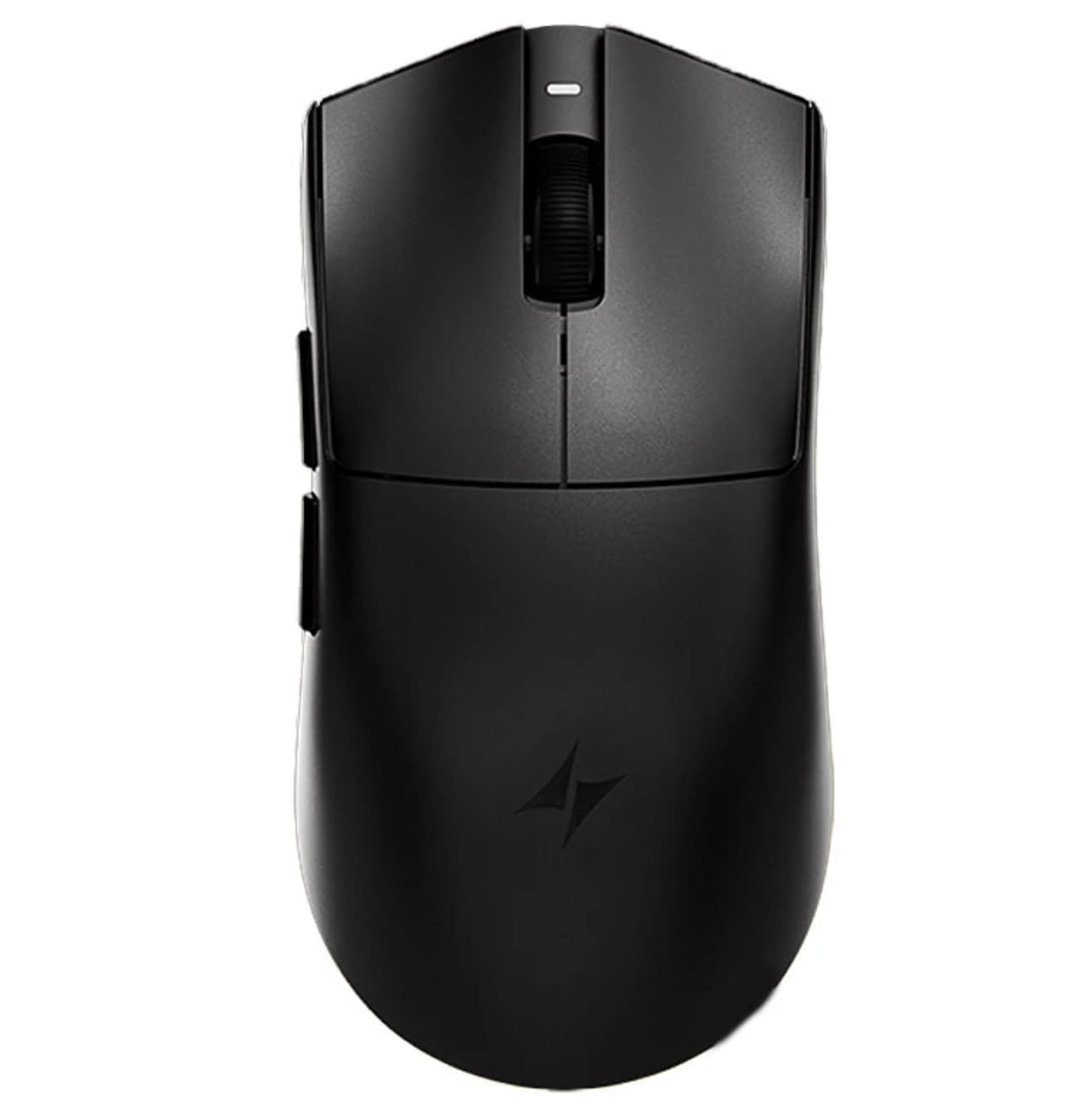
The X1 V2 is designed to support 8,000Hz polling in both wired and wireless modes. ATK also lists button latency around 0.181ms for several X1 V2 configurations.
For everyday desktop work, the difference may be difficult to notice. In fast competitive games, however, players who already use high-refresh-rate monitors and low-latency peripherals are more likely to appreciate the additional responsiveness.
The Sensor Choice Depends on the Version
One detail buyers should pay attention to is that the X1 V2 is a series, not a single configuration.
The Banggood listing identifies three versions: X1 V2 Ultras Max, X1 V2 Ultimate and X1 V2 Extreme. The listing associates the Ultra Max with the PAW3395 Ultra sensor, while the other versions use different sensor configurations.
This distinction matters because shoppers should not assume that every X1 V2 carries exactly the same internal hardware.
ATK’s current official X1 V2 product page also shows that the broader X1 V2 lineup has evolved across several configurations, including models using PAW3950 Ultra and PAW3955 Master sensors.
For anyone purchasing the mouse, checking the exact version is therefore more useful than simply searching for “X1 V2.”
Why an 800mAh Battery Is Significant
Wireless gaming mice usually have to make a compromise between weight and battery capacity.
A larger battery can extend runtime, but it also adds weight. The X1 V2 takes a different approach by pairing an 800mAh battery with a lightweight body.
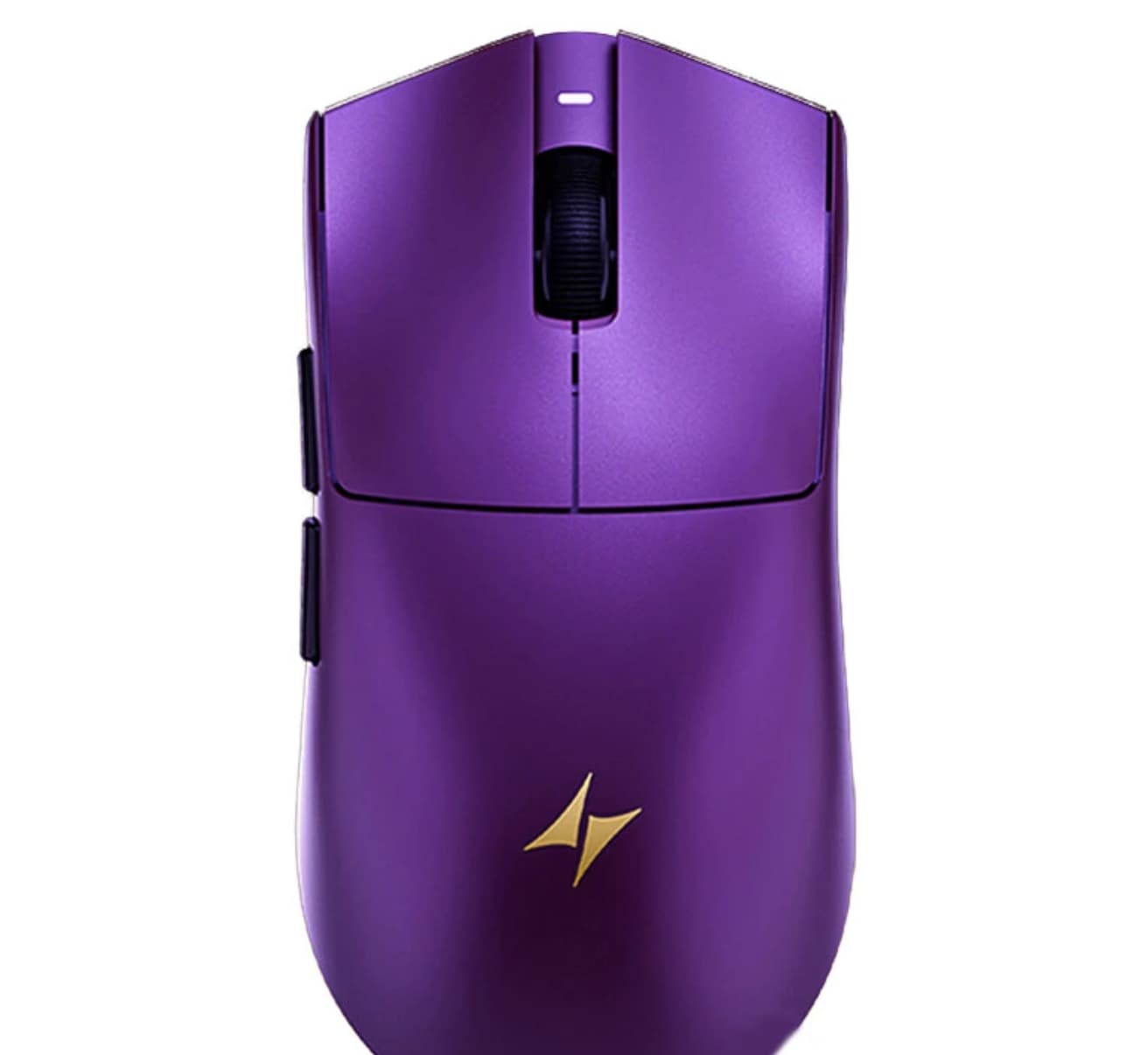
The Banggood listing advertises more than 800 hours of battery life at 1,000Hz for the 800mAh configuration.
That figure should be treated as a manufacturer-rated condition rather than a guaranteed runtime during continuous 8K wireless gaming. Higher polling rates, lighting, wireless conditions and other usage variables can affect actual battery life.
Even so, the battery capacity is one of the more practical reasons to consider this mouse. A wireless mouse that needs to be charged frequently can become frustrating, especially for people who use it for work during the day and gaming at night.
Wireless Freedom Without Giving Up Wired Mode
The X1 V2 supports wired and 2.4GHz wireless connectivity, giving users two different ways to use the mouse.
That flexibility is useful because different situations call for different setups.
A wired connection can make sense when charging the mouse or when someone wants the simplest possible competitive setup. Wireless operation, meanwhile, removes the cable from the desk and allows the mouse to move more freely, which is one of the main advantages of a wireless gaming mouse.
The included 8K receiver and cable are part of the package listed by Banggood, so the high-polling-rate setup is not dependent on purchasing a separate basic receiver.
The Shape May Matter More Than the Specifications
Specifications are easy to compare. Mouse shape is not.
The X1 V2 uses a symmetrical 127mm-long body and is positioned by ATK for medium-to-large hands, with claw and palm grips listed as suitable grip styles.
This suggests that the mouse is aimed at users who want a relatively substantial body without moving into the heavier designs commonly associated with large gaming mice.
For claw-grip users, the rear portion of the shell can provide support while still leaving enough freedom for quick fingertip adjustments. Palm-grip players may also appreciate the larger overall footprint.
However, grip preference is highly personal. A lightweight mouse can have excellent specifications and still feel wrong if its hump, width or button position does not match the user’s hand.
PTFE Feet Complete the Lightweight Approach
Weight alone does not determine how quickly a mouse moves.
The contact surface between the mouse and mousepad also has a major effect on the feeling of movement. The X1 V2 uses high-purity PTFE mouse feet, with ATK describing the design as focused on smooth and stable gliding.
This becomes particularly relevant when the mouse is used with a low sensitivity setting.
A lightweight shell combined with low-friction feet can make broad movements feel less demanding. At the same time, players who prefer more stopping resistance may want to consider their mousepad surface before deciding whether this setup matches their preferences.
A Nordic 54-Series Platform
Inside the X1 V2 is ATK’s Nordic 54-series platform.
The manufacturer describes its ApexShark MAX solution as a combination of hardware and firmware optimization, with high-speed wireless transmission and low button latency.
The important point for buyers is that the mouse is not relying on the polling rate alone. The controller, wireless system, sensor and firmware all contribute to the overall response chain.
This is also why looking only at DPI can be misleading when comparing gaming mice. A high maximum DPI number does not automatically translate into better real-world aiming.
For most players, sensor tracking quality, consistent wireless communication, shape and the ability to control the mouse comfortably are more meaningful factors.
Who Is the ATK Blazing Sky X1 V2 For?
The X1 V2 makes the most sense for several types of users.
Competitive FPS players may benefit from the lightweight body and high polling rate, particularly when paired with a high-refresh-rate monitor.
Low-sensitivity gamers can take advantage of the reduced weight when making repeated wide movements.
Wireless enthusiasts get 2.4GHz connectivity without having to accept a heavy mouse.
Users who dislike frequent charging may find the 800mAh configuration particularly attractive because of its large battery capacity.
It is less compelling for someone who mainly wants a basic office mouse. An 8K polling rate and esports-focused sensor platform are unnecessary for browsing, documents and casual desktop use.
What Makes the X1 V2 Different?
The strongest part of the X1 V2 concept is not one individual specification.
There are plenty of gaming mice with high polling rates. There are also many lightweight wireless mice and plenty of models with high-end optical sensors.
The more interesting combination here is the attempt to bring these characteristics together without turning the mouse into an ultra-small design or sacrificing battery capacity.
The result is a peripheral aimed at players who want a fast, light and flexible setup but still care about endurance.
ATK Blazing Sky X1 V2 Specifications
| Feature | Details |
|---|---|
| Product | ATK Blazing Sky X1 V2 Series |
| Dimensions | 127 × 64 × 40mm |
| Shape | Symmetrical |
| Weight | About 54–55g depending on version |
| Sensor | PAW3395 Ultra / other sensor options depending on version |
| Polling Rate | Up to 8,000Hz |
| Battery | 800mAh on the Ultra Max configuration |
| Battery Life | 800+ hours at 1,000Hz, manufacturer rated |
| Connectivity | Wired / 2.4GHz wireless |
| MCU | Nordic 54-series |
| Button Latency | About 0.181ms on listed configurations |
| Mouse Feet | PTFE |
| Intended Use | Competitive gaming and esports |
Specifications can vary between X1 V2 versions, so buyers should verify the exact configuration before ordering.
Final Thoughts
ATK Blazing Sky X1 V2 is best understood as a performance-focused wireless mouse rather than another accessory chasing impressive numbers.
Its lightweight construction can make large movements easier, while 8,000Hz polling targets users who want a highly responsive setup. The 2.4GHz connection keeps the desk cable-free, and the 800mAh battery on the Ultra Max configuration addresses one of the biggest disadvantages of lightweight wireless mice: charging interruptions.
The biggest buying consideration is the specific X1 V2 version. Sensor, switch, weight and battery specifications can differ across the range, so the exact configuration matters.
For gamers who already have a high-refresh-rate monitor and care about low-latency peripherals, the X1 V2 offers a well-balanced collection of hardware features. For casual users, many of those advantages will be difficult to notice—and a simpler mouse may make more sense.