










Choosing between a 0.15Ω and 0.3Ω Vaporesso GTX coil can look like a small specification difference, but the two resistances are designed around noticeably different power ranges. The 0.15Ω GTX sits toward the higher-power end of the GTX platform, while the 0.3Ω option reduces the wattage requirement and offers a different balance between vapor production, power consumption, and airflow.
Vaporesso currently rates the GTX 0.15Ω Mesh at 60–75W, with 70W listed as its best wattage. The GTX 0.3Ω Mesh is rated at 32–45W, with 40W listed as the best wattage.
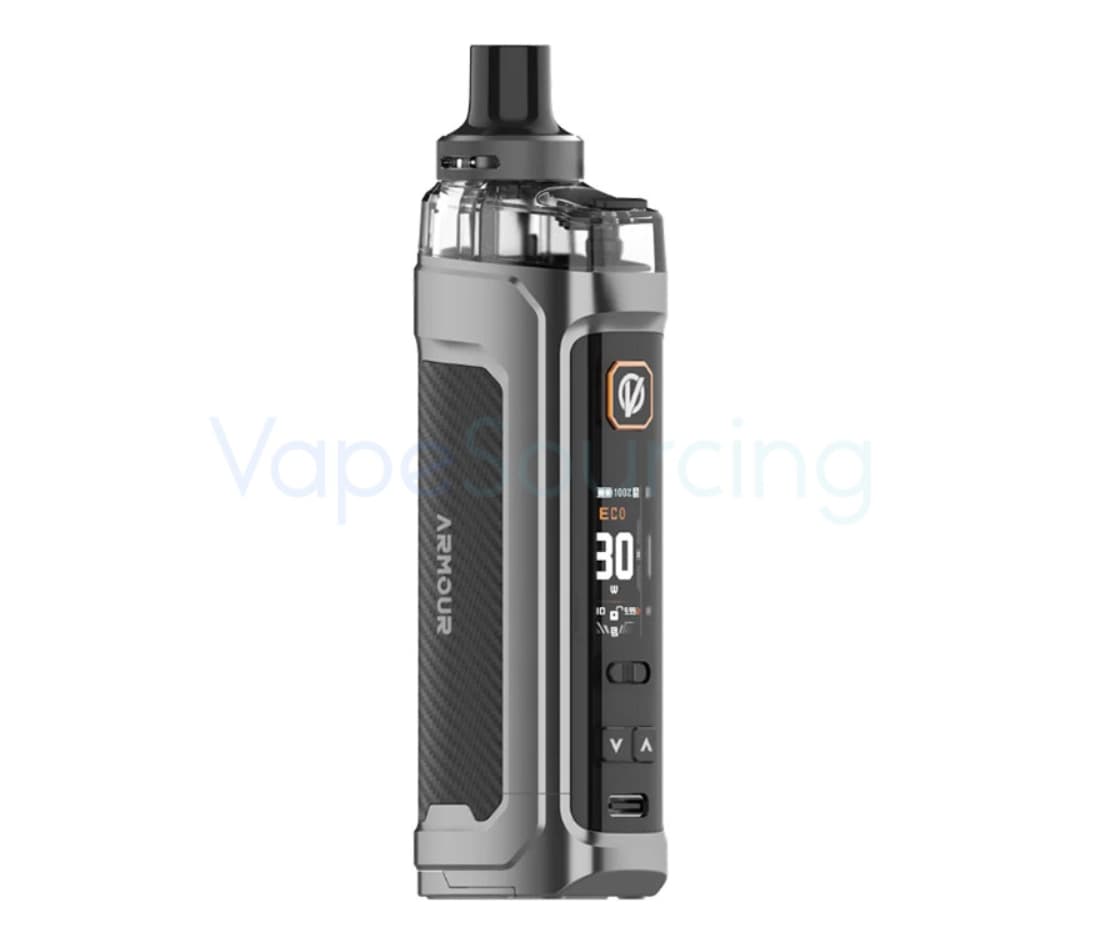
The difference becomes especially relevant on devices such as the Vaporesso ARMOUR GS2, whose DTL kit includes a 0.3Ω Dual Mesh coil pre-installed and a 0.15Ω Dual Mesh coil in the box.
The Vaporesso ARMOUR GS2 review takes a closer look at the device’s 80W output, replaceable 18650 battery, pod design, and GTX Dual Mesh compatibility.
So which GTX coil makes more sense? The answer depends less on the resistance number itself and more on how you want to use the device.
0.15Ω vs 0.3Ω GTX Coils at a Glance
| Feature | GTX 0.15Ω | GTX 0.3Ω |
|---|---|---|
| Resistance | 0.15Ω | 0.3Ω |
| Official wattage range | 60–75W | 32–45W |
| Vaporesso’s best wattage | 70W | 40W |
| General power class | Higher | Moderate |
| Typical use | DTL | DTL / lower-power DTL |
| Power demand | Higher | Lower |
| Vapor output | Generally higher at comparable airflow | Generally more moderate |
| Battery demand | Higher at higher wattage | Lower at lower wattage |
| Best suited to | Users comfortable with higher power | Users wanting a lower-power setup |
The wattage figures above come from Vaporesso’s current GTX coil specifications. Always follow the wattage range printed on the specific coil you have, because coil versions and regional product configurations can differ.
The Important Difference Is Wattage, Not Just Resistance
The easiest mistake is to look at 0.15Ω versus 0.3Ω and assume the lower number is simply the “stronger” version.
Resistance is only part of the equation.
The GTX 0.15Ω Mesh is designed for 60–75W, while the 0.3Ω Mesh operates at 32–45W. That means the 0.15Ω coil is intended to be driven at substantially more power.
In practical terms, higher operating power can produce more vapor and a more energetic DTL experience, but it also places greater demands on the battery and e-liquid supply.
The 0.3Ω coil occupies a lower power range. At its recommended 40W setting, it doesn’t require the same power level as the 0.15Ω coil at its 70W best setting.
This is why choosing a GTX coil should start with the question:
What wattage range do you actually want to use?
Not simply:
Which resistance is lower?
GTX 0.15Ω: A Higher-Power Option
The GTX 0.15Ω Mesh is specified for 60–75W, with Vaporesso listing 70W as its best wattage.
That puts it firmly in the higher-power portion of the GTX lineup.
At this resistance, the coil makes more sense for users who have a device capable of comfortably supplying the required power and who prefer a more substantial DTL setup.
The higher wattage requirement also changes the overall operating profile. Battery consumption can be greater, and e-liquid consumption can increase as power rises.
That does not automatically make 0.15Ω the better GTX coil. It simply means the coil is designed around a different operating range.
Who Should Consider the 0.15Ω GTX?
The 0.15Ω option makes more sense if you:
- Prefer higher-power DTL vaping
- Have a device that supports the required wattage
- Want to operate around the 60–75W range
- Prefer a larger vapor output at higher power
- Are comfortable with greater battery and e-liquid consumption
On the ARMOUR GS2, the 0.15Ω Dual Mesh is specifically included as one of the compatible coils. The GS2 itself supports output from 5W to 80W, giving it enough power headroom for the 0.15Ω coil’s specified range.
GTX 0.3Ω: The Lower-Power Alternative
The GTX 0.3Ω Mesh is rated at 32–45W, with 40W listed as the best wattage by Vaporesso.
That is a substantial step down from the 0.15Ω coil’s 60–75W range.
For someone who doesn’t want to run a pod mod close to its maximum output, this can be an important difference. A 40W operating point is also easier to accommodate on devices with a lower maximum output.
The 0.3Ω GTX is therefore better understood as a moderate-power DTL option, rather than simply a weaker version of the 0.15Ω.
Who Should Consider the 0.3Ω GTX?
The 0.3Ω option is worth considering if you:
- Prefer a lower wattage
- Don’t need the higher-power range of the 0.15Ω
- Want a balance between vapor production and power consumption
- Are using a device where around 40W is a more comfortable operating point
- Prefer not to run an 80W-capable device near its upper range
For the ARMOUR GS2, Vaporesso supplies the 0.3Ω Dual Mesh as the pre-installed coil in the global DTL kit, while the 0.15Ω Dual Mesh is supplied separately.
0.15Ω vs 0.3Ω: How Does the Vape Experience Differ?
It is difficult to reduce coil performance to resistance alone because airflow, e-liquid composition, coil construction, pod design and wattage all influence the result.
Still, the different recommended power ranges give us a useful starting point.
Vapor Production
At their respective recommended wattages, the 0.15Ω coil is designed for higher power than the 0.3Ω coil.
That generally means the 0.15Ω configuration is the more power-oriented option, while the 0.3Ω setup is more moderate.
However, avoid assuming that resistance alone determines vapor production. Airflow and the specific mesh construction also matter.
Flavor
Both coils are designed for mesh-style heating, but “more power” does not automatically mean “better flavor.”
A 0.15Ω coil operated at 70W may provide a more intense overall experience, while a 0.3Ω coil at around 40W may provide a less power-hungry setup.
Flavor preference is subjective, so the more useful question is whether you prefer the higher-power or moderate-power operating style.
Battery Consumption
This is one of the most practical differences.
The 0.15Ω coil’s recommended range reaches 75W, whereas the 0.3Ω coil tops out at 45W according to Vaporesso’s current specifications.
Running at higher power generally requires more energy per puff.
Therefore, if battery efficiency between these two setups matters to you, the 0.3Ω coil has an obvious power-demand advantage when operated around its recommended range.
Actual battery life will still depend on battery capacity, battery condition, puff duration, airflow and how frequently the device is used.
What About 0.15Ω Dual Mesh vs 0.3Ω Dual Mesh?
This distinction matters if you’re specifically buying coils for the ARMOUR GS2.
Vaporesso lists both GTX 0.15Ω Dual Mesh and GTX 0.3Ω Dual Mesh as compatible with the ARMOUR GS2. The global GS2 kit includes one of each, with the 0.3Ω Dual Mesh pre-installed.
Do not automatically treat a standard GTX Mesh coil and a GTX Dual Mesh coil as identical just because they have the same resistance.
For example:
- GTX 0.15Ω Mesh ≠ GTX 0.15Ω Dual Mesh
- GTX 0.3Ω Mesh ≠ GTX 0.3Ω Dual Mesh
The resistance number tells you one important part of the coil specification, but the coil construction also matters.
When purchasing replacements, check the exact GTX Mesh or GTX Dual Mesh designation and confirm compatibility with your pod.
Which Coil Uses More Battery?
If everything else is comparable, the 0.15Ω coil is the more power-hungry choice because its recommended operating range is much higher.
Vaporesso recommends:
- 0.15Ω: 60–75W
- 0.3Ω: 32–45W
with best wattages of 70W and 40W respectively.
This doesn’t mean a 0.15Ω coil will always drain a battery by a specific percentage faster. Actual battery life depends on how long each puff lasts, how often the device is used and the characteristics of the battery.
But if one setup is being operated around 70W and another around 40W, the higher-powered setup will normally consume more energy over comparable usage.
Which Coil Uses More E-Liquid?
The same principle applies to e-liquid.
A higher-powered coil can vaporize more liquid per unit of time, so a 0.15Ω setup operated around 70W can use more e-liquid than a 0.3Ω setup operated around 40W.
That doesn’t mean every user will see the same difference.
Puff duration, airflow, liquid formulation and usage frequency can all change consumption.
If you regularly find yourself refilling a pod much more frequently after moving from 0.3Ω to 0.15Ω, the higher operating power is one likely explanation.
What E-Liquid Should You Use?
Vaporesso’s current GTX specifications distinguish between higher-power DTL coils and lower-power options, and list recommended PG/VG ranges for different resistances. For the 0.15Ω–0.4Ω DTL group, Vaporesso lists 40/60–30/70 PG/VG with 0–6mg freebase in its current GTX specifications.
That is more useful than assuming every GTX coil should use the same liquid.
For any specific coil, check the manufacturer’s current recommendation and the instructions supplied with the product.
The important point is that coil resistance, wattage and e-liquid characteristics should be considered together.
Can You Use 0.15Ω and 0.3Ω on the Same Device?
Not automatically.
If you’re deciding between Vaporesso’s two ARMOUR pod mods, our ARMOUR GS2 vs ARMOUR G2 comparison explains the differences in battery design, output and coil compatibility.
Compatibility depends on the pod, coil platform and device.
The ARMOUR GS2 supports a wide selection of GTX coils, including 0.15Ω and 0.3Ω versions, and its 5ml DTL pod is designed for this platform.
But the fact that a coil is branded “GTX” does not mean it is compatible with every Vaporesso device.
Before buying replacement coils, check:
- The exact device model
- The exact pod or tank
- The coil resistance
- Mesh versus Dual Mesh construction
- The manufacturer’s recommended wattage
This is particularly important because the ARMOUR G2 and ARMOUR GS2 have different kit configurations, and Vaporesso specifically notes that the 0.15Ω Dual Mesh is not compatible with the ARMOUR G2.
Which Is Better for the ARMOUR GS2?
There isn’t one universally better coil.
The better match depends on how you intend to operate the device.
Choose 0.15Ω if:
- You want a higher-power setup
- You are comfortable around 60–75W
- You want to use more of the GS2’s available power range
- Higher vapor production is more important to you than minimizing power consumption
Choose 0.3Ω if:
- You prefer around 32–45W
- You want a more moderate-power DTL setup
- Battery consumption is a bigger consideration
- You don’t need to operate near the GS2’s 80W maximum
The ARMOUR GS2’s 5–80W output range covers both options, which is one reason the two coils make a useful comparison on this particular device.
A Simple Way to Decide
If you’re still undecided, use the wattage you actually want as your starting point:
Around 40W → GTX 0.3Ω
Around 70W → GTX 0.15Ω
Those two settings sit close to Vaporesso’s listed best wattages for the respective coils.
This is a more practical way to choose than assuming the lower resistance is automatically the better option.
What About Coil Lifespan?
Coil lifespan isn’t determined by resistance alone.
The actual service life can vary depending on:
- Wattage
- Puff duration
- Usage frequency
- E-liquid formulation
- Sweetener content
- How the coil is primed
- Whether the wick remains adequately saturated
A coil that is consistently pushed toward the top of its rated range may behave differently from one operated near the lower end.
Rather than expecting a fixed number of days from either coil, watch for changes such as declining flavor, reduced vapor production or a burnt taste. When those signs appear, follow the manufacturer’s replacement guidance.
The Bottom Line
The GTX 0.15Ω and 0.3Ω coils are designed for different power ranges, so the decision isn’t really about which resistance is “better.”
The 0.15Ω GTX is the higher-power option, rated at 60–75W with a 70W best setting. The 0.3Ω GTX operates at 32–45W, with 40W listed as its best wattage.
For an ARMOUR GS2 user, that makes the choice relatively straightforward:
0.15Ω = higher-power DTL setup
0.3Ω = lower-power DTL setup
If you’re unsure, start with the coil whose recommended wattage is closest to the way you actually want to operate your device. And always verify the exact coil version, pod compatibility and wattage printed on the replacement coil before installing it.
For current compatibility information and the latest GTX specifications, refer to Vaporesso’s official GTX coil documentation.