








The 2nd Gen Huawei Mate XT 2 represents a different stage in the evolution of tri-fold smartphones. The first Mate XT proved that a phone could use a tri-fold mechanism in a practical consumer device. With the new generation, the focus shifts from whether the technology works to whether this unusual form factor can deliver a genuinely useful everyday experience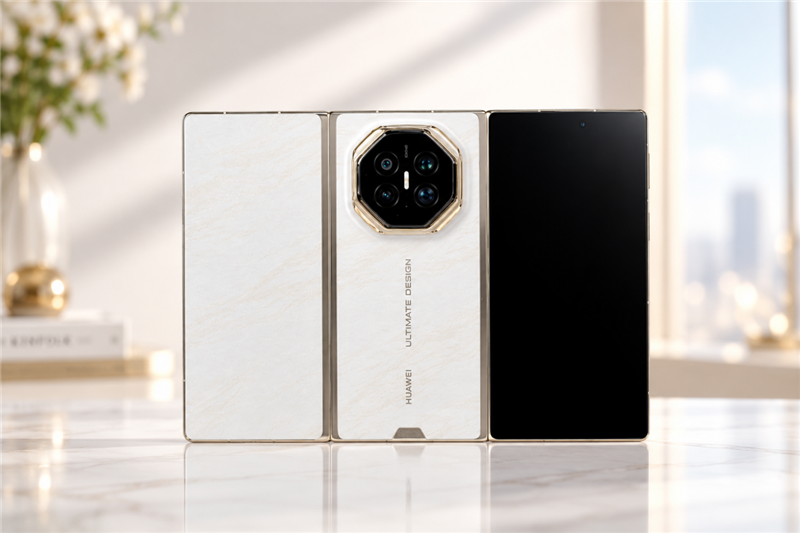
One of the biggest concerns with large foldable phones remains portability. At around 299g, the Mate XT 2 is noticeably heavier than a conventional smartphone, and that weight can be felt during extended one-handed use. Its large display becomes a major advantage when fully opened, but for everyday tasks such as checking messages, browsing social media, taking photos, or watching short videos, the additional thickness and weight may become more noticeable.
This highlights the real challenge facing tri-fold smartphones: the goal is not simply to provide a larger display, but to make different screen configurations useful in different situations.
New Tri-Fold Design for More Flexible Use
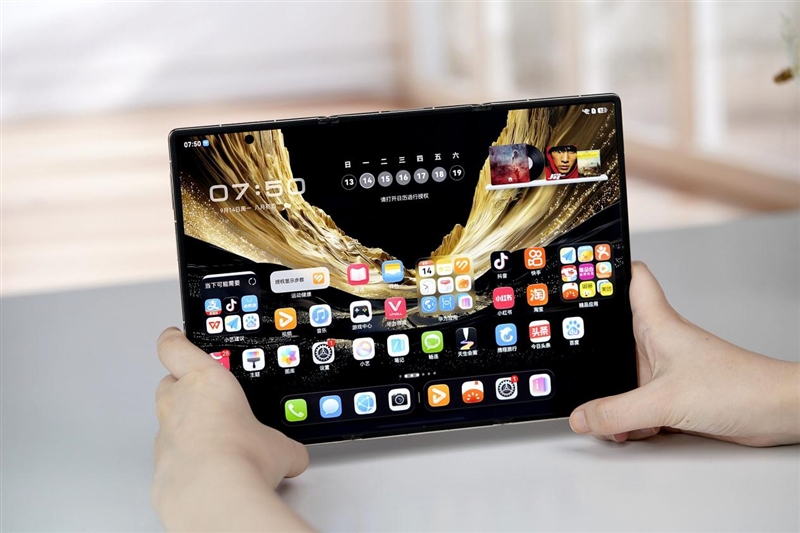
The Huawei Mate XT 2 Extraordinary Master introduces an updated tri-fold design that folds inward from both sides. In its compact configuration, it works much like a conventional 6.5-inch smartphone and can be used comfortably with one hand. When completely unfolded, the device transforms into a 10.2-inch display designed for multitasking, reading, gaming, and video consumption.
The new second-generation Tiangong hinge works alongside Huawei’s Xuanwu architecture to improve durability and structural stability. The outer display is protected by Xuanwu Kunlun Glass, while the inner panel uses a reinforced composite structure. The phone also carries IP58 and IP59 ratings for improved resistance against dust and water
Huawei has also paid attention to weight distribution. The centered camera arrangement helps balance the device, while the phone measures just 3.5mm at its thinnest point when unfolded. Its Qingyun-pattern rear panel and star-diamond camera ring add a premium appearance to the overall design.
Kirin 9050 Pro and HarmonyOS 7
At the heart of the Huawei Mate XT 2 Master Edition is the Kirin 9050 Pro, positioned as Huawei’s flagship mobile platform for this generation. The phone runs HarmonyOS 7.0, which plays an important role in managing the different screen configurations and adapting applications as the device changes between folded and unfolded modes.
For a tri-fold smartphone, raw processing power is only one part of the experience. The operating system also needs to handle multitasking, application scaling, window management, and transitions between different display layouts smoothly.
Dual OLED Displays
Both the inner and outer OLED displays support a 1Hz to 120Hz LTPO adaptive refresh rate. The panels also use 1440Hz high-frequency PWM dimming, helping provide smoother visuals while improving the viewing experience in low-brightness conditions.
Huawei also offers a Lingdun privacy display option designed to limit side-angle visibility while maintaining a bright image for the person viewing the screen directly.
The combination of a conventional outer display and a much larger unfolded panel gives the Mate XT 2 greater flexibility than traditional foldable phones. Users can keep the phone compact for everyday tasks and open the larger screen when additional workspace is needed.
Full RYYB Camera System
Photography is another major part of the Huawei Mate XT 2 Master Edition experience. The rear camera system uses Huawei’s full RYYB sensor configuration and includes a 50MP variable-aperture main camera with optical image stabilization, a 40MP ultra-wide camera, and a 50MP OIS periscope telephoto camera.
The system is complemented by a third-generation red maple primary-color camera designed to improve color reproduction.
While specifications provide an idea of what the hardware can offer, the real test is how consistently the cameras perform in different lighting conditions. Image quality, dynamic range, skin tones, zoom detail, and night photography are all better judged through hands-on testing than by megapixel counts alone.
5,600mAh Battery and Fast Charging
The Huawei Mate XT 2 Master Edition packs a 5,600mAh dual-cell battery. Charging support includes 66W wired fast charging and 50W wireless charging.
Huawei has also equipped the device with several communication and health-related features, including Tiantong satellite calling, BeiDou two-way messaging, and ECG and heart-rate monitoring.
These features give the Mate XT 2 a broader range of capabilities, although their practical value depends heavily on the user’s location and daily requirements.
Can a Tri-Fold Phone Be Practical?
The biggest challenge for any tri-fold smartphone is balancing its complex hardware with everyday usability. The hinge mechanism, display durability, crease visibility, software adaptation, and weight distribution all influence the experience.
Performance under heavy workloads is another important consideration. Running multiple applications across a large unfolded display places additional demands on the processor, memory management, and thermal system. Camera performance, battery endurance with the larger display, and the usefulness of satellite communication also require real-world testing rather than relying solely on specifications.
The Huawei Mate XT 2 therefore represents more than an attempt to build an even larger foldable phone. Its success depends on whether its three-screen configuration actually makes everyday tasks more convenient.
After testing the device across different scenarios, the key question is clear: Is the Huawei Mate XT 2 still an impressive engineering showcase, or has Huawei finally made the tri-fold smartphone a practical premium flagship for everyday use?
Appearance and Design
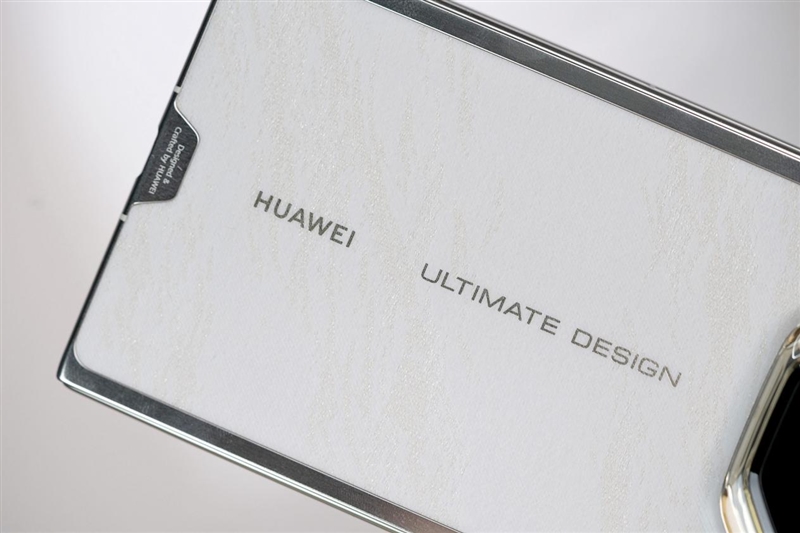
The HUAWEI Mate XT 2 Ultra takes a different approach to smartphone design with its updated tri-fold mechanism. When unfolded, the three sections combine to create a large horizontal display that feels closer to a compact tablet, while the folded form remains practical enough for everyday carrying.
The model featured in this review comes in pure white, giving the phone a clean and sophisticated appearance. Its white rear panel is complemented by a glossy metal frame, while the camera module features gold-colored accents. This combination gives the device a premium appearance consistent with Huawei’s high-end Master Series.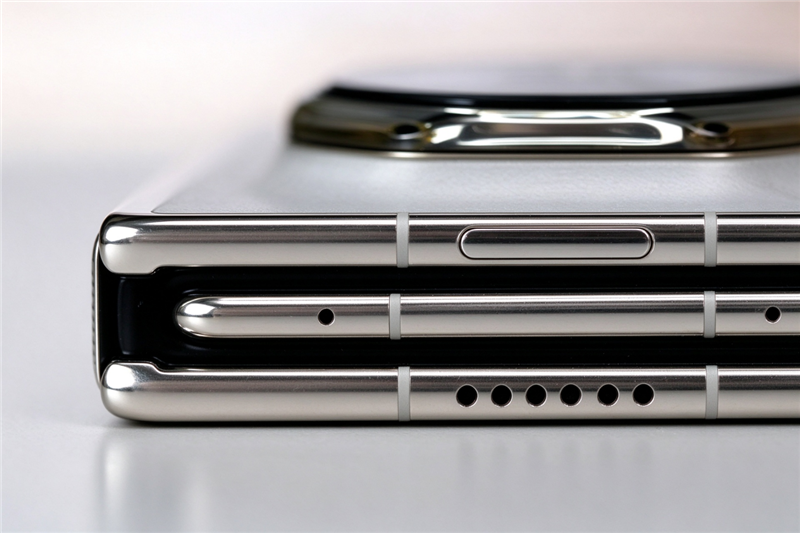
The rear panel is not completely plain. A subtle diagonal texture runs across the surface, resembling fine silk-like lines. Under certain lighting, the pattern produces a soft golden shimmer that adds visual depth without making the design look overly flashy.
The camera module is the main visual highlight on the back. Its black finish contrasts sharply with the white body, while the surrounding gold trim emphasizes the shape of the camera housing. The combination of black, white, and gold gives the phone a distinctive flagship look.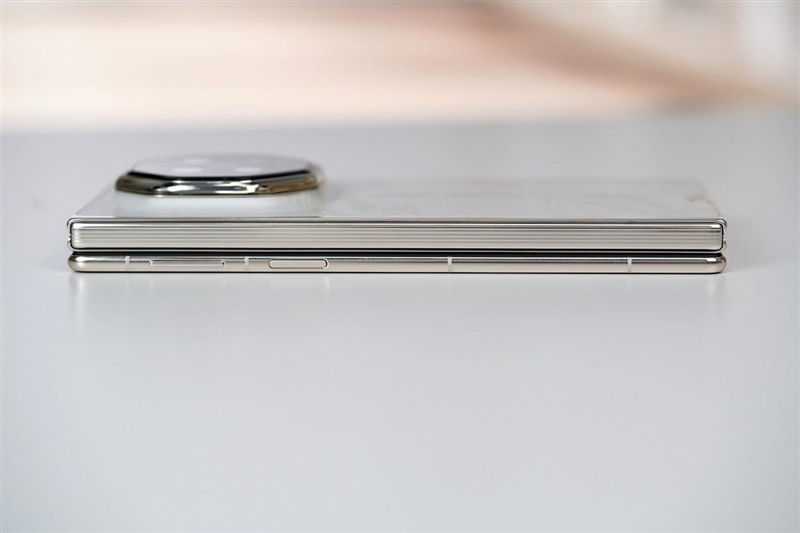
Huawei has also paid attention to the hinge area. Fine parallel lines have been incorporated into the hinge surface, creating a textured appearance that contrasts with the smoother metal frame. This small design detail helps make the folding mechanism feel more deliberately engineered rather than simply functional.
Folded and Unfolded Form
The tri-fold construction inevitably gives the phone a substantial appearance when it is closed. Three sections of the device are stacked together, and the protruding camera module adds additional thickness. From the side, the layered arrangement of the hinges, body panels, and camera housing is particularly noticeable.
However, the design changes dramatically when the phone is fully opened. The three panels align to form one large, wide display, giving the Mate XT 2 Ultra a tablet-like experience. Slim bezels allow the screen to dominate the front of the device while maintaining a relatively clean appearance.
This combination of a compact folded form and a large unfolded display is one of the main advantages of the tri-fold concept. Instead of choosing between smartphone portability and a larger screen, the Mate XT 2 Ultra attempts to offer both in a single device.
Charging and Included Adapter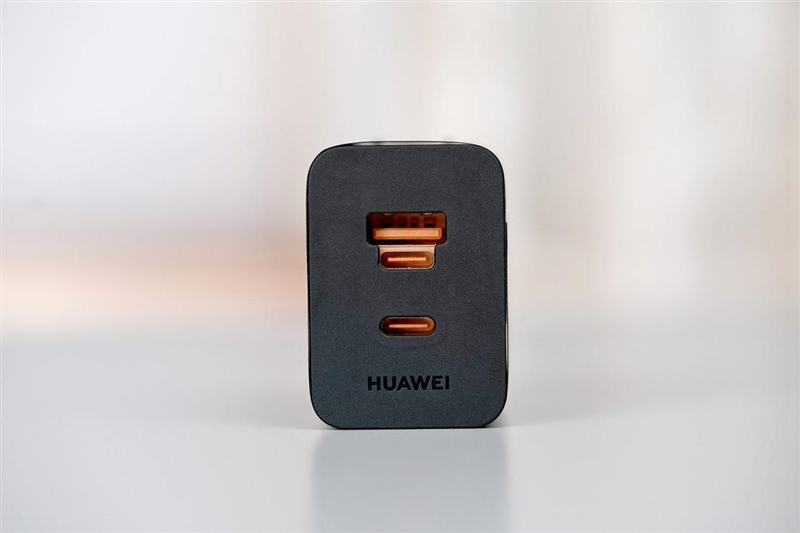
The HUAWEI Mate XT 2 Ultra supports up to 66W wired fast charging, and Huawei includes a 100W power adapter in the box.
The bundled charger features two USB-C ports and one USB-A port, making it more versatile than a conventional single-device charger. Users can charge a smartphone alongside other devices such as a tablet, laptop, or older USB-A accessories.
For travelers and users who carry multiple gadgets, having several charging ports built into one adapter can reduce the need to carry separate chargers.
Camera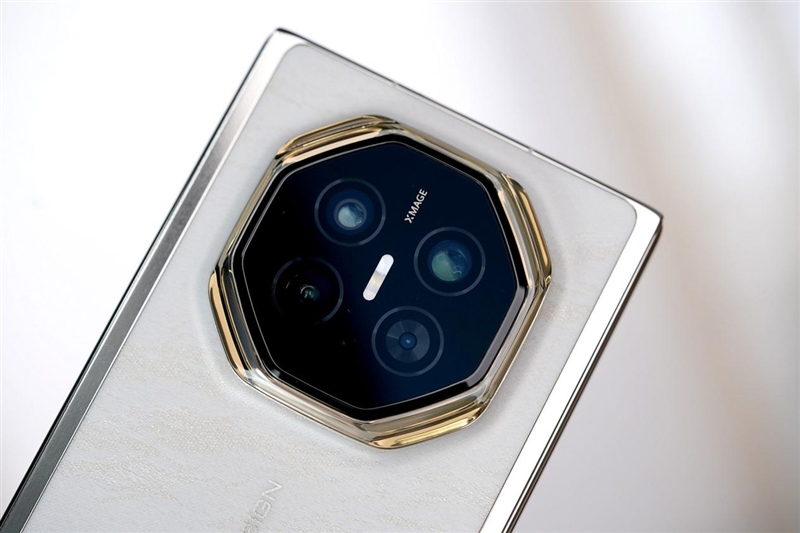
Designing a camera system for a foldable smartphone is already challenging because internal space is limited. For a tri-fold device like the Huawei Mate XT 2, the engineering challenge becomes even greater. Its two hinges and three-section body must accommodate the display, battery, cameras, and other components without making the phone excessively thick or heavy.
Instead of simply pushing for a longer telephoto range, Huawei has taken a different approach with the Mate XT 2. The biggest change is the telephoto camera, which moves from a 125mm focal length on the previous generation to approximately 84mm while gaining a higher-resolution sensor and a much wider aperture.
Huawei Mate XT 2 Telephoto Camera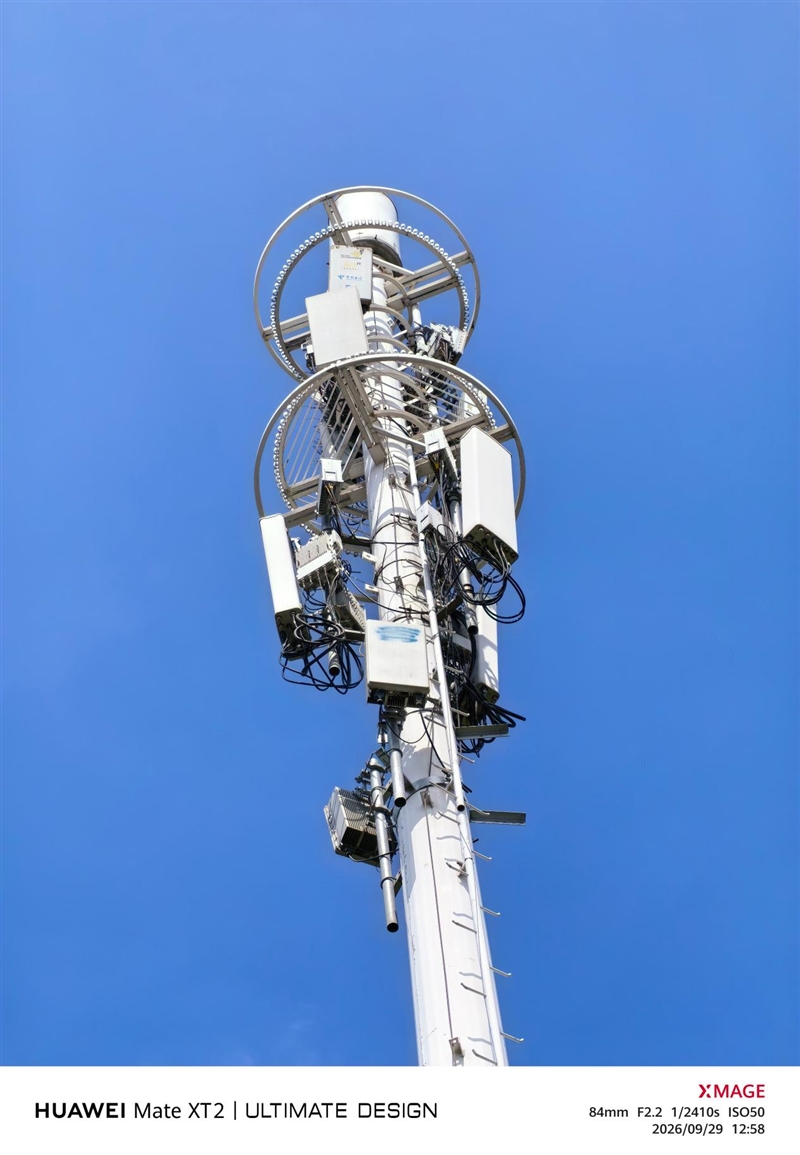
The previous Mate XTs used a 5.5x telephoto lens with a focal length of around 125mm. On the Mate XT 2, Huawei has reduced that focal length to approximately 84mm.
On paper, this may look like a step backward because a 125mm lens can capture distant subjects more effectively. However, a longer focal length is not always the most practical choice for everyday photography.
When shooting indoors or photographing people and objects on the street, a 125mm lens can produce a tight perspective. You may need to move several steps backward just to fit the subject into the frame.
The 84mm focal length provides a more flexible perspective. It is better suited to everyday subjects such as portraits, small objects, architecture, and street photography.
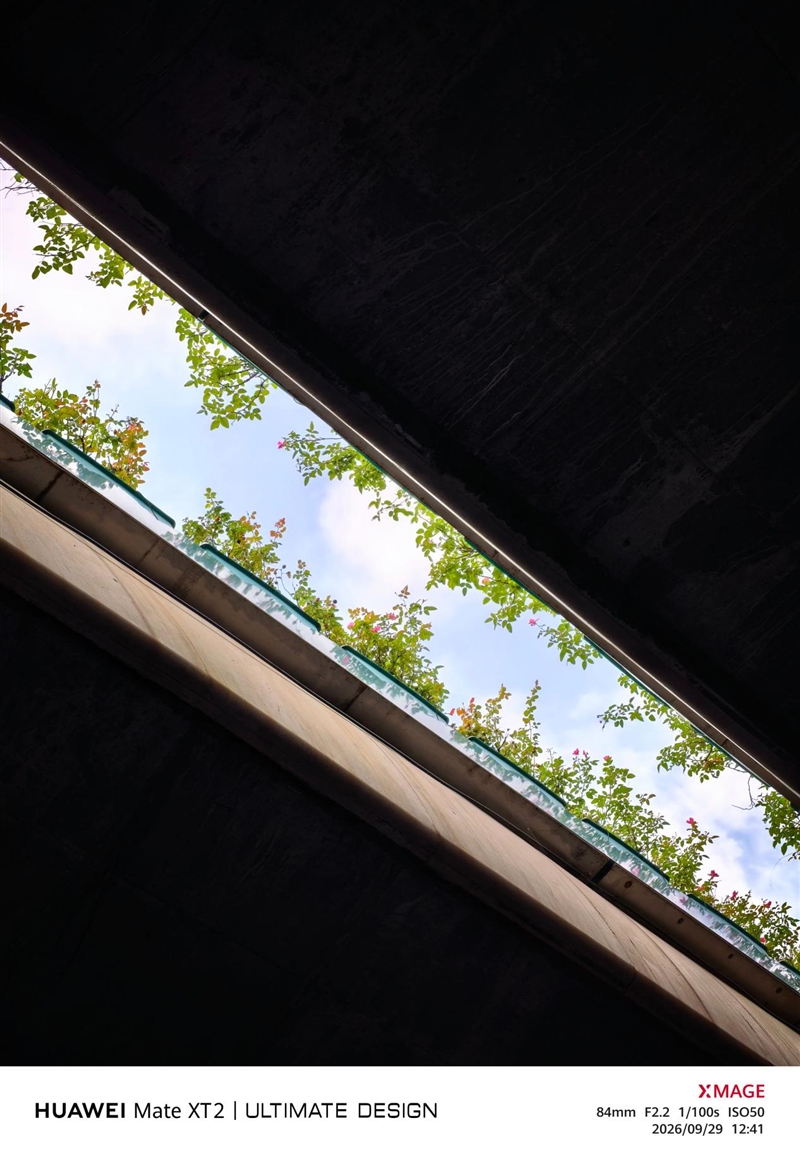
Huawei has also increased the telephoto resolution to 50MP and widened the aperture from F3.4 to F2.2. Together, these changes suggest that the company is prioritizing practical shooting flexibility and low-light performance rather than simply maximizing zoom reach.
84mm Telephoto Performance in Daylight
The benefits of the shorter telephoto focal length become clear in real-world compositions.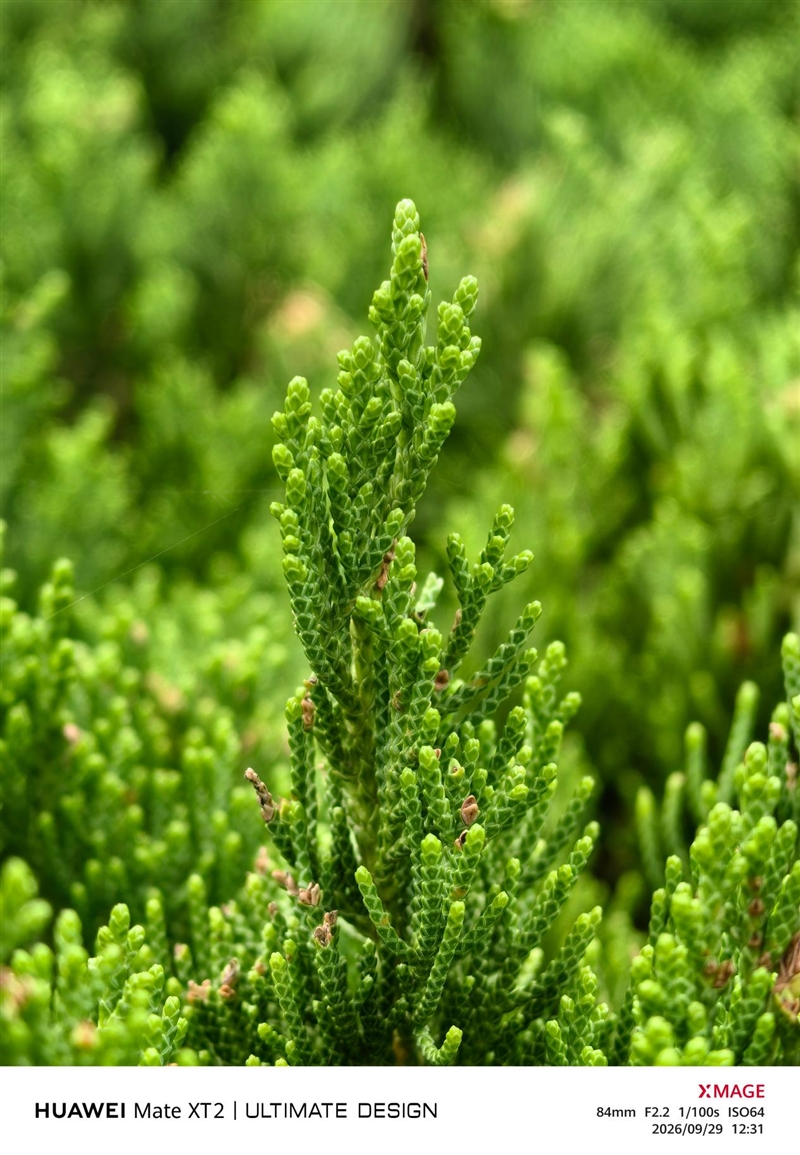
A close-up photo of a plant demonstrates how the lens can isolate a subject from a busy environment. Small branches and leaves become more prominent, while the similar colors of the foreground and background still retain enough separation. In bright conditions, the 50MP telephoto camera delivers sufficient detail and close-up performance for a tri-fold smartphone.
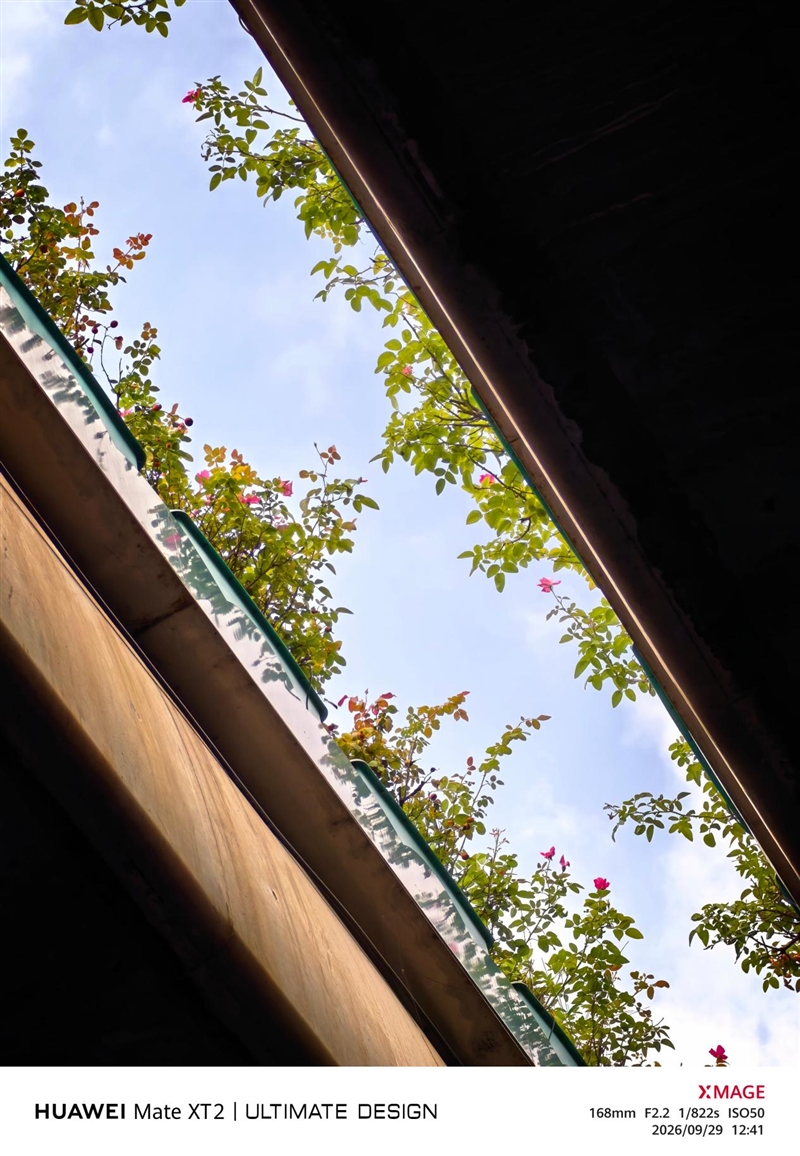
The 84mm focal length is also useful for simplifying complicated scenes. In a photo taken beneath a bridge, only a narrow section of sky appears between two darker structures. Instead of capturing a large amount of surrounding scenery, the telephoto camera narrows the composition and turns a small overlooked area into the main subject.
The same advantage can be seen when photographing a subject from a higher viewpoint. The main camera may include a large amount of surrounding environment, while the telephoto lens concentrates attention on the subject and uses the open sky as a cleaner background.
At 168mm, or 7x zoom, the framing becomes even tighter. Objects that would normally appear as small details within the environment can be isolated as individual subjects. Leaves, branches, flowers, and other distant elements become much more prominent in the frame.
Main Camer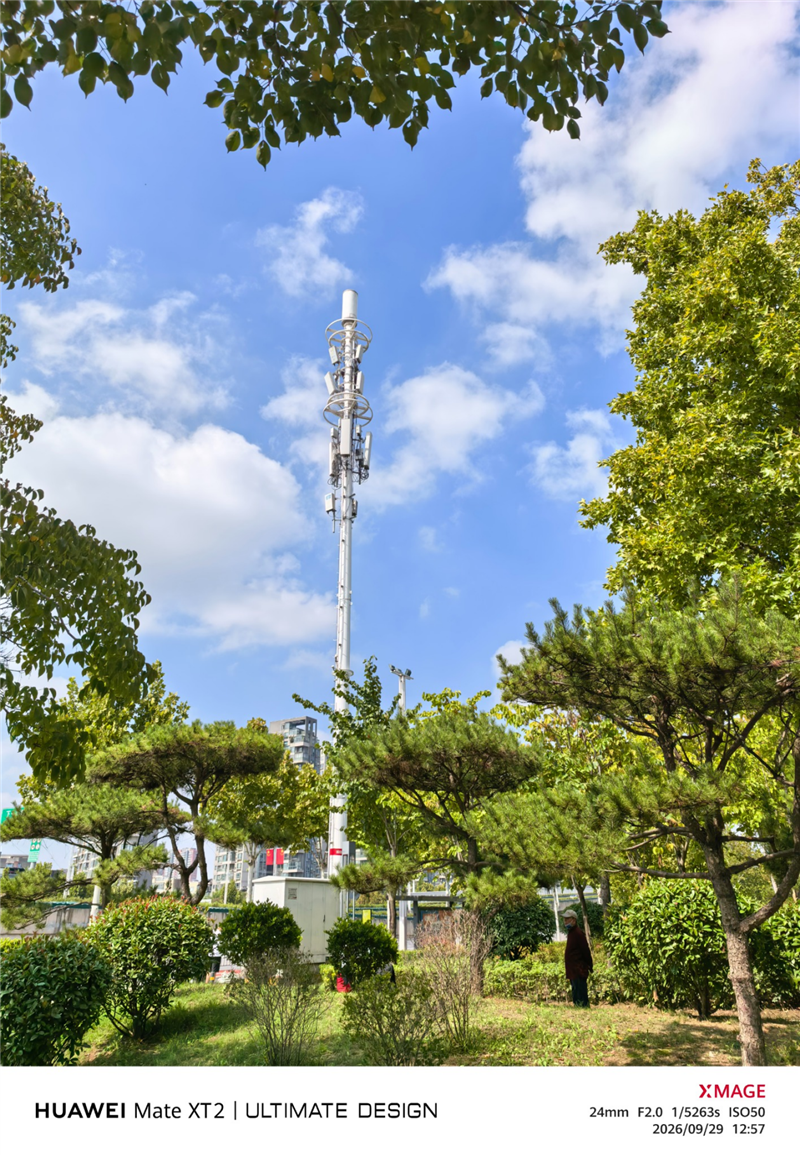
The Huawei Mate XT 2 Master Edition’s main camera uses a 24mm perspective that is better suited to everyday photography and wider scenes. With this camera, image quality depends not only on detail but also on brightness, color reproduction, and overall tonal balance.
In one sample scene containing the sky, buildings, trees, and water, the camera handles the different brightness levels reasonably well. Highlights in the clouds remain controlled, while the contrast between the building’s glass surfaces and surrounding shadows is maintained.
The greenery appears somewhat more saturated than natural, but reflections in the water remain recognizable despite the movement of the surface. Overall resolution is also sufficient for this type of landscape photography.
Another daylight example shows a silver-white communication structure against a bright sky. Its edges and supporting structure remain clearly defined. However, some green areas appear overly vibrant, particularly leaves exposed directly to sunlight.
Importantly, the darker portions of the scene have not been aggressively brightened. This helps preserve the natural contrast associated with a bright outdoor environment.
13mm Ultra-Wide Camera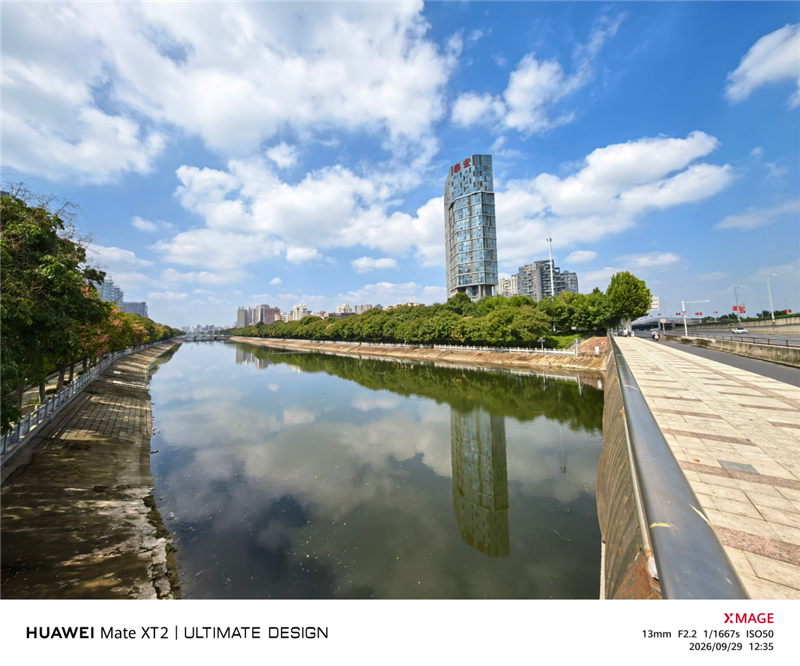
For larger scenes, the Huawei Mate XT 2 Master Edition can switch to an ultra-wide 13mm focal length.
A river scene photographed at 13mm captures the surrounding buildings, sky, water, and both riverbanks without obvious distortion at the edges. Building lines remain relatively straight, which helps the image maintain a natural appearance despite the extremely wide perspective.
The ultra-wide camera also performs well in more demanding high-contrast environments. Under a bridge, large areas are covered by shadow, yet concrete textures, structural details, and reflections on the ground remain visible.
The HDR processing appears relatively restrained rather than aggressively lifting every dark area. As a result, the underside of the bridge retains a more natural appearance instead of becoming excessively gray.
Color Performance and Night Photography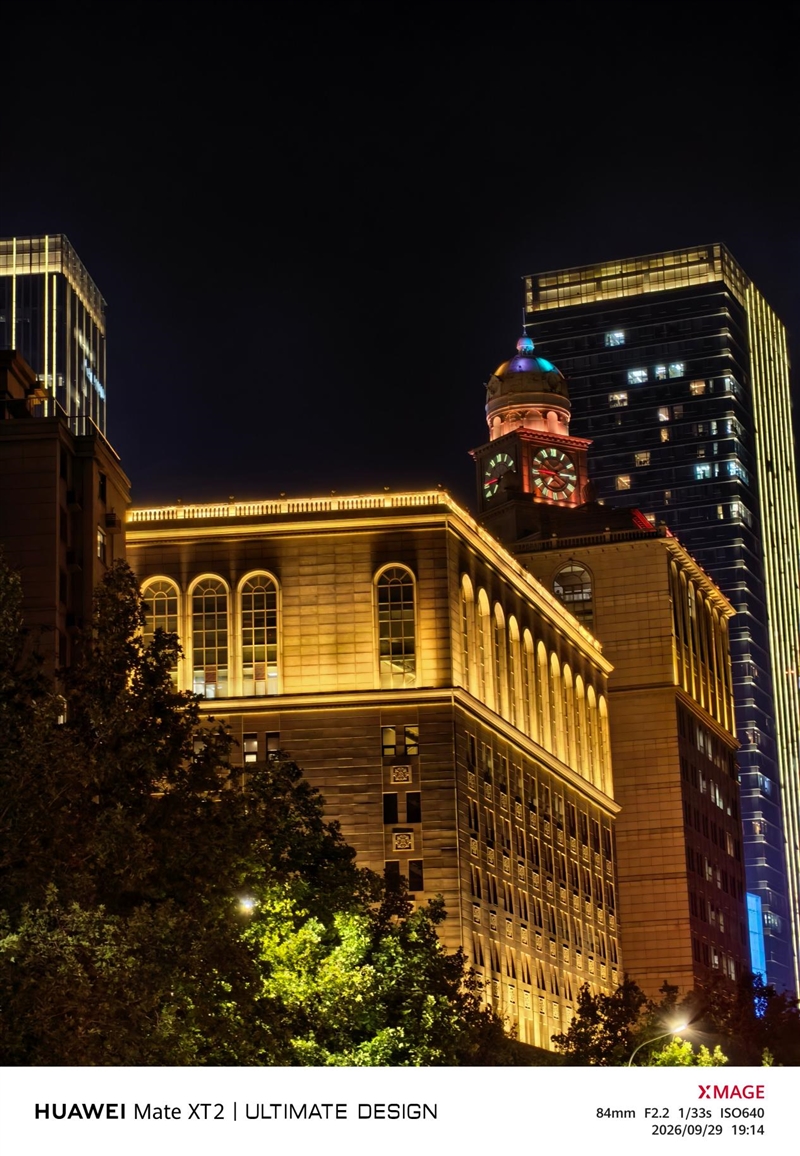
Huawei’s third-generation Red Maple Image system also contributes to the Mate XT 2’s color processing. In a flower photograph containing highly saturated pink and purple tones, the camera preserves the texture of the petals while maintaining clear separation between the flowers and green background.
Night photography is another area where the new 84mm telephoto camera should have an advantage. Its F2.2 aperture allows more light to reach the sensor than the previous F3.4 design.
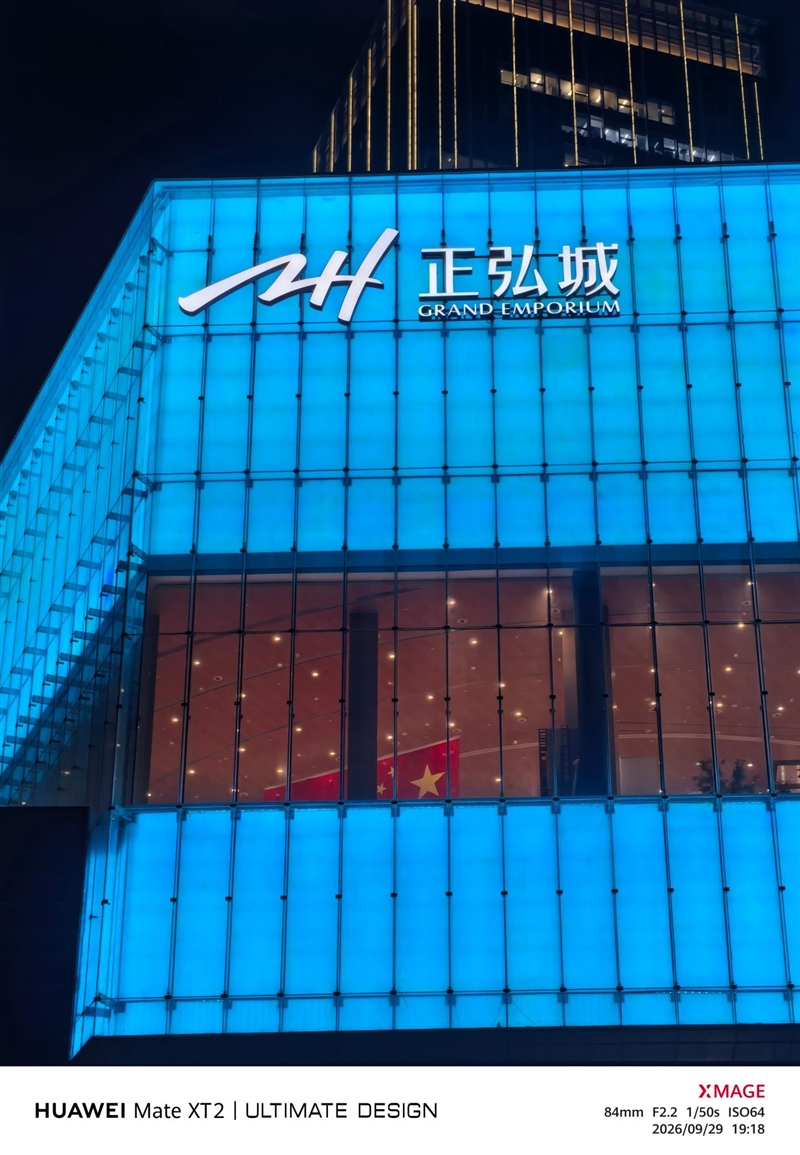
In a night scene, details such as leaves, brick walls, and window frames remain relatively well preserved. Rather than dramatically lifting all dark areas, the camera maintains visible differences between illuminated sections and surrounding shadows.
System Experience
The Huawei Mate XT 2 runs HarmonyOS 7, with the software interface redesigned to take better advantage of its tri-fold form factor. The layout automatically adapts to the phone’s configuration, whether it is being used as a single-screen device, opened into a dual-screen layout, or fully unfolded into a three-screen workspace.
Multitasking and Productivity
The larger display is particularly useful for productivity. Apps such as WPS have been optimized for the expanded screen and adopt a more desktop-like interface when the Mate XT 2 is fully unfolded. This reduces the need to constantly switch between pages and makes working with documents more comfortable on the larger display.
Multitasking is another strong point. The Mate XT 2 can run three windows simultaneously, allowing users to handle multiple tasks without repeatedly opening and closing applications. The system even provides independent volume controls for different video windows, which is useful when playing multiple media sources at the same time.
Privacy on the Large Foldable Display
A larger screen also creates a practical privacy concern. When the Huawei Mate XT 2 Master Edition is fully unfolded in places such as trains or airplanes, nearby passengers may have a clear view of the content displayed on its 10.2-inch screen.
The review unit uses the Lingdun privacy screen version, which integrates hardware-level privacy protection into the inner display. This is particularly useful for people who frequently work with sensitive information while traveling or in other crowded environments.
Privacy mode can be enabled through the Control Center or activated quickly by double-tapping the back of the device. Once enabled, the viewing angle becomes significantly narrower, making the content difficult to see from the side while keeping the display largely readable when viewed directly.
Built-In ECG Monitoring
The Mate XT 2 also includes a built-in ECG heart-rate monitoring feature. To use it, fully unfold the phone and place your hands on the electrodes located on both sides of the device. The phone can then begin recording an ECG without requiring an additional accessory.
After the measurement is complete, the ECG report can automatically synchronize with Huawei Health and can also be exported directly. For frequent travelers or users who want convenient access to basic heart-monitoring information, having the sensors integrated into the phone adds another practical function to the device.
Overall, HarmonyOS 7 makes good use of the Mate XT 2’s unusual three-screen design. The adaptive interface, multi-window support, privacy display, and built-in health features help turn the tri-fold form factor into more than just a larger screen.
Battery Life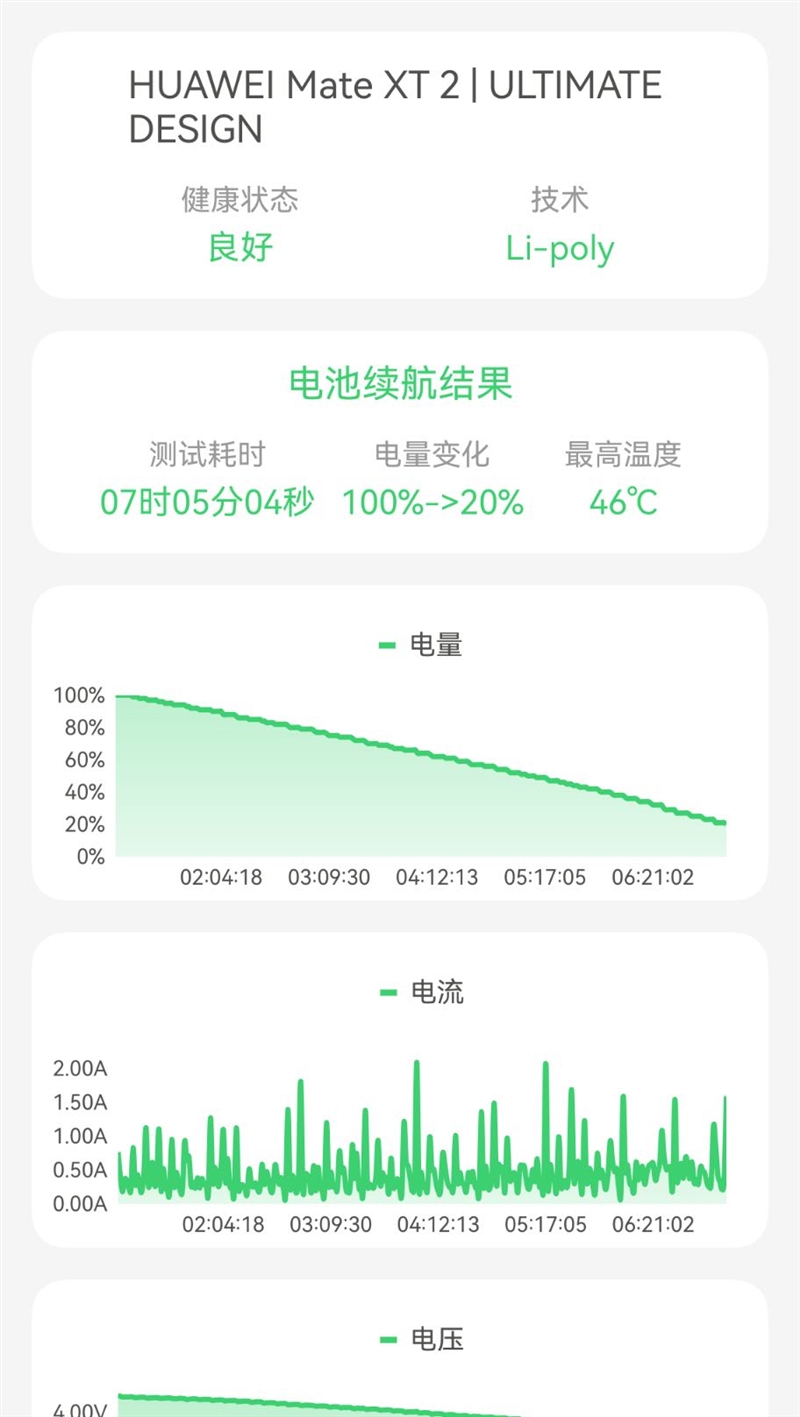
The HUAWEI Mate XT 2 features a 5600mAh battery. While the capacity may not appear particularly large compared with some flagship smartphones, it reflects Huawei’s effort to balance battery endurance with the phone’s exceptionally slim and lightweight tri-fold design.
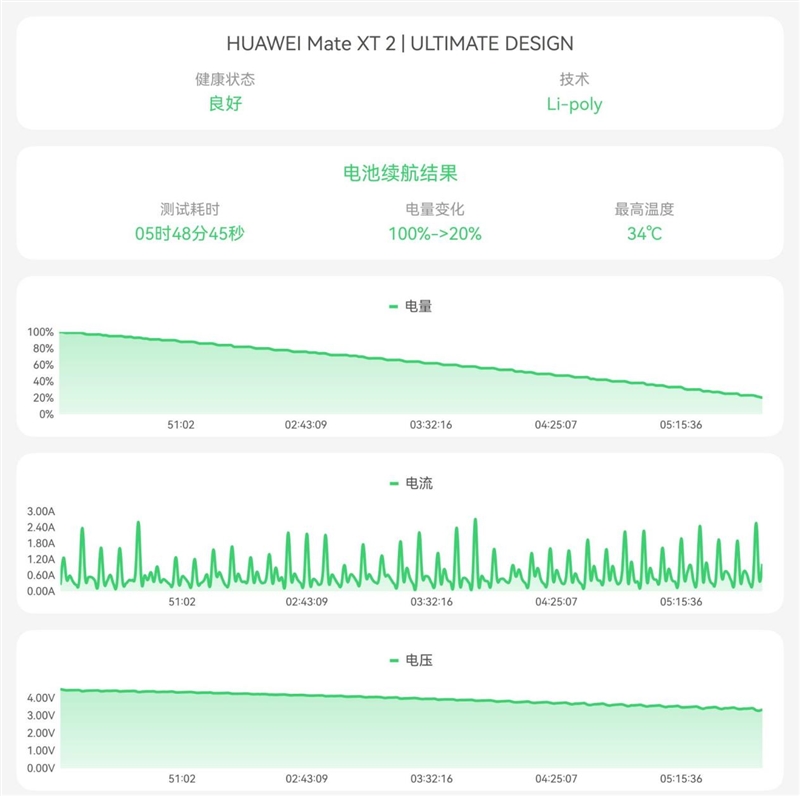
To evaluate real-world endurance, we tested the Mate XT 2 in two configurations: fully unfolded with the inner display active and folded with the outer display in use. Both tests were conducted with BatteryDog, a comprehensive battery-testing tool from Fast Technology. For consistency, screen brightness was fixed at 50%, automatic brightness was disabled, and volume was set to 30%.
Battery Life with the 10.2-Inch Inner Display
With the Mate XT 2 fully unfolded and using its 10.2-inch inner display, the phone lasted 5 hours, 48 minutes, and 45 seconds, dropping from 100% to 20% battery.
This result shows that the larger unfolded display has a noticeable impact on power consumption, which is expected given its much larger screen area.
Battery Life with the Outer Display
When the phone was folded and tested with the external display under the same conditions, endurance increased to 7 hours, 5 minutes, and 4 seconds from 100% to 20%.
Compared with the fully unfolded configuration, the outer display delivered an additional 1 hour, 16 minutes, and 19 seconds of battery life. This makes the folded configuration more suitable when longer endurance is a priority.
Huawei Mate XT 2 Charging Test
We also tested the charging performance starting at 20% battery. The Mate XT 2 reached 30% after 5 minutes and 40% after 10 minutes, maintaining a strong charging rate during the early stage.
After 30 minutes, the battery reached 80%. Charging became slower as the battery level approached full capacity, reaching 93% after 40 minutes.
The complete charge from 20% to 100% took 50 minutes. Overall, the first 30 minutes provided the fastest charging performance, making the charging system particularly useful when you need a quick boost before heading out.
The Mate XT 2’s 5600mAh battery is not simply about capacity. Huawei appears to have prioritized a practical balance between endurance, portability, and the physical constraints of a tri-fold smartphone. Battery life varies significantly depending on whether the large 10.2-inch inner display or the smaller outer display is used, while the 20% to 100% charging test shows that most of the battery can be restored relatively quickly.
Tri-fold smartphones have long walked the line between engineering showcase and real-world utility. After extensive multi-scenario testing, the Huawei Mate XT 2 Master Edition proves that ultra-large screen portability is ready for prime time.
Verdict
Instead of carrying over the familiar Z-shaped folding layout of the first generation, Huawei opted for a balanced double-folding “wing” mechanism accompanied by a dedicated external cover screen.
This mechanical shift drastically simplifies the device’s operational logic:
-
Folded Mode: The phone handles like a standard candybar handset, letting you comfortably conduct one-handed tasks such as quick messaging, browsing, and mobile payments.
-
Unfolded Mode: Opening the device reveals an expansive 10.2-inch internal workspace designed for document multitasking, side-by-side app concurrency, and immersive media playback.
By decoupling everyday interactions from the main display, the 10.2-inch canvas is called upon only when an expanded layout is truly needed.
Build
Large foldables typically struggle with uneven weight distribution and excessive bulk. The Mate XT 2 addresses this by pairing the second-generation Tiangong hinge with an updated Xuanwu internal framework, bringing the total weight down to 299g and eliminating top-heavy strain. Structural durability is further reinforced by an IP58/IP59 dust and water resistance rating, establishing a new reliability baseline for multi-hinge form factors.
Flagship Hardware and Performance
Under the hood, the Kirin 9050 Pro chip delivers low-latency system scheduling tailored for seamless multi-window layouts and rapid display-mode transitions on HarmonyOS 7.0.
| Specification | Hardware Feature |
| SoC | Kirin 9050 Pro |
| Display | Dual LTPO panels (Internal 10.2″ & External Cover) |
| Camera Suite | Full RYYB quad array (Variable-aperture main + Dual OIS telephoto) |
| Battery & Charging | 5600mAh capacity; 66W wired + 50W wireless fast charging |
| Connectivity & Health | Tiantong satellite calling, Beidou two-way messaging, integrated ECG |
Both display surfaces utilize adaptive LTPO tech to balance refresh-rate fluidity with eye comfort. On the imaging front, the quad-lens setup maintains Huawei’s classic color rendition and low-light exposure control.
Subtle hinge creases and the natural battery draw of an expansive 10.2-inch panel remain engineering trade-offs inherent to the tri-fold segment. However, the Huawei Mate XT 2 Master Edition closes the gap between prototype tech and effortless daily carry. For enterprise users who rely on on-the-go productivity, demand top-tier communication and imaging, and have no budget constraints, this device stands out as an exceptional productivity powerhouse.
Read Also: Huawei MatePad Mini 2 Leak: 5G, 12GB RAM and What We Know So Far