










Transparent editions have always marked pivotal milestones in Xiaomi’s design history. The Xiaomi 8 Transparent Edition, 9 Transparent Premium Edition, and 10 Ultra Commemorative Edition spearheaded the brand’s push into premium hardware. Back then, exposed internal aesthetics captured Xiaomi’s pure enthusiast DNA, flaunting early in-screen fingerprint readers, 3D structured light, and bleeding-edge camera modules.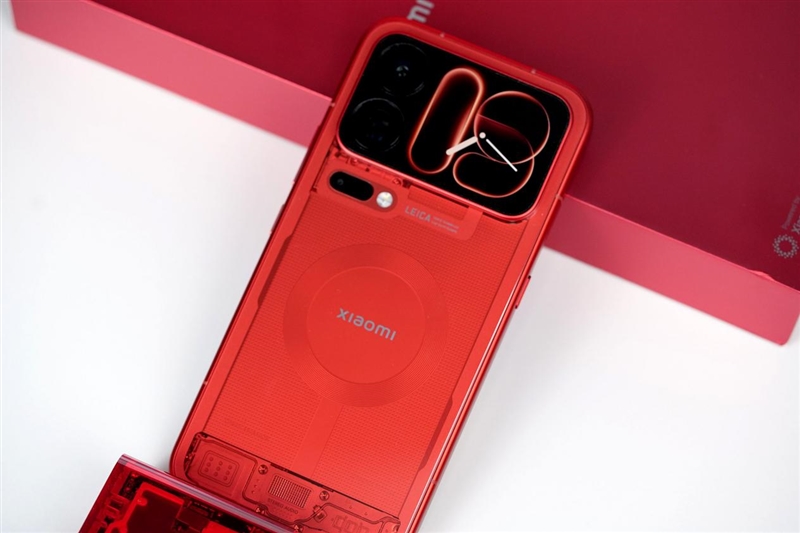
With the Xiaomi 18 Pro Max Transparent Edition, that enthusiast heritage returns in mature form. By merging the functional secondary back screen introduced on its predecessor with a refined transparent aesthetic, a massive 8,500mAh silicon-carbon cell, and an advanced 200MP dual-camera pipeline, the 18 Pro Max moves beyond novelty into a polished, distinct flagship.
Xiaomi 18 Pro Max Transparent Edition Technical Specs Overview
| Component | Specification |
| Main Display | 6.9-inch SuperPixel 2.0 AMOLED, BT.2020 color gamut, 0.99mm uniform bezels |
| Rear Display | Secondary AMOLED Magic Screen, 400 PPI, 4,000 nits peak brightness, high refresh rate |
| Processor | Qualcomm Snapdragon 8 Ultra (6th Gen, 2nm node, Oryon CPU up to 5.0GHz) |
| Cooling & Packaging | OFFSET high-thermal conductivity layout + Ring-Shaped Cold Pump |
| Primary Camera | 200MP, 1/1.28-inch LOFIC sensor, 16.2EV single-frame dynamic range |
| Telephoto Camera | 200MP, 75mm periscope telephoto, floating lens group, 12cm macro focus |
| Battery & Charging | 8,500mAh battery, 100W wired, 50W wireless, 100W USB-PPS support |
| Security & Privacy | Directional hardware-level micro-louver display privacy, dedicated AI physical button |
Design and Display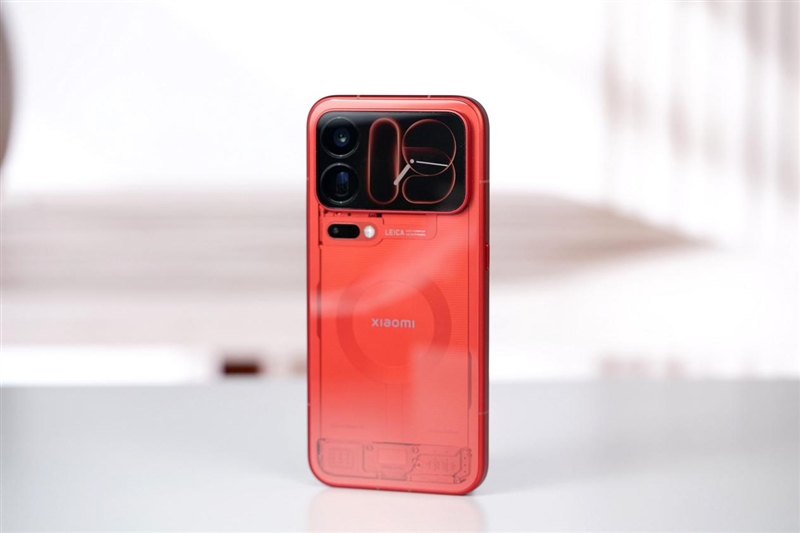
The unboxing sets an immediate tone: the packaging, braided cable, and 100W power brick all arrive in a striking, uniform red. Even the power brick casing adopts a semi-transparent housing.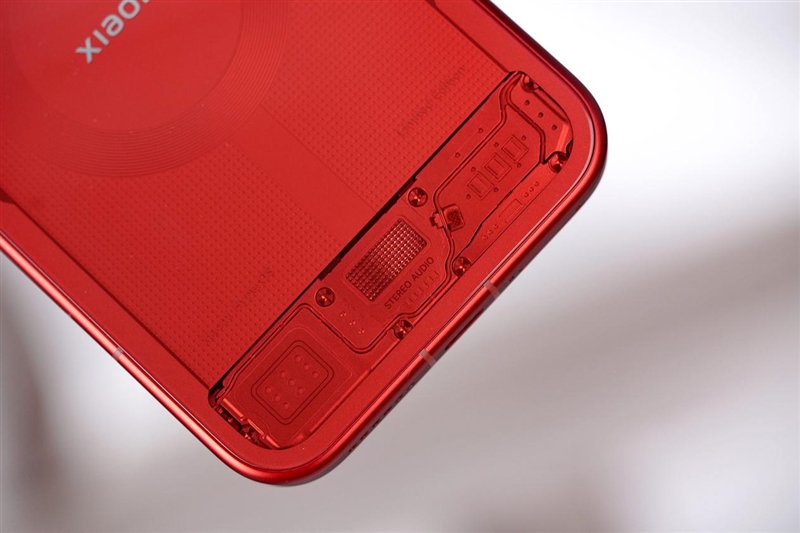
The phone’s rear glass features a deep, saturated crimson tone tempered by transparency. Unlike early transparent flagships that exposed busy faux motherboards, the 18 Pro Max displays deliberate industrial design. The centerpiece is an exposed wireless charging induction coil highlighted by concentric micro-dot matrix patterns and a clean Xiaomi emblem. Beneath the coil, real fasteners, shielding mesh, ribbon interconnects, and modular brackets sit within geometric sections.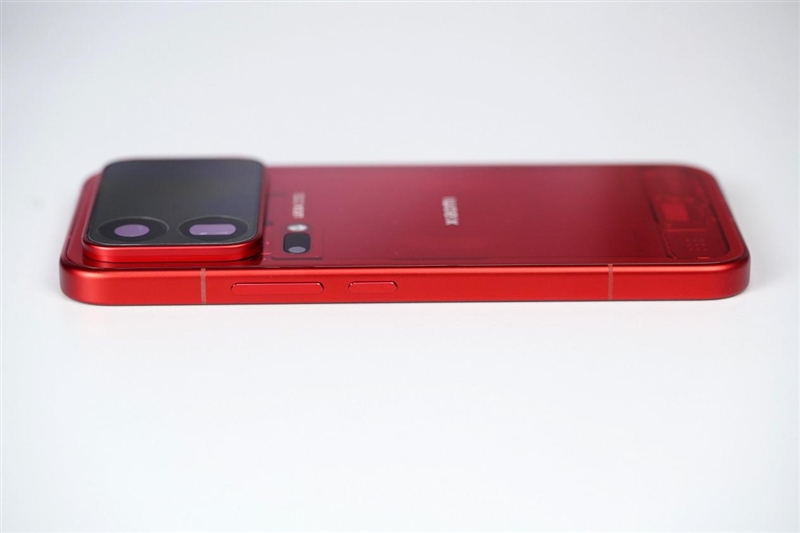
The rear camera deck has been flattened considerably. The dual 200MP sensors sit flush inside the secondary display window, virtually eliminating the deep step-gaps that accumulated dust on older iterations.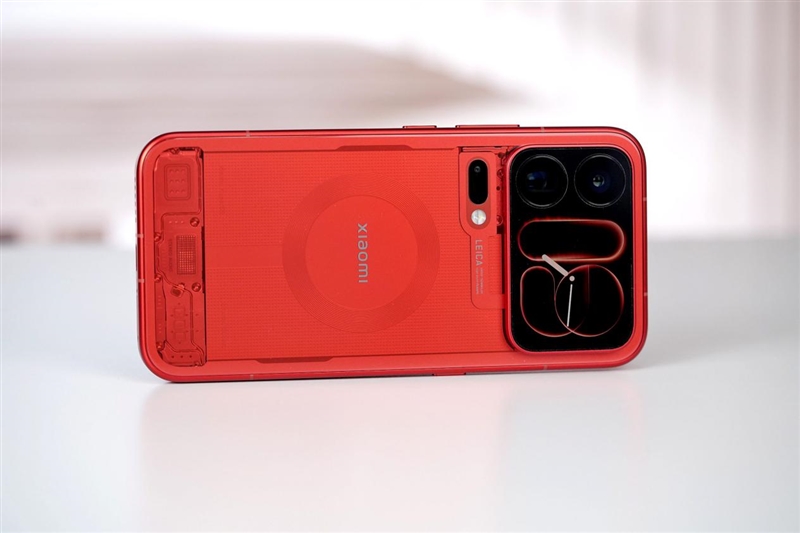
Up front, the 6.9-inch flat AMOLED panel achieves a 94%+ screen-to-body ratio thanks to symmetrical 0.99mm borders. Generous corner radii blend seamlessly into the aluminum mid-frame, visually minimizing the phone’s footprint despite its expansive diagonal dimension.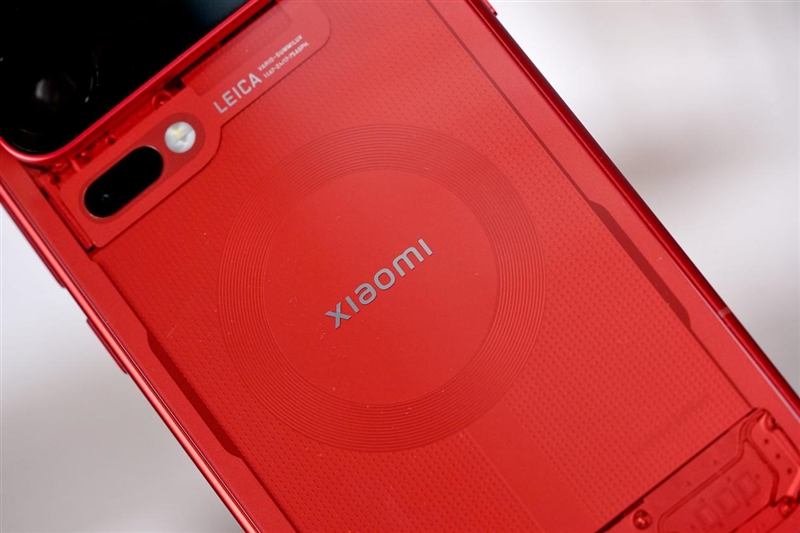
On the left chassis rail sits a customizable physical AI key. It handles short and long presses to trigger system-wide privacy mode, launch on-device transcription, mute audio, or bring up the Xiao AI voice interface.
Secondary AMOLED Display and Hardware-Level Anti-Peeping
Practical Utility via the Rear “Light App Center”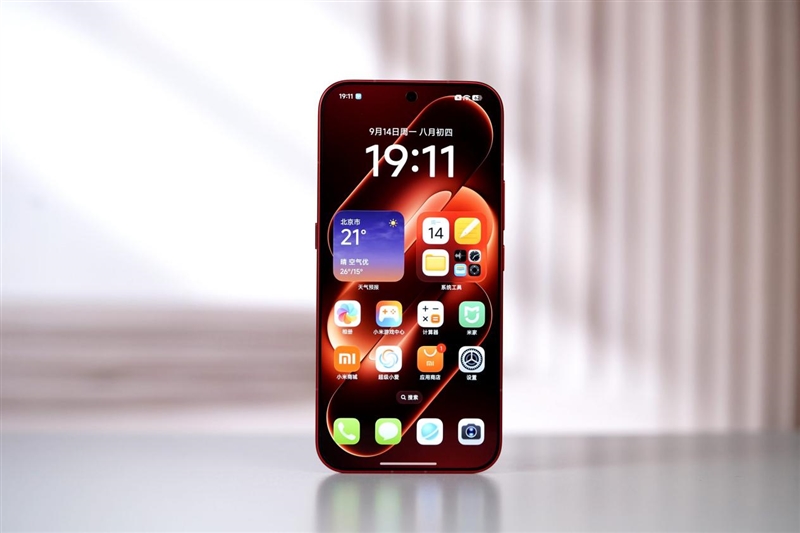
The secondary rear AMOLED is no longer a passive notification window. Sporting 400 PPI, 4,000 nits peak brightness, and fluid touch response, it functions as a standalone micro-interface. Swiping up brings up the Light App Center for rapid interactions:
- Checking transit and calendar cards
- Media playback toggles
- Live countdown timers
- Smart home toggles via the Mi Home ecosystem
- Vehicle status and digital key controls for the Xiaomi EV platform
Beyond pre-configured widgets, the interface integrates natural-language micro-app compilation. Users can prompt the assistant to generate custom interactive countdowns, pet-feeding cards, or workout rest timers that live directly on the secondary display without running heavy application stacks.
Directional Pixel Light Control
Screen privacy moves from polarizing stick-on filters to the active display layer. Microstructures embedded within the 6.9-inch front panel control lateral light output. In standard operation, full subpixel dispersion ensures wide viewing angles.
Engaging hardware privacy disables the wide-dispersion sub-elements:
-
Lateral luminance at 45-degree off-axis angles drops below 3%, rendering on-screen text unreadable to bystanders.
-
The feature can be mapped directly to the physical AI key for immediate activation on mass transit or in cafes.
-
Automated trigger rules enable geofenced protection, activating privacy mode upon disconnecting from trusted home Wi-Fi networks.
Camera System
200MP Main Camera with LOFIC Architecture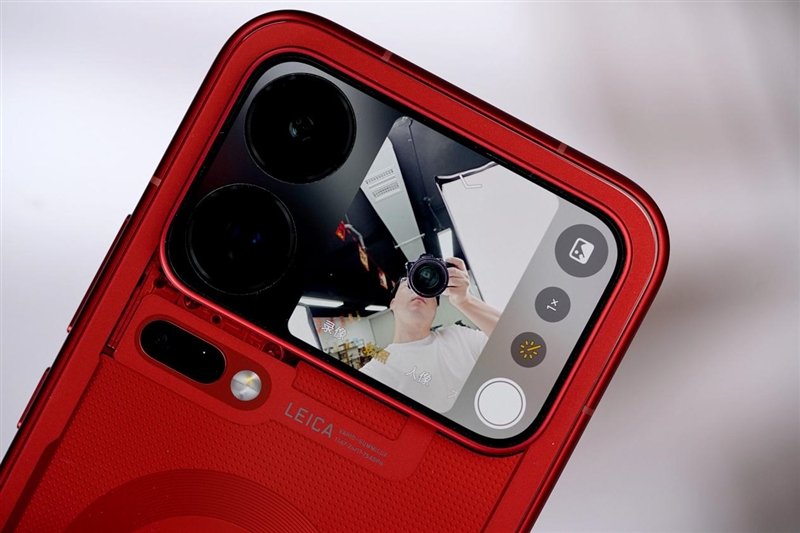
The primary shooter pairs a 200MP 1/1.28-inch sensor with Lateral Overflow Integration Capacitor (LOFIC) technology. Rather than relying entirely on aggressive multi-frame exposure merging that flattens highlights, each individual pixel routes excess charge into an auxiliary capacitor before saturation occurs.
This yields an intrinsic single-frame dynamic range of 16.2EV. In harsh twilight or backlit urban compositions, skies retain cloud textures and gradual color gradients without blowing out to pure white, while shadowed foliage and water reflections retain depth instead of being artificially over-brightened by aggressive tone mapping.
75mm Floating-Element Periscope Telephoto
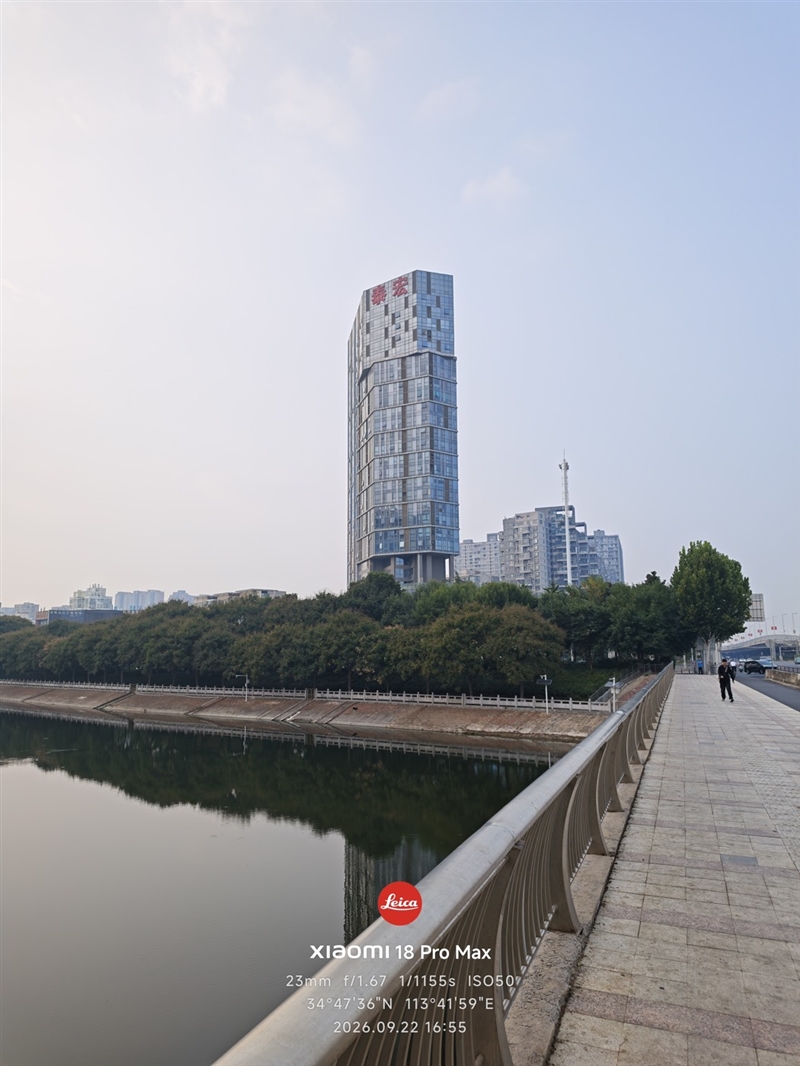
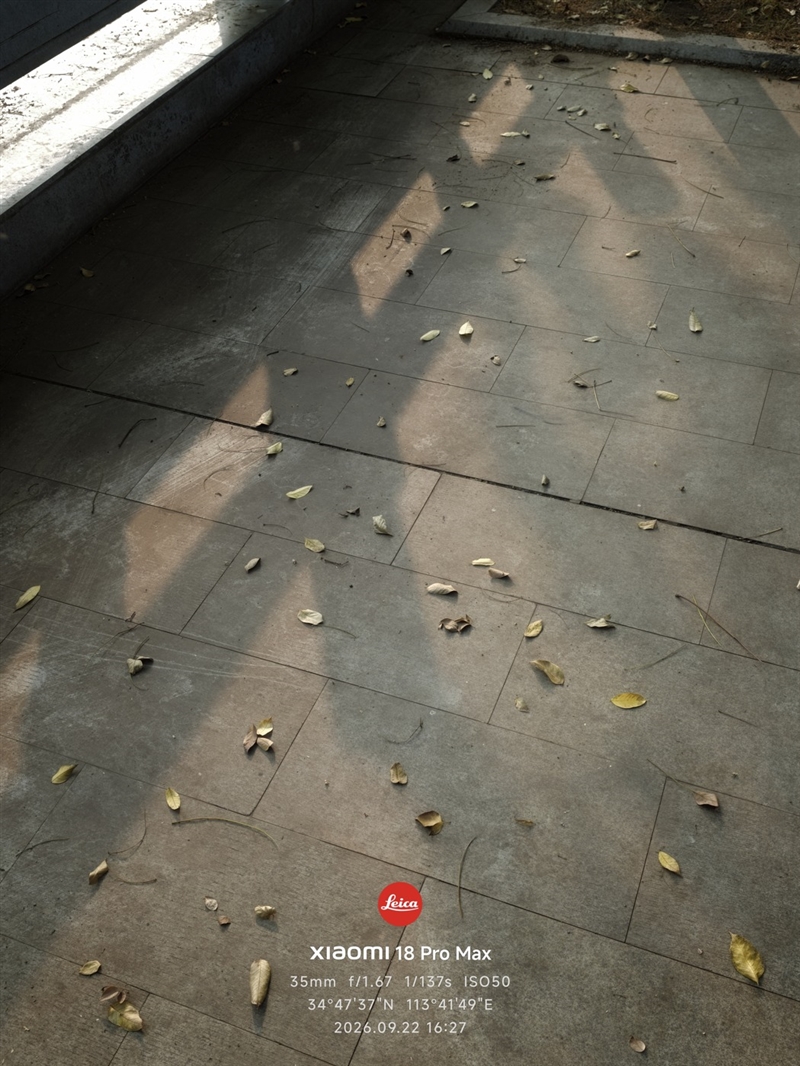
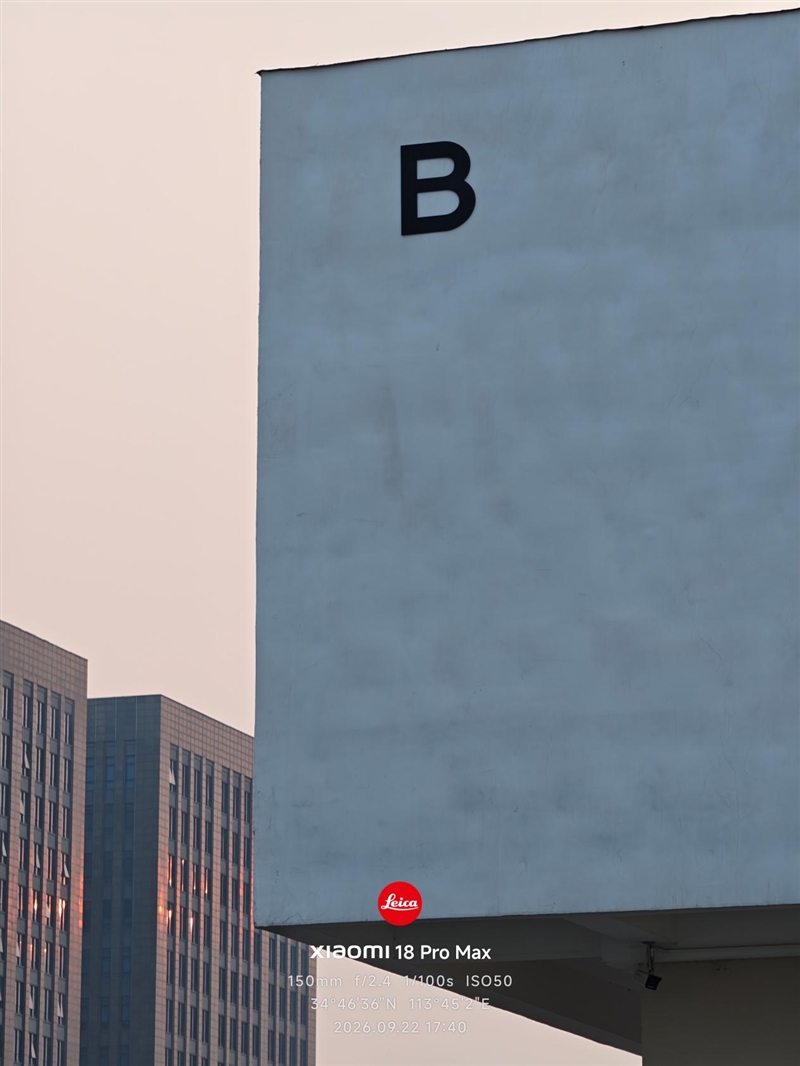


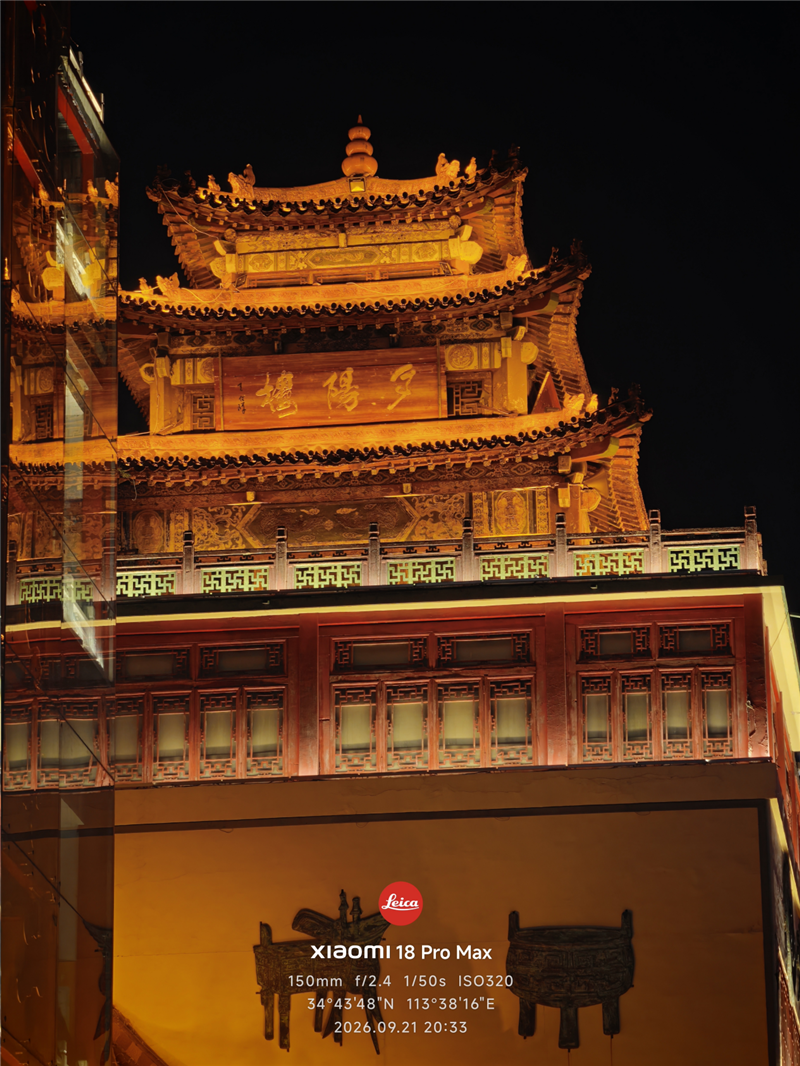
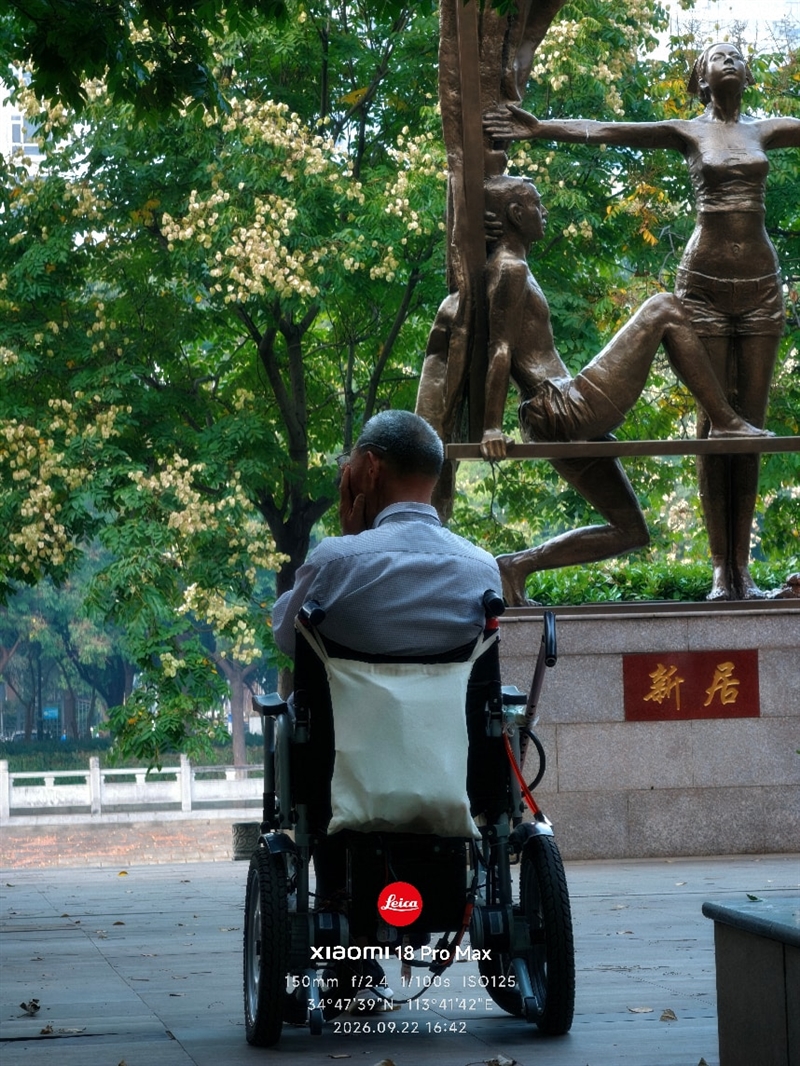
The companion 200MP periscope telephoto relies on a classic 75mm portrait focal length. By incorporating a floating internal group, the lens drops its minimum focusing distance down to 12cm, serving dual duties as an isolated portrait shooter and a close-up telephoto macro tool. The wide aperture configuration pulls in ample light, keeping night-time telephoto captures sharp with low sensor noise.
Imaging Modes: Primary Color, Color Palette, and “Legendary Moment”
Alongside standard Leica Authentic and Leica Vibrant looks, Xiaomi debuts an independent “Primary Color” rendering engine. This profile strips out cinematic color grading to deliver neutral white balances and unmanipulated tonal distributions. Users can adjust highlights, grain intensity, shadows, and color temperature inside an expanded Color Palette suite, which exports custom profile presets via shareable QR codes.
For analog enthusiasts, the “Legendary Moment” mode passes multi-frame RAW exposures to an on-device neural network, accurately emulating the highlight halation, organic grain, and tonal curves of classic monochrome emulsions and legacy CCD sensors across 35mm and 75mm focal lengths.
Video Capabilities
-
Full focal-range 4K capture at 60fps in Dolby Vision.
-
Open Gate sensor readout across the full 4:3/16:9 canvas, letting creators re-frame footage horizontally or vertically for multiple platforms in post-production without severe resolution loss.
-
AI framing guides that suggest composition adjustments, leading lines, and portrait poses in real time.
Hardware and Gaming Benchmarks
Under the hood, the device runs the Qualcomm Snapdragon 8 Ultra fabricated on a 2nm node. Its 2+6 Oryon CPU cluster reaches clock speeds up to 5.0GHz.
To prevent thermal build-up across prolonged gaming, Xiaomi replaced traditional package-on-package memory stacking with an OFFSET layout. Moving the RAM off the direct thermal path of the SoC allows the processor dies to interface directly with an upgraded Loop LiquidCool closed-loop vapor-liquid pump.
Gaming Performance Data
-
Honor of Kings (120 FPS Target):
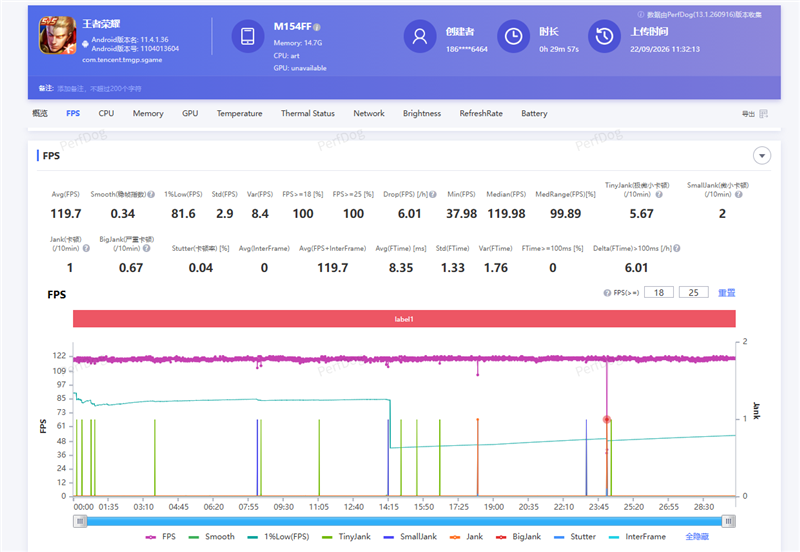
- Average Frame Rate: 119.7 FPS
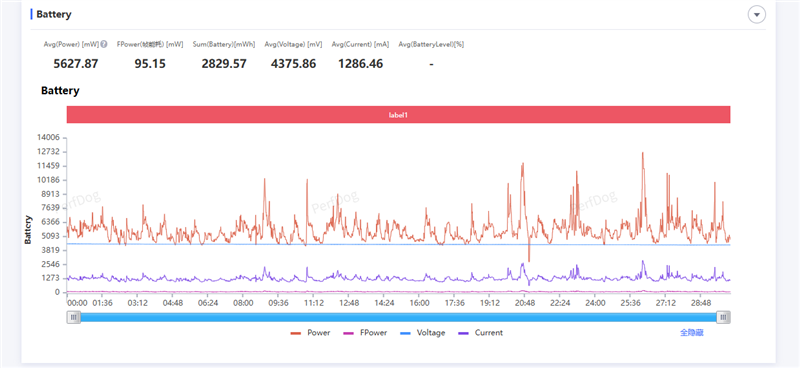
- Average Power Consumption: 3.49 Watts
- Peak Surface Temperature: 37.1°C (balanced heat spreading across chassis rails)
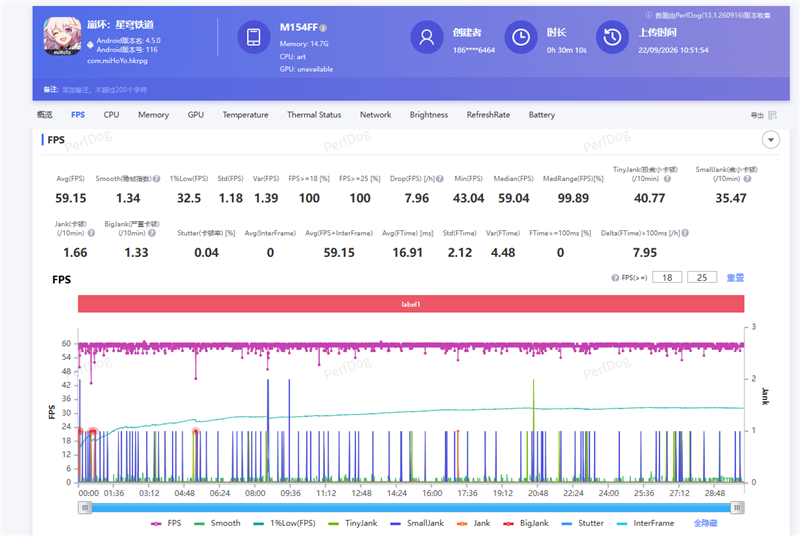
- Honkai: Star Rail (60 FPS Max Settings):
- Average Frame Rate: 59.15 FPS
- Average Power Draw: 5.63 Watts
-
Thermal Behavior: Consistent frame-pacing without thermal throttling drops. Heat transfers efficiently upward away from hand-contact points.
-
Battery Endurance and Charging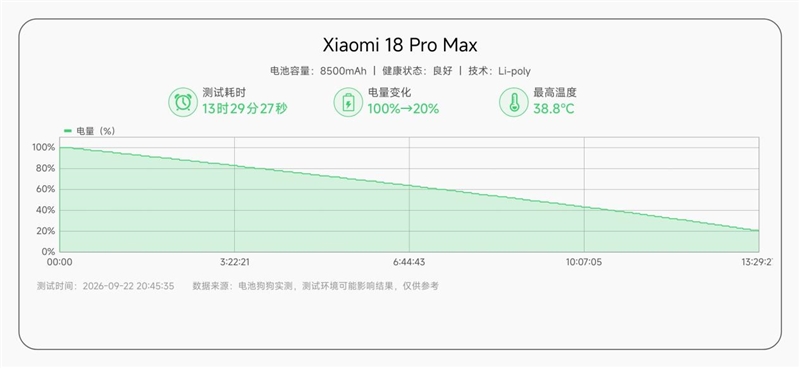
Battery capacity reaches 8,500mAh via a high-density dual-cell Jinshajiang pack without inflating chassis thickness beyond standard flagship dimensions.
BatteryDog Standard Discharge Benchmark
-
Test Parameters: Fixed 50% display brightness, auto-brightness disabled, 30% volume.
-
100% to 20% Run Time: 13 hours, 29 minutes, 27 seconds (Peak surface temperature: 38.8°C).
-
Projected Total Runtime (100% to 0%): Approximately 16 hours and 52 minutes of continuous screen-on activity.
Under heavy daily routines spanning 5G connectivity, mobile photography, and navigation, the 8,500mAh cell easily delivers full two-day endurance for moderate users.
Charging Speeds
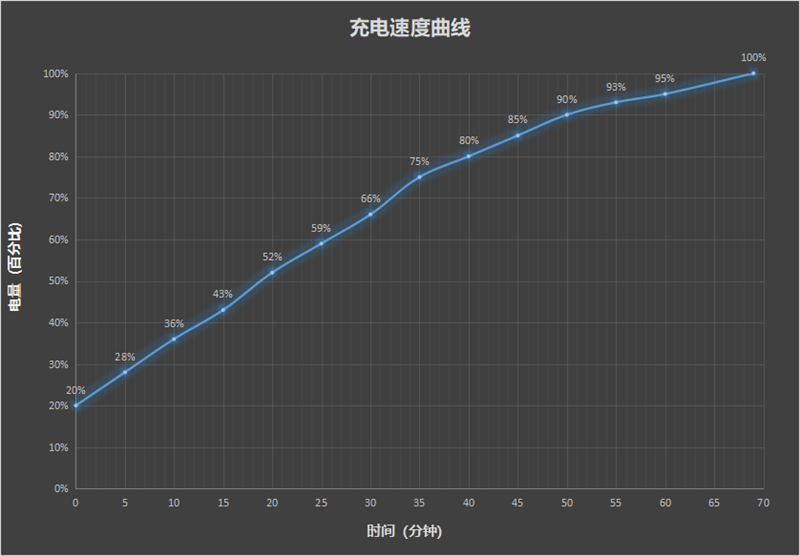
Using the included 100W proprietary charging brick (starting from 20% state-of-charge):
- 5 Minutes: 28%
- 10 Minutes: 36%
- 15 Minutes: 43%
- 20 Minutes: 52%
While peak wattage tapers past 80% to protect the multi-cell chemistry, native support for open 100W USB-PD / PPS protocols means users can fast-charge the phone at full speed using standard USB-C laptop power bricks.
Final Verdict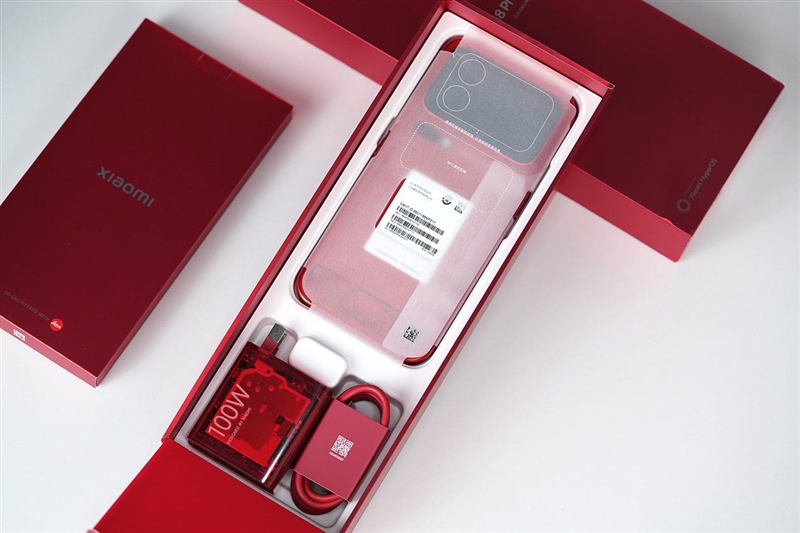
The Xiaomi 18 Pro Max Transparent Edition steps away from experimental showmanship to deliver purposeful innovation. The rear AMOLED display proves its utility through lightweight micro-apps and smart-home controls; directional hardware-level privacy solves real-world security issues; the 200MP LOFIC sensor prioritizes optical dynamic range over artificial digital sharpening; and the 8,500mAh battery sets a high benchmark for flagship longevity. It stands out as one of Xiaomi’s most complete and distinctive flagships to date.
Read Also: Xiaomi Door and Window Sensor 3 Launches With Tunnel Magnetoresistance Sensor and 3-Year Battery