











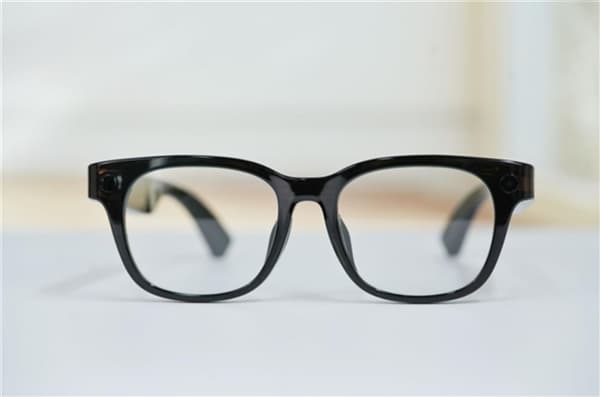
Xiaomi is reportedly preparing its next-generation AI smart glasses for a December launch, with a new display-equipped version expected to join the lineup. According to a report from the Science and Technology Innovation Board Daily, the Xiaomi AI Glasses 2 could debut in mid-December alongside the standard Xiaomi 18 smartphone.
The report suggests that the new glasses may go on sale on the same day as their announcement. The Xiaomi 18 standard edition, meanwhile, is rumored to start at 5,699 yuan.
Three Xiaomi AI Glasses 2 Versions Reportedly Planned
The second-generation Xiaomi AI glasses are expected to arrive in three configurations:
- Q95 Pro: The standard version.
- Q95 Pro Multicolor Edition: Expected to feature electrochromic lenses with four adjustable settings.
- Q95 Display Edition: A new version that adds a display feature to the glasses.
The display edition is particularly noteworthy because it could expand the product beyond conventional camera-equipped AI glasses. However, the report does not yet clarify the display technology, its position within the lenses, or the information it will show.
The multicolor version is also expected to offer more visual customization through its electrochromic lenses, allowing users to switch between four adjustment levels.
Xiaomi’s move into AI-powered eyewear was first highlighted ahead of its June 2025 product event, as discussed in our report on Xiaomi’s first AI smart glasses announcement.
Camera, Interaction and Battery Life Expected to Improve
Previous leaks suggest that Xiaomi is preparing broader upgrades to the second-generation model, covering imaging, interaction and battery life.
One rumored addition is dynamic photo capture, which could give users more ways to record moments without taking out their smartphones. The new glasses are also expected to introduce eye-based interaction, potentially adding another control method alongside voice commands.
If these features arrive as expected, Xiaomi AI Glasses 2 could offer a more flexible hands-free experience. Nevertheless, detailed specifications, supported functions and real-world battery performance have not yet been officially confirmed.
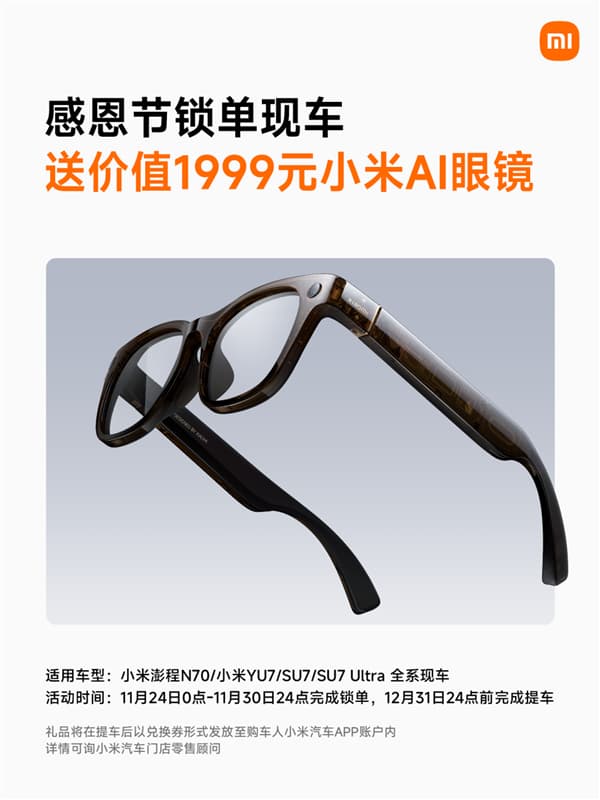
Xiaomi Is Already Using Its First-Generation AI Glasses in a Car Promotion
Interestingly, Xiaomi’s first-generation AI glasses have recently appeared in a promotional campaign for Xiaomi vehicles.
From November 24 to November 30, customers who lock in an order for an in-stock Xiaomi vehicle and complete delivery by December 31 can receive a pair of Xiaomi AI Glasses worth 1,999 yuan as a gift.
The promotion gives the existing model additional exposure just weeks before the rumored arrival of its successor. It also illustrates how Xiaomi is connecting its smart hardware products with its broader automotive and consumer-electronics ecosystem.
Xiaomi had already explored audio-focused eyewear before introducing its camera-equipped AI glasses. Our MIJIA Smart Audio Glasses 2 report covers its lightweight frame, open-ear audio design and advertised 12-hour listening time.
Looking Back: What Did the First Xiaomi AI Glasses Offer?
Xiaomi introduced its first-generation AI glasses in June 2025, with three versions targeting different price points.
| Version | Launch price in China |
|---|---|
| Standard Edition | 1,999 yuan |
| Monochrome Electrochromic Edition | 2,699 yuan |
| Color Electrochromic Edition | 2,999 yuan |
The first-generation model focused on combining a lightweight frame with cameras, voice interaction and AI-powered functions.
Its frame weighed approximately 40g. Inside, Xiaomi used a Qualcomm Snapdragon AR1 platform alongside a BES2700 chip from Bestechnic. The glasses also included 4GB of RAM and 32GB of internal storage.
Power came from a 263mAh Jinshajiang battery, with Xiaomi advertising up to 8.6 hours of typical usage.
Camera Hardware and Hands-Free Recording
For imaging, the first-generation glasses featured a 12MP Sony IMX681 sensor. They supported 2K video recording at 30 frames per second, along with first-person-view video calls and livestreaming.
The camera was designed to capture footage from the wearer’s perspective, making it useful for recording activities without holding a phone or separate camera.
Super XiaoAi Brings AI Features to the Glasses
The first-generation model also integrated Xiaomi’s Super XiaoAi assistant.
Its software features included voice-activated photography and video recording, real-time translation, multimodal AI question answering and QR-code payments.
These functions were intended to make the glasses more than a wearable camera. Users could access selected AI and everyday smartphone-related functions through voice interaction, reducing the need to take their phones out for every task.
Can Xiaomi AI Glasses 2 Become More Than a Camera on Your Face?
The rumored addition of a display edition could represent an important change in Xiaomi’s smart-glasses strategy.
The first generation already combined a camera, voice assistant and lightweight design. Adding a display and eye-based interaction could move the next model toward a more integrated wearable interface.
However, the usefulness of such a device will depend on practical details that remain unknown: display visibility, outdoor readability, comfort, battery consumption, privacy controls and software compatibility.
Pricing will also matter. The first generation started at 1,999 yuan, while its electrochromic versions cost more. A display-equipped successor could occupy a higher price segment, although no reliable second-generation pricing has been announced.
For now, Xiaomi AI Glasses 2 remains an anticipated product rather than an officially confirmed launch. If the reported December schedule proves accurate, the upcoming announcement should reveal whether Xiaomi can turn its next pair of smart glasses into a more capable everyday wearable.