









AI wearable cameras and action cameras can both record hands-free video, but they are built around very different ideas.
An action camera is primarily a camera designed to survive movement and capture high-quality footage. An AI wearable camera is more like a small personal computing device with a camera attached. It may record what you see while also responding to voice commands, recognizing objects, organizing captured information, or connecting to an AI assistant.
That difference matters more than resolution numbers alone.
If you want smooth footage while cycling, hiking, skiing, or traveling, an action camera may better match your needs. If you want to capture everyday moments without constantly reaching for your phone and are interested in AI-powered assistance, a wearable camera may be more appropriate.
The right choice depends on what you want the camera to do after you press—or don’t press—the record button. If you want to explore the wearable side in more detail, see our guide to the best AI wearable cameras in 2026, covering smart glasses, clip-on cameras, AI features, battery life, and privacy.
The Basic Difference
The simplest way to understand the two categories is to look at their primary purpose.
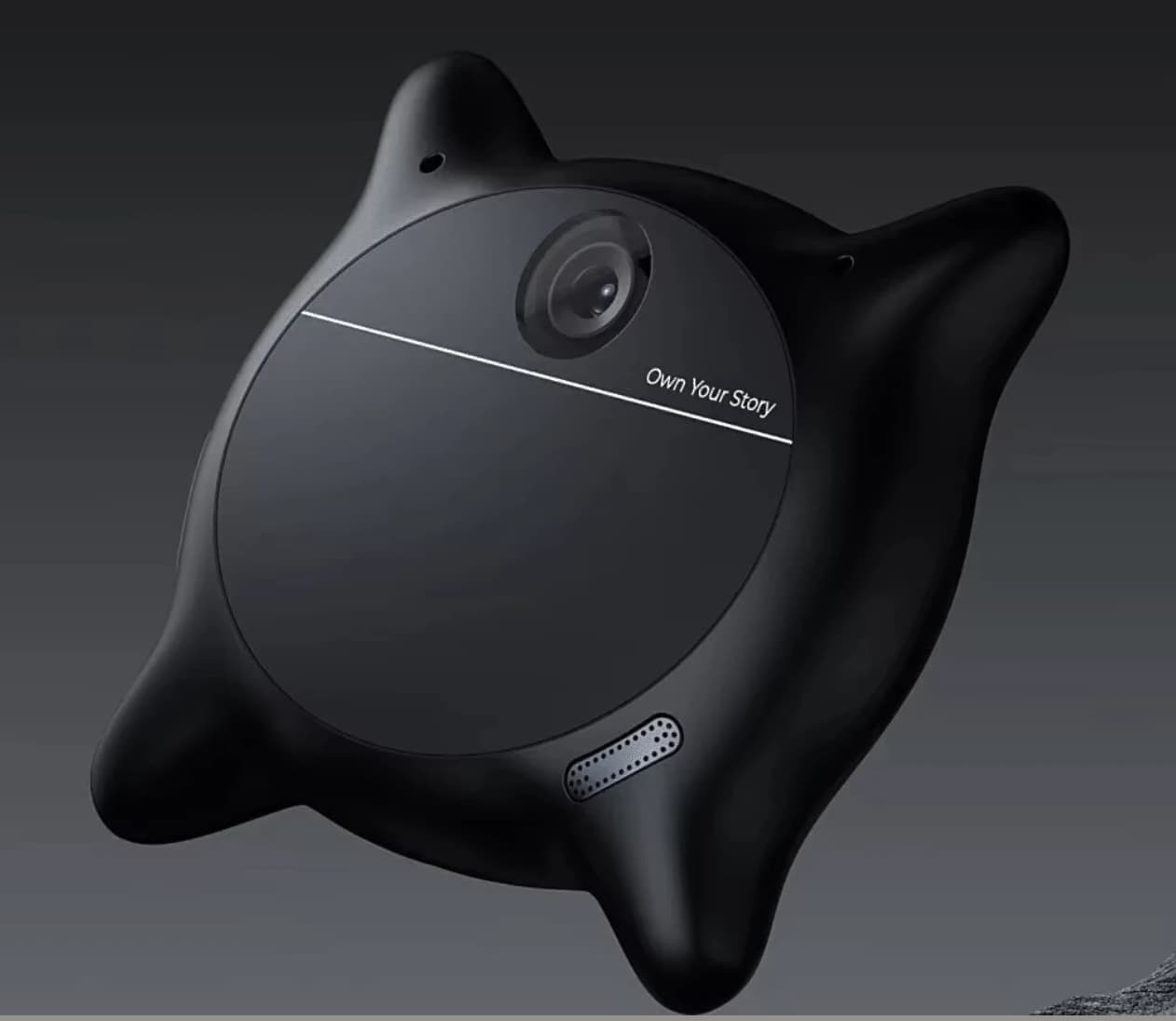
An AI wearable camera is designed around hands-free interaction, portability, and AI-assisted functions. It may be worn on clothing, around the neck, or integrated into smart glasses.
An action camera is designed around video capture. It typically offers a rugged body, wide-angle lens, stabilization, high-resolution recording, and mounting options for helmets, bikes, vehicles, and other equipment.
Both can capture first-person footage, but the experience is different.
| Feature | AI Wearable Camera | Action Camera |
|---|---|---|
| Main purpose | Everyday capture + AI assistance | High-quality action footage |
| Hands-free operation | Core feature | Usually requires a mount |
| AI functions | Often a major feature | Usually secondary |
| Stabilization | Varies by model | Usually a major strength |
| Ruggedness | Model dependent | Usually designed for demanding use |
| Mounting options | Usually limited | Extensive |
| Image quality | Varies widely | Generally a key selling point |
| Voice interaction | Common on AI-focused devices | Available on some models |
| Continuous everyday use | Strong use case | Less convenient |
| First-person video | Natural | Excellent with the right mount |
| Smartphone replacement | Partial | No |
| Battery priorities | Everyday endurance | Recording endurance |
Neither category is simply a replacement for the other.
What Is an AI Wearable Camera?
An AI wearable camera combines a small camera with wearable hardware and software that can provide AI-powered functions.
The device may be attached to clothing, carried as a pendant, or built into smart glasses.
Depending on the product, it can potentially:
- Take photos
- Record video
- Capture audio
- Respond to voice commands
- Recognize objects
- Read visible text
- Answer questions about surroundings
- Organize captured memories
- Synchronize with a smartphone
- Search recorded information
The camera is therefore only one part of the product.
The larger idea is to make digital interaction more natural by allowing the user to communicate with an AI system while continuing to move through the world.
What Is an Action Camera?
An action camera takes a much more focused approach.
Its main job is to record video under conditions where a smartphone or conventional camera may be inconvenient or too fragile.
Action cameras are commonly used for:
- Cycling
- Mountain biking
- Hiking
- Skiing
- Snowboarding
- Surfing
- Motorcycling
- Travel
- Outdoor sports
- Vehicle recording
- First-person content creation
Their designs usually emphasize wide-angle lenses, electronic stabilization, rugged construction, waterproofing or water resistance, mounting flexibility, and high-resolution recording.
An action camera does not need to be intelligent to be useful.
Its value comes primarily from how well it captures moving subjects and difficult environments.
AI Wearable Camera vs Action Camera: Image Quality
If video quality is your top priority, this is one of the first areas to examine.
Action cameras have traditionally been designed around imaging performance. Depending on the model, they may offer high-resolution recording, high frame rates, advanced stabilization, HDR capabilities, and sophisticated image processing.
AI wearable cameras face a different set of constraints.
They need to remain small and comfortable enough to wear for long periods. A smaller camera module and battery can limit what the device can achieve compared with a dedicated action camera.
That does not mean wearable cameras necessarily produce poor footage.
Modern wearable devices can produce surprisingly good photos and video, especially in good lighting. But their priorities are usually different.
Choose an action camera if:
- Video quality is your main concern
- You need strong stabilization
- You frequently record fast movement
- You want multiple resolution and frame-rate options
- You plan to edit footage seriously
Consider an AI wearable camera if:
- Convenience matters more than maximum image quality
- You want spontaneous everyday footage
- You prefer hands-free operation
- You want AI features alongside recording
Stabilization Can Change the Experience
A camera attached to a moving person has to deal with constant motion.
Walking creates vertical movement. Cycling introduces vibration. Running creates much stronger impacts.
Action cameras have spent years developing stabilization systems specifically for these situations.
Advanced electronic image stabilization can make footage from a moving camera look considerably smoother.
AI wearable cameras may also include stabilization, but performance varies significantly from one device to another.
If you plan to record while riding a bicycle or running, do not assume that a wearable camera will provide the same stabilization as a dedicated action camera.
Look at real-world footage and stabilization specifications before buying.
Where AI Wearable Cameras Have an Advantage
The biggest advantage of an AI wearable camera is not necessarily video quality.
For a deeper explanation of searchable memories and continuous personal recording, read our guide on what an AI life logging camera is and how it works.
It is interaction.
Imagine walking through a new city.
With an action camera, you can record the experience.
With an AI wearable camera, you may also be able to ask questions, identify objects, interact with an assistant, or capture information without reaching for your phone.
That changes the device from a recording tool into something closer to a wearable computer.
Potential AI functions include:
Visual Recognition
The camera may be able to identify objects, landmarks, signs, products, or other visual information.
Voice Assistance
Users can potentially ask questions without opening a smartphone app.
Text Recognition
A camera may recognize printed information and make it easier to understand or translate.
Searchable Memories
Some systems can organize captured photos, videos, or conversations so users can search for specific moments later.
Automatic Organization
AI can potentially categorize images and clips instead of leaving the user with a large folder of unorganized files.
These functions are what separate AI wearable cameras from conventional action cameras.
Where Action Cameras Have an Advantage
Action cameras are designed to do one thing extremely well: record video in difficult situations.
They generally offer more mature ecosystems for:
- Helmet mounting
- Chest mounting
- Handlebar mounting
- Vehicle mounting
- Tripod use
- Selfie sticks
- Waterproof housings
- External accessories
This flexibility matters.
If you want a camera that can be moved from a bicycle to a helmet and then to a tripod, an action camera provides far more options.
An AI wearable camera is usually designed around a particular wearing position.
Durability and Weather Resistance
Outdoor users should pay close attention to durability.
Action cameras are often designed for environments involving:
- Rain
- Dust
- Mud
- Snow
- Drops
- Vibration
- Water exposure
Not every action camera has the same protection rating, but ruggedness is a fundamental part of the category.
AI wearable cameras vary much more.
Some may tolerate light rain, while others are intended primarily for everyday indoor and urban use.
If you are buying a camera specifically for outdoor adventures, check its official water-resistance and operating-temperature specifications rather than assuming a wearable device is suitable.
Battery Life: A Different Kind of Problem
Both categories have battery limitations, but the problem is different.
An action camera may consume significant power when recording high-resolution video with stabilization enabled.
An AI wearable camera may need power for much more than the camera.
Its battery can be used by:
- Camera sensors
- Microphones
- Wireless connectivity
- AI processing
- Voice detection
- Smartphone synchronization
- Speakers
- Other sensors
This means battery capacity alone does not tell you how long a wearable camera will last.
A small wearable may have an impressive standby time but a much shorter active recording time.
When comparing products, look for realistic usage figures.
Which Is Better for Travel?
This depends on the type of travel.
For sightseeing
An AI wearable camera can be convenient because you can walk around without constantly holding a phone or camera.
You can potentially capture spontaneous moments while using AI assistance at the same time.
For adventure travel
An action camera is generally better suited to activities such as mountain biking, skiing, surfing, or motorcycling because durability and stabilization become much more important.
For travel creators
Using both can make sense.
An action camera can handle dedicated video capture, while a wearable camera can record spontaneous first-person moments.
Which Is Better for Cycling?
For cycling, the answer depends heavily on what you want to record.
If your priority is smooth footage of a ride, an action camera mounted to your helmet, chest, or handlebars provides a familiar setup.
If your goal is to capture occasional moments while interacting with an AI assistant, a wearable camera may be more convenient.
However, cycling introduces safety considerations.
A camera should not require frequent manual interaction while riding. The less attention you need to give the device, the better.
Which Is Better for Hiking?
Hiking presents an interesting middle ground.
An action camera is useful for capturing scenery, walking footage, and challenging terrain.
A wearable AI camera can be attractive for travelers who want to document their surroundings while keeping both hands free.
For long hikes, however, battery life and comfort become particularly important.
A device that feels lightweight during a 20-minute walk may become noticeably less comfortable after several hours.
Which Is Better for Content Creators?
For serious video production, an action camera generally offers more control over the recording process.
Creators can choose mounting positions, frame rates, resolutions, accessories, and shooting angles.
An AI wearable camera is more useful for spontaneous and first-person content.
It can capture moments that would otherwise be missed because the creator was busy doing something else.
That makes wearable cameras particularly interesting for:
- Behind-the-scenes footage
- Walking videos
- Travel clips
- Product demonstrations
- First-person tutorials
- Lifestyle content
A creator does not necessarily need to choose only one.
A wearable camera can provide an additional angle while an action camera handles the main footage.
AI Wearable Camera vs Action Camera for Privacy
This is an area that should not be overlooked.
Action cameras are generally obvious when mounted to a helmet, handlebar, or selfie stick.
Wearable cameras can be much less noticeable, particularly when integrated into glasses or small accessories.
That can create additional privacy considerations when recording around other people.
Before using either type of camera, consider local laws, venue rules, and whether people nearby reasonably understand that recording is taking place.
AI wearable cameras can raise additional questions because the device may also record audio, analyze visual information, or upload data to cloud services.
Users should understand what information the device collects and where it is processed.
Storage and File Management
Action cameras can generate large amounts of video.
A long recording session at high resolution can quickly consume storage space.
This means memory-card capacity and file-transfer speed matter.
AI wearable cameras can create a different storage problem.
Instead of only storing video, the system may maintain:
- Photos
- Video clips
- Audio
- AI-generated metadata
- Transcriptions
- Search indexes
- Location information
If cloud synchronization is involved, subscription fees and data retention policies become important considerations.
Do You Need AI?
This is perhaps the most useful question to ask before buying.
If your answer is:
“I just want a great camera for outdoor activities.”
Then you probably do not need an AI wearable camera simply because it has AI features.
An action camera may be more appropriate.
If your answer is:
“I want a camera that I can wear every day and interact with through voice and AI.”
Then the wearable category becomes more interesting.
The AI should solve an actual problem rather than simply appear on the specification sheet.
What About Smart Glasses?
Smart glasses sit between the two categories.
If you are particularly interested in camera-equipped eyewear, our AI smart glasses guide explores how cameras, microphones, speakers, and voice assistants are combined in a wearable device.
They can combine:
- Camera
- Microphones
- Speakers
- Voice assistant
- AI services
- Smartphone connectivity
- Wearable design
The camera perspective is naturally close to the user’s line of sight, which can make smart glasses useful for first-person capture.
However, glasses also have unique limitations.
Battery size is restricted by the frame, heat must be managed carefully, and the device needs to remain comfortable on the user’s face.
Smart glasses therefore represent one branch of the broader AI wearable camera category rather than a direct replacement for action cameras.
A Simple Decision Guide
Your choice becomes easier when you start with the activity rather than the product category.
Choose an AI Wearable Camera If You:
- Want hands-free everyday recording
- Are interested in AI assistance
- Want voice interaction
- Prefer spontaneous first-person capture
- Want something small enough to wear regularly
- Want to reduce how often you reach for your phone
- Are interested in searchable digital memories
Choose an Action Camera If You:
- Prioritize video quality
- Need strong stabilization
- Record outdoor sports
- Need rugged construction
- Want extensive mounting options
- Shoot in rain, snow, or water
- Want more control over video settings
- Plan to edit footage extensively
Consider Using Both If You:
- Create travel content
- Need multiple camera angles
- Want dedicated action footage plus spontaneous clips
- Produce first-person videos
- Want an everyday camera alongside a more capable video camera
What Should You Check Before Buying?
Regardless of category, look beyond the headline specification.
For an AI Wearable Camera
Pay particular attention to:
- AI capabilities
- Voice recognition
- Camera quality
- Microphone performance
- Battery life
- Recording duration
- Storage
- Cloud requirements
- Smartphone compatibility
- Privacy controls
- Comfort
For an Action Camera
Pay particular attention to:
- Resolution
- Frame rates
- Stabilization
- Sensor performance
- Waterproofing
- Battery life
- Mounting ecosystem
- Storage
- Low-light performance
- External microphone support
These specifications tell you much more about the actual experience than a single megapixel or resolution number.
Final Verdict: Start With Your Use Case
AI wearable cameras and action cameras are not simply two versions of the same product.
They solve different problems.
An action camera is fundamentally a dedicated imaging tool. It is built to capture stable, durable, high-quality footage while you move through challenging environments.
An AI wearable camera is closer to a wearable computer with an imaging system. Its appeal comes from hands-free operation, voice interaction, AI assistance, and the possibility of turning everyday experiences into searchable digital information.
If your priority is adventure footage, stabilization, durability, and video control, focus on action cameras.
If your priority is everyday capture, AI interaction, convenience, and hands-free use, explore AI wearable cameras.
And if you create content or travel frequently, using both types can provide complementary perspectives rather than forcing one device to do everything.
The most important specification is therefore not always the camera resolution. It is whether the device fits the way you actually intend to use it.