









During the early years of application development, the developers mainly focused on the desktop platform as it was the only way of accessing various apps and the Internet. However, with the passing years, portability has become one of the most important factors in the life of the end users. Therefore portable devices like smartphones, tablets, and even smartwatches started to arrive in the market. So, to provide compatibility with their apps on these devices, the developer started integrating additional software like Appium Automation. Using these tools, app developers can ensure that they can expand their audience base by efficiently providing high-quality applications.
Appium and Espresso are two of the most popular names in the segment of Android app testing. So, with this article, we are going to explore both of these tools and we will try to choose the perfect one based on the requirements of the application developers. We will also analyze some of the factors that the developers must consider while making this decision.
Basics of Mobile Testing
Current market studies show that mobile devices control about 55% of the total users. One of the major reasons for the popularity of mobile devices is that they can provide desktop-like performance while being able to fit in the palm of the customers. Some of the most popular mobile platforms include Android, iOS, and Windows. Android being the dominant player has over 72% of end users. However, all Android devices are not the same as thousands of devices are released every year with unique displays, operating systems, and other configurations. Therefore it is almost impossible for the app developers to generalise the test cases while working on mobile apps. Moreover, they cannot restrict the testing process to only simulators and emulators.
This is because simulation software cannot replicate the behavior of an app based on the physical parameters of a device. Some of the most crucial physical parameters include unstable bandwidth, user interaction errors, and low battery. Therefore real device testing is one of the most important components of the mobile app development industry.
Analysing Appium and Espresso
Appium: Appium is an automated testing tool for verifying the performance of all the user interface elements present in modern applications. Using this tool, the developers will access an open-source automation framework that allows the test case creation process in multiple programming languages. The cross-platform nature of Appium allows the developers to run the test cases on different platforms at the same time. Using the Appium API, the app developers can also initiate the test cases on native and hybrid mobile applications. This tool is very simple and easy to adopt for the new automation testers who are starting the transition to this industry.
Espresso: Espresso, on the other hand, is a user interface testing framework that is specially designed for verifying the performance of Android applications. This tool is tightly integrated with the Android platform and provides native features for verifying the performance of these apps. So, the primary focus of this tool is to simplify the process of verifying the performance of all the user interface elements on Android apps. Moreover, the open-source infrastructure of this tool ensures that the developers can use all of its features without any additional charges.
Factors to Consider for Choosing the Right Android App Testing Tool
When choosing between Espresso and Appium, there are certain factors that the developers must consider that can influence their decision-making process. Based on our research and understanding, we have mentioned some of the most decisive factors below:
Availability of Programming Languages
- Appium: Appium natively provides support for various programming languages. It is one of the primary reasons why many automation testers consider Appium to be one of the most versatile Android app testing tools.
- Espresso: All the espresso test cases are mainly written in Kotlin or Java. Therefore, this tool can be an advantage only when the automation testers already have experience writing the test cases in these programming languages.
Nature of the Mobile App
- Appium: Depending on the nature of the mobile app, Appium can be useful as it can work on both native Android applications and cross-platform Android apps. Appium can run the test cases on cross-platform Android apps that have been developed with frameworks like Xamarin or React Native.
- Espresso: The application compatibility of Espresso is limited to only native Android applications. So, if the developers workwith other apps, they will be forced to consider Appium as their Android automation testing tool.
Integration with the Android Platform
- Appium: While working with Android apps, Appium can interact with all the elements using the accessibility API or the UI Automator. Although this compatibility layer makes the test cases flexible, they can be limited in terms of interaction speeds.
- Espresso: Since Espresso is tightly integrated with Android app development technology, it provides native support for communicating with all the Android app elements. Therefore it is faster and more reliable while working with the UI elements of Android apps.
Availability of Support
- Appium: Appium maintains a large and active community of automation testers and developers. Therefore it is very easy to avail support while working with this automation testing tool. The developers can gain adequate information regarding support, resources, and various Appium plugins.
- Espresso: Since Espresso is the official Google testing framework for Android, it receives stable updates from Google to keep it operational and simple. Moreover, Google provides adequate support options to help the new automation testers and developers while working with this tool.
Ease of Use
- Appium: Although Appium is highly flexible and compatible with multiple programming languages, it can harm the initial integration with this tool. This is because due to all of these additions, the testers have to go through a steep learning curve during the initial phases of Appium automation.
- Espresso: Espresso is one of the most reliable tools in terms of ease of access and initial configuration. Moreover, this integration becomes even more simplified when the app developers workwith native Android applications.
Reliability and Speed
- Appium: When the application developers are working with native Android apps, Appium can be slower and less reliable compared to Espresso. This is because the Appium testing infrastructure works at a higher level of test abstraction.
- Espresso: As we already mentioned earlier, for Android UI test cases, Espresso is known for its speed and reliability. Therefore it becomes one of the first choices for the developers while working with UI test cases.
LambdaTest and its Role in Appium Automation
As we already mentioned earlier, real device testing is one of the most important parameters of modern Android app testing. However, the process of setting up and maintaining a real device test bench is not only expensive but also hectic. So, the app developers can replace this process with the integration of cloud platforms like LambdaTest. LambdaTest allows the execution of the test cases on thousands of real devices through remote servers. It also provides an artificial intelligence-integrated platform for orchestrating and executing automation test cases on mobile apps.
The combination of LambdaTest API and the LambdaTest real device testing cloud helps Boost Mobile automation testing in the following ways:
- LambdaTest supports the native execution of test cases with both Appium and Espresso. It can run the test cases from these Android testing tools on thousands of real devices through remote servers. This list also consists of legacy devices and older browser versions for further expanding the compatibility of the app. By purchasing the LambdaTest license, the app developers can gain access to these servers.
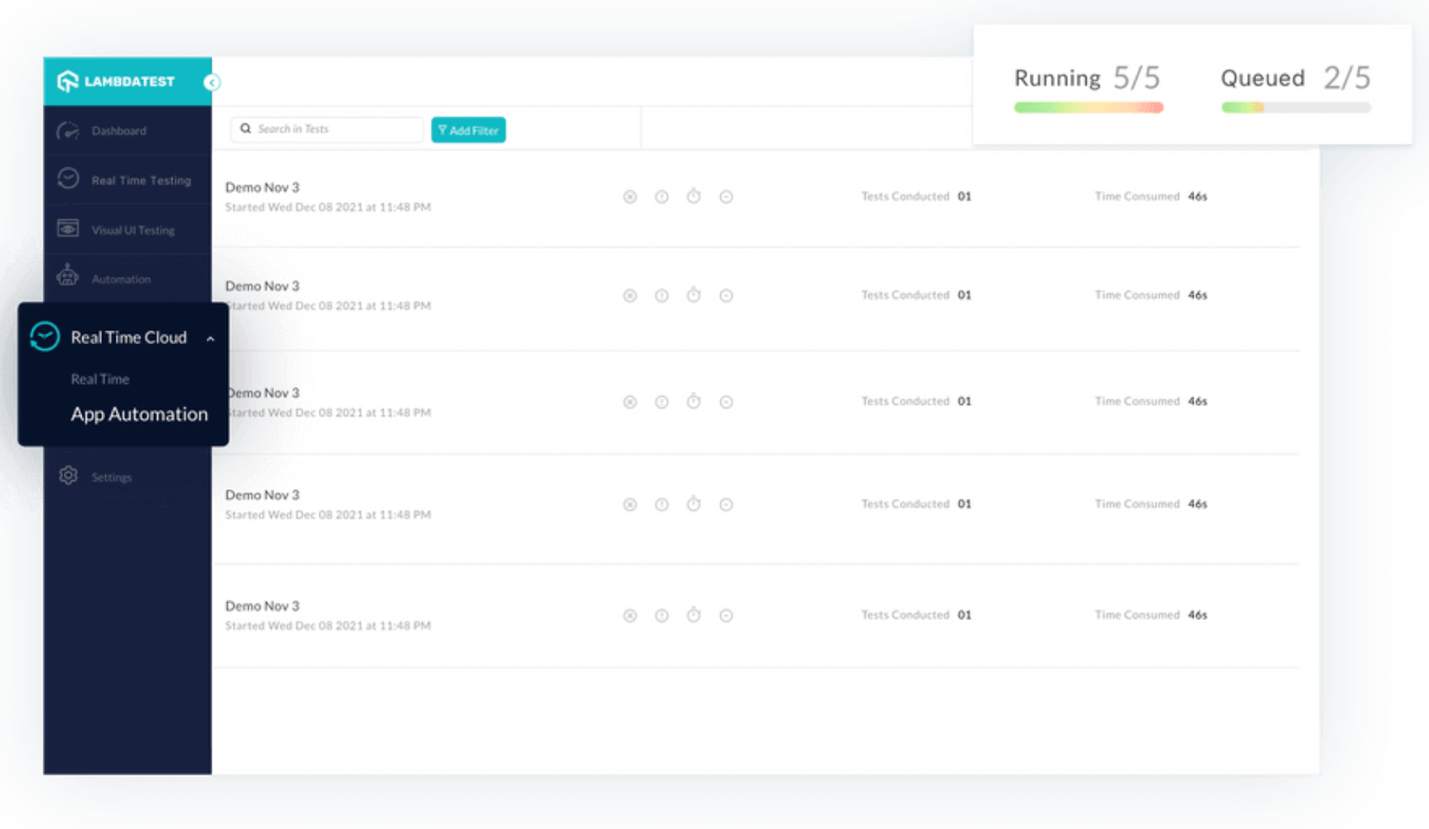
- By integrating Selenium Grid with the mobile automation test cases, the application developers can also execute cross-browser testing on the apps. The major benefit of executing cross-browser testing is that it verifies the app’s stability irrespective of changes in browser version, operating system, or other platform parameters.
- LambdaTest supports the use of parallel test execution for improving the efficiency of the test cases several times. Using this process, the app developers can initiate multiple testing instances on different machines and combinations at the same time.
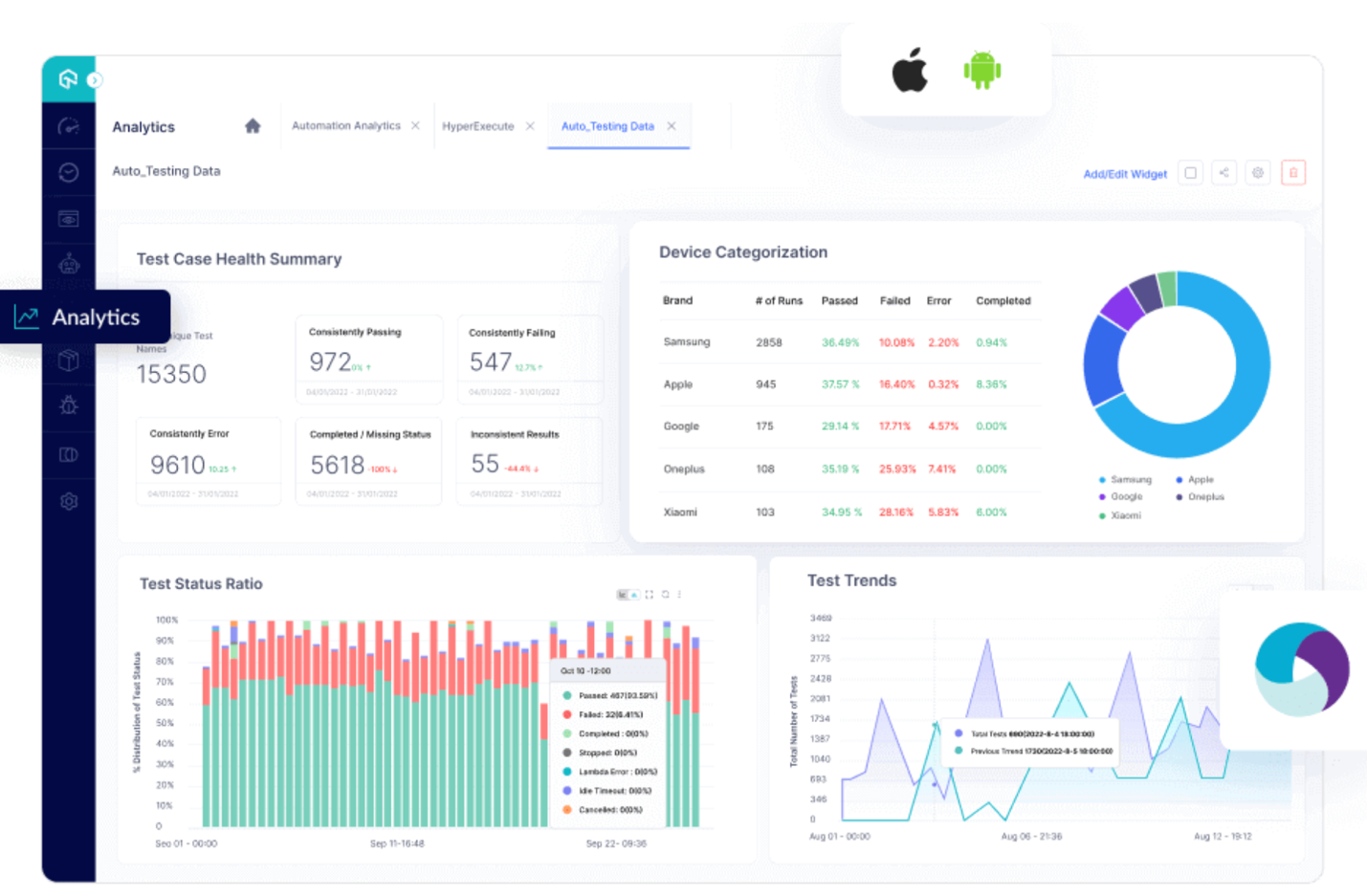
- Using LambdaTest’s native feature called “Lambda tunnel”, the App developers can use Appium automation to verify the performance of locally hosted mobile applications. A company primarily uses these appsfor testing purposes and other internal operations.
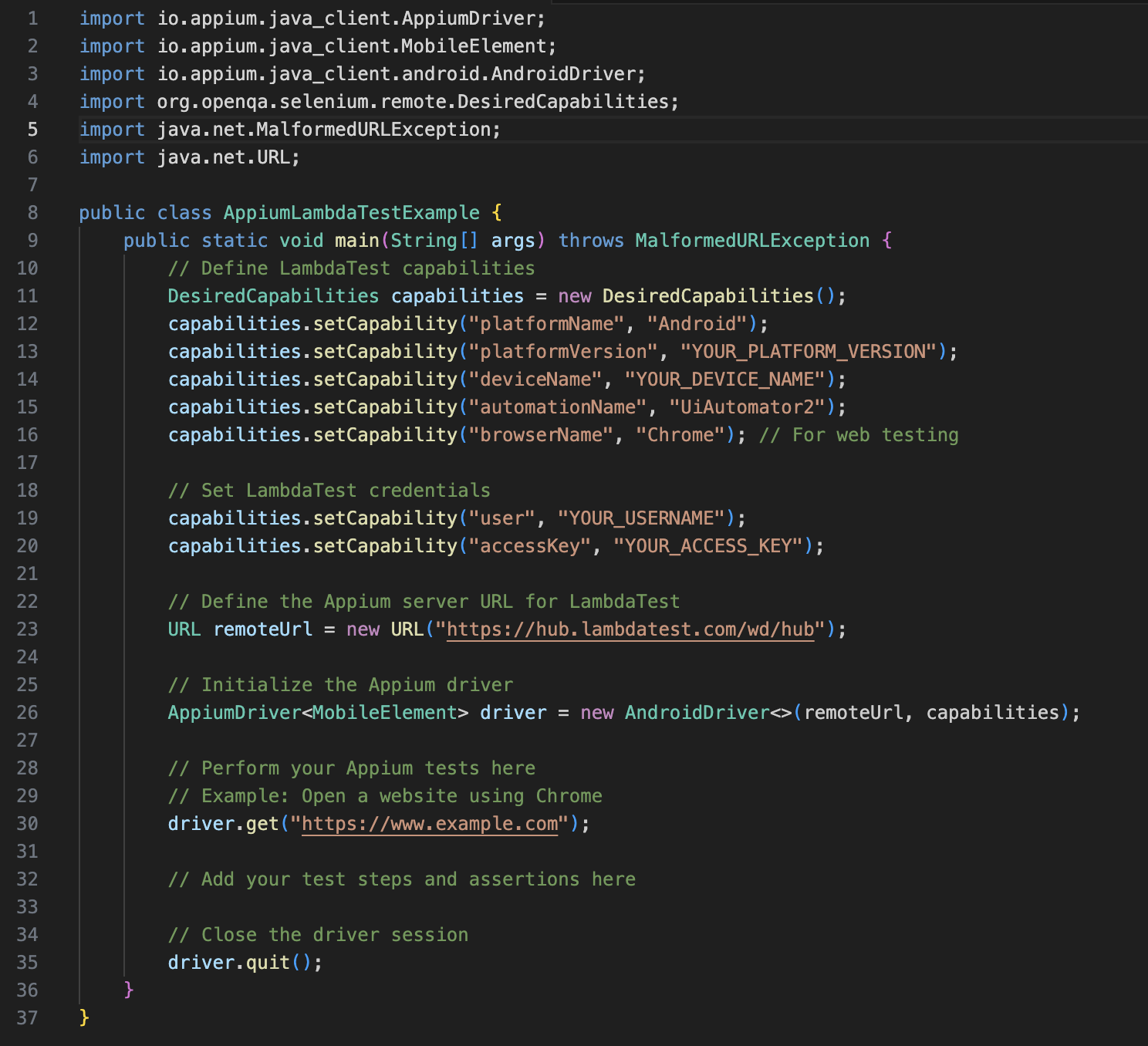
- While working with Appium, it is a very easy process to set up the LambdaTest testing environment and execute the test cases. For the simplicity of the new automation testers, we have mentioned the code for executing Appium testing with LambdaTest:
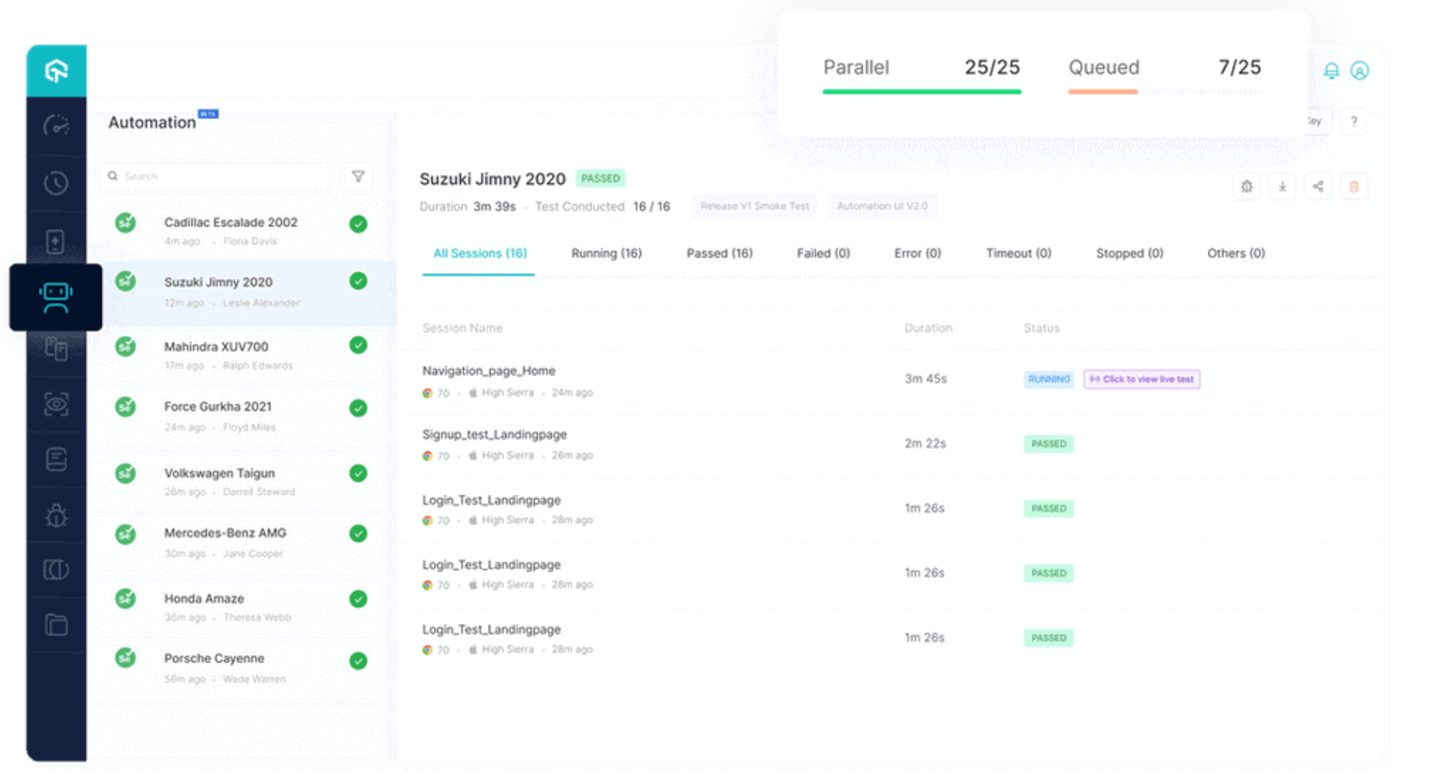
- LambdaTest maintains a live activity log to keep track of all the test cases,which include the currently running test instances, the passed test cases, and even the failed ones. It also keeps track of all the bugs and errors that have been deleted in the application so that the developers can use this data for future reference and avoid these errors.
- After executing the test cases, LambdaTest generates a detailed test report showing the status of the app. This report consists of various important information like screenshots and videos that were automatically captured during the execution process,along with test activity logs. The primary introduction of this data is to assist the developers during the troubleshooting and debugging process.
- LambdaTest has elaborate documentation that explains all the important features and tools in simple languages using sample test cases. The official website also provides information about some of the common errors that can arise during Appium automation or Espresso testing,along with their possible solutions.
- LambdaTest has an elaborate support system consisting of over-the-phone support, live chat, and even a mailing feature. Using these options, the developers can gather adequate information regarding all the tools and features available with this platform. LambdaTest also maintains a platform where the developers and testers can discuss among themselves.
The Final Verdict
Through this article, we discussed some of the most important parameters that can influence the decision-making of the developers while choosing between Appium automation and Espresso. Based on all the factors we discussed in this article, Espresso must be the primary choice for conducting Android UI test cases. However, in case the developers want cross-platform support with compatibility for multiple programming languages, Appium becomes the primary recommendation. For the proper implementation of automation testing, the developers should also constantly integrate all the revolutionary trends and innovations in this segment. It is also important to gather adequate information about the requirements of the target audience. This is because, based on all these parameters, the developers would be able to serve a wider section of end-users.