









Apple has officially introduced its first touchscreen MacBook Pro, marking a major change in the company’s approach to Mac laptop design. The new lineup combines touch input with a dual-layer OLED display, the arrival of Dynamic Island on Mac, and Apple’s latest M5 Pro and M5 Max processors.
According to a report published by Kuai Technology on October 29, the new MacBook Pro is available in 14-inch and 16-inch configurations, with prices in China starting at 22,999 yuan. Pre-orders are scheduled to begin at 9 a.m. on October 30, with the official launch set for November 6.
The introduction of touchscreen functionality is particularly significant because Apple has traditionally relied on keyboards, trackpads, and external input devices for its MacBook lineup. The latest model aims to combine familiar Mac workflows with more direct interaction, while also upgrading the display, performance, and overall hardware design.
Dual-Layer OLED Display Delivers Higher Brightness and Contrast
One of the biggest changes is the introduction of Apple’s new PROLED XDR display, which reportedly uses dual-layer OLED technology.
Unlike conventional display designs, a dual-layer OLED panel uses two layers of self-emissive pixels to improve brightness, contrast, and display uniformity. This approach could benefit professionals who work with HDR footage, detailed images, and demanding visual content.
According to the reported specifications, the display supports peak brightness of up to 2,000 nits for both HDR and SDR content, alongside a contrast ratio of 10,000,000:1.
The panel also supports Apple’s ProMotion adaptive refresh rate, operating between 10Hz and 120Hz. This allows the display to adjust its refresh rate according to the content, balancing smooth motion with power efficiency.
Color reproduction is another priority. The screen supports the P3 wide color gamut and Adobe RGB, while its reported Rec.2020 color gamut coverage exceeds 80%. These features could make the display suitable for photographers, video editors, graphic designers, and other professionals who need accurate color representation.
Apple is also reportedly offering an optional nano-texture glass finish. Designed to reduce reflections and glare, this option could be particularly useful for people working in bright studios or other environments with challenging lighting conditions.
Touchscreen Support Brings a New Way to Use macOS
The touchscreen is the defining feature of the new MacBook Pro.
Users can reportedly scroll through web pages, zoom in on photographs with two fingers, drag files across the screen, and adjust window layouts using direct touch gestures. These capabilities add another input method without eliminating the traditional keyboard and trackpad experience.
Apple has also integrated the touch sensors directly into the display panel rather than adding a separate touch-sensitive layer on top. This design is intended to reduce input latency and provide a more responsive experience.
Apple’s move toward touchscreen laptops builds on earlier reports about its next-generation notebooks, including our coverage of the M6 MacBook Pro with an OLED touchscreen.
The touchscreen could be particularly useful in creative workflows. Designers may be able to draw directly on the display, music producers could interact with virtual instruments, and video editors may find it easier to manipulate clips and adjust timeline elements.
To improve usability, Apple has reportedly redesigned the display hinge to provide greater stability during touch interactions. This should help reduce screen movement when users tap or swipe across the panel.
Software compatibility is another important consideration. The new macOS experience can reportedly translate touch gestures into mouse-click actions, potentially allowing many existing applications to work with touch input without requiring developers to rebuild their interfaces.
The actual benefits will depend on how well individual applications handle direct interaction, particularly software designed primarily for keyboard and trackpad controls.
Dynamic Island Comes to MacBook Pro for the First Time
Another major change is the reported introduction of Dynamic Island on the MacBook Pro.
Previously associated with the iPhone, Dynamic Island is designed to bring notifications, background activities, and interactive controls into a compact interface. On the new MacBook Pro, it reportedly replaces the familiar display notch with a more functional area for system information and shortcuts.
The Mac version is said to integrate several Apple services, including Spotlight search, Live Activities, and Siri-related AI features.
Users may be able to interact with notifications, control music playback, and access relevant information directly from Dynamic Island without switching between multiple applications.
If implemented effectively, the feature could make multitasking more convenient by keeping important information visible while users continue working.
Its arrival also represents a broader effort to create a more consistent interface across Apple’s devices, bringing familiar iPhone interaction concepts to the Mac platform.
M5 Pro and M5 Max Power Demanding Professional Workloads
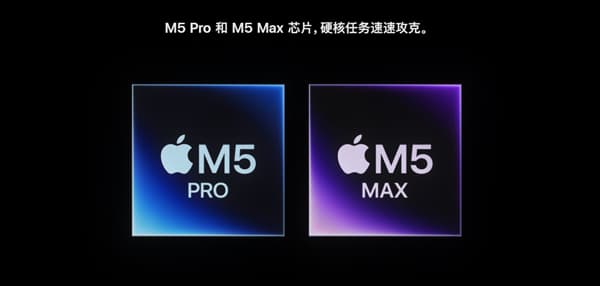
Performance is another central part of the new MacBook Pro lineup. According to the source report, Apple has equipped the new models with M5 Pro and M5 Max processors.
The two chips target different levels of professional computing.
The M5 Pro is positioned for demanding everyday professional workloads, including software development, graphic design, and video production. The M5 Max targets users who need greater graphics performance for tasks such as complex 3D rendering, high-resolution video editing, and local AI model execution.
The new MacBook Pro reportedly supports up to 128GB of unified memory and as much as 16TB of SSD storage, depending on the configuration.
These options could make the laptop suitable for professionals working with large project files, high-resolution media, and memory-intensive creative applications.
Running AI models locally is another potential use case. More memory and powerful processing hardware can help users work with compatible AI models without relying entirely on cloud-based services, although actual performance will depend on the model, software optimization, and hardware configuration.
For buyers deciding between the M5 Pro and M5 Max versions, the main consideration will be workload intensity. Developers and general creative professionals may find the Pro configuration sufficient, while users handling demanding graphics and video tasks may benefit more from the Max model.
Thinner and Lighter Design With Improved Portability
Despite its professional hardware, the new MacBook Pro reportedly features a thinner and lighter chassis.
The 14-inch model weighs approximately 1.36kg, while the 16-inch version comes in at around 1.81kg. Compared with their respective predecessors, the two models are reported to be lighter by approximately 0.23kg and 0.32kg.
The latest design changes also highlight Apple’s continued focus on portable notebooks, following earlier models such as the M3 MacBook Air, which emphasizes lightweight construction and everyday performance.
The OLED display design also contributes to a slimmer profile. The 14-inch model is reportedly around 0.5mm thinner, while the 16-inch version is nearly 1mm thinner than the previous generation.
These changes may make the larger model easier to carry and improve the portability of the smaller version without sacrificing its professional positioning.
For users who regularly travel between offices, studios, and client locations, even modest reductions in weight can make a difference during daily use.
Up to 24 Hours of Battery Life and Faster Charging
Battery life remains important for a laptop designed for professional work.
The new MacBook Pro is reported to deliver up to 24 hours of battery life, although actual runtime will depend on the configuration, workload, display settings, and other usage conditions.
Fast charging is also supported. With a compatible power adapter, the laptop can reportedly recharge to as much as 50% in approximately 30 minutes.
The combination of a high-end display, powerful processors, and long battery life could make the new models attractive to professionals who need substantial computing performance away from a desk.
However, sustained heavy workloads such as video rendering and local AI processing typically consume more power than basic browsing or document editing, so real-world battery life may vary considerably.
Thunderbolt 5, Wi-Fi 7, and a Wide Selection of Ports
The new MacBook Pro retains a broad selection of physical connections for professional users.
According to the report, the port configuration includes:
- Three Thunderbolt 5 ports
- An HDMI port
- An SDXC card slot
- A MagSafe charging connector
- A 3.5mm headphone jack
Thunderbolt 5 can be useful for users connecting high-speed storage, compatible displays, and professional peripherals. The HDMI port and SDXC slot also reduce the need for adapters in common video production and photography workflows.
Wireless connectivity reportedly includes Wi-Fi 7 and Bluetooth 6, while Touch ID provides fingerprint-based authentication.
This combination of physical ports, wireless standards, and biometric security should help the MacBook Pro accommodate a range of professional setups.
Upgraded Camera, Microphones, and Six-Speaker Audio
Apple has also reportedly improved the laptop’s audio and video hardware.
The new MacBook Pro features a 12-megapixel Center Stage camera, which is designed to keep users appropriately framed during video calls as they move around the scene.
A studio-quality microphone array is intended to improve voice capture for meetings, remote collaboration, and content creation.
Audio output comes from a six-speaker sound system. Apple reportedly claims that the new speakers deliver bass extension improved by 50% compared with the previous generation.
These upgrades could benefit users who frequently participate in video conferences, record voice content, or edit multimedia without always connecting external equipment.
MacBook Pro Price and Release Date in China
The reported launch schedule for Apple’s new touchscreen MacBook Pro is as follows:
| Specification | Reported details |
|---|---|
| Display sizes | 14-inch and 16-inch |
| Display technology | Dual-layer OLED |
| Peak brightness | Up to 2,000 nits |
| Refresh rate | Adaptive 10Hz–120Hz |
| Processors | M5 Pro and M5 Max |
| Maximum unified memory | Up to 128GB |
| Maximum SSD storage | Up to 16TB |
| Reported battery life | Up to 24 hours |
| Starting price in China | 22,999 yuan |
| Pre-orders begin | October 30, 2026 |
| Official release date | November 6, 2026 |
The starting price places the new MacBook Pro firmly in the premium laptop category. Buyers will need to consider the display upgrades, touchscreen functionality, processor choice, and storage configuration when deciding whether the new model offers sufficient value for their work.
International pricing and the full range of regional configurations were not specified in the source report.
Is Apple’s First Touchscreen MacBook Pro a Major Upgrade?
Apple’s reported touchscreen MacBook Pro combines several substantial changes rather than relying on a single hardware improvement.
The dual-layer OLED display targets professionals who need strong brightness and color performance, while touchscreen support introduces a new way to interact with macOS. Dynamic Island adds another layer of software integration, and the M5 Pro and M5 Max processors target demanding creative and technical workloads.
The lighter chassis, reported 24-hour battery life, expanded connectivity, and upgraded camera and audio systems round out the package.
The most important question is how these features work together in everyday use. Touch interaction will need to feel natural, macOS applications will need to handle it effectively, and the OLED display’s advantages will need to justify the cost for professional buyers.
If the reported specifications and launch details are confirmed, the new MacBook Pro could represent one of the most significant changes to Apple’s professional laptop lineup in years.