











A traditional rear-view mirror only shows what is happening behind the vehicle within its reflection range. A mirror dash cam takes that familiar position and turns it into something more useful: a digital display that can show live camera footage while recording the road.
The DDPAI E3 Rear View Mirror Dash Cam combines front and rear video recording, a large touchscreen, Wi-Fi connectivity and parking surveillance in one integrated system. Its front camera records at 2K 1440P, while the rear camera captures Full HD 1080P footage. Rather than adding another small screen to the dashboard, the E3 is designed to sit over the existing rear-view mirror and provide a wider digital view of the road.
For drivers who want a cleaner dashboard setup, better visibility behind the vehicle and video evidence in the event of an incident, the E3 offers an interesting alternative to conventional windscreen-mounted dash cams.
A Digital Rear-View Mirror That Does More Than Reflect
The main attraction of the DDPAI E3 is its mirror-style design. Instead of placing a separate display somewhere on the windscreen, the unit uses a large LCD touchscreen in the position normally occupied by the factory rear-view mirror.
The screen can display the rear camera feed, giving drivers a different perspective from the view available through the original mirror. This can be particularly useful when passengers, headrests, luggage or other objects obstruct the rear window.
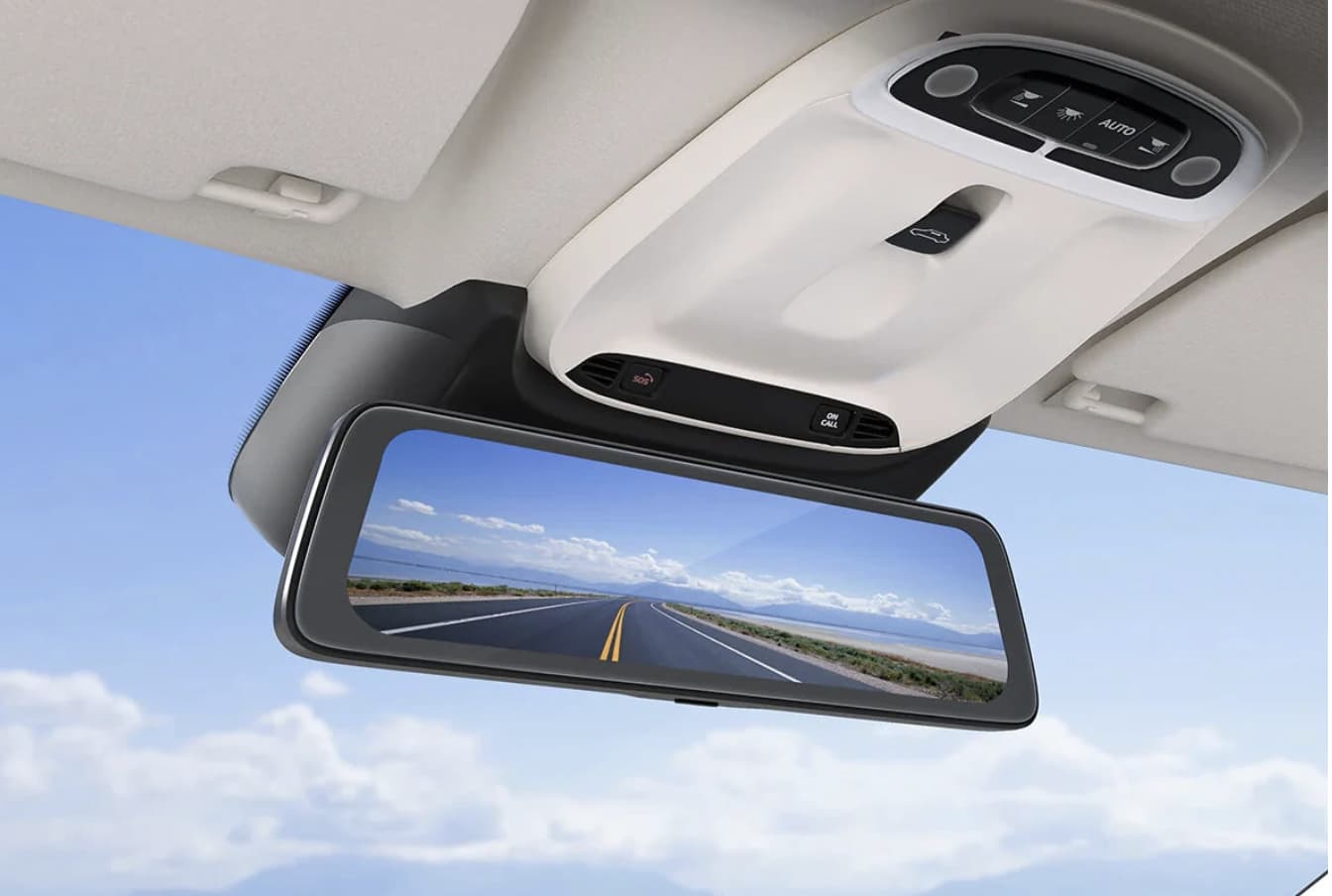
DDPAI markets the display as a 10-inch touchscreen. Its detailed specification sheet lists a 9.35-inch LCD panel, so buyers should understand that the advertised size and the listed panel measurement are not exactly the same.
The touchscreen also makes it easier to access recording playback, camera views and system settings without relying entirely on small physical buttons.
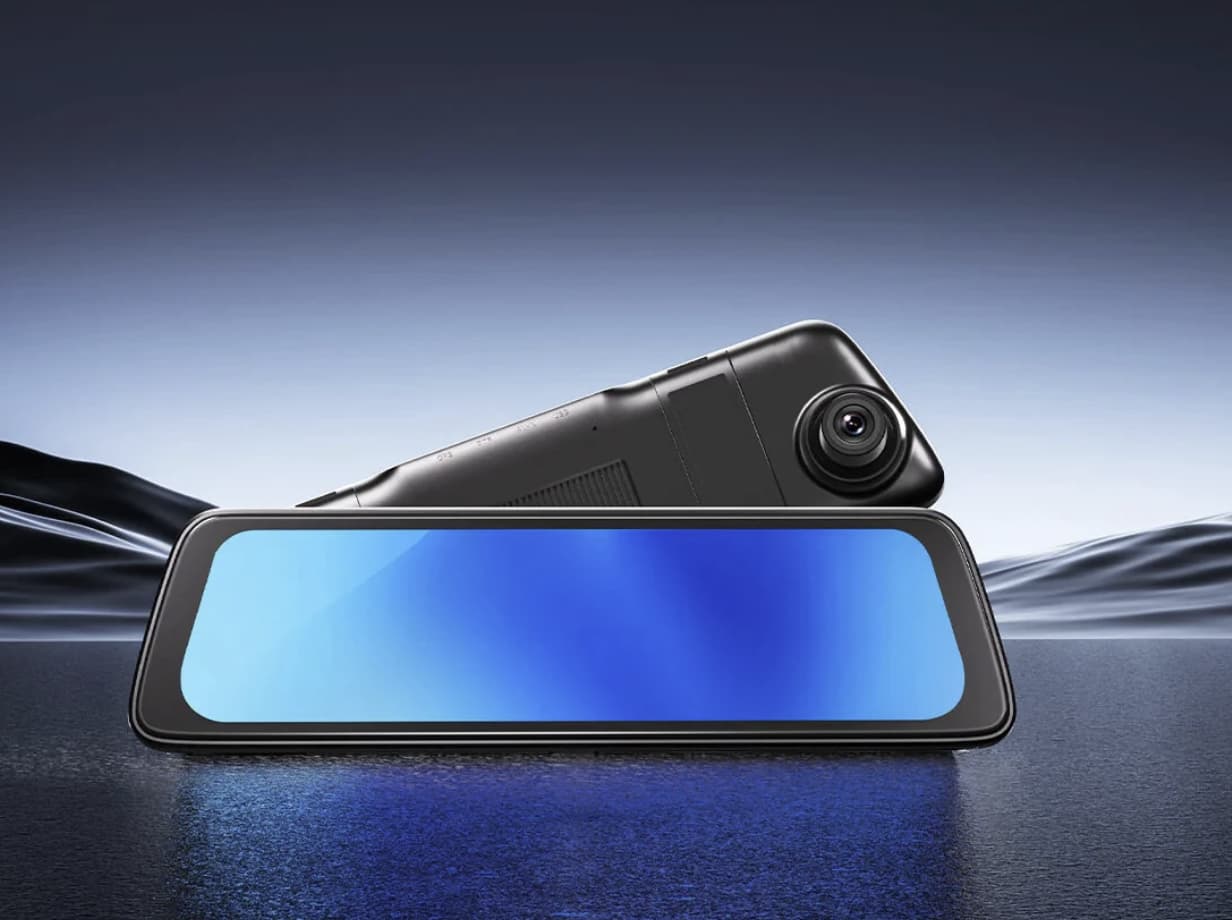
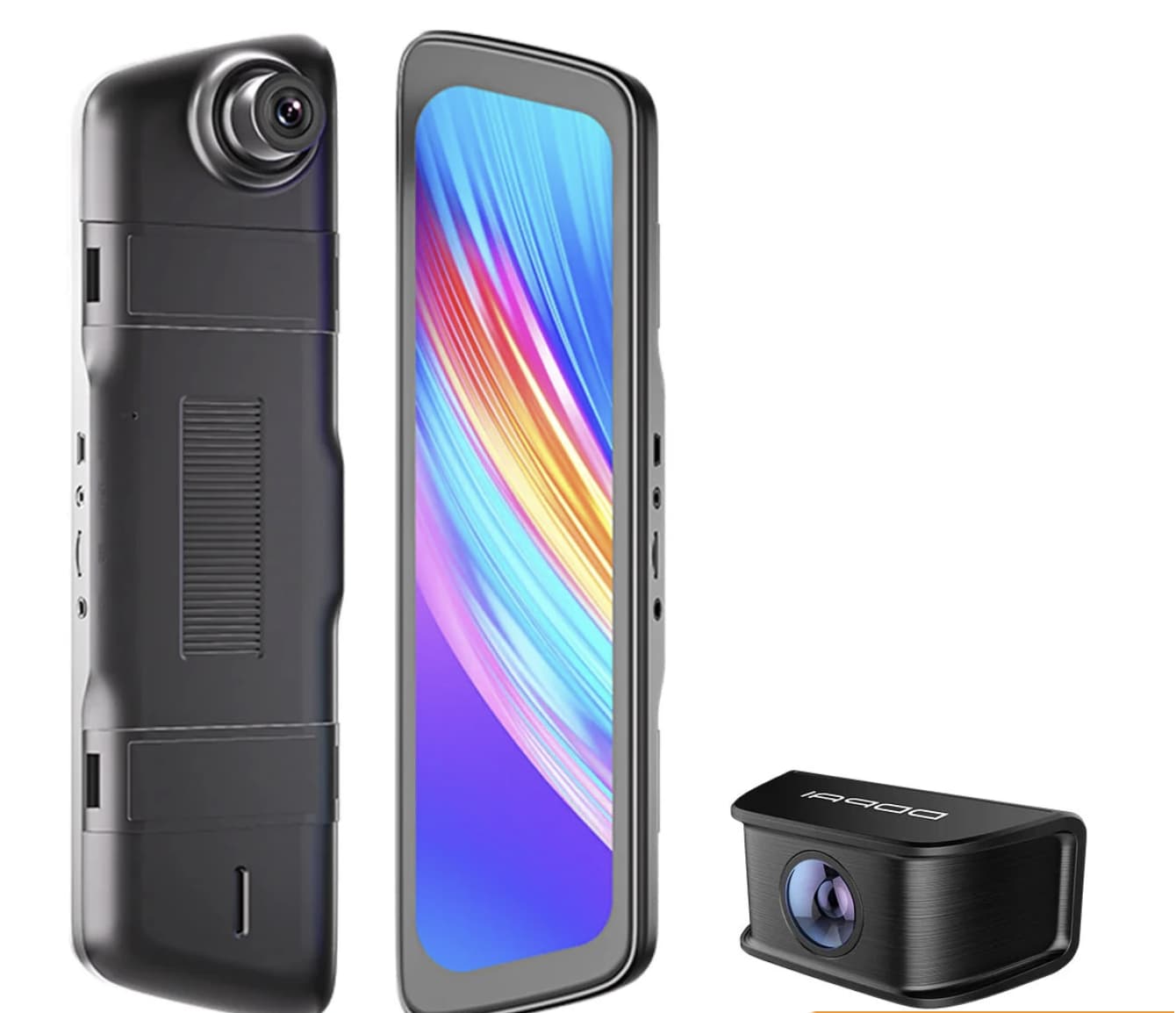
Another useful design detail is the adjustable camera assembly. The telescopic lens can be extended to improve positioning, and the camera can rotate through 360 degrees to help users adjust its viewing direction.
2K Front Recording and Full HD Rear Coverage
Video quality is one of the most important considerations when choosing a dash cam. The DDPAI E3 uses a dual-channel recording arrangement, with a higher-resolution camera facing forward and a separate camera covering the rear.
The front camera records at 2560 × 1440 pixels (2K QHD). This provides more image detail than standard 1080P recording and gives the system a better chance of capturing useful information from the road ahead.
The front lens has a 130-degree diagonal field of view and an F1.4 aperture. The wide viewing angle helps capture multiple lanes, while the large aperture is designed to collect more light in darker conditions.
At the back, the included camera records at 1920 × 1080 pixels (Full HD) and offers a 125-degree diagonal viewing angle. DDPAI also uses image-enhancement technology to improve the appearance of rear footage, particularly in changing weather and lighting conditions.
This front-and-rear arrangement is more useful than a front-only camera when documenting incidents involving vehicles approaching from behind, rear-end collisions or unexpected activity around the back of the car.
It is worth remembering that the two cameras do not record at the same resolution. The front channel provides 2K footage, while the rear channel is limited to 1080P.
Drivers comparing DDPAI’s dual-camera systems can also read our DDPAI N5 Pro 4K Front and 2K Rear Dash Cam Review, which explores a higher-resolution recording setup with additional connected features.
Night Vision and High-Beam Glare Reduction
Driving at night presents different challenges for a dash cam. Headlights, street lighting, dark roads and sudden changes in brightness can all affect recording quality.
The E3 uses an F1.4 front aperture and a multi-layer optical lens design to improve light capture. Its image-processing features are intended to preserve more visible detail in low-light environments.
DDPAI also highlights high-beam glare suppression. This feature is designed to reduce the distracting effect of bright headlights from vehicles behind the car when their light is reflected toward the rear camera.
The rear camera has its own F2.0 aperture and 125-degree viewing angle. Together, the two cameras provide a more complete record of the vehicle’s surroundings than a single-camera setup.
No dash cam can guarantee readable number plates in every night-driving situation. Results still depend on distance, vehicle speed, weather, lighting and camera positioning. Nevertheless, the E3’s dedicated low-light features make it more versatile than a basic mirror camera.
Touchscreen Controls and Smartphone Wi-Fi
The large touchscreen is not simply a display for showing the rear camera feed. It also serves as the main interface for operating the E3.
Drivers can switch between camera views, access recorded footage and adjust supported settings directly from the mirror unit. The full-screen design makes the interface easier to navigate than many compact dash cams with small displays.
The device also includes built-in 2.4GHz Wi-Fi connectivity. Through the DDPAI app, users can connect a compatible smartphone to access recordings and review footage without removing the memory card.
This is useful after an unexpected road incident. Instead of searching through files on a computer, users can connect their phones and check the relevant footage more conveniently.
Wi-Fi playback does not require mobile data for transferring recordings locally between the camera and phone. However, the actual connection process and app compatibility should be checked against the smartphone being used.
For another DDPAI camera with smartphone connectivity and app-based video access, see our DDPAI Mola N3 Dash Cam Review.
Voice Features for Easier Operation
The Banggood product listing advertises voice control, another feature intended to reduce the need for manual interaction while driving.
Voice-operated functions can be useful when a driver wants to capture an important moment or change a supported setting without reaching toward the touchscreen.
There is an important detail to check before purchasing: DDPAI’s international E3 product information describes voice reminders, while voice-control functions and available commands can vary between product versions and regional firmware. Buyers who specifically need hands-free voice commands should confirm the supported language and command list for the exact version being sold.
G-Sensor and Emergency Video Protection
A dash cam becomes particularly valuable when something unexpected happens. The DDPAI E3 includes a built-in three-axis G-sensor that detects sudden movements, impacts and other events.
When the sensor detects a collision or emergency braking event, the camera can automatically capture photographs and preserve video around the incident. DDPAI describes recording approximately 10 seconds before and after a detected event.
This matters because ordinary dash cam footage is usually stored in a continuous recording cycle. Without event protection, an important clip could eventually be overwritten as the memory card fills up.
The E3’s emergency recording and collision-locking functions are designed to help preserve significant footage for later review.
The G-sensor sensitivity can also be adjusted, which is useful for reducing unnecessary event triggers caused by minor bumps or vibrations.
Parking Monitoring Requires the Correct Power Connection
The E3 is not limited to recording while the engine is running. It also supports parking monitoring, allowing the camera to watch for certain events after the vehicle has been switched off.
According to DDPAI, its parking-monitoring system can activate recording when a collision is detected. The manufacturer describes a time-lapse approach that captures one frame per second, helping reduce storage consumption during extended monitoring.
However, there is an important installation requirement: 24-hour parking monitoring needs a dedicated hardwire kit connected to the vehicle’s ACC power system. A standard cigarette-lighter power connection may not provide the required continuous power after the ignition is switched off.
The hardwire kit also provides low-voltage protection to help prevent excessive battery discharge. Check whether the Banggood package includes this accessory or whether it must be purchased separately.
For drivers who regularly park outdoors, this feature can provide an additional layer of vehicle monitoring, although it should not be treated as a replacement for a dedicated security system.
Reversing Assistance and a Wider Rear View
The rear camera also has a practical role beyond recording incidents. Its 125-degree wide-angle view can provide a digital picture of the area behind the vehicle.
This can be helpful when reversing into a parking space or manoeuvring in an area where the original rear-view mirror offers limited visibility.
The mirror display makes the rear camera image easier to view from the driver’s normal seating position. It can also help compensate for obstructions inside the cabin.
For the reversing function to work as expected, installation and vehicle wiring matter. Buyers should check whether the required reverse-trigger connection is included in their package and whether it is compatible with their vehicle.
Loop Recording and Memory Card Capacity
The DDPAI E3 uses automatic loop recording to keep the camera running without requiring users to manually delete old videos every time the memory card becomes full.
When storage space runs out, the system can overwrite older standard recordings with newer footage. Emergency clips protected by the G-sensor are intended to remain locked rather than being treated like ordinary files.
DDPAI’s global product specifications state support for microSD cards up to 512GB. However, storage limits can differ between regional versions and product configurations, so it is sensible to confirm the maximum supported capacity for the exact unit before buying a high-capacity card.
A reliable, compatible memory card is important for continuous dual-camera recording. Using a suitable card also helps reduce the risk of recording interruptions or corrupted footage.
DDPAI E3 Mirror Dash Cam Specifications
| Specification | Details |
|---|---|
| Brand | DDPAI |
| Model | E3 / Mola E3 |
| Product type | Rear-view mirror dash cam |
| Camera configuration | Dual-channel front and rear |
| Front resolution | 2560 × 1440 (2K) |
| Rear resolution | 1920 × 1080 (1080P) |
| Front viewing angle | 130° diagonal |
| Rear viewing angle | 125° diagonal |
| Front aperture | F1.4 |
| Rear aperture | F2.0 |
| Display | 10-inch marketed touchscreen; 9.35-inch LCD listed in detailed specifications |
| Wireless connectivity | 2.4GHz Wi-Fi |
| Storage | microSD, up to 512GB on DDPAI’s global specification page |
| G-sensor | Built-in three-axis acceleration sensor |
| Recording | Dual-channel and automatic loop recording |
| Parking monitoring | Supported; dedicated hardwire kit required |
| Reversing image | Supported |
| App connectivity | DDPAI smartphone app |
What Should Buyers Check Before Ordering?
The E3 has several useful features, but a few practical details deserve attention before placing an order.
Vehicle compatibility: Check the dimensions and mounting arrangement of the mirror unit against your original rear-view mirror. The telescopic adjustment helps with positioning, but vehicle interiors are not identical.
Hardwire kit availability: If you want parking monitoring after switching off the engine, make sure the required hardwire kit is included or available separately.
Memory card: Confirm whether a microSD card is included in the Banggood package. If not, prepare a compatible card before installation.
Voice-control language: Check the exact voice features supported by the regional version rather than assuming every advertised voice function works in every language.
Installation: The rear camera needs to be positioned correctly, and some reversing functions may require additional wiring. Professional installation can be helpful if you are unfamiliar with vehicle electrical connections.
Is the DDPAI E3 Worth Considering?
The DDPAI E3 takes a different approach from conventional dash cams by combining front-and-rear recording with a large mirror-mounted display. Its 2K front camera, 1080P rear camera, touchscreen operation and smartphone Wi-Fi make it a practical option for drivers who want both recording and a more flexible rear-view display.
Its strongest advantage is the combination of everyday visibility and incident documentation. The G-sensor, emergency video locking, loop recording and optional hardwired parking monitoring add useful protection beyond basic driving footage.
There are some limitations to consider. The rear camera records at 1080P rather than 2K, parking surveillance requires the appropriate hardwire kit, and buyers should verify voice-control support and memory-card compatibility for their specific package.
Overall, the DDPAI E3 is worth a closer look if you want a mirror-style dash cam that combines a digital rear view with dual-camera recording, night-vision features and app connectivity.
Where to Buy the DDPAI E3 Mirror Dash Cam
DDPAI E3 10-inch Rear View Mirror Dash Cam is available through Banggood. Before ordering, check the latest price, shipping options and whether the selected package includes the hardwire kit or other accessories you need.