











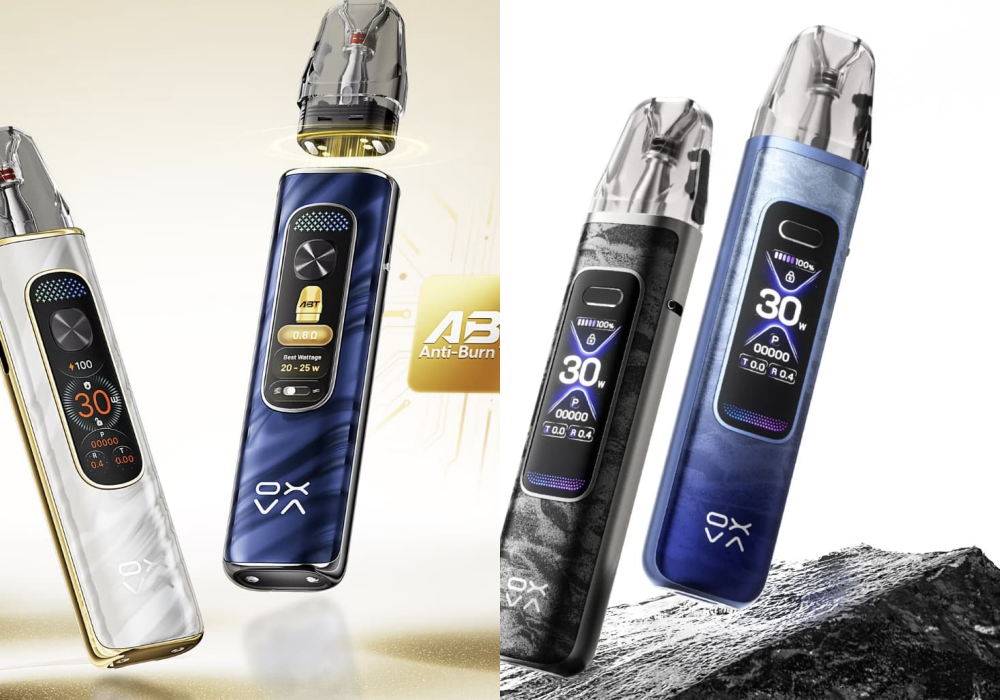
Choosing between the OXVA XLIM Pro 4 and XLIM Pro 3 is not simply a question of buying the newer model. Both devices belong to OXVA’s established XLIM pod system, offer adjustable output up to 30W, support multiple pod resistances, and provide a compact design with a built-in colour display. The real difference is how they manage e-liquid, battery power, charging and everyday operation.
The OXVA XLIM Pro 4 introduces Anti-Burn Tech (ABT), an upgraded UNITECH 3.0 cartridge platform, a larger battery and faster charging. The XLIM Pro 3, meanwhile, focuses on its PULSE System, a 1.05-inch HD screen and a lighter body.
So, what has actually changed, and does the Pro 4 offer enough improvement to justify choosing it over its predecessor? This comparison looks beyond the model numbers to examine the features that matter most.
Readers who want a closer look at the previous generation can also check out our OXVA XLIM Pro 3 hands-on review before deciding whether the Pro 4 represents a worthwhile upgrade.
OXVA XLIM Pro 4 vs XLIM Pro 3: Specifications Compared
| Specification | OXVA XLIM Pro 4 | OXVA XLIM Pro 3 |
|---|---|---|
| Maximum output | 30W | 30W |
| Output range | 5–30W | 5–30W |
| Battery capacity | 1800mAh | 1500mAh |
| Charging | USB-C, 5V/3A | USB-C, 5V/2A |
| Display | HD colour screen | 1.05-inch HD colour screen |
| Main technology | ABT Anti-Burn Tech and UNITECH 3.0 | PULSE System |
| Pod system | XLIM ABT and compatible XLIM cartridges | XLIM cartridges |
| Pod capacity | 3ml / 2ml TPD version | 3ml / 2ml TPD version |
| Included pod resistances | 0.6Ω and 0.8Ω | 0.6Ω and 0.8Ω |
| Compatible resistance range | 0.4Ω, 0.6Ω, 0.8Ω, 1.2Ω | 0.4Ω, 0.6Ω, 0.8Ω, 1.2Ω |
| Airflow | Side adjustable airflow | Side adjustable airflow |
| Device weight | 89g | 77.4g |
| Dimensions | 124 × 27.4 × 17.6mm | 119.9 × 25.7 × 15mm |
Specifications are based on OXVA’s published product information. Pod capacity and included accessories can vary by market and regulatory version.
1. Anti-Burn Tech Is the Biggest Difference
The most important addition to the XLIM Pro 4 is OXVA’s Anti-Burn Tech, or ABT. Rather than relying entirely on users to monitor the remaining e-liquid, the system is designed to detect when the liquid level becomes too low.
When an ABT cartridge detects a low or empty liquid level, the device can stop firing and display a refill alert. The intention is to reduce the chance of a dry hit and help prevent unnecessary damage to the cartridge.
This feature addresses a familiar issue with refillable pod systems: a pod can continue producing vapour even when there is not enough liquid reaching the heating element. By introducing liquid-level detection, the Pro 4 adds an extra layer of protection to the normal refill routine.
There is an important compatibility detail, however. ABT protection requires both the XLIM Pro 4 device and an XLIM ABT cartridge. Using a regular XLIM cartridge does not activate the anti-burn function. OXVA also allows the ABT feature to be switched on or off when an ABT cartridge is installed.
The XLIM Pro 3 does not offer this dedicated liquid-level detection system. Its operation is more conventional, meaning users need to check the pod themselves and refill before the liquid becomes too low.
For anyone who has previously experienced burnt-tasting draws because a pod ran dry, ABT is a meaningful functional upgrade rather than just another specification on the box.
For additional background on how OXVA developed its previous-generation platform, see our OXVA XLIM Pro 3 vs XLIM Pro 2 comparison.
2. UNITECH 3.0 vs PULSE System: Two Different Approaches
The two generations also use different headline technologies.
The XLIM Pro 3 introduced OXVA’s PULSE System, which is designed to maintain stable power delivery and consistent flavour as the battery level decreases. OXVA promotes this system as a way to reduce the noticeable performance drop that can occur as a device loses charge.
The XLIM Pro 4 moves the focus to UNITECH 3.0. This upgraded cartridge platform is designed around smoother airflow, improved e-liquid delivery and more consistent vapour production. OXVA also advertises a 30-second priming process and enhanced leak protection.
These technologies address related but different aspects of the vaping experience. PULSE focuses on how the device manages output, while UNITECH 3.0 concentrates on the cartridge and its liquid-delivery performance.
It would be misleading to say that one system automatically produces better flavour in every situation. The result can depend on the cartridge resistance, e-liquid formulation, wattage and individual usage habits. Nevertheless, the Pro 4’s newer cartridge design and ABT integration give it a more advanced pod-management approach.
3. The Pro 4 Has a Larger Battery and Faster Charging
Battery capacity is another clear improvement.
The XLIM Pro 3 has a 1500mAh built-in battery, while the XLIM Pro 4 increases that figure to 1800mAh. This represents a 300mAh increase, or approximately 20% more rated battery capacity.
Both devices have an adjustable output range of 5–30W, so the Pro 4 does not increase the maximum power level. Instead, its larger battery gives it more capacity to support everyday operation between charges.
Charging has also been upgraded. The Pro 3 supports USB-C charging at up to 5V/2A, whereas the Pro 4 supports 5V/3A charging with a compatible adapter and cable. OXVA states that the newer model can reach a full charge in approximately 40 minutes under its specified charging conditions.
Actual charging time and battery endurance will vary according to the power setting, cartridge resistance, charging equipment and usage pattern. A larger battery does not guarantee a fixed number of additional hours, but it gives the Pro 4 a useful capacity advantage.
For people who use their device frequently or prefer fewer charging interruptions, this is one of the more practical reasons to consider the newer model.
4. Screen and Controls: The Pro 3 Still Has a Strong Display
The XLIM Pro 3 features a clearly specified 1.05-inch HD colour screen. It displays information such as wattage, battery level and resistance, while OXVA also highlights its customisable themes and visual effects.
The XLIM Pro 4 retains an HD colour display and adds to the device’s updated interface. Its screen works alongside the ABT refill alerts, making the display more than a decorative feature.
However, OXVA’s published Pro 4 specification page describes the screen as an HD colour display without giving the same 1.05-inch measurement listed for the Pro 3. It is therefore better not to assume that the newer model has a larger screen simply because it is the newer generation.
Both devices support button activation and automatic draw activation, giving users two ways to operate them. They also retain adjustable wattage and side airflow control.
In other words, the Pro 4 updates the information and protection features, but the Pro 3 already provides a well-equipped display and a familiar control layout.
5. Design and Portability: The Older Model Is Lighter
The XLIM Pro 4 is slightly larger and heavier than its predecessor.
It measures 124mm high and weighs 89g, compared with the Pro 3’s 119.9mm height and 77.4g weight. The difference is noticeable on paper: the newer device weighs 11.6g more and has a wider, thicker body.
That extra size accompanies the larger battery and revised internal hardware. It does not necessarily make the Pro 4 inconvenient to carry, but users who prioritise a lighter pocket-friendly device may prefer the Pro 3.
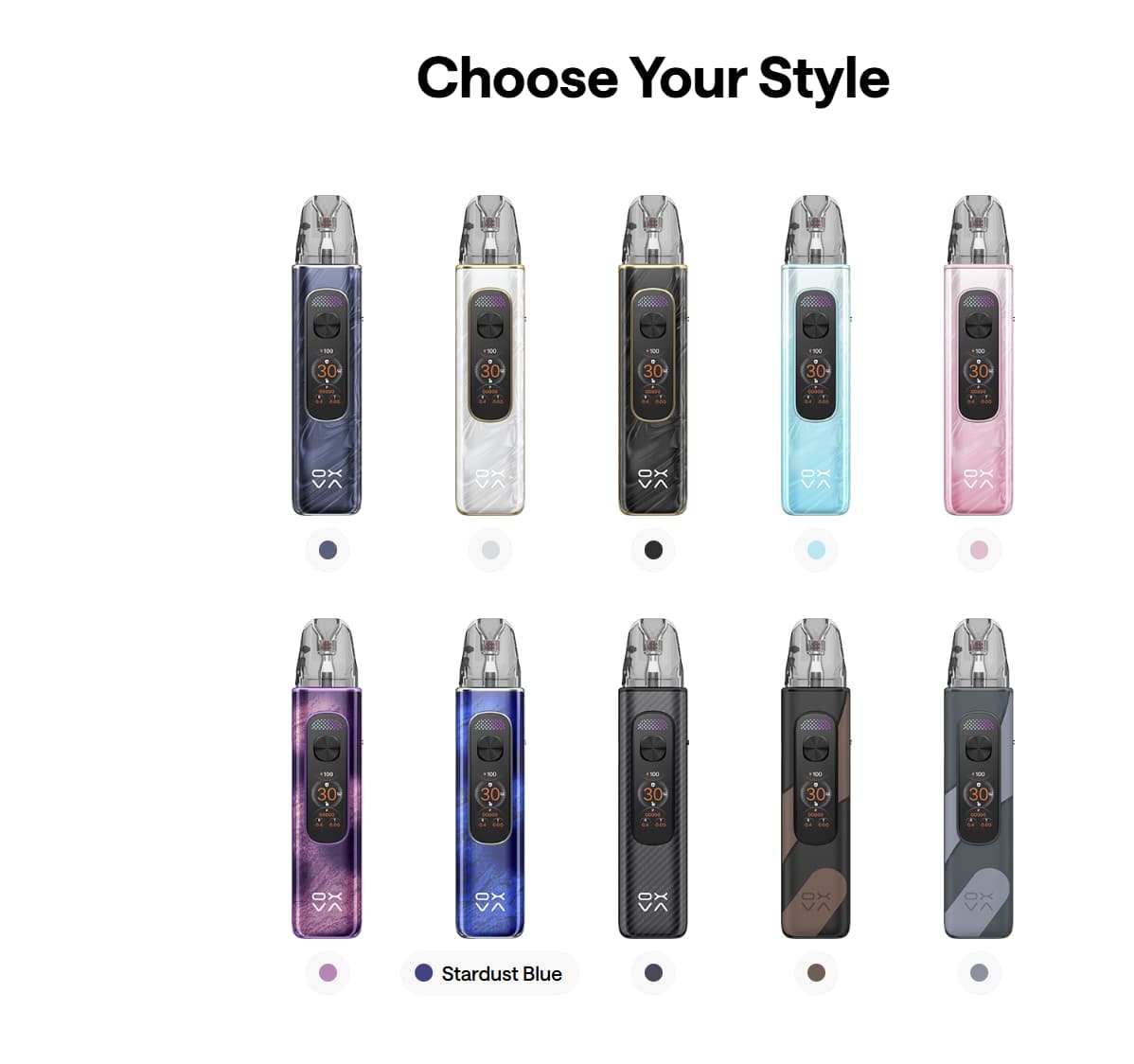
OXVA offers both models in several finishes and colour options. The Pro 4’s selection includes flowing colour designs, carbon finishes and leather-style options, while the Pro 3 has its own range of silk, carbon, leather and other finishes.
The choice here is largely personal. The Pro 4 prioritises additional hardware and functionality, while the Pro 3 has the advantage of a lighter physical profile.
6. Pod Compatibility and E-Liquid Capacity
Pod compatibility is particularly important when comparing two devices from the same product family.
The XLIM Pro 3 supports OXVA’s XLIM cartridge range, including top-fill cartridges with 0.4Ω, 0.6Ω, 0.8Ω and 1.2Ω resistance options. Its standard kit includes 0.6Ω and 0.8Ω top-fill cartridges.
The XLIM Pro 4 also supports multiple XLIM cartridges, but its headline option is the new XLIM ABT Cartridge with UNITECH 3.0. The standard kit includes 0.6Ω and 0.8Ω ABT cartridges, while other compatible XLIM cartridges remain available.
Both generations list a 3ml pod capacity for standard versions and a 2ml capacity for TPD-compliant versions. This means the newer model does not automatically offer a larger e-liquid reservoir.
The key distinction is the cartridge technology and the Pro 4’s ability to use ABT protection with the matching cartridge. Buyers should check the exact cartridge type and regional kit contents before ordering replacement pods.
Which OXVA XLIM Pro Should You Choose?
The decision depends on whether the newer protection and battery upgrades are worth more to you than the Pro 3’s lighter design.
The XLIM Pro 4 makes more sense if:
- You want the ABT liquid-level detection feature with compatible cartridges.
- You prefer a larger 1800mAh battery.
- Faster 3A USB-C charging is important to you.
- You want to use OXVA’s newer UNITECH 3.0 cartridge platform.
- You value refill alerts and additional protection against dry hits.
The XLIM Pro 3 remains worth considering if:
- You prefer a lighter device.
- You are satisfied with its 1500mAh battery and 5–30W output.
- You like its 1.05-inch HD colour display.
- You already own compatible XLIM cartridges.
- You do not need the newer ABT feature.
Price and cartridge availability should also influence the decision. If the Pro 3 is substantially cheaper in your market, its core specifications remain competitive. If the price difference is modest, the Pro 4’s battery, charging and ABT upgrades make a stronger case for choosing the newer generation.
Final Verdict: Is the XLIM Pro 4 a Worthwhile Upgrade?
The OXVA XLIM Pro 4 is an evolutionary upgrade, but its improvements are more meaningful than a simple cosmetic refresh. The addition of ABT liquid-level detection is its most distinctive feature, while the 1800mAh battery, 3A charging and UNITECH 3.0 cartridge system strengthen its everyday specification.
The XLIM Pro 3 still has several advantages. It is lighter, retains adjustable 5–30W output and offers a well-defined 1.05-inch HD display. Users who are happy with its existing performance may not find an urgent reason to replace it.
Overall, the XLIM Pro 4 is the more feature-rich option, particularly for people who value cartridge protection and faster charging. The XLIM Pro 3 remains a capable alternative for those who want a lighter device and do not need the latest ABT technology.