









The disposable vape market is evolving in 2026, with retailers looking beyond puff count when choosing new products. Factors such as battery capacity, charging speed, coil performance, flavor options, display features, regulatory requirements, and inventory efficiency are becoming increasingly important. For retailers and wholesale buyers, understanding these trends can help identify disposable vape products that better match customer demand and changing market conditions.
For wholesalers and retailers, this means comparing devices based on more than the number printed on the package. A product with a large advertised capacity may attract attention, but factors such as hardware reliability, flavor consistency, charging convenience, packaging, and market compatibility can have a greater effect on whether it remains a practical product to carry.
High-Puff Devices Are Still a Major Product Category
Large-capacity disposable and rechargeable devices remain prominent in the market. Higher advertised puff counts appeal to consumers who want to replace their devices less frequently, while larger batteries and expanded e-liquid capacities allow manufacturers to build products intended for longer periods of use.
For retailers, however, puff count should not be treated as the only purchasing metric. A high-capacity device also occupies more inventory space and may have a higher wholesale cost. Its suitability depends on local customer demand and whether the product’s other features justify the additional cost.

This is particularly relevant when comparing several devices with similar advertised capacities. Battery size, charging speed, coil configuration, airflow design, display information, and actual product dimensions can create meaningful differences between otherwise similar products.
Rechargeable Hardware Is Changing the Disposable Format
Another noticeable development is the increasing use of rechargeable batteries and USB-C charging in products marketed around long-term use.
Rechargeability allows manufacturers to pair larger e-liquid capacities with batteries that can be replenished during use. From a product-design perspective, this removes one of the limitations of earlier disposable formats, where the battery could become depleted before the available liquid was fully consumed.
For wholesale buyers, rechargeable hardware also creates another specification to evaluate: charging behavior. Port placement, charging speed, battery capacity, and protection features can affect the overall usability of a device.
Dual-Mesh Coils Put More Attention on Flavor Performance
Puff counts are easy to advertise, but flavor consistency is harder to communicate on a product box.
Mesh and dual-mesh coil configurations continue to appear across higher-capacity devices because manufacturers use them to target more consistent heating and vapor production. The underlying hardware design can influence how quickly an e-liquid is vaporized and how the flavor develops during use.
This makes coil configuration worth considering when comparing products for a particular customer base. A retailer that already has customers who prioritize flavor may find coil design more relevant than simply choosing the device with the largest advertised puff count.
At the same time, coil technology should not automatically be treated as proof of better performance. Actual results depend on the complete device design, including airflow, power delivery, e-liquid formulation, and manufacturing consistency.
Displays Are Becoming a More Visible Differentiator
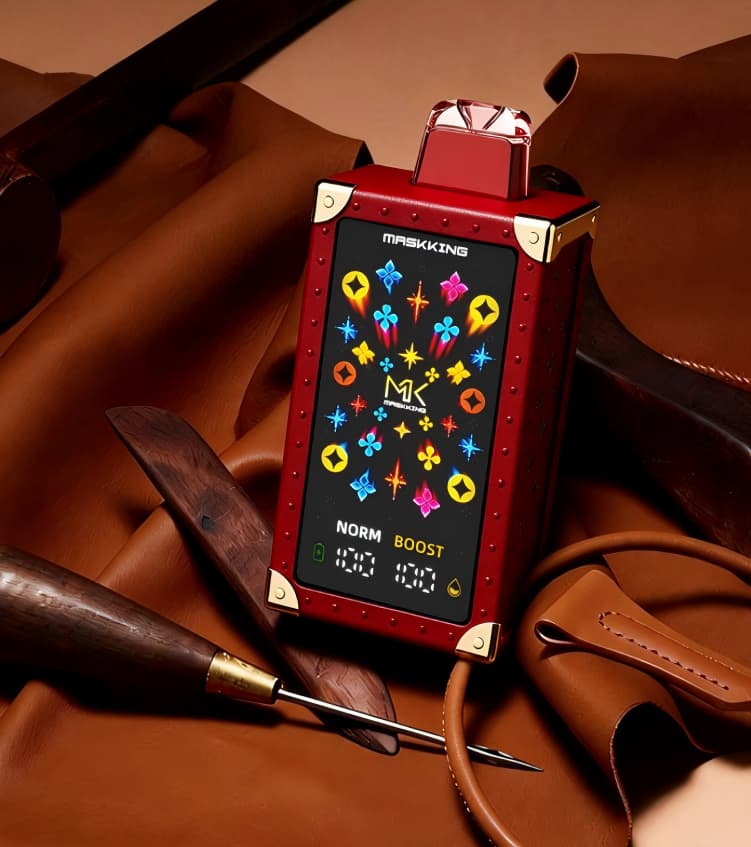
Digital displays are another feature appearing more frequently on modern high-capacity devices.
Instead of leaving users to estimate remaining battery or liquid levels, a screen can provide information directly on the device. Depending on the model, displays may show battery status, liquid information, operating modes, or other device data.
From a retail perspective, displays also give manufacturers another way to differentiate products that otherwise have similar capacities. A device with a recognizable interface may be easier for customers to distinguish from competing products on a crowded shelf.
However, additional electronics can also affect device size, cost, and complexity. Retailers should therefore consider whether customers actually value the feature rather than treating a display as an automatic upgrade.
Flavor Variety Remains Important for Product Selection
Flavor selection is another area where wholesale strategies can become more complicated, particularly for retailers comparing Maskking ejuice flavors and nicotine strengths.
Different regions and customer groups can have very different preferences. A product range built around only a small number of flavors may be easier to manage, but a broader selection can help retailers serve customers looking for different fruit, cooling, beverage, or mixed profiles.
The challenge is avoiding unnecessary inventory. Carrying too many similar flavors can divide demand across multiple products, leaving individual SKUs with slower turnover.
For that reason, retailers may benefit from analyzing their existing sales patterns before expanding a flavor range rather than simply selecting the largest available menu.
Compliance Has Become Part of Product Selection
Regulatory requirements are increasingly important when selecting products for different markets.
A device that is suitable for one region may not be appropriate for another because requirements can differ regarding nicotine strength, e-liquid capacity, packaging, labeling, product registration, or permitted product formats.
This makes documentation and market-specific compliance information important considerations for wholesale buyers. Product specifications should be checked against the requirements of the intended market instead of assuming that a product sold internationally is automatically suitable everywhere.
For retailers operating across multiple regions, compliance can therefore influence purchasing decisions just as much as hardware specifications. Retailers should also evaluate regional vape regulations before adding a new disposable or refillable product to their inventory.
Why Puff Count Alone Is a Poor Wholesale Metric
A large puff number can attract attention, but it does not tell a retailer everything necessary to evaluate a product.
A more complete wholesale assessment should consider:
- Battery capacity and charging method
- E-liquid capacity
- Coil configuration
- Flavor consistency
- Device dimensions and weight
- Display and control features
- Packaging and labeling
- Product documentation
- Regional compliance
- Minimum order requirements
- Expected inventory turnover
Looking at these factors together provides a more realistic picture of a product’s wholesale potential.
For example, a lower-capacity device with strong flavor performance and faster inventory turnover may be more practical for a retailer than a much larger device that takes longer to sell.
Where Maskking Fits Into These Trends
Maskking is one of the brands participating in the industry’s move toward higher-capacity hardware, more visible device interfaces, and increasingly feature-rich designs. Its product range includes models positioned around different capacity and hardware configurations.
Products such as the Maskking Malux 50K and EXTRE 100K wholesale illustrate the industry’s emphasis on larger advertised capacities, while other Maskking models use features such as digital displays and mesh-based coil systems.
Rather than judging these products solely by their headline specifications, retailers should compare their individual hardware, flavor selections, pricing, documentation, and market suitability with competing products.
That approach is more useful than assuming that the product with the highest advertised capacity will automatically generate the best retail results.
What Retailers Should Watch in the Second Half of 2026
The disposable vape category is likely to remain highly competitive, but the strongest product differentiators are becoming more diverse.
Higher capacities will continue to attract attention, while rechargeable designs, displays, coil improvements, flavor variety, and market-specific compliance will influence product selection.
For wholesalers, the practical lesson is simple: puff count should be one specification among many, not the entire purchasing strategy.
Brands that can combine dependable hardware, consistent product specifications, appealing designs, suitable flavor options, and appropriate market documentation will have a stronger foundation than products relying on a single headline number.
For retailers, choosing the right disposable vape products should start with customer preferences, local regulations, and expected sales performance. Instead of focusing only on high puff counts or headline specifications, buyers can build a stronger inventory by comparing battery life, device design, flavor selection, and overall product demand. Retailers exploring different Maskking formats, our guide to Maskking disposable and pod systems provides a broader look at the lineup.