









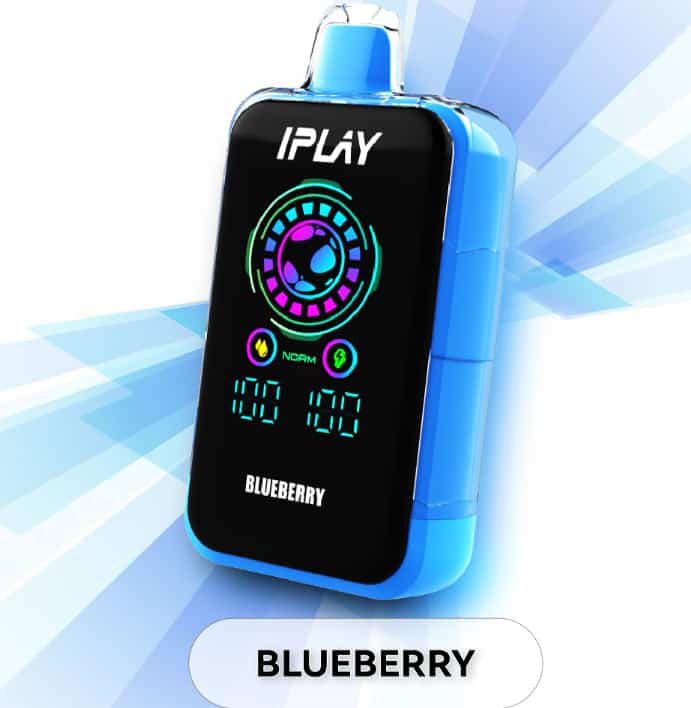
Under the triple pressure of stricter policies, intensified competition and stable technology, the e-cigarette industry is entering a critical turning point for product innovation. The industry is shifting from “functional superposition” to “system evolution”, and truly breakthrough innovations are becoming scarce and important. Although there have been numerous “innovations” at the product level in recent years, most of them remain at the level of form or rhetoric, lacking sustainable value. The industry urgently needs to answer two core questions: What is truly meaningful product innovation? How can enterprises find a definite direction amid uncertainties?
The report has distilled nine representative product trends and summarized them into three core driving forces – user experience upgrade, compliance-driven reconstruction, and cross-category integration and evolution. This reflects that the e-cigarette industry is undergoing a structural transformation from “quickly launching new products” to “deeply exploring logic”, and from “stacking functions” to “building systems”.
We hope that through this report, it can provide brand owners, supply chains, channel partners and policy researchers with a more strategically valuable trend reference coordinate.
Driving Force One: User Experience-driven – From “Easy to Draw” to “User-friendly”
User experience has always been the origin and anchor point of product innovation.
In a highly homogeneous competitive environment, detailed experience has become the key for brands to establish differentiation. Through long-term market observation and exhibition research, it has distilled four major trend directions driven by current user experience, which are becoming important signals for the reshaping of product design priorities.
【 Trend One 】 Open Oil Structure: Visualized “Sense of Security
The design of transparent oil tanks is becoming a mainstream trend. It not only enhances the aesthetic appeal of the product, but also responds to users’ anxiety about the amount and quality of e-liquid through the logic of “seeing is reassuring”. Functionally, it even has the potential to replace electronic screens, thereby reducing costs and design complexity, while alleviating environmental pressure.
【 Trend Two 】 Metal Casings: Driving a “Class and Texture Leap” in Disposable Products
From plastic appearance to metal body, disposable products are undergoing a transformation towards “gentrification”. The metal material not only enhances the grip feel but also endows the product with more “maturity” and “business temperament”. This type of design is attempting to break the stereotype that e-cigarettes are “only targeted at young people” and enter groups with higher purchasing power. However, the disposable nature of the metal casing also brings greater environmental pressure, and enterprises need to strike a better balance in design.
Trend Three: Adjustable Flavors: E-cigarettes enter the era of personalized adjustment
The taste adjustment function is accelerating its expansion in dimensions, from sweetness, coolness, nicotine concentration, and even extending to the regulation of CO₂ sensation, in order to simulate the flavor stimulation similar to that of cola bubbles. Brands are exploring the path of “customized taste”, such as knob adjustment, button control, program setting, or functional segmentation through device modules.
This type of product has achieved an unprecedented “freedom of taste” in form, but it also brings new challenges: As the number of adjustment options keeps increasing, does the user experience improve as a result, or is it instead restricted by complexity? How to control the operational burden while meeting personalization requirements is becoming an important proposition in the next stage of product design.
【 Trend Four 】 Dust Cover: A “Must-have Detail” for Clean Habits
Users’ concern about cigarette nozzle hygiene is being taken seriously by brands. Dust cover designs are being adopted by more brands. This response to a “non-mainstream necessity” indicates that the user experience of e-cigarettes has moved from a broad perspective to a micro dimension, and details have begun to become part of the product’s competitiveness.
Driving Force Two: Compliance-driven – Seeking solutions between regulation and the market
In today’s global market, “compliance” has long risen from an accessory condition for product development to the first principle guiding the design logic.
In the face of an increasingly complex regulatory environment, product innovation should not only meet the needs of consumer experience but also strike the optimal solution between policy Windows and technical feasibility.
Through systematic research on global policy dynamics and corporate response strategies, it has identified three current compliance-driven innovation trends. These trends are reshaping the product form boundaries of industries and have also become key signals for brand strategic shifts.
Trend Five: Split Batteries: Driving the Dual Transformation of Repurchase and Sustainability
With the requirements of environmental protection and regulations (such as the EU’s plan to mandate battery detachable by 2026), split battery design has become an important way to comply with regulations. Whether it is the left-right structure, the top-bottom structure, or the battery embedded structure, its core value lies in:
Comply with policy requirements
Enhance repurchase rate and user stickiness
The split structure is no longer merely a change in physical structure; it is also an active adjustment in brand strategy.
Trend 6: The “disguise” of disposable products continues – The shape remains the same
In response to the restrictions imposed by European countries on disposable products, a batch of products have begun to appear in the form of “disposable appearance, replaceable structure, and oil injection”, which not only lowers the threshold for users to migrate but also circumvents policy constraints in form, becoming a “balanced solution” under the disposable ban.
Trend 7: Fog-free Products: The “Invisibility Weapon” for Expanding E-Cigarette Usage Scenarios
Fog-free e-cigarettes – that is, no visible mist when smoked – are attempting to break through the usage restrictions in public places. Its greatest advantage lies in: low interference. However, the current technology is still not mature, the threshold for operation skills is relatively high, and the cost of user education cannot be ignored either. Its true large-scale implementation still requires a time window and technological iteration.
Driving Force Three: Convergence Trend – A new growth curve that breaks category boundaries
Integration is becoming one of the key paths for the innovation of new tobacco products.
With the diversified evolution of user demands, the trend of integration has moved from early exploration to systematic advancement, profoundly influencing product forms, technical architectures, and application scenarios, and driving the industry towards more integrated and composite innovation.
Based on continuous market tracking and observation of cutting-edge products, it has summarized two major trend directions driven by current integration, which are becoming important references for category collaboration and technological reconstruction.
【 Trend 8 】 Internal Integration of NGP: The “Blurred Line” between E-cigarettes and Heated Non-combustible Products
From disposable e-cigarettes to heat-not-burn products, the two paths are getting closer to each other. On the one hand, heat-not-burn products are beginning to “e-cigarette” to gain portability and interactivity; On the other hand, e-cigarettes also draw on the structure and taste path of HNB to achieve a substitute smoking experience. The interaction between the two major tracks will reshape product boundaries and user paths.
Trend 9: The Fusion of New and Old Tobacco: The cross-border combination of disposable and desktop hookahs
As Middle Eastern hookahs spread globally, e-cigarette technology is penetrating into desktop hookahs, giving rise to a new species known as “e-hookahs”. It combines the one-time convenience with the social attributes of traditional hookaws, creating brand-new scenarios and user conversion channels. The rise of desktop hookahs may become one of the breakthroughs for “scenario-based e-cigarettes” in the future.
Innovation is systematic, not an isolated accumulation of technologies.
What can truly change the trajectory of an industry is not a single product or a single function, but the systematic force driving innovation behind it. Only when “user experience”, “compliance response” and “cross-category integration” work together can the e-cigarette industry enter a true “product paradigm reconstruction”.
This report aims to provide a structured observation framework to help the industry more clearly identify trend threads and strategic fulcrums.