









Igeekphone 7/14: Tech media Neowin published a blog post yesterday (July 13), stating that Google submitted an opinion to the European Commission, arguing that the EU’s ban on DNS resolvers (such as 8.8.8.8, owned by Google) and IP addresses has “limited effect in combating piracy and will cause collateral damage”.
The European Commission intends to implement measures to block DNS resolvers and IP addresses in order to combat piracy websites. In its opinion, Google clearly stated that such measures are mostly ineffective and would cause additional harm.
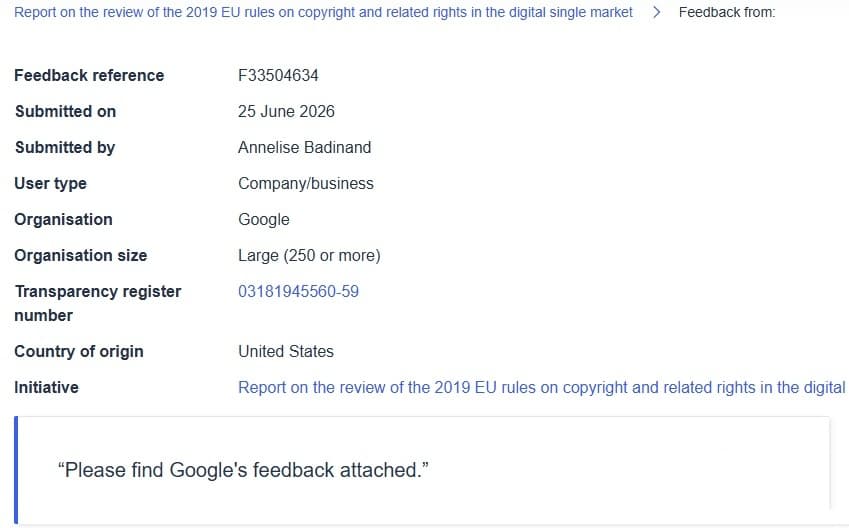
Google pointed out that in terms of DNS resolution, even if the official ban is implemented, users can still switch to other alternative services to bypass the restrictions. Regarding IP address blocking, the actual effect might be “disproportionate”. Moreover, multiple legal services may share the same IP address. Once this address is blocked, services that do not infringe upon any rights may also be inaccessible simultaneously.
Google cited a case from December 2019. When the local Portuguese internet service provider blocked the virtual IP addresses hosted by Google, it caused the interruption of many normal Google service traffic, and cut off the traffic of Google Cloud’s legitimate customers that shared resources with these virtual IPs or IP segments.
The report also mentioned that after the UK blocked The Pirate Bay, a list of proxies emerged externally that allowed continued access to the website. Based on this, Google believed that simply blocking the entry point of the site might lead to new ways of circumventing it. For copyrighted content distributed through BT seeds or peer-to-peer methods, the content is hosted and forwarded by multiple nodes worldwide, and a single-point blockade would be difficult to cover all the transmission paths.