








Recording a travel vlog usually means making a compromise. A handheld camera captures the details in front of you, but filming yourself while walking can be awkward. A drone offers a wider perspective, yet it requires extra equipment and more preparation. Carrying both devices solves the problem, although it adds weight and makes spontaneous filming less convenient.
The HOVERAir VERSA takes a different approach. Rather than asking creators to choose between handheld footage and aerial shots, this compact camera is designed to handle both jobs. Used on its own, it functions as a handheld gimbal camera. Attach its flight hardware, and it becomes a self-flying camera capable of following the user and capturing footage from different angles.
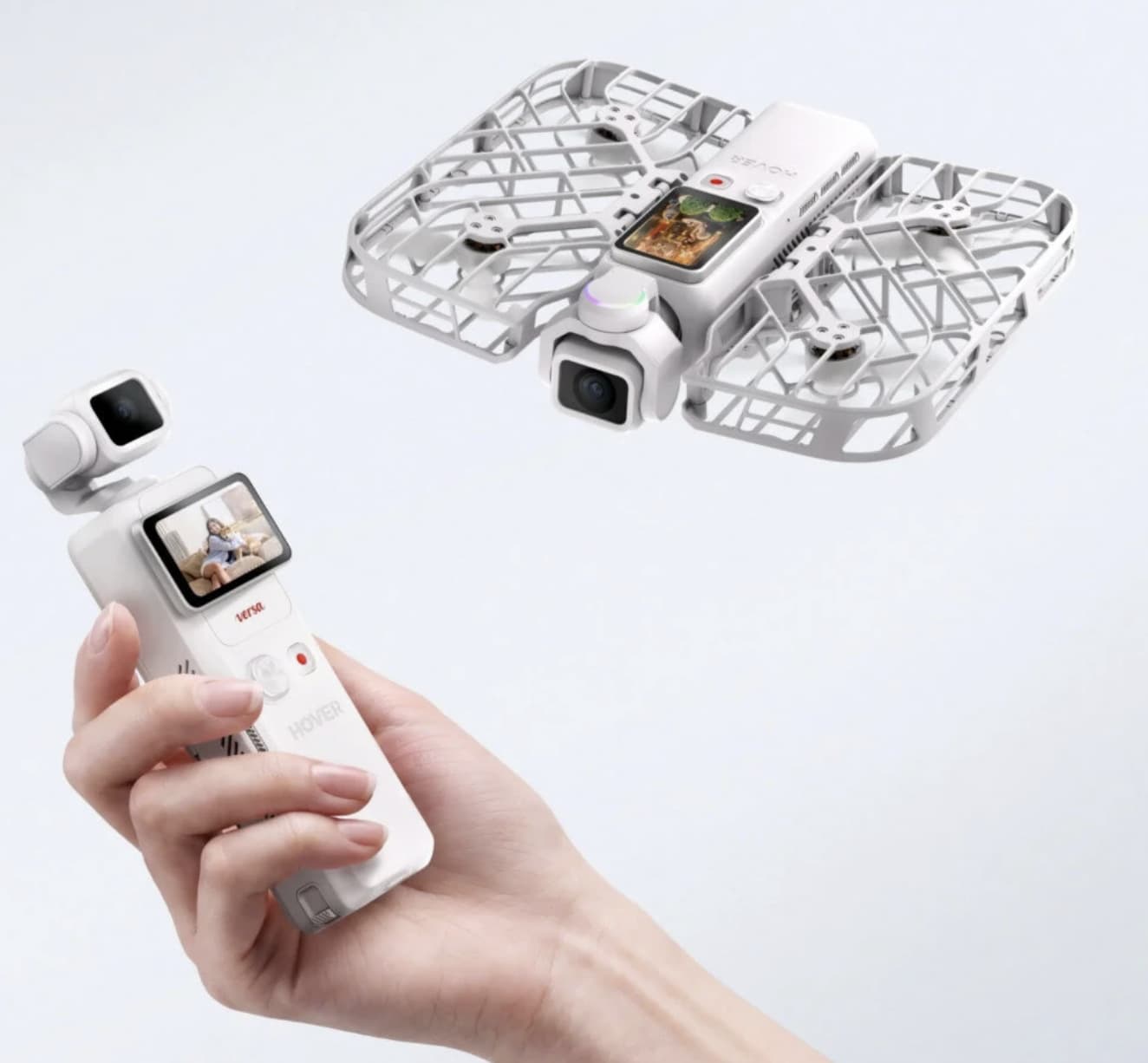
That combination makes the VERSA particularly interesting for solo creators, travel vloggers, cyclists, and anyone who wants more filming options without carrying a full camera kit.
But combining two devices does not automatically make one product suitable for every situation. Flight time, camera controls, tracking performance, and the practicalities of switching between modes all matter. Here is what buyers should understand about the HOVERAir VERSA before considering it.
One Camera, Two Different Ways to Shoot
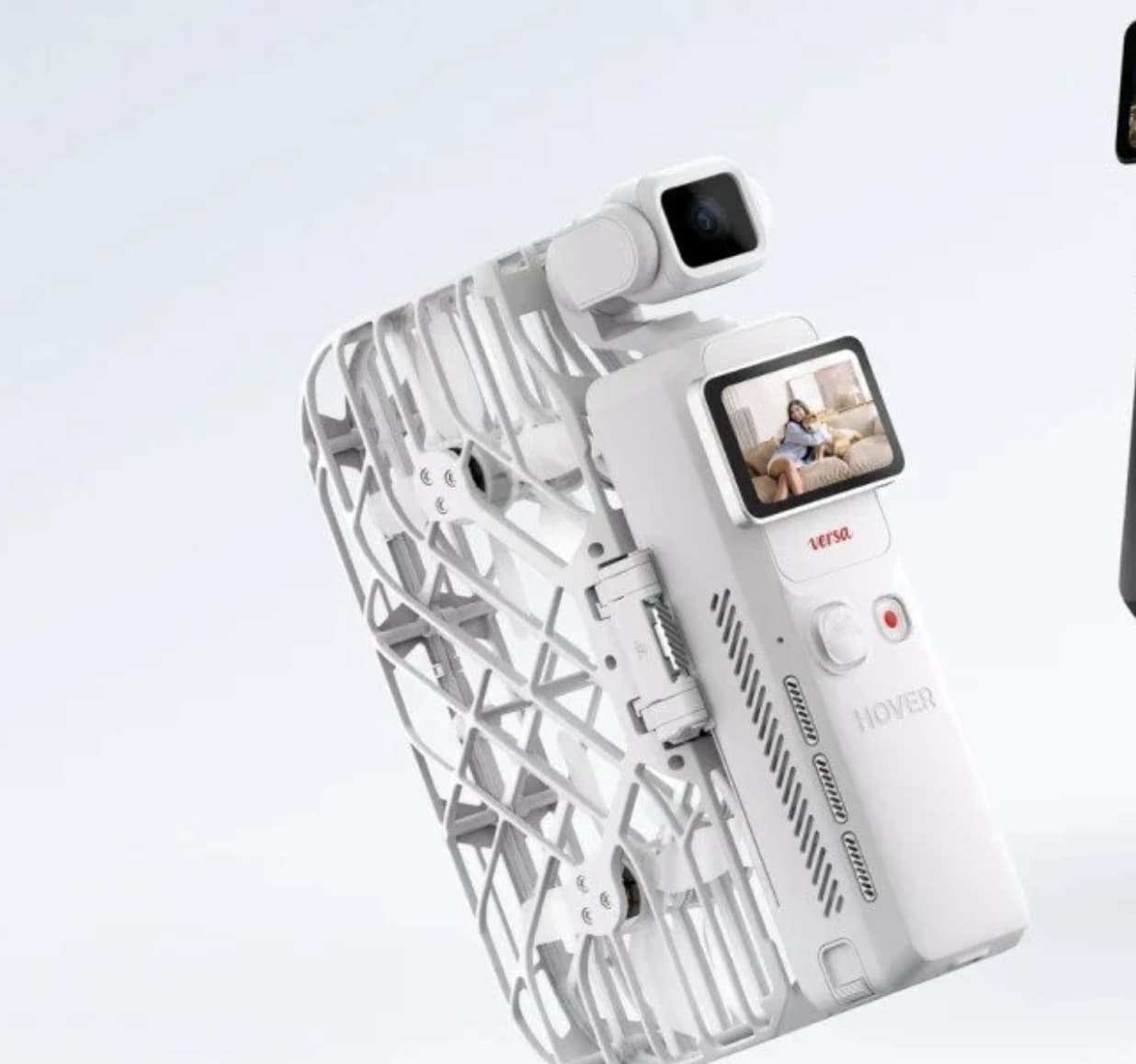
The VERSA’s defining feature is its modular design. Instead of building a conventional drone around a dedicated camera, HOVERAir has created a camera that can also operate as a flying platform.
In handheld mode, the device is intended for walking videos, close-up footage, personal vlogging, and everyday recording. Its three-axis mechanical gimbal helps compensate for movement, providing a more controlled image than simply holding a camera without stabilization.
When aerial footage is needed, the camera connects to the compatible Flight Kit. The resulting configuration can take off and capture footage without requiring the user to hold the camera throughout the recording.
This changes the way a creator can approach a shoot. Imagine arriving at a scenic overlook. You could begin with a handheld introduction, record details of the surroundings, and then switch to a flying shot that shows the landscape from a wider perspective. One camera system can support both parts of the sequence.
The benefit is not simply convenience. Using the same camera across different shooting situations can also make it easier to maintain a consistent visual style throughout a video.
The trade-off is that the VERSA is a hybrid product. Buyers looking for the longest flight time, advanced obstacle avoidance, or the specialized capabilities of a dedicated professional drone may need a different category of equipment.
Camera Quality: More Than Just a 4K Label
Resolution is an obvious starting point when evaluating a camera, but it does not tell the entire story. Sensor size, stabilization, dynamic range, exposure control, and the available recording modes all influence the final result.
The HOVERAir VERSA uses a 1/1.3-inch image sensor and supports video recording up to 4K at 60 frames per second in compatible standard recording modes. It also offers 10-bit HDR and H-Log recording, with these advanced formats available at up to 4K/30fps according to the published specifications.
For everyday creators, 4K provides enough detail for high-quality travel videos, product demonstrations, YouTube content, and many social media projects. Recording at 60fps can make movement look smoother and offers flexibility for slow-motion editing when the project timeline uses a lower frame rate.
HDR and Log modes are more relevant to people who edit their footage after recording. They can provide additional flexibility when adjusting highlights, shadows, and color during post-production. However, these modes require a compatible editing workflow, and the final result depends on exposure and lighting as well as the camera itself.
The distinction between 4K/60fps standard video and 4K/30fps HDR or H-Log is worth checking before buying. Not every combination of resolution, frame rate, and color profile is necessarily available at the same time.
For creators who publish directly from a phone, standard recording may be sufficient. Those who color-grade travel films or commercial content should examine the precise recording options they intend to use.
Three-Axis Stabilization for Walking and Travel Videos
Shaky footage can make an otherwise interesting video difficult to watch. This is especially noticeable when walking through a busy street, recording a product demonstration, or filming while moving between locations.
The VERSA’s three-axis mechanical gimbal is designed to counteract camera movement and help maintain a controlled composition. Unlike stabilization that relies exclusively on software, a mechanical gimbal physically adjusts the camera’s orientation as the device moves.
This makes the handheld configuration useful for creators who frequently record while walking. It can also help when filming a sequence that moves from a close-up subject to a wider view.
Stabilization still has limits. A gimbal cannot eliminate every sudden impact, and the final footage depends on walking technique, camera movement, lighting, and recording settings. It is also important to distinguish the camera’s handheld stabilization from the stability of the flying configuration, which is affected by wind and flight conditions.
For buyers who primarily want to record smooth footage without learning advanced camera movements, the combination of mechanical stabilization and automated framing is one of the VERSA’s most relevant features.
AI Tracking and Automatic Framing for Solo Creators
Filming yourself without another person behind the camera can be surprisingly difficult. You need to stay in frame, manage the camera, and concentrate on what you are doing at the same time.
The VERSA addresses this problem with AI-powered subject tracking and automatic framing features. Its intended use cases include following a moving person, keeping a subject in view, and capturing footage without requiring continuous manual camera adjustments.
For example, a travel vlogger could record themselves walking along a trail, while a fitness creator could use automated filming for selected outdoor exercises. A solo cyclist might also find tracking useful for compatible, carefully planned shots.
The key advantage is a simpler recording process. Instead of asking a friend to operate the camera, the creator can concentrate on the activity while the device handles much of the framing.
However, AI tracking should not be confused with complete autonomy in every environment. Performance can vary with lighting, background complexity, subject movement, distance, and obstructions. A tracking feature also does not guarantee that every shot will have professional composition.
Before using automated flight around people or moving vehicles, understand the product’s operating limits and keep the camera within a safe, controllable environment.
A Lightweight Design for Everyday Carry
Portability is essential for a device intended to accompany users on trips and spontaneous outings.
According to HOVERAir’s published specifications, the VERSA weighs approximately 163g in handheld mode and around 230g when configured for flight. This allows the camera itself to remain relatively compact while providing the additional hardware needed for aerial recording.
For travel, that distinction matters. You can carry the handheld camera for everyday filming and add the flight components when a particular location or shot calls for them.
The design is suited to people who value convenience over carrying a large interchangeable-lens camera, separate gimbal, and traditional drone. It may also appeal to creators who want to record short clips throughout the day rather than setting up a complete production each time.
Nevertheless, the total travel kit matters more than the camera’s weight alone. Spare batteries, charging equipment, protective storage, and any optional controller or accessories can increase the amount of gear you carry.
The VERSA is therefore best viewed as a compact camera system, not a promise that every filming accessory will fit into a pocket.
Flight Time: The Limitation Buyers Should Consider
One of the most important differences between a handheld camera and a flying camera is battery consumption.
HOVERAir lists up to 14 minutes of flight time for the VERSA. That figure should be treated as a best-case manufacturer rating rather than a guarantee of usable recording time in every situation. Wind, temperature, flight patterns, battery condition, and other operating factors can affect endurance.
Fourteen minutes can still be useful for short sequences. A creator might record a scenic reveal, a brief follow shot, or a series of carefully planned clips before landing the device.
It is less suitable for someone who expects continuous aerial recording throughout a long hike or extended outdoor event. In those situations, battery planning becomes part of the shooting process.
The handheld configuration has a different endurance rating. HOVERAir advertises up to 180 minutes of handheld operation, giving the product a substantially different usage profile when it is not flying.
These two figures should not be confused: the camera’s long handheld operating time does not mean it can remain airborne for anything close to three hours.
Anyone planning to use the VERSA for a full day of content creation should investigate spare-battery availability, charging options, and the time needed to return the camera to service between flights.
Storage and Connectivity for Modern Content Workflows
A compact camera is more useful when transferring footage and managing files does not become an obstacle.
The VERSA’s published specifications include 64GB of internal storage and support for microSD cards up to 1TB. This gives users options for managing recordings according to the length and frequency of their shoots.
Internal storage can be convenient when you want to start recording without preparing a removable card. A compatible microSD card, meanwhile, offers additional space for longer trips and larger video collections.
Storage requirements depend on the selected resolution, frame rate, and recording format. High-resolution video can consume space quickly, so creators who regularly record 4K footage should plan their storage around the actual bit rate and duration of their clips.
The camera also supports wireless connectivity, allowing compatible devices and accessories to form part of its operating workflow. Before purchasing optional equipment, check which controllers, transmitters, or other accessories are supported by the specific version being sold.
For social media creators, an efficient workflow can be just as important as image quality. A camera that captures excellent footage but makes transferring and organizing files inconvenient may be less practical for everyday use.
Where the HOVERAir VERSA Makes the Most Sense
The VERSA’s appeal becomes clearer when considered through specific filming scenarios rather than a list of technical features.
Travel and city exploration: Use the handheld configuration for street scenes, food, architecture, and personal commentary. Switch to flight mode where permitted and appropriate for a wider view of the surroundings.
Solo vlogging: Automated tracking can reduce the need for a separate camera operator, making it easier to record walking sequences and other activities.
Outdoor activities: The lightweight design is attractive for short trips when carrying several specialized devices would be inconvenient. Flight time and weather conditions still need to be considered.
Product and lifestyle videos: The handheld gimbal can support smooth close-ups, while the flying configuration adds another perspective for suitable scenes.
Social media production: Vertical video support can help creators produce material for mobile-first platforms without depending entirely on cropping horizontal footage.
These are potential use cases based on the product’s design and published features, not a claim that every mode has been independently tested under all conditions.
HOVERAir VERSA vs. a Traditional Drone and Pocket Gimbal
Choosing the right camera depends on the footage you produce most often.
A conventional pocket gimbal camera is designed primarily for handheld filming. It may be the better option if nearly all your content consists of interviews, walking videos, close-ups, and controlled camera movements.
If you’re comparing different flying cameras, our guide on how to choose a beginner drone explains the key features to consider before buying.
A dedicated drone places more emphasis on aerial performance. Depending on the model, it may offer longer flight endurance, more advanced flight controls, obstacle sensing, or a different camera system.
The VERSA sits between these categories. Its appeal is that a single camera body can serve both handheld and self-flying roles.
This approach is especially attractive for solo creators who frequently move between ground-level and aerial footage. On the other hand, people who specialize in long aerial sessions may prefer a dedicated drone, while creators who never need aerial footage may not benefit from paying for flight hardware.
The sensible question is not whether a hybrid camera is universally better. It is whether switching between these two recording styles is important enough in your own workflow to justify the additional equipment.
Safety and Practical Considerations Before Flying
Automated flight can make recording easier, but it does not remove the operator’s responsibility to choose a safe location and follow applicable rules.
Before taking the HOVERAir VERSA outdoors, review these drone safety rules and flying guidelines to understand important flight precautions.
Before takeoff, check local drone regulations, airspace restrictions, privacy requirements, weather conditions, and any limits that apply to the device’s weight category. Rules differ by country and location, so a lightweight camera should not automatically be assumed exempt from every requirement.
The VERSA should also not be treated as having obstacle avoidance unless the exact configuration is confirmed to include that capability. Automated tracking and obstacle sensing are different functions.
Avoid flying close to uninvolved people, roads, power lines, or other hazards. Keep a clear landing area available, monitor battery levels, and follow the manufacturer’s instructions for takeoff, landing, and emergency handling.
These precautions are particularly important for beginners. A self-flying camera can reduce the effort involved in capturing a shot, but safe flight still requires preparation and awareness of the surroundings.
Who Should Buy the HOVERAir VERSA?
The VERSA is worth considering if you want one compact camera system for both handheld filming and short autonomous aerial sequences.
It may suit:
- Travel vloggers who want ground-level and aerial perspectives.
- Solo creators who regularly film themselves.
- Outdoor enthusiasts who need a lightweight recording setup.
- Social media producers who value automated tracking and framing.
- Users who would rather carry one hybrid system than separate handheld and flying cameras.
It is less compelling for buyers who need long uninterrupted flight sessions, professional aerial features that the device does not offer, or a camera solely for conventional handheld shooting.
Price is another important factor. The value of the system depends on the complete package, including the Flight Kit, battery accessories, and any optional equipment. Compare the actual contents of the Banggood listing rather than assuming every accessory is included.
Final Verdict: A Different Approach to Portable Video
HOVERAir VERSA is built around a useful idea: handheld recording and aerial filming do not always need to require separate cameras.
Its three-axis gimbal, 4K recording capabilities, AI-assisted tracking, compact design, and modular flight configuration make it an interesting option for creators who want to capture different perspectives without assembling a large production kit.
Its limitations are also clear. The advertised flight endurance is short compared with what some dedicated drone users may want, and automated shooting cannot guarantee perfect framing or safe operation in every environment. Buyers should also check the precise recording modes, accessory package, and local flight requirements before ordering.
Ultimately, the VERSA makes the most sense for people who will regularly use both configurations. If your content alternates between handheld storytelling and short aerial sequences, its hybrid design could simplify the way you shoot. If you only need one of those functions, a specialized camera may offer better value.
For creators who prioritize flexibility and portability, the HOVERAir VERSA is an intriguing alternative to carrying a pocket gimbal and a separate small drone.